Sports
Lendeborg challenged Dončić in his NBA debut. What did the game actually show?
The rookie’s criticism became a talking point after the Lakers’ 127–105 win. The result, rulebook and his own draft-night expectations add context.
What to know
- Lendeborg challenged Dončić verbally during his NBA debut and criticized his behavior afterward.
- The Lakers won 127–105 in Los Angeles; Dončić scored 28 points and Lendeborg had 12.
- The rookie received a technical foul late in the second quarter; a technical is a conduct penalty, separate from whether a defender played a particular possession well.
- Lendeborg's longer development will depend on decisions, defense and consistency across many games, not one argument.
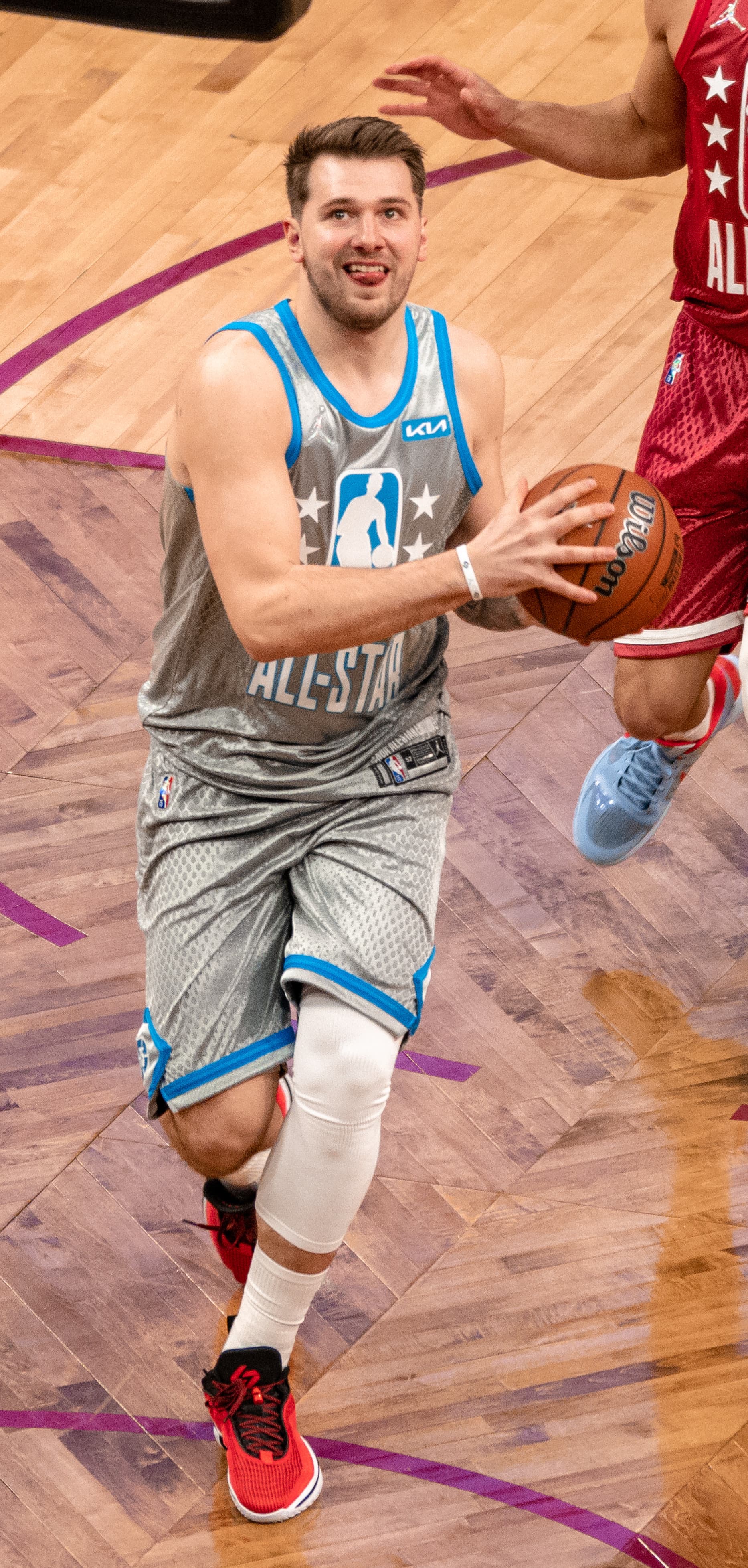
Yaxel Lendeborg's first NBA game produced an immediate confrontation with one of basketball's most accomplished scorers. After Golden State's 127–105 loss to the Los Angeles Lakers on October 21, the rookie criticized Luka Dončić's appeals to officials and said the encounter had changed his view of the veteran. The comments turned a season opener into a debate about confidence, gamesmanship and the difference between defending a possession and winning a game.
The result supplies essential context. Dončić finished with 28 points, eight rebounds and seven assists; Lendeborg contributed 12 points, three rebounds and two assists. Those lines, reported by NBC Sports Bay Area and RotoWire, do not settle every argument about their individual matchup. They do establish that a viral exchange should be read alongside the basketball rather than used as a substitute for it.
What the two players said
Yahoo Sports reported that Lendeborg complained about Dončić repeatedly seeking calls and described a loss of respect after facing him. That was the rookie's assessment of his opponent's behavior. It was not a league finding that the Lakers guard had violated the rules, nor proof that every disputed whistle was wrong. Players can experience the same possession differently, particularly after a frustrating defeat.
Dončić offered a different account of the competitive dynamic. In his postgame comments, he said opponents' verbal challenges bring out another side of his game. The exchange fits two competing interpretations: a newcomer refusing to be intimidated and an established scorer treating that challenge as motivation. Neither interpretation, on its own, explains all 48 minutes of a team sport.
NBC Sports Bay Area's account placed the technical late in the second period and described continued conversation between the players. Its report also connected the confrontation with Dončić's long shot before halftime. The important distinction is between sequence and causation. A basket following an argument does not allow anyone outside the players' own explanations to measure precisely how much the argument changed their performance.
The scoreboard has more than one protagonist
It would be misleading to make the result entirely about the two men exchanging words. The Lakers also received 26 points from Walker Kessler, who made all 12 of his field-goal attempts, according to the Associated Press game report carried by StatMuse. Stephen Curry scored 23 for Golden State in the same account. The opening-night result involved interior finishing, teammates and changing lineups as well as an individual confrontation.
A guard's scoring total includes possessions against different defenders, transition opportunities and free throws. It should not automatically be assigned to the player who attracted the most attention on a clip. Likewise, a missed shot with Lendeborg nearby cannot establish that every other defensive responsibility was fulfilled. Possession-level claims require the complete sequence, including switches, help and the original assignment.
For readers evaluating the rookie, the useful questions are more specific than who embarrassed whom. Did he maintain his balance when the ballhandler changed direction? Did he recover after a screen? Did he stay engaged when the ball moved away? Those are analytical questions for reviewing film, not claims that an unseen possession happened in a particular way. They describe the evidence a serious assessment would need.
Why the technical matters
The NBA's official Rule 12 allows technical fouls for unsportsmanlike conduct, including taunting, profanity and disrespectful responses to officials. It also provides officials discretion to assess a technical without a prior warning. That framework means competitive speech is not governed solely by whether a player touched an opponent or whether the ball went in. Conduct can carry a penalty even after effective defense.
The public rulebook does not itself resolve the exact words that triggered this call. A television clip can show gestures without capturing everything officials heard. It is therefore reasonable to explain the rule while withholding a definitive verdict on an incomplete audio record. Calling every technical evidence of softness, or treating every complaint about a call as justified, skips the question the rule actually asks.
There is a practical development issue here. A rookie can preserve confidence while learning when a verbal response gives the opponent something useful. The immediate cost of a technical is visible; the larger question is whether emotion changes attention on the next possession. Coaches need a player to compete physically, communicate with teammates and execute assignments even when the previous decision felt unfair.
The newcomer had a longer journey to this moment
Lendeborg's draft-night interview provides a useful counterweight to the image of a newcomer known only for confrontation. In the June 23 NBA Draft transcript published by ASAP Sports, he identified defense, versatility and making correct reads as parts of his game he expected to translate. He also credited his mother's encouragement for keeping him committed during an unconventional path toward professional basketball.
That interview matters because it records his own expectations before the October controversy. He spoke about learning from Stephen Curry and joining an organization he had once watched from a fan's perspective. The difference between admiration at a distance and a professional assignment on the floor is part of the transition now confronting him. Competing against a famous player entails more than recognizing his highlights.
His college record also predates this exchange. In March, the Associated Press reported that he scored 27 points when Michigan defeated Tennessee 95–62 to reach the Final Four. That tournament performance supplies evidence of meaningful achievement before his professional debut. It does not guarantee that the same advantages or decision-making patterns will immediately work against NBA opponents with different spacing, timing and experience.
Confidence and adjustment can coexist
A young player's willingness to take a difficult defensive assignment is valuable. So is the ability to revise an approach after the opponent finds an answer. Those traits are compatible. Learning from a debut need not mean becoming passive, and celebrating confidence need not require pretending that a lopsided loss was a personal victory. Development is more useful when it permits both observations.
For Golden State, the ongoing question is how Lendeborg's decisions fit around established teammates. A player can help without leading the scoring: recovering to a shooter, making the next pass or preventing a second chance all affect a possession. Conversely, a memorable confrontation does not erase missed opportunities. The appropriate evaluation will connect visible energy to repeatable contributions rather than award credit for the loudest moment.
For Dončić, the evening showed the attention that comes with being the central problem in an opponent's defensive plan. That does not make every response admirable or every complaint persuasive. It explains why rivals test his composure and why his own reactions become part of the spectacle. Observers can enjoy that tension while still asking whether the next basketball decision helped the team.
What to watch after the opening-night argument
The next meaningful evidence will be how the rookie plays after this attention: his defensive discipline, passing decisions, shot selection and response to difficult whistles. Those indicators can improve without another confrontation making headlines. A second meeting might add a chapter, but there is no need to predict a season-long feud or manufacture certainty about a rivalry before more games are played.
The first result is already clear: Los Angeles won, Dončić produced a substantial all-around line and Lendeborg left an unusually outspoken first impression. The broader story remains open. A professional debut is an introduction to a new competitive environment, not a final judgment on a career. The most revealing follow-up will be what Lendeborg does with the ball and on defense once the conversation has moved on.
Sources, credits & editorial notes
- NBA game page; dynamic box score inaccessible
- NBC Sports Bay Area game analysis
- Yahoo Sports postgame reporting
- RotoWire debut statistics
- AP game report via StatMuse
- Official NBA conduct rule
- ASAP Sports draft interview June23
- AP Michigan-Tennessee March29
- Photo: Erik Drost / CC BY 2.0
- Photo license; cropped and overlaid