Politics
Supreme Court blocks student-ID fallback in New Hampshire voting
An emergency order restores the broader exclusion before November 3. The distinction between accepted photo ID and backup identity evidence explains what changed.
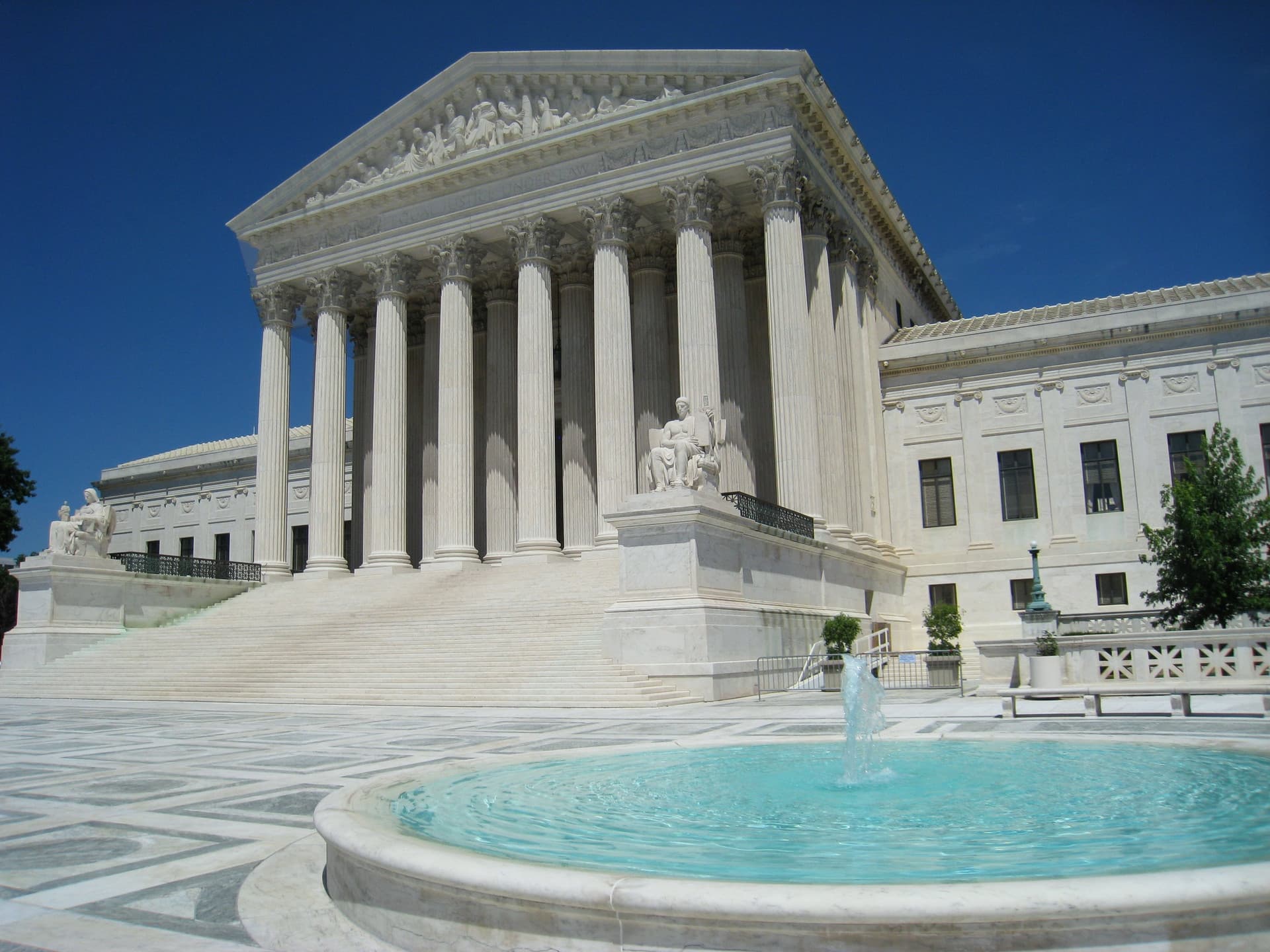
What to know
- The Supreme Court paused lower-court orders that would have allowed election officials to consider student IDs as backup identity evidence.
- New Hampshire's separate law removing student cards from the expressly accepted photo-ID list had already remained in force.
- Justice Ketanji Brown Jackson publicly dissented, saying the lower court was correcting misleading guidance rather than rewriting election rules.
- The underlying constitutional challenge continues; Thursday's stay is not a final judgment resolving every claim.
The Supreme Court has allowed New Hampshire to exclude student identification cards even as supporting evidence of a voter's identity in the November election, putting a disputed state policy back into effect less than two weeks before Election Day. Thursday's emergency order concerns what identification voters may present, not whether college students as a group are entitled to vote.
The distinction matters for students preparing to register or obtain a ballot on November 3. A campus card that once helped establish identity cannot be relied on under the policy the justices allowed to operate. Students who otherwise meet the qualifications should check their available documents and the current instructions from their local election officials before heading to the polls.
Two different rules became one courtroom dispute
The case involves a law and an administrative interpretation of that law. New Hampshire's governor signed HB 323 on April 3, and it took effect June 2, according to the district court's October 2 opinion. The legislation removed student identification cards from the list of documents expressly accepted when a registered voter requests a ballot.
Later in April, Secretary of State David Scanlan's office distributed instructions treating student cards as unavailable for proving identity throughout the process, including registration and requesting a ballot. The instructions therefore went beyond the question of which documents automatically qualified as valid photo identification. They also covered a separate provision permitting consideration of other reasonably reliable evidence.
That alternative process became central to the litigation. A person without an expressly accepted photo ID could be referred to election officials for an assessment of whether other evidence established identity. The lower court concluded that removing student cards from the automatic list did not, by itself, prohibit considering them during that assessment. The state disagreed with the court's intervention and sought emergency relief.
This is why describing Thursday's development simply as a new nationwide student-ID ban would be inaccurate. The dispute is about New Hampshire's system, including the relationship between its registration rules, ballot procedures and official instructions. Other states have their own identification laws. Nothing in this order establishes one uniform national document list for all voters.
What the lower court did—and left in place
Coalition for Open Democracy filed its lawsuit August 11. It argued that the law and the accompanying directive burdened younger voters and violated constitutional protections, including the Twenty-Sixth Amendment's prohibition on denying or abridging voting rights because of age for citizens eighteen and older. Those were the challenger's legal allegations, not conclusions the Supreme Court adopted Thursday.
U.S. District Judge Joseph Laplante refused to block the law itself for the general election. His October opinion said the plaintiff had not demonstrated the necessary likelihood of success against the statute at that preliminary stage. Students therefore had not regained an automatic entitlement to obtain a ballot simply by presenting a campus identification card.
But Laplante granted narrower relief against the administrative directive. He determined that the state had not independently justified excluding student IDs from consideration under the alternative identity-evidence provision. He directed the secretary of state to issue revised instructions. The practical result would have been case-by-case consideration, rather than automatic acceptance of every campus card.
That distinction also limits what can be inferred about fraud. An objection that a student card does not prove citizenship or a permanent address does not settle whether it can help identify its holder. The district court explained that identity, citizenship, age and domicile were distinct qualifications requiring appropriate evidence. Student IDs had not previously served as proof of citizenship or domicile.
Why the Supreme Court intervened
In its October 22 order, case 26A512, the Supreme Court relied on the principle that lower federal courts ordinarily should avoid changing election rules shortly before voting. The unsigned order said the district court had not identified a sufficient reason to depart from that principle in this case.
The approach is commonly associated with Purcell v. Gonzalez, a 2006 election case. Its concern is that late judicial intervention can create uncertainty for voters and administrators. Here, the justices stayed the district court's October 2 and October 5 orders while the state's appeal proceeds. The stay also addresses the period for seeking further Supreme Court review and explains when it will terminate.
An emergency stay determines which rules operate during litigation. It does not perform the same function as a fully argued final merits decision. The order should therefore not be described as a conclusive finding that every aspect of the challenged policy is constitutional. Equally, the earlier injunction should not be described as a final ruling invalidating the entire state identification law.
The state's emergency application emphasized the work already done to train election officials and inform voters. Requiring revised guidance in October, the state argued, would undo months of preparation. It also criticized the interval between the law's enactment and the August lawsuit. Those arguments explain the state's request; they do not establish how many voters would be affected.
Jackson saw a correction, not a rule change
Jackson's written dissent challenged the majority's application of the timing principle. In her view, the district court left the statute intact and required officials to describe it accurately. Correcting misleading explanations of election rules, she reasoned, could reduce the very confusion the Supreme Court's election-timing doctrine seeks to prevent.
The disagreement therefore concerns the characterization of the lower court's action. For the majority, intervening so near the election required a justification the district court had not provided. For Jackson, the injunction addressed misinformation about an existing legal avenue rather than creating a new avenue. She was the only justice to publicly register a dissent in the order.
Neither characterization supplies a dependable estimate of turnout effects. A student who has a passport or qualifying government identification may face a different practical problem from one whose only convenient photo document is a university card. The litigation explains why access to alternatives matters, but this article does not assign an unsupported number to those situations or predict an election result.
What students should check now
Students should consult the New Hampshire secretary of state's election-day information and their city or town election officials for the operative document requirements. Because guidance has been affected by court orders this month, an older screenshot, campus handout or social-media post may reflect an earlier stage of the case. Confirming the current instructions is more useful than assuming the last item shared online remains controlling.
Plan separately for registration and for obtaining a ballot. The district court's description of the system identifies both steps and explains why documents serving one qualification do not necessarily prove another. Ask officials which acceptable evidence establishes identity and which additional evidence is needed for age, citizenship and domicile. Do not assume a student card alone resolves those questions.
A student living away from a family address should ask specifically about domicile rather than treating a campus card's acceptance as an answer to every eligibility question. Conversely, exclusion of that card does not establish that the student is ineligible. Thursday's decision concerns one means of proving identity; it does not erase the separate legal criteria or the importance of reliable individual guidance.
The broader issue will continue through the courts after the immediate election instructions are settled. The next meaningful developments are the appeal's disposition and any subsequent Supreme Court action, rather than speculation about how individual clerks will react. For November 3, Thursday's order leaves the broader exclusion in operation while preserving the underlying legal dispute for further proceedings.
Sources, credits & editorial notes
- Supreme Court: October 22 stay and Jackson dissent, 26A512
- District Court: October 2 opinion, Document 63
- New Hampshire: October 15 emergency stay application
- AP: October 22 Supreme Court decision
- Democracy Docket: linked court records and litigation chronology
- New Hampshire Secretary of State: election-day guidance (consult for current requirements)
- Photo: Daderot / Public domain (author release / PD-self)
- Image license / permission