Entertainment
Tom Skerritt dies at 93: the quiet authority behind Alien, Top Gun and Picket Fences
The Emmy-winning actor’s record spans film, television and a veterans’ storytelling project. A look at the work beyond three familiar titles.
What to know
- Skerritt died October 21 at 93; his family announced the death, and the Television Academy records the same date.
- He won the 1993 lead-actor drama Emmy for *Picket Fences* and received another nomination for that role in 1994.
- His film work included *Alien*, *Top Gun*, *Steel Magnolias*, *Contact* and *A River Runs Through It*.
- An Air Force veteran, he co-founded the Red Badge Project, which helps veterans develop and share their own stories.
Tom Skerritt, whose screen career connected the unsettling corridors of *Alien*, the flight-school hierarchy of *Top Gun* and the small-town arguments of *Picket Fences*, died October 21 at 93. His family announced the death in a statement reported by the Associated Press, saying he died of natural causes. The Television Academy's own biographical record also lists October 21, 2026, as his date of death.
The familiar roles suggest one reason his work endured: he could make authority feel lived in. A captain, sheriff or instructor might begin with credibility, but the story could reveal uncertainty, humor or limitations beneath it. Remembering him through those differences offers more than a catalogue of recognizable titles. It shows how supporting performances help establish the worlds in which other characters move.
An actor whose authority could change shape
Skerritt was born in Detroit on August 25, 1933, according to the Television Academy. Its career summary records both major films and television appearances, including *Cheers*, *Brothers & Sisters* and earlier western series. The range matters because a long acting career is rarely confined to the films that become shorthand in an obituary. Television, guest roles and ensembles allow a performer to create very different relationships with viewers.
His presence could be reassuring without being bland. In an ensemble, an actor does not always need the most dialogue to establish a hierarchy or a history. A measured response, a pause before giving an instruction or the way another character addresses him can do that work. This is an interpretation of his screen persona, rather than a claim about what every director intended or every audience member felt.
That distinction becomes especially useful when comparing his best-known roles. The confidence attached to an experienced instructor is not identical to a captain's responsibility in a crisis. A sheriff dealing with a community's recurring disputes faces another kind of test. Treating all three as the same stern father figure would overlook the separate dramatic problems each performance helps the story explore.
Dallas and the limits of reassurance in Alien
The American Film Institute's catalogue identifies Skerritt in Ridley Scott's 1979 *Alien*, alongside Sigourney Weaver and Veronica Cartwright. The film places a working crew aboard the Nostromo in a situation that steadily defeats its assumptions about safety. Dallas, Skerritt's captain, brings an established command structure into a story where procedure and experience offer less protection than the characters expect.
That is why a familiar, grounded presence is important to the film's construction. Horror needs an ordinary world to disrupt. A captain who seems accustomed to making decisions helps establish that world before it becomes frightening. The later uncertainty carries more weight because the crew initially appears to have jobs, routines and practical concerns, rather than existing only as figures waiting for a monster.
In a 2024 interview with SYFY WIRE's Josh Weiss, Skerritt discussed the film's suspense, Ridley Scott's preparation and the difference between knowing an effect was planned and experiencing it on set. He also considered a deleted scene involving Dallas and the demands of the film's ending. His comments offered a craft perspective: the impact of a performance depends partly on editing, structure and what a film chooses to leave unexplained.
From flight instructor to television lead
In *Top Gun*, Skerritt's Viper is part of the institutional framework against which younger pilots test themselves. The AFI's film presentation includes him among the cast of the 1986 production. Watching that role alongside *Alien* reveals an interesting contrast: one uses experience to help define standards, while the other places an experienced figure inside a situation that erodes control.
The contrast also suggests why a career tribute should include scenes between spectacular sequences. An action film relies on instruction, disagreement and assessment to make its risks intelligible. Supporting actors supply those connections. Their work can make a fictional institution appear to have existed before the protagonist entered it, giving the story a sense of history without an extended explanation.
Television allowed Skerritt to occupy the center over a longer span. The Television Academy records his Emmy win as Sheriff Jimmy Brock in *Picket Fences* in 1993 and his nomination the following year. These were competitive acting recognitions for that performance, not a general lifetime award. The precise distinction honors the work itself and avoids confusing one institution's record with another's.
A career larger than three famous titles
The Red Badge Project's faculty biography traces his early film work to *War Hunt* in 1962 and notes an initial interest in directing. It also names *M*A*S*H*, *Harold and Maude*, *The Turning Point*, *Steel Magnolias* and *Contact* among his credits. That selection covers comedy, family drama, romance and science fiction. It gives viewers a way to explore the career beyond a single genre.
A useful remembrance can follow those contrasts. *Steel Magnolias* places him within a family and community ensemble; *Contact* belongs to a story about evidence, ambition and institutions. An actor recognized from a military film may carry associations into another role, but a different script can redirect them. Familiarity becomes part of the casting's expressive value without forcing every character to share the same moral position.
For someone returning to his work, comparing one television episode with a film role may be more illuminating than watching only a compilation. The longer scene reveals listening, pacing and relationships. A highlight montage tends to favor speeches and entrances. Acting also happens when another performer has the line and a reaction establishes what has changed between two people.
Military service and the work beyond acting
The Department of Veterans Affairs' 2023 profile describes Skerritt's enlistment in the Air Force in 1951 and his posting at Bergstrom Air Force Base in Texas. It says he later pursued education with support from the GI Bill. That service is part of his biography; it should not be mistaken for the fictional military experiences of characters he portrayed on screen.
His work with veterans also had a practical institutional form. The Red Badge Project says he and former Army captain Evan Bailey co-founded it in 2012. Its stated goals include helping participants develop communication skills, a sense of personal worth and connection to community through storytelling. Those are the organization's aims, not a clinical claim that every participant experiences the same outcome.
The University of Washington's College of Arts and Sciences documented the project in 2015 through the work of English professor Shawn Wong and other instructors. Its account described classes connected to Joint Base Lewis-McChord and emphasized participants' freedom to choose what they wrote about. That detail points to a different use of storytelling from professional entertainment: giving someone room to shape an experience in their own terms.
A way to revisit the work
A viewing path need not begin and end with the biggest hit. Pairing *Alien* with *Top Gun* shows two uses of command; adding *Picket Fences* introduces the rhythms of a continuing television role. Selecting one of the quieter ensemble films broadens the comparison again. Current streaming availability varies by country and service, so a remembrance should not turn an old platform listing into a promise about where a film can be watched today.
The lasting record includes both performances and the work of helping other people find a voice. One belongs to a shared cultural memory; the other is documented through an organization, teachers and veterans rather than a box-office ranking. Taken together, they give Skerritt's career a fuller shape: a familiar actor whose contribution extended beyond the moment when the camera turned toward him.
Sources, credits & editorial notes
- AP family statement October22
- Television Academy primary biography and awards
- AFI Alien cast/catalogue
- SYFY WIRE direct interview March11 2024
- AFI Top Gun
- Red Badge faculty biography
- VA biography February27 2023
- Red Badge primary mission
- University of Washington program reporting October2015
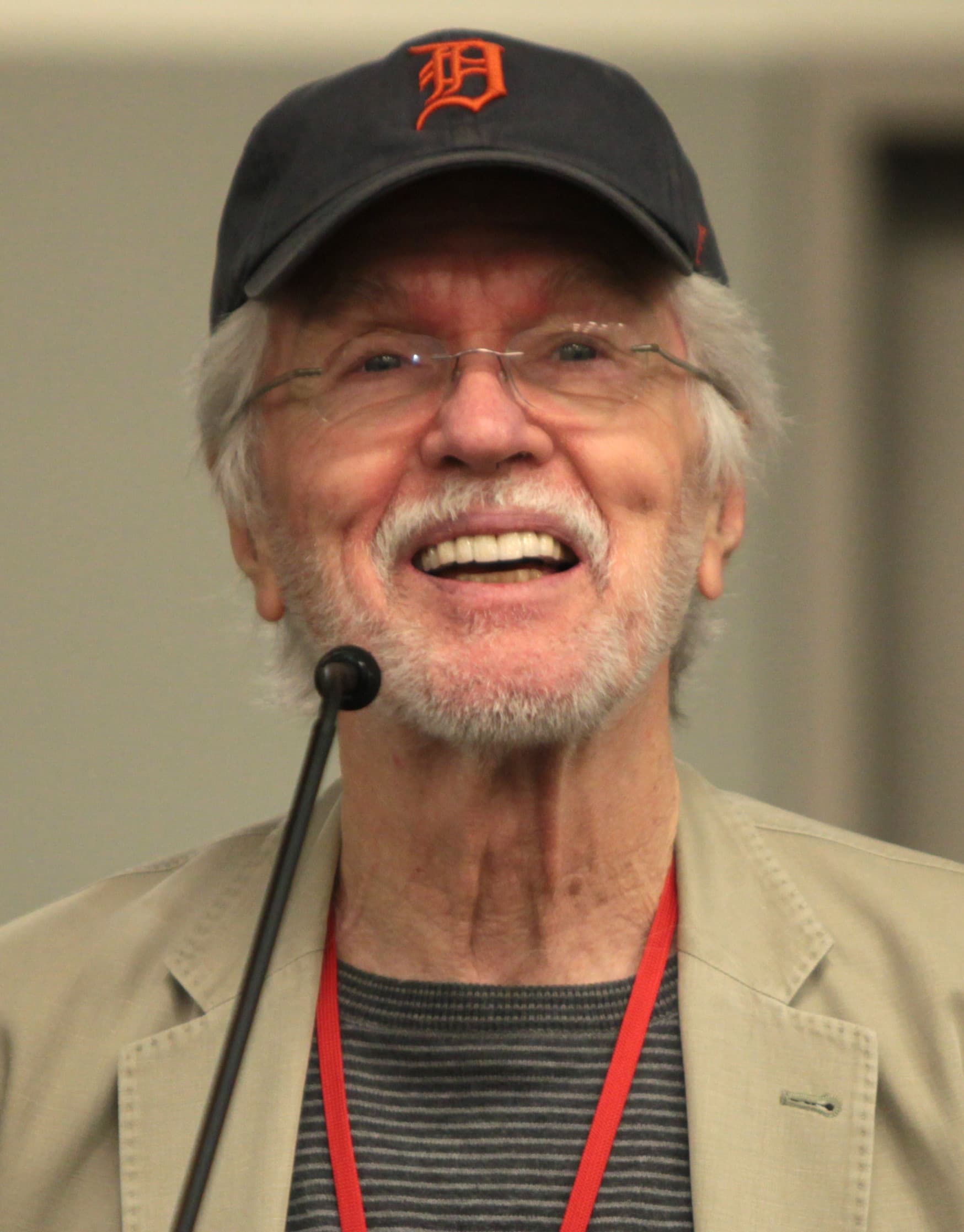
- Photo: Gage Skidmore / CC BY-SA 2.0
- Photo license; cropped and overlaid