AI & Cybersecurity
Anthropic IPO explained: ANT, revenue and the $80.7B loss
Anthropic’s filing reveals rapid growth and a huge accounting loss. What ANT means, what the numbers show and which IPO terms remain unknown.
What to know
- Anthropic filed its public Form S-1 on October 26, seeking a Nasdaq listing under the proposed symbol ANT.
- The filing reports approximately $16.3 billion in revenue and an $80.7 billion net loss for the first six months of 2026.
- About $72.4 billion of that loss reflects changes in the value of convertible financing and related instruments. It is not equivalent to cash spent during those six months.
- The filing reports $3.9 billion of cash provided by operating activities for the same period, a separate measure from net income.
- The initial share count and offering price range remain unspecified in the reviewed prospectus. No final trading date is established here.
Anthropic's public stock-offering filing has given investors a detailed look at the company behind Claude, combining rapid revenue growth with large financing-related accounting charges and substantial computing needs. The Form S-1 was filed with the Securities and Exchange Commission on October 26. As of the material reviewed for this October 28 morning article, the proposed offering is not a completed Nasdaq debut.
The company has applied to list its Class A shares under the symbol ANT. Its initial filing leaves the proposed share count and price range blank. Those omissions matter: a filed prospectus describes a proposed transaction, while an actual offering requires further steps. Reports about possible valuations or timing should not be mistaken for terms Anthropic has finalized.
What has Anthropic actually announced?
The company's own announcement describes a proposed initial public offering of Class A common stock. The SEC filing supplies financial statements, a business description, governance information and risk disclosures. It also explains that there has been no prior public trading market for those shares.
This is a significant disclosure event even before trading begins. A private company's fundraising announcements can highlight selected milestones; a public prospectus has to present a much broader account of the business, including liabilities, related arrangements and material uncertainties. Investors can inspect the document rather than rely entirely on fundraising valuations or product enthusiasm.
But disclosure is not the same as approval of an investment's merits. The prospectus itself warns that the SEC has not approved or disapproved the securities or passed on the document's accuracy. A ticker in a preliminary filing identifies the requested trading symbol. It does not mean the shares are already available through ordinary public-market trading.
Why is the $80.7 billion loss easy to misunderstand?
The headline loss is an accounting result, not a bank statement. Anthropic reports an $80.748 billion net loss for the six months ended June 30, 2026. Its filing identifies $72.388 billion in changes in the fair value of convertible notes, derivative liabilities and simple agreements for future equity, commonly called SAFEs.
Those instruments connect financing to possible future equity. Changes in their accounting value can pass through a company's income statement. Anthropic says the changes were driven primarily by an increase in the fair value of outstanding convertible promissory notes as its enterprise valuation rose. That can create a large reported expense without an equal cash payment in the period.
Reuters' reporting on the filing likewise distinguished steep reported losses from financing-related valuation changes. The distinction does not make the loss fictional or irrelevant. It means the number answers a different question from how much cash the company used to run the business. Both the financial statements and their explanatory notes are needed to understand it.
What do cash flow and operating results show?
The cash-flow statement reports $3.9 billion provided by operating activities in the first half of 2026, compared with cash used in operations in the comparable 2025 period. Operating cash flow measures cash associated with operating activity under accounting rules. It is not interchangeable with net profit, and it is not automatically cash left over after every investment or financing obligation.
The filing separately records an operating loss for the first half. That measure concerns revenue and operating expenses before the broader set of financing-related items included in net income. Reading operating income, net income and cash flow together produces a more informative picture than selecting whichever one makes the business look strongest or weakest.
A further distinction involves future commitments. Contracts for computing capacity can require significant spending over time. A company's current cash position, this year's expenses and payments promised for future infrastructure are different categories. Adding them casually or describing all commitments as money already spent can produce a misleading impression of the financing challenge.
What is driving the revenue story?
Anthropic builds the Claude family of AI systems and sells access through applications, subscriptions, developer tools and business arrangements. Its prospectus describes a business dependent on customers finding those systems useful enough to keep paying for them. Revenue growth therefore measures more than public attention to a chatbot; it reflects commercial use across a range of products and channels.
The first-half revenue figure of approximately $16.3 billion is a historical result for a defined six-month period. It should not be described as the company's full-year revenue or as a guaranteed annual run rate. A rapid increase can be important evidence of demand without establishing how much revenue the business will produce in future quarters.
That distinction is particularly important in a fast-changing market. Customers can expand usage, negotiate terms, switch providers or reduce spending. Competition can affect both prices and the cost of delivering a service. Investors evaluating an AI company need to consider how durable its sales are, not simply how quickly one period grew relative to an earlier one.
Why do computing partners matter so much?
Developing advanced models and responding to customers' requests require substantial computing infrastructure. Anthropic's filing describes reliance on cloud-service providers, partners and financing sources to secure that capacity. It also says that the long lead times involved can require commitments well before infrastructure is ready for use.
That creates several linked business questions. Will enough capacity arrive when customers need it? Will the cost of running models fall as revenue grows? Can the company obtain the power, equipment and operational support required for expansion? The answers affect both service reliability and the economics of future sales.
The relationships can be complex because companies that supply infrastructure may also invest in, distribute or compete with AI developers. A partnership announcement alone does not settle who bears which costs or risks. The prospectus' descriptions of contracts and financing are therefore important alongside the more familiar revenue and loss figures.
What do the AI risk warnings mean?
The filing includes extensive warnings about safety, misuse, reliability, regulation, security and other risks. AP's reporting highlighted that some of those disclosures concern potential harms from increasingly capable AI. These are statements about possible adverse outcomes and business exposure, not an announcement that each described event has happened.
Risk language also needs context. Securities filings are designed to inform investors about significant uncertainties, including events that might be unlikely but consequential. A warning should not be dismissed merely because it appears in a risk section. Nor should it be turned into a prediction that an extreme outcome is imminent.
For customers, practical questions include whether a system performs reliably, how sensitive data are handled and what happens when services change. For investors, those same questions can affect demand, legal costs, reputation and operating expenses. The company's ability to develop safeguards is part of its business outlook, not just a separate philosophical discussion about AI.
How is the company's structure different?
Anthropic is incorporated as a Delaware public benefit corporation. Its prospectus describes a governance structure connected to its stated commitment to responsible AI. That designation is a legal corporate form; it does not remove the need to examine financial performance, voting arrangements or the specific rights attached to the offered shares.
Potential investors should distinguish a company's mission from enforceable ownership rights. The relevant questions include who can elect directors, how voting power is distributed and which decisions public shareholders can influence. Those details belong in the governance and capital-stock sections, rather than being assumed from the fact that a company plans to list on an exchange.
What do we know, and what is still missing?
The public filing establishes a proposed Nasdaq offering, the requested ANT symbol and extensive historical financial disclosures. It also provides the evidence needed to distinguish a large noncash valuation charge from spending and cash flow. Those are firmer reference points than an unconfirmed price target circulated online.
The reviewed initial filing does not establish a final offering price, final share count or completed first trade. Estimates about the size of the deal remain estimates unless confirmed by subsequent offering documents. A later amendment can add information or change the proposed terms, so the filing date and version matter.
What's next?
The next useful developments are amendments specifying the proposed terms, further company disclosures and eventual documents confirming pricing and the start of trading, if the offering proceeds. Wednesday morning's assessment should therefore focus on the evidence already available: growth, financing, infrastructure and governance. Enthusiasm for the technology is not a substitute for understanding the security being offered or the risks described in its filing.
*Want more? Explore today's headlines on NewsCubby and join My Day free to make NewsCubby part of your day.*
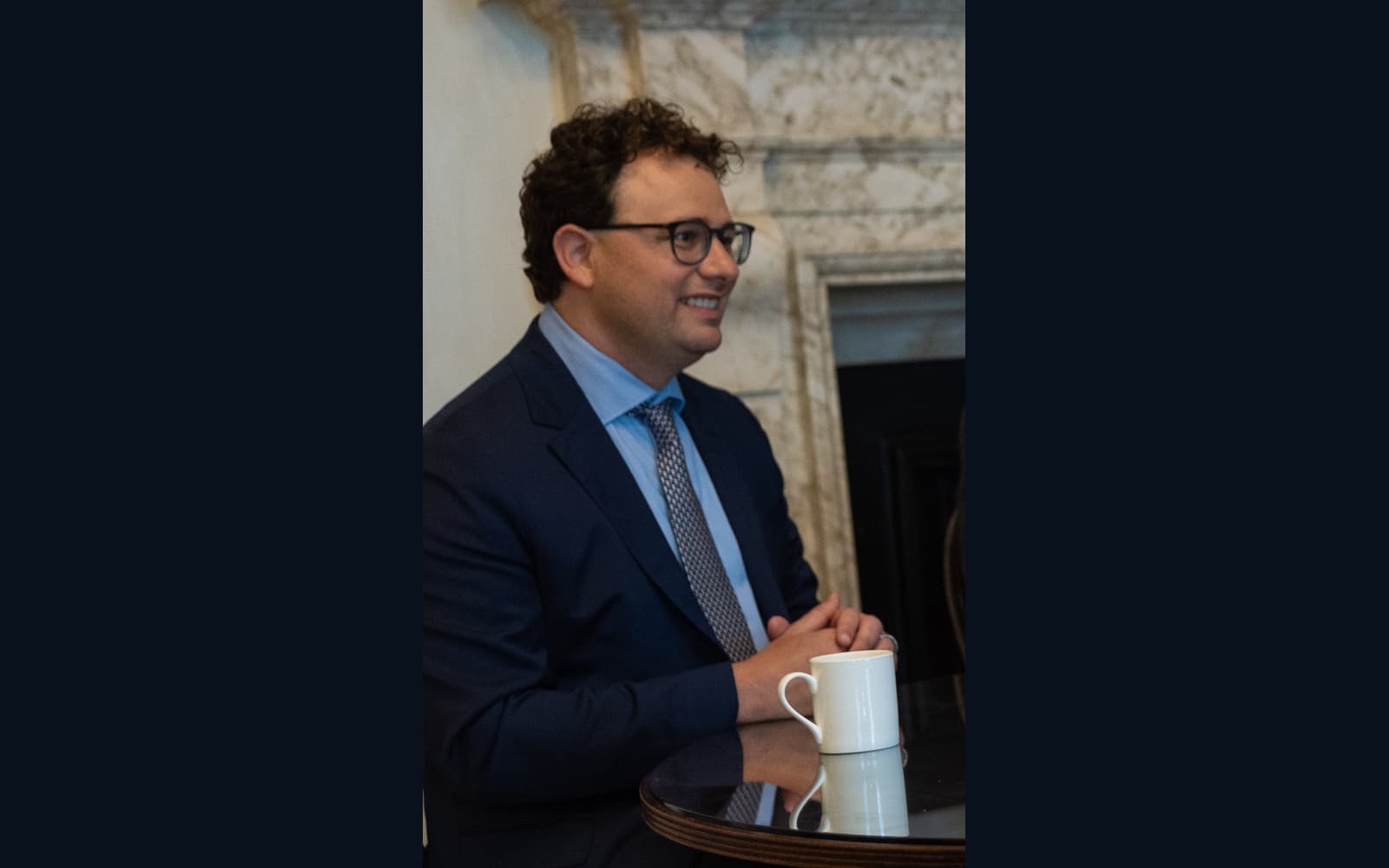
*ARCHIVE PHOTO: Anthropic CEO Dario Amodei at a meeting at 10 Downing Street in London in May 2023. Capture date(s): 2023-05-24. Photo: Simon Walker / No 10 Downing Street / Wikimedia Commons, CC BY 2.0 (https://creativecommons.org/licenses/by/2.0/). Cropped/resized; social cards add typography and gradient. Not a photograph of the October 2026 event. No endorsement implied.*
*Prepared with AI assistance for NewsCubby.*
Sources, credits & editorial notes
- SEC: Anthropic preliminary Form S-1, October 26
- SEC: Anthropic S-1 filing index
- Anthropic: Proposed IPO announcement
- Reuters: Anthropic growth, costs and IPO filing
- AP: Anthropic offering and AI risk disclosures
- AP: Risks disclosed to prospective Anthropic investors
- Photo: Simon Walker / No 10 Downing Street; CC BY 2.0