U.S.
Bend father’s new account turns attention to Silver Rail’s long aftermath
Kaylub Giamanco spoke to OPB as the school remains closed, investigators continue their work and families face another week without classes.
What to know
- OPB published a new interview with Giamanco, a father of two Silver Rail students, about intervening and the aftermath.
- Bend police say a teacher physically confronted the attacker before the father entered the classroom and shot him.
- The district says Silver Rail will have no classes October 26–30; no return-to-learning date has been decided.
- Police confirmed October 21 that the firearm had been purchased legally, while continuing to investigate how the attack occurred.
The Bend father who fatally shot the attacker at Silver Rail Elementary School has described the burden that followed his intervention, shifting attention from the moments that ended the October 15 attack to the families still living with its consequences. Kaylub Giamanco spoke in an interview published by Oregon Public Broadcasting on October 23, eight days after three children and a teacher were killed.
His account arrives as Silver Rail remains closed and investigators continue examining the attack. School officials have begun repairs, but their latest update does not set a return date. The emergency ended in minutes; decisions about learning, security, support and the building's future are taking much longer. Giamanco's role is part of that story, alongside the teacher who confronted the gunman and the children and adults whose lives were changed.
A public account, not an end to grieving
In the OPB interview, Giamanco expressed gratitude that children survived and anguish over the people he could not save. He also credited the teacher's intervention. The interview is OPB's reporting, not an interview conducted by NewsCubby. It adds his perspective without replacing the official investigation or the experiences of other families.
A person can have acted to stop further harm and still describe profound distress afterward. Those statements should be reported as his account, without assigning a medical diagnosis or suggesting he caused the deaths he was unable to prevent. Public praise does not decide what recovery will look like for him or for anyone else affected. Nor should the account reduce the teacher's actions or the victims' lives to background in a single-person narrative.
What police established about the response
The Bend Police Department's October 16 account, preserved on the school district's information hub, records the first emergency call at 12:59 p.m. October 15 and the first officers' arrival at 1:02 p.m. Those times describe the initial response, not the entire investigation. By the officers' arrival, a community member had already intervened against the attacker.
Police said the attacker forced entry through locked exterior doors and entered a classroom. A teacher confronted him physically. Giamanco, whose children attended the school, followed him inside and fired. The police account credits both adults' actions. This article omits the graphic details of the attack; understanding the response does not require reproducing victims' suffering or describing injuries in detail.
Police identified three children, ages five, eight and eleven, and a twenty-five-year-old teacher as the people killed by the attacker. The teacher was Megan Lambert. Five-year-old Rhoam Summer was identified with his family's permission; police said the other children's families had asked that their names not be released. Those requests remain a meaningful boundary when telling the story, rather than an invitation to seek names elsewhere.
The department later corrected its account of how many people had been in the classroom. Its October 19 update put the total at four adults and five children. That revision illustrates why early emergency information must be attributed and dated. Different numbers in older stories do not necessarily describe a new incident or prove that officials concealed information; investigators explicitly said their understanding had developed.
The teacher and students are more than a casualty count
Lambert's family described her in a statement included with the police update as a Central Oregon native who wanted to teach in the community where she grew up. They said she graduated from Mountain View High School in 2019 and Boise State in 2023, coached volleyball and cared deeply about children with special needs. Silver Rail was her first teaching job after earlier substitute work.
Those details matter because the people killed were members of families and a school community before they became subjects of national coverage. The unnamed teacher who struggled with the attacker has also been credited by police. Not knowing her name does not diminish her role, and attention to Giamanco's interview does not make his intervention the only action that mattered that day.
Investigators have not finished their work
In its October 21 update, Bend police said the firearm used in the attack had been purchased legally. The statement did not publicly settle every question about its handling, storage or how the teenager obtained access. A lawful purchase and the later circumstances of access are separate issues. The announcement should not be stretched into an unsupported finding about anyone else's criminal responsibility.
Police said detectives had served search warrants involving the suspect's home, electronic devices and accounts across multiple social-media platforms. They were continuing to investigate the weapon and other aspects of the case. Those searches show the work under way; they do not establish the contents of every device, a motive or the involvement of another person. Public claims about those matters require evidence beyond the fact that investigators are looking.
The school's latest update changes the practical picture
The district's October 23 restoration update says work began October 20 after police returned custody of the building. Repairs and cleaning are continuing. Damaged perimeter fencing has been repaired, temporary construction fencing is in place, and playground areas remain closed during restoration. Reopened parking-lot gates and removed police tape do not mean the school has reopened for classes.
The district says no decision has been made about when Silver Rail students will return to learning. Its October 22 notice specifically says there will be no school for those students October 26–30. The distinction matters for families arranging work, child care and meals. A building-restoration milestone is not the same as an agreed educational plan, and neither should be presented as a confirmed reopening date.
Other district schools resumed classes October 21. OPB's report on that return described families making different decisions about whether their children were ready. Some wanted routine; others wanted further security changes. Returning students and families who keep children home should not be treated as evidence that the community has reached one common judgment about safety or recovery.
What security arrangements actually remain
The district clarified October 23 that at least one officer or deputy was stationed at each of its thirty-two schools for Wednesday's return. That individual-school arrangement applied to that day. Officials now describe increased law-enforcement presence in surrounding neighborhoods and at special events, with eight school resource officers continuing to rotate among campuses. A claim that every school will have a dedicated officer every day would therefore misstate the latest guidance.
Security decisions are being discussed alongside the educational transition. The district says it is working with families and staff rather than announcing a completed plan. Visible patrols, building repairs and counseling have different purposes; none alone answers all the questions families are asking. Reporting them separately makes it possible to assess what has actually changed instead of treating every response as a guarantee against future violence.
Support continues beyond the emergency week
The district's family-resources page lists free meal and child-care arrangements for Silver Rail families. Its meal notice covers weekdays through October 27, with collection at R.E. Jewell Elementary. It also lists no-charge Boys & Girls Club places for October 26 and 27 and a separate nature-camp option. Families should use that current page for locations, hours and enrollment requirements; availability should not be assumed from an older shared post.
Deschutes County's October 21 support notice describes free individual sessions October 22–25 at the Stabilization Center, including help connecting with longer-term services. That is a dated local offer, not a prediction about how quickly anyone should recover. The county's transition toward individual support recognizes that the need for help continues after public vigils and the first school return.
What comes next for Silver Rail
Memorial items left outside the school were moved into safe storage October 22, according to the district. The Source's report on that decision explains that officials were considering how the site might again serve the school community. Storing tributes is not the same as deciding the building's permanent future, and it does not mean families have finished mourning.
The next concrete developments are an actual return-to-learning plan, further investigative findings and updates on support arrangements. Giamanco's interview gives the public one important account of the aftermath. The larger task remains caring for children, staff and families while establishing what happened and what changes will follow. Those responsibilities continue even when the national spotlight moves elsewhere.
Sources, credits & editorial notes
- OPB: Emily Cureton Cook and Jen Baires, October 23 interview
- Bend-La Pine Schools: October 23 restoration and security update
- Bend police: October 16 response and family statements, reproduced by district
- Bend police: October 19 and 21 investigative updates, reproduced by district
- Bend-La Pine Schools: family resources, meals and child care
- OPB: return to classes, updated October 22
- Deschutes County: dated individual support notice, October 21
- The Source: Clayton Franke, memorial storage, October 22
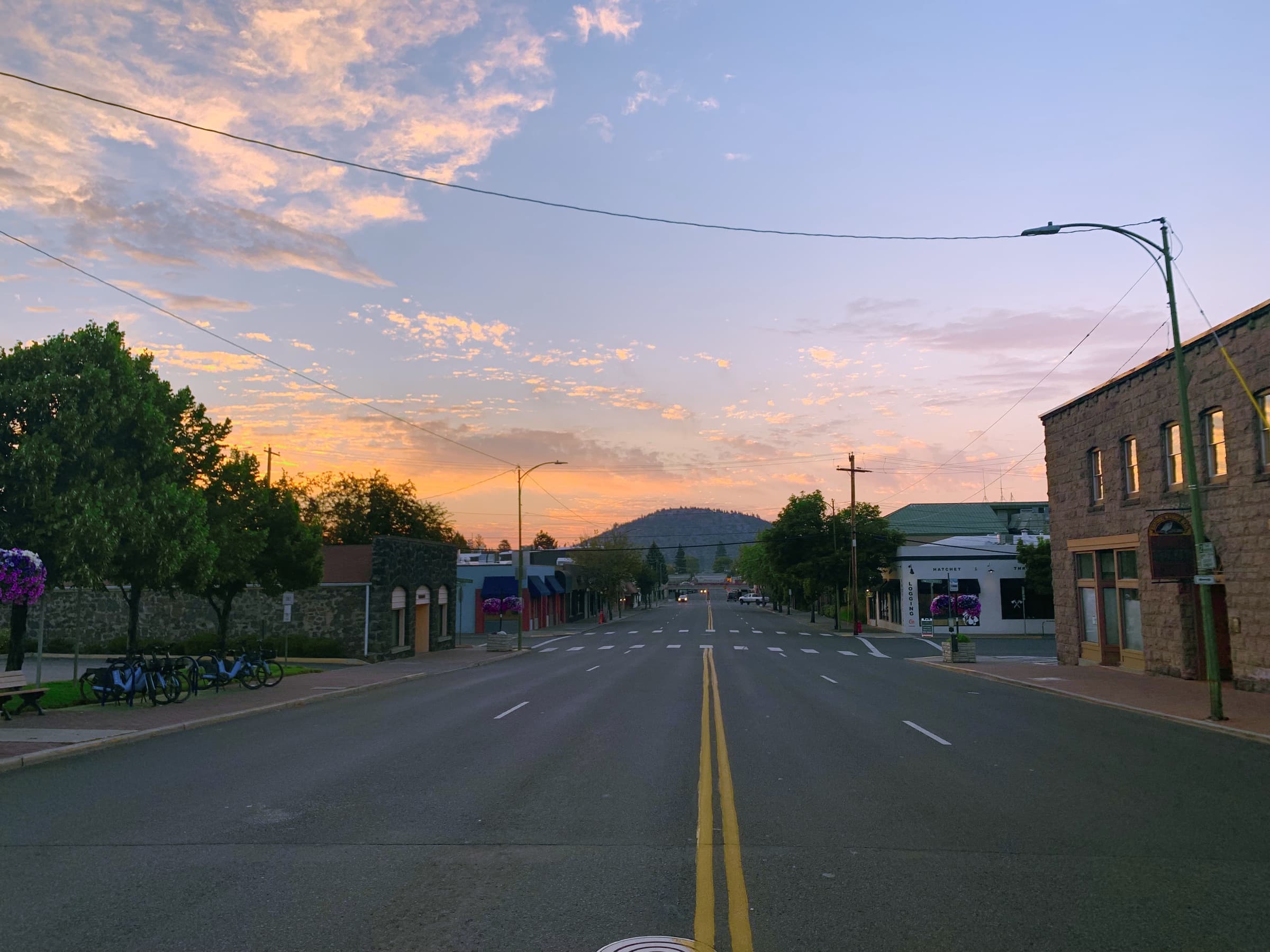
- Archive photo: UpdateNerd, downtown Bend, July 27, 2022; CC0
- Photo permission: CC0 1.0 Universal