U.S.
Retired NYPD detective charged in George Washington Bridge killing: what is known about the case
Victor Romero faces a murder charge after Koran Irvine was fatally shot during Tuesday’s commute. The police account remains an allegation to be tested in court.
What to know
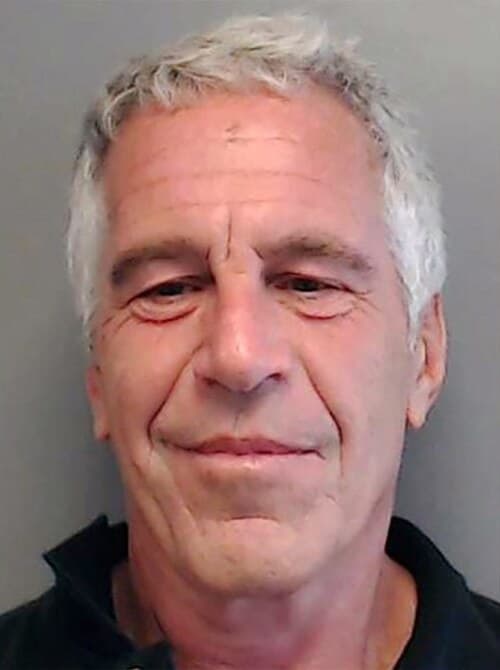
- Police identified the man charged with murder as Victor Romero, 62, a former NYPD detective who has been retired for about 25 years.
- Koran Irvine, 46, died after being shot on the New Jersey-bound upper level of the George Washington Bridge on October 20.
- Investigators have described a possible road-rage encounter. The sequence and motive remain matters for evidence, not assumptions about either driver.
- A criminal charge is not a conviction. No verified defense response or plea was available in the reporting reviewed for this article.
A retired New York City detective has been charged with murder after a fatal shooting on the George Washington Bridge turned an evening commute into a homicide investigation. Authorities identified the defendant as Victor Romero, 62, and the man who died as Koran Irvine, 46, a Con Edison employee from Rockland County.
The shooting occurred Tuesday, October 20, on the upper level carrying traffic toward New Jersey. Police announced Romero’s arrest Wednesday. Local reporting described investigators examining a possible road-rage confrontation, but no publicly tested reconstruction establishes the complete interaction between the drivers.
The distinction between an accusation and a proven account is essential. Romero is presumed innocent. The allegation concerns a killing; his former occupation neither establishes his guilt nor supplies a defense. The evidence and the applicable law, not his professional history, must determine the criminal case.
A crash report became a homicide investigation
News 12 reported, citing the NYPD, that officers initially responded around 7 p.m. to a single-vehicle crash. They found Irvine unresponsive in the vehicle, and he was taken to Englewood Medical Center, where he was pronounced dead. The response therefore began with the outward appearance of a traffic incident before investigators examined the shooting.
That sequence illustrates why an initial emergency report may not describe the underlying crime. A vehicle can continue moving or collide after its driver is injured. It would be misleading to treat the crash itself as a separate explanation for the death when the authorities are investigating a gunshot and have announced a murder charge.
The location also made the response highly visible. The upper roadway is a major interstate connection, with tightly spaced vehicles and approaches feeding into multiple lanes. A closed lane affects travelers far beyond the immediate incident, but the resulting congestion is not evidence about who fired a weapon or why.
The man who died
Irvine lived in Valley Cottage. News 12’s account identified him as a longtime Con Edison worker, while NBC New York reported that he had a wife and two children. Those details establish a person and a community behind a headline that otherwise risks becoming only a traffic-disruption story.
Con Edison expressed grief in a statement quoted by both local outlets. The employer’s confirmation is relevant to Irvine’s work and the loss felt by colleagues. It does not establish the disputed sequence on the bridge, and grief should not be presented as evidence of a defendant’s criminal responsibility.
No unsupported claim about Irvine’s driving, intentions or private life is needed to explain his death. A reported near-collision remains part of an investigative account. It does not shift blame to a victim or justify a shooting, and it should not be embellished into a confrontation that the public record does not yet fully describe.
What investigators are trying to establish
NBC New York reported that police were examining surveillance footage and potential ballistics evidence. Its account described a possible near-collision on an entrance ramp and investigators’ efforts to connect a vehicle, a weapon and the shot. Those are reported investigative steps, not forensic conclusions issued by a court.
Video can help establish where vehicles were and when an encounter occurred, but a camera’s presence does not guarantee that every relevant movement or conversation was recorded. An image can answer one question while leaving another unresolved. The complete sequence, the position of vehicles and the identity of a shooter require careful corroboration.
Ballistics can also be important without making every early statement definitive. A recovered firearm and material from a scene must be examined and connected through evidence. This report does not state that a laboratory has conclusively matched a weapon, that a confession exists or that a recording captures the entire alleged shooting.
The allegation of road rage
The term road rage describes the investigators’ working account of a driving-related confrontation. It is not a substitute for the elements of a criminal charge. A prosecution must establish the acts and mental state required by the offense, rather than rely on an emotionally powerful label.
The distinction matters particularly when early information comes from sources familiar with an investigation. Their account can be newsworthy while still incomplete. Later filings, defense arguments or additional footage can clarify or challenge details that seemed straightforward in the first hours after an arrest.
There is no basis here to declare that the case proves a wider increase in shootings by retired police officers or a trend at this crossing. One serious incident warrants reporting on its own facts. A claim about a broader pattern would need consistent data and an appropriate comparison period.
What is known about the defendant
Romero is from Haverstraw, according to reporting that attributed his identification to police. He retired from the NYPD in 2001. This was not described as an encounter involving an officer on duty or an official police operation.
AP’s initial report said information about an attorney who could speak for him was not immediately available. NBC likewise did not identify a lawyer in the material reviewed. That means a defense position was unavailable in those reports; it does not mean Romero waived counsel, admitted an offense or declined a question from NewsCubby.
No plea, bail condition or scheduled trial date is asserted here without a verified court record. Those are distinct developments that can change quickly after an arrest and should be updated from an actual proceeding rather than inferred from the seriousness of the charge.
Why a charge is not the end of the process
New York’s court guidance describes arraignment as the point when a defendant appears on a filed accusation and the court sets the course of further proceedings. It is not a trial verdict. A grand jury indictment, when applicable, is also a charging stage rather than a determination of guilt.
The state judiciary’s standard jury instructions explain that the prosecution bears the burden of proving the defendant’s identity and every element of a charged offense beyond a reasonable doubt. The defendant does not have to prove innocence. That rule applies even when the event is disturbing and the arrest attracts intense attention.
Legal proceedings can test the reliability and admissibility of statements, images and physical evidence. An allegation repeated widely does not gain the status of a finding through repetition. The public should be able to follow the case without being asked to decide it from the first account alone.
A vital crossing, not an illustration of the crime
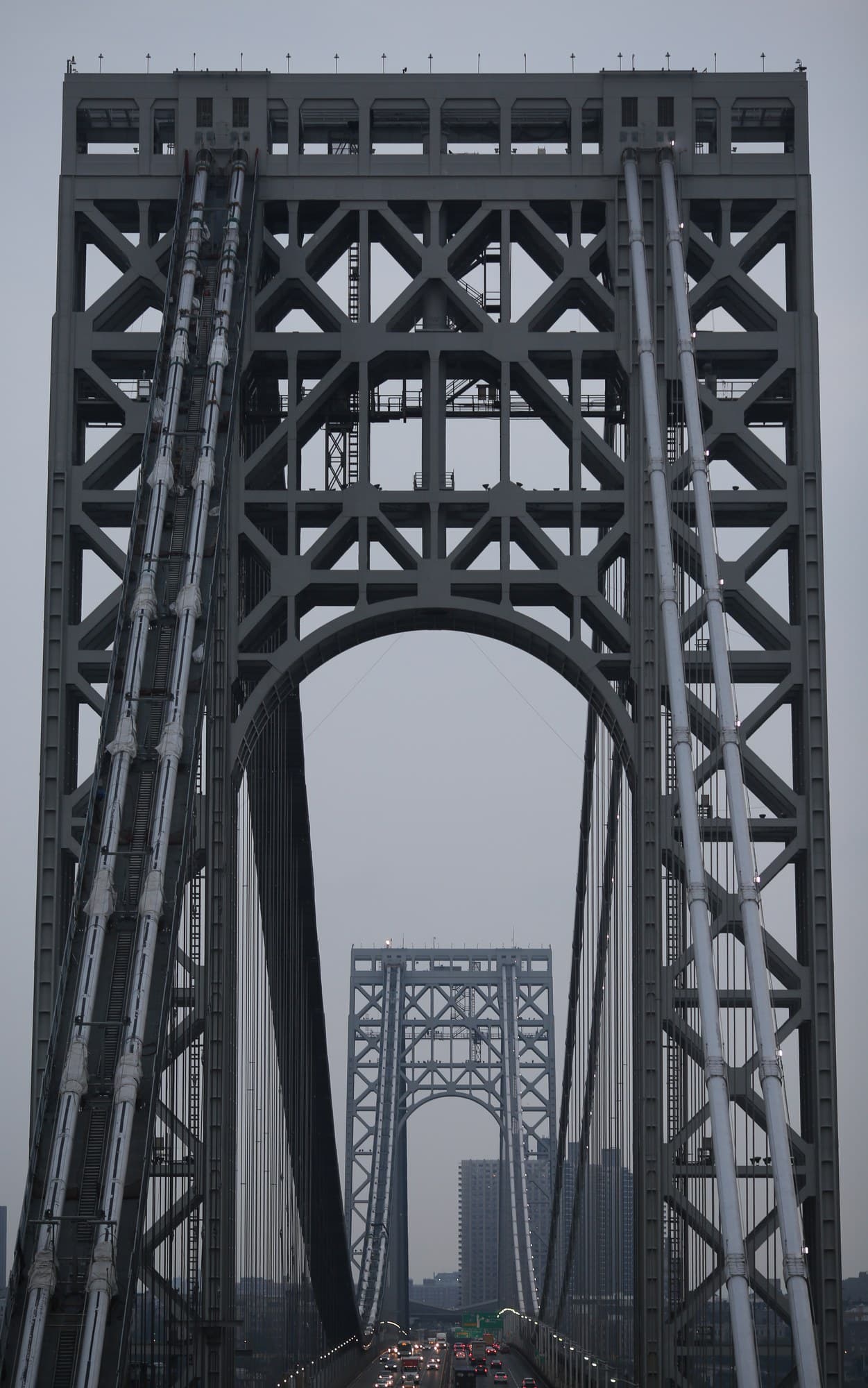
The bridge joins upper Manhattan and Fort Lee across the Hudson River and forms part of Interstate 95. Fort Lee’s official history records its opening in October 1931 and the addition of the lower roadway in 1962. Its importance as a regional crossing explains the scale of the disruption.
The photograph accompanying this article is an archive view of the bridge. It is not an image of the shooting, either vehicle, the victim or the defendant. The location is relevant; inventing a visual reconstruction would not add reliable evidence.
The next meaningful developments are verified court appearances, a defense response and any newly released evidence or charging documents. For now, the confirmed public development is a murder charge after Irvine’s fatal shooting, with the prosecution’s account still subject to the criminal process.
Sources, credits & editorial notes
- apnews.com: reporting or primary record
- nbcnewyork.com: reporting or primary record
- brooklyn.news12.com: reporting or primary record
- nycourts.gov: reporting or primary record
- askalawlibrarian.nycourts.gov: reporting or primary record
- nycourts.gov: reporting or primary record
- nycbar.org: reporting or primary record
- fortleenj.org: reporting or primary record
- Photo: John Sears; CC BY 4.0; archive 2019-08-13
- Image reuse license: CC BY 4.0