Sports
Brewers beat Rays in Game 5 to win first World Series title
Milwaukee finished a historic season with a 4-1 victory in St. Petersburg, powered by Jacob Misiorowski, Cooper Pratt and World Series MVP William Contreras.
What to know
- Milwaukee defeated Tampa Bay 4-1 in Game 5 and won the World Series four games to one.
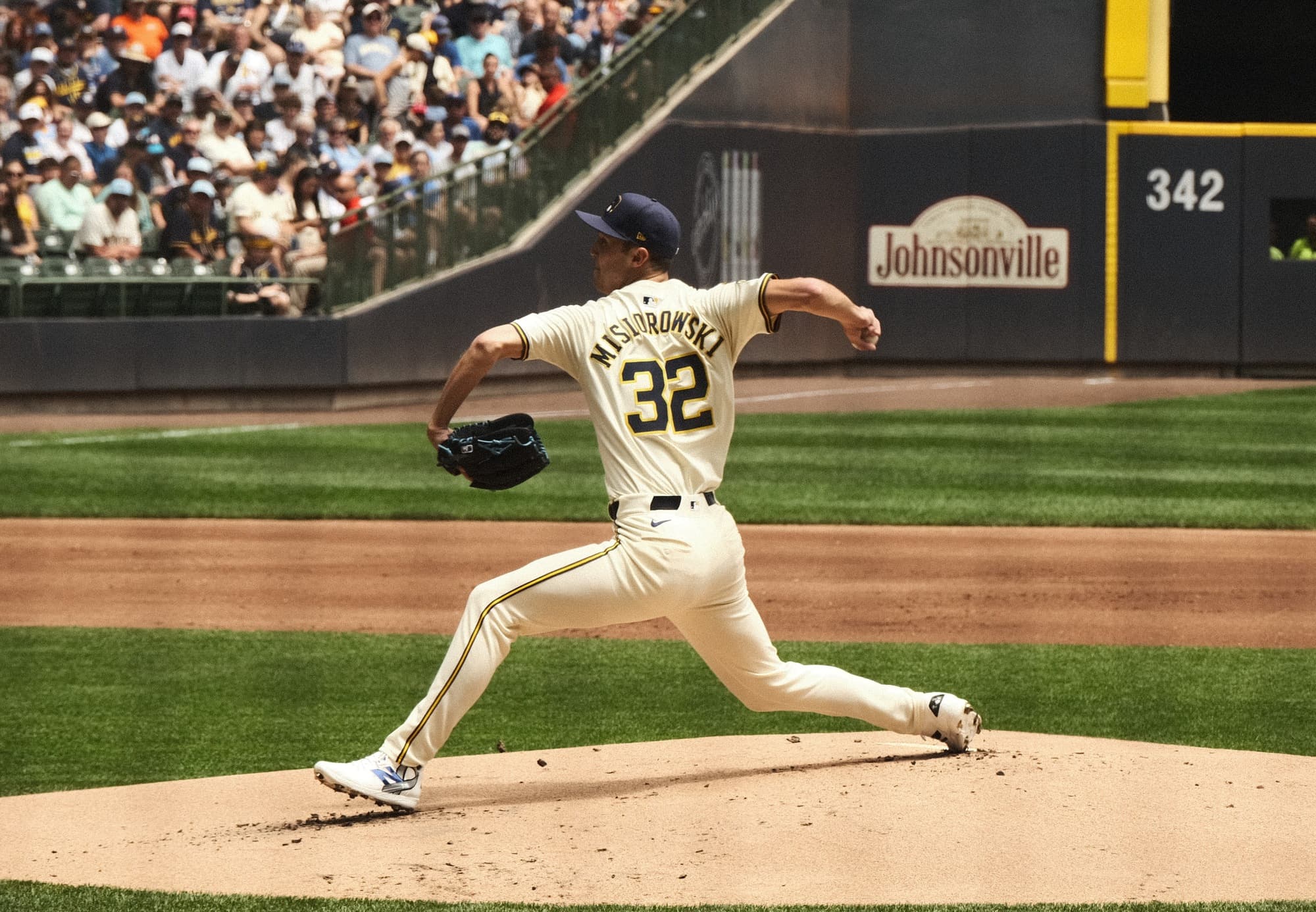
- Jacob Misiorowski held the Rays scoreless for 5 2/3 innings before leaving with a right-calf cramp.
- Cooper Pratt had two hits and two RBIs, while William Contreras supplied an RBI double.
- Contreras was selected as World Series MVP after batting.381 in the series.
- This is the Brewers’ first championship; their only previous World Series appearance ended in a Game 7 loss in 1982.
The Milwaukee Brewers are World Series champions for the first time in franchise history. Milwaukee beat the Tampa Bay Rays 4-1 in Game 5 on Wednesday night at Tropicana Field, ending the best-of-seven series four games to one and completing the breakthrough that had eluded the club since it began play in 1969.
The clincher followed the formula that carried Milwaukee through October: an early lead, pressure built through contact rather than one decisive home run, and enough pitching to keep the opponent from changing the shape of the game. Young right-hander Jacob Misiorowski delivered 5 2/3 scoreless innings. Rookie shortstop Cooper Pratt drove in two runs. Catcher William Contreras added an RBI double before being named World Series Most Valuable Player.
Those are the final results, not projections. Major League Baseball’s championship account and the Associated Press game report independently confirm the 4-1 score, the 4-1 series result and Milwaukee’s first title.
How Milwaukee took control
The decisive inning began in the second. Brice Turang doubled to left-center, Sal Frelick was hit by a pitch and Pratt singled through the middle to score Turang. Rays starter Drew Rasmussen limited the damage, but the sequence gave Misiorowski a lead before Tampa Bay had found a way to create sustained pressure.
Milwaukee added another run in the fifth. Pratt singled for his sixth consecutive hit in the Series and later scored on David Hamilton’s single. In the sixth, Contreras doubled home another run against Garrett Cleavinger, and Pratt’s sacrifice fly made it 4-0. The Brewers had built four runs with a collection of doubles, singles, a hit batter and a sacrifice fly—the kind of connected offense that made them difficult to contain throughout the postseason.
Tampa Bay did not break through until after Misiorowski had departed. The Rays’ one run prevented a shutout but did not produce a late comeback. JoJo Romero, Abner Uribe and Trevor Megill completed a four-hitter, according to the AP account. Megill recorded the final outs that turned a long-running franchise ambition into a championship.
The score also corrects a possible source of confusion from the previous night. Tampa Bay won Game 4 by a 4-3 score in 12 innings, postponing Milwaukee’s celebration and forcing a fifth game. Pratt had homered in the top of the 12th to put the Brewers ahead in that game, but the Rays answered with two runs in the bottom half. Game 5 was a separate contest, and Milwaukee’s 4-1 victory—not the Game 4 result—clinched the Series.
Misiorowski set the terms of the game
Misiorowski allowed two hits and one walk while striking out two in 5 2/3 innings, according to MLB’s recap. His outing was effective even without a huge strikeout total. The Rays repeatedly had to put the ball in play against a defense positioned to turn contact into outs, and they did not score while he was on the mound.
The right-hander left with Milwaukee ahead 4-0 after experiencing a cramp in his right calf. That detail matters because his exit was not reported as a strategic removal after he surrendered the lead. He had protected a scoreless line and placed the final ten outs in the hands of the bullpen. Any assessment of a longer-term injury would go beyond the immediate postgame reporting; the confirmed description was a cramp.
Misiorowski’s performance also carried symbolic weight. He had become one of the most closely watched pitchers in the sport because of his velocity, but the championship start demanded more than spectacle. He worked deep enough to keep Milwaukee’s preferred relievers in defined roles and prevented Tampa Bay from using the home crowd to create early momentum.
Pratt’s fingerprints were all over the clincher
Pratt entered Game 5 after a complicated Game 4. He produced the go-ahead home run in the 12th inning, only for Tampa Bay to win in the bottom half. Less than a day later, he supplied the first run of the clincher, collected another hit in the fifth and added the sacrifice fly in the sixth.
That made Pratt responsible for two of Milwaukee’s four RBIs in Game 5. It also illustrated why one highlight cannot explain his impact. His first RBI came on a single, his second on a ball deep enough to score a runner without becoming a hit. The Brewers did not need him to repeat the extra-inning home run. They needed him to keep productive plate appearances connected, and he did.
The rookie’s contribution fit a wider team identity. Milwaukee reached the Series without building its offense around home runs alone. The AP’s preview, citing the Elias Sports Bureau, reported that the Brewers scored a major league-low 32.1% of their regular-season runs on homers. Their clinching rally looked like that profile: move runners, take the available base and keep forcing the defense to complete plays.
Why Contreras won World Series MVP
Contreras batted.381 in the World Series and became the eighth catcher to win the award, according to the AP’s MVP report. His sixth-inning double in Game 5 gave Milwaukee breathing room, but his value extended beyond that swing.
The Series was the first played with Major League Baseball’s automated ball-strike challenge system, and Contreras successfully challenged ten calls. A catcher’s work is often difficult to summarize with one statistic because it combines receiving, game planning, throwing and communication with the pitching staff. In this Series, his offensive production and his use of the challenge system were both visible parts of the outcome.
His selection did not mean one player carried Milwaukee alone. Pratt shaped the final two games, Misiorowski dominated the clincher, and the bullpen finished the job. The award recognized Contreras as the most valuable player across the entire Series rather than declaring that every decisive moment belonged to him.
The first championship in franchise history
The Brewers began as the Seattle Pilots in 1969 and moved to Milwaukee after one season. Before Wednesday, the franchise had reached the World Series only once. The 1982 team led St. Louis 3-1 in the sixth inning of Game 7 before losing 6-3, a defeat that remained the closest the Brewers had come to a championship.
Milwaukee had celebrated a major league title before—the Milwaukee Braves won the 1957 World Series—but that was a different franchise. The Braves later moved to Atlanta. The 2026 championship is the first for the organization now known as the Brewers, which is why both the franchise history and the city’s longer baseball history need to be stated precisely.
The achievement also belongs to a club operating in Major League Baseball’s smallest market. Market size does not determine a result, but it helps explain why this roster was built around depth, player development and coordinated roles rather than the assumption that every need could be solved by adding the most expensive available star.
Pat Murphy’s long route to the top
Manager Pat Murphy reached the championship at age 67 after a career that included college coaching, a brief interim managerial stint with San Diego and years as Milwaukee’s bench coach. The AP’s profile of Murphy describes the relationships and routines behind a manager whose public style can be demanding, curious and unconventional.
Murphy joined Milwaukee’s staff in 2016 and later succeeded Craig Counsell as manager. The title does not erase every difficult chapter in a long career, and it should not be reduced to a simple overnight success story. It does show that the organization’s internal continuity mattered. Players accustomed to Murphy’s expectations did not have to learn an entirely foreign system when he moved into the top job.
The Brewers won a fourth consecutive National League Central title in 2026. The World Series victory converted that sustained regular-season success into the championship that had remained missing from the franchise record.
What comes next
The immediate next steps are celebration, medical evaluation for players who finished the postseason hurt or fatigued, and the formal offseason decisions every champion faces. The trophy is settled; future roster choices are not. Free agency, contract options and arbitration will determine how much of this group returns intact.
For now, the central fact needs no qualification: Milwaukee won Game 5, won the 2026 World Series and owns the first championship in Brewers history. The Rays forced the Series beyond a sweep and made the Brewers earn the final win on the road. Milwaukee answered with its clearest pitching performance of the matchup and enough disciplined offense to make the lead hold.
Question for readers
Which moment best captured Milwaukee’s championship run: Misiorowski’s scoreless start, Pratt’s two-way response after the Game 4 loss, or Contreras’ work across the full Series?
About this article
Create a free NewsCubby account to follow the teams and subjects that matter to you. Produced with AI assistance.
Sources, credits & editorial notes
- MLB: Brewers win the 2026 World Series
- MLB: Brewers beat Rays in Game 5
- Associated Press: Game 5 recap
- Associated Press: William Contreras wins World Series MVP
- Associated Press: Pat Murphy profile
- Associated Press: Game 4 recap
- Wikimedia Commons: Jacob Misiorowski photograph
- Creative Commons Attribution-ShareAlike 4.0 license