Sports
Rays walk off Brewers 4–3 in 12th, forcing World Series Game 5
Ben Williamson's single capped Tampa Bay's two-run answer to Cooper Pratt's homer. Milwaukee still leads 3–1; Game 5 is Wednesday.
What to know
- Williamson's walk-off single gave Tampa Bay a 4–3 victory in 12 innings. The Rays scored twice without an out in the final half-inning.
- Cooper Pratt had homered in the top of the 12th to put Milwaukee ahead 3–2; the lead did not hold.
- Milwaukee now leads the World Series 3–1. Game 5 is Wednesday at Tropicana Field, with the Brewers still one win from the title.
- Ian Seymour received the win and Shane Drohan the loss in MLB's official record. Neither a sweep nor a championship was completed in Game 4.
The Tampa Bay Rays kept their season alive with a 4–3, 12-inning victory over the Milwaukee Brewers at Tropicana Field, answering a potential championship-winning home run with a rally that did not record an out. Ben Williamson's single to right scored Nick Fortes with the winning run, ending Game 4 early Wednesday morning and turning the World Series from a possible sweep into a fifth-game appointment.
Milwaukee still leads the best-of-seven series 3–1 and needs one victory for its first championship. Tampa Bay needs three more. But the immediate result is concrete: there is no Brewers title yet, and Game 5 will be played Wednesday, October 28, in St. Petersburg. The official MLB game record showed the contest completed at the time NewsCubby checked it at 12:31 a.m. Eastern.
The inning that changed the ending
MLB's official play-by-play records the decisive sequence beginning with a mistake. Junior Caminero reached on a throwing error by Milwaukee third baseman Joey Ortiz to open the bottom of the 12th. Liam Hicks then singled to left, moving the runner to third and putting the tying and winning possibilities on base before the Brewers had recorded an out.
The substitutions matter to an accurate account of who scored. Cedric Mullins ran for Caminero, while Fortes later ran for Hicks. Jonny DeLuca singled to center, bringing Mullins home with the tying run and moving Hicks to second before the subsequent pinch-running change. It was 3–3: Pratt's homer had created a lead, but Tampa Bay had already erased it.
Chandler Simpson followed with another single to center. Fortes advanced to third, DeLuca to second, and the bases were loaded. Williamson then sent a ground-ball single into right field, scoring Fortes and ending the game. The distinction between the first and second runs is essential: DeLuca's hit tied it, while Williamson's won it. Fortes, not Hicks or Caminero, crossed the plate with the final run.
Tampa Bay's rally consisted of the opening error followed by four singles. There was no need for a matching home run, and Milwaukee never recorded an out in the inning. That sequence explains the reversal more clearly than a general claim about momentum: the Rays repeatedly put the ball in play for hits after the defense gave them their first runner, and each successful action made the next one more damaging.
Pratt had put Milwaukee on the verge
The top of the 12th had offered the opposite ending. Pratt led off with a solo home run to left-center against Seymour, breaking a 2–2 tie that had lasted since the fifth inning. It gave Milwaukee a 3–2 advantage and made three more defensive outs sufficient to finish the series, provided the Brewers preserved the lead.
Milwaukee had another opportunity in that half-inning when Jackson Chourio doubled with two outs. Jake Bauers then popped out to shortstop Taylor Walls, leaving the advantage at one run. That did not make the lead meaningless; it defined the margin Tampa Bay had to overcome. The Rays needed one run to continue the contest and two to end it, and they produced both in the bottom half.
Seymour's winning-pitcher designation can look surprising beside a description of Pratt's homer. The designation reflects the game's result and pitching sequence, rather than a claim that the pitcher did not allow a run. Seymour surrendered the go-ahead shot, but Tampa Bay took the lead back in its next turn. MLB credited him with the victory and charged Drohan with the loss after the winning rally.
How the game reached extra innings
The first nine innings were a much tighter contest than Milwaukee's 10–1 win the previous night. Tampa Bay took an early lead in the second when Simpson doubled to right and DeLuca scored. Milwaukee answered in the fourth, with Pratt doubling to left to bring home Sal Frelick and make it 1–1.
The Rays went ahead again in the bottom of the fourth. Caminero scored on a play in which DeLuca reached on a fielder's choice and third baseman David Hamilton was charged with a throwing error. Milwaukee challenged the tag play, but the call was upheld. The official scoring preserves both the fielder's choice and the error; it was not simply another hit in the scoring column.
Hamilton supplied the next answer himself, homering to right-center in the fifth to make it 2–2. From the sixth through the ninth, neither club scored. The early error and Hamilton's tying homer were both consequential: the mistake helped Tampa Bay regain a lead, and the homer prevented that advantage from carrying into the later innings.
Pratt therefore contributed to two different Milwaukee scoring moments. His fourth-inning double supplied the first tie, while his 12th-inning homer supplied the late lead. Neither action was enough to decide the series because Tampa Bay still had its final opportunity at bat. The difference between a go-ahead play and a winning play became the central fact of the finish.
A bullpen game with a costly final turn
The official box score lists Dustin May with three innings for Milwaukee and Griffin Jax with four for Tampa Bay. The early transitions meant the relief staffs carried a large share of the game well before it reached extra innings. Both clubs kept finding outs through the long stretch between Hamilton's homer and Pratt's.
Milwaukee used JoJo Romero, Abner Uribe, DL Hall, Trevor Megill and Aaron Ashby before regulation ended, and Antonio Senzatela worked later. Drohan entered during the final half-inning. Tampa Bay followed Jax with Kevin Kelly, Nick Martinez and Bryan Baker through the first nine, then used Tyler Wells, Cam Booser and Seymour. That succession shows how far the contest moved beyond its starting-pitcher matchup.
The playoff format matters here: extra innings do not begin with an automatic runner on second base. Tampa Bay had to create its own baserunners, and its final rally began with Ortiz's error rather than a placed runner. The mistake and the subsequent hits were separate events in the official record. Explaining that sequence avoids attributing the outcome to a regular-season rule that did not apply.
One win changes the schedule, not the whole deficit
The Associated Press account of Game 3 described Milwaukee's eight-run fifth inning in its 10–1 victory. The Brewers had also won the opening games at home, 3–2 and 5–4. Those results explain why Tuesday began with Milwaukee holding three wins and Tampa Bay facing elimination. The fourth game changed the next appointment without erasing what happened in the first three.
The Sporting News' Game 4 coverage, carried by Yahoo Sports, set out that first-title opportunity before the game. It remains an opportunity for Milwaukee, rather than a completed achievement. Both franchises entered this Series without a championship. A first title would be historic for either club, but the necessary fourth victory still has to be earned.
For Tampa Bay, avoiding the sweep provides another game and an immediate chance to narrow the deficit. It does not make the series level, establish that a complete comeback will follow or force the teams to return to Milwaukee. The Rays must win Game 5 before a sixth game becomes necessary. For the Brewers, the next task is to secure the remaining victory after a finish in which a late lead and an opportunity to close the season slipped away.
What comes next
Game 5 is scheduled for Wednesday at Tropicana Field. MLB's published schedule lists the broadcast window at 8 p.m. Eastern on FOX, with FOX Deportes and FOX One also carrying the series. Check the current listing for the precise first-pitch time and access through the relevant provider. A potential sixth and seventh game remain conditional, in Milwaukee on Friday and Saturday.
The most important correction to any premature celebration is the official result: Rays 4, Brewers 3, in 12 innings; Milwaukee leads the series 3–1. Pratt supplied a dramatic lead, but Williamson supplied the final hit. Tampa Bay's season continues, and the championship remains undecided.
Follow the series with NewsCubby
Visit NewsCubby for more original sports coverage and explainers. Join NewsCubby to follow verified results and the next developments in the World Series.
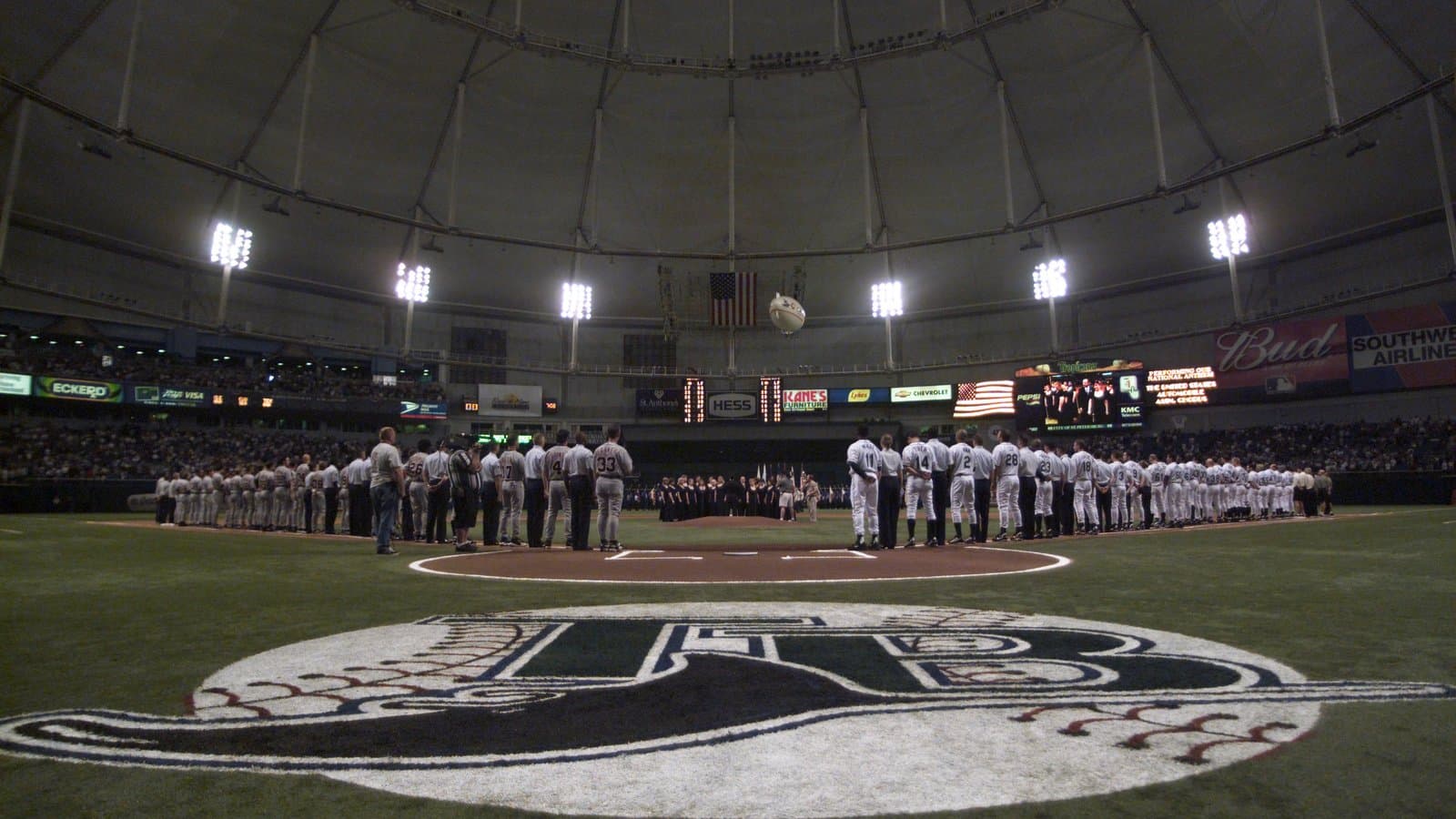
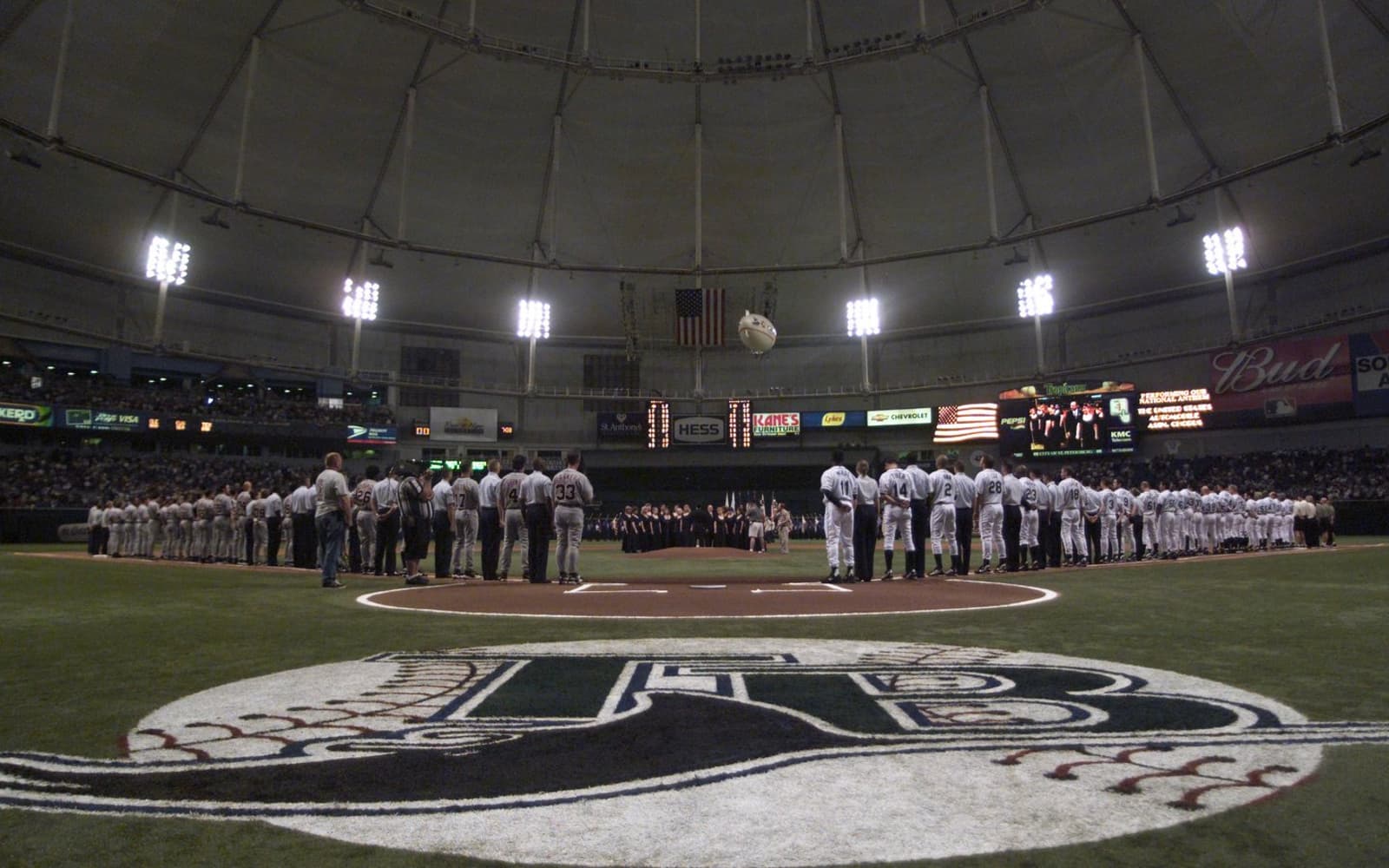
*Reporting note: The final result and scoring sequence were checked against MLB's completed game record. Associated Press and The Sporting News provide the cited earlier series context; their pregame coverage is not presented as independent confirmation of this final. The photograph shows Tropicana Field in 2002, not Game 4. No postgame interview or quotation is claimed.*
*ARCHIVE PHOTO: Tropicana Field on Opening Day 2002; archive venue photograph. Capture date(s): 2002-04-02. Photo: TSgt. Douglas K. Lingefelt / U.S. Air Force / Wikimedia Commons, Public domain (https://commons.wikimedia.org/wiki/File:Tropicana_Field_Opening_Day_2002.jpg). Cropped/resized; social cards add typography and gradient. Not a photograph of the October 2026 event. No endorsement implied.*
*Prepared with AI assistance for NewsCubby.*