Technology
Chicago delivery robots face biometric privacy claims. Both companies deny collecting the data.
The October 9 lawsuits raise a specific question: whether the robots collected protected biometric information, rather than ordinary camera images.
What to know
- The allegations concern face and hand measurements; they have not been established as facts by this reporting.
- Both companies dispute biometric collection. Serve says its systems are not designed to identify individuals or create biometric profiles.
- Illinois law distinguishes ordinary photographs from scans of face or hand geometry.
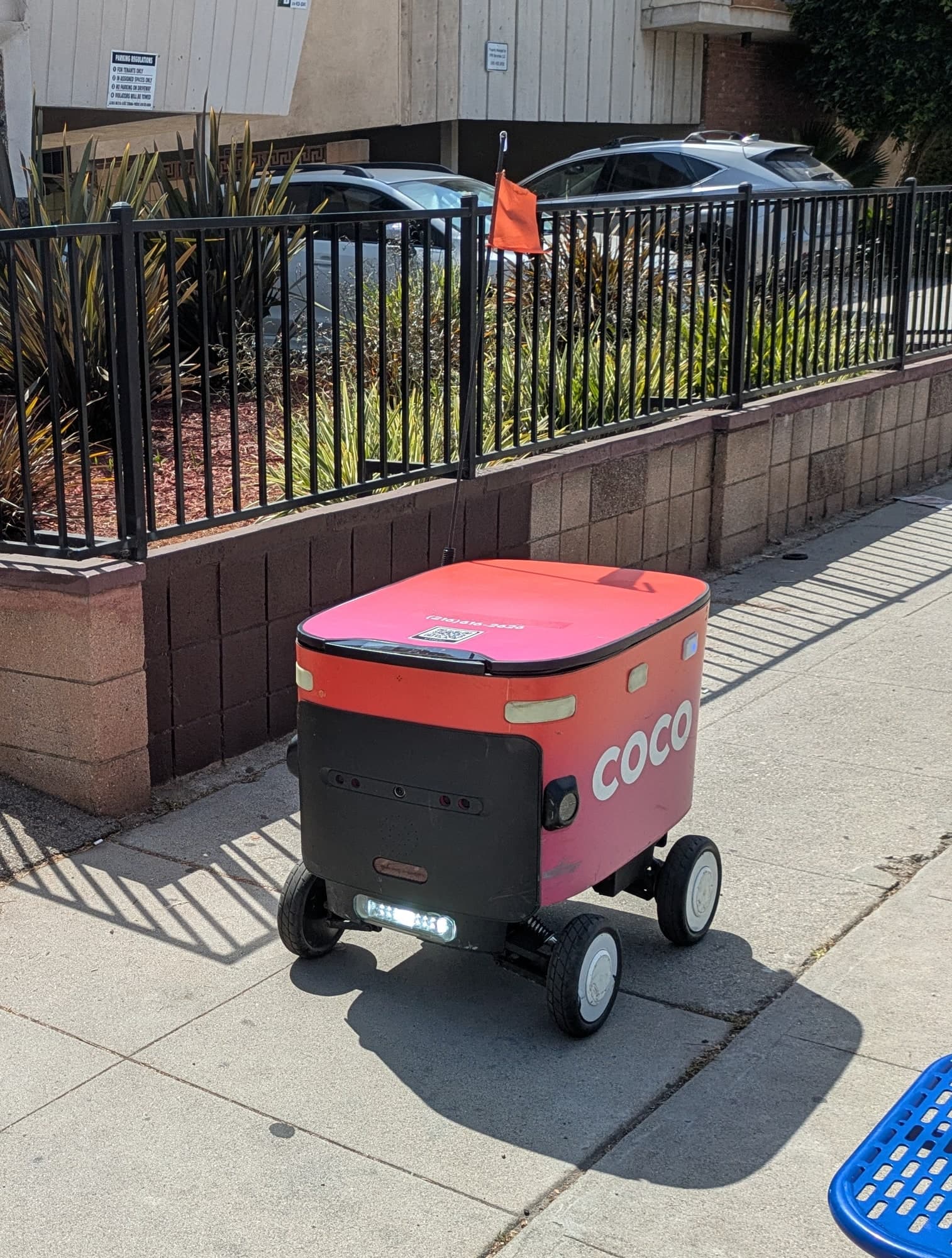
Two Chicago customers accuse Coco Robotics and Serve Robotics of collecting biometric information during deliveries without consent. Both companies deny collecting customers’ biometric data, according to Kade Heather’s Block Club Chicago reporting distributed by The Associated Press on October 20. The separate lawsuits were filed October 9, not October 20.
Why that distinction matters
The Illinois Biometric Information Privacy Act, known as BIPA, includes scans of face or hand geometry among its protected identifiers. Its definition expressly excludes photographs. It separately defines biometric information as information based on a biometric identifier used to identify an individual.
That means the presence of a camera does not, by itself, answer the legal question. A description of what a robot sees, what it calculates and what it retains would be needed to evaluate the claim. A photograph of a robot is not proof of a biometric scan.
What the law requires
For collection covered by BIPA, Section 15 generally requires advance written information about collection or storage, the specific purpose and duration, and an executed written release. Entities possessing covered data must also maintain a public retention and destruction policy. The statute sets conditions on disclosure and prohibits profiting from covered biometric identifiers or information.
These obligations make data handling more consequential than a simple question of whether a camera is switched on. Whether the disputed robot systems collected information covered by those rules remains contested.
What readers should watch next
The useful next development is evidence or a court ruling on the data practices, not another photograph of a robot on a sidewalk. Filing a complaint does not establish liability or mean that a class of customers has already won compensation.
NewsCubby reviewed the original published report and Illinois statutory text; it has not independently inspected the robots’ systems or obtained the underlying complaints. The companies’ denials and the unresolved status are essential to this story.