World
Fire devastates Hitler’s Eagle’s Nest; suspect detained as investigation continues
The Alpine fire has damaged a historically charged landmark. The inquiry, difficult access and questions about restoration all require careful distinctions.
What to know
- The Kehlsteinhaus was badly damaged in an October 23–24 fire; authorities are investigating suspected arson.
- A detained man is a suspect. Questions of responsibility, motive and criminal culpability remain matters for investigators and the courts.
- The site’s elevation and access route made the emergency response unusually difficult.
- The separate Dokumentation Obersalzberg says it was not affected by the fire and remains open.
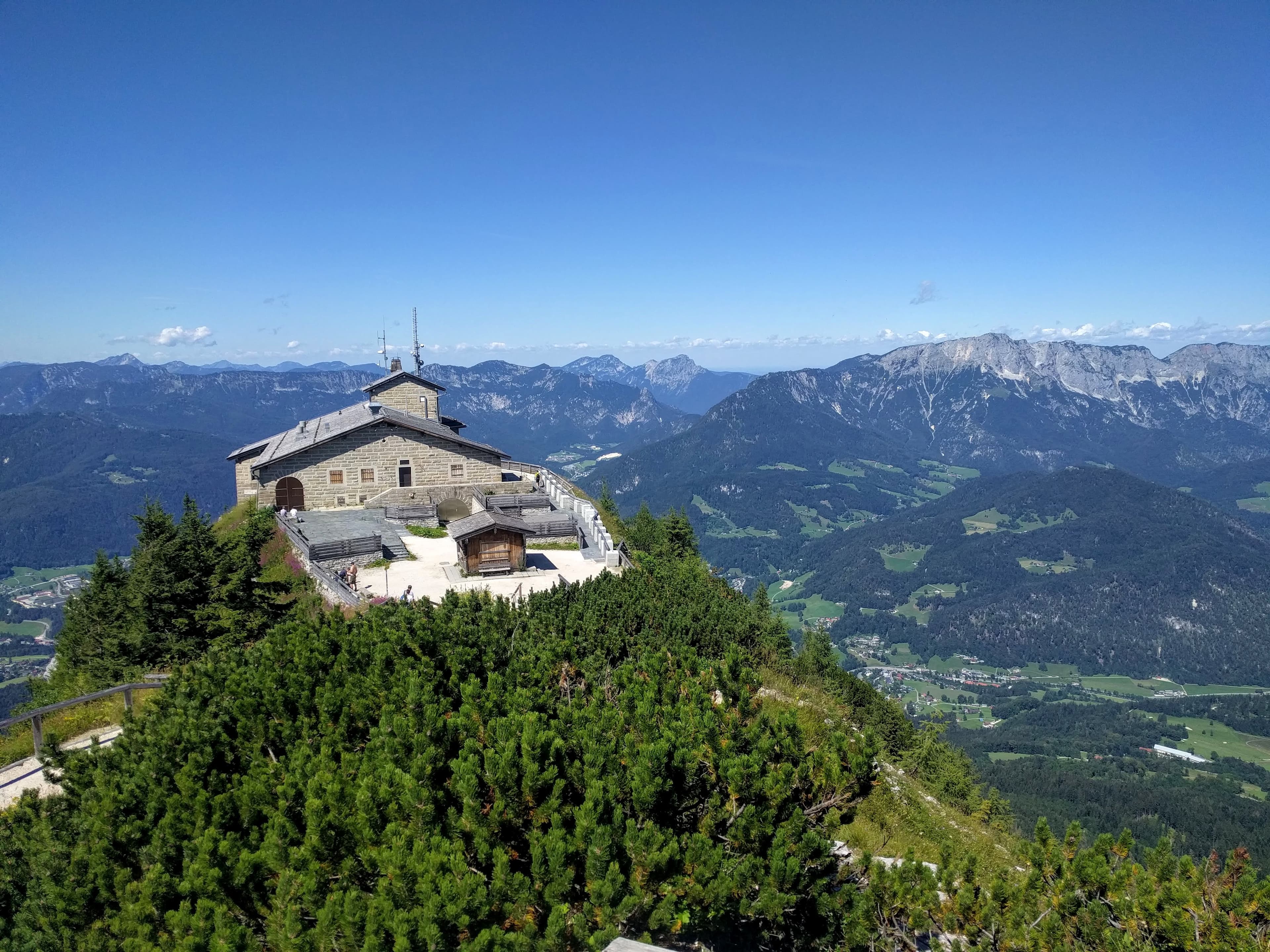
- Images of the intact building in this article are archive photographs, not pictures of the fire or the current damage.
A major fire has severely damaged the Kehlsteinhaus, the Bavarian mountaintop building internationally known as Hitler’s Eagle’s Nest, and German authorities have detained a suspect as they investigate possible arson. The blaze has left an immediate criminal inquiry and a longer argument over how a difficult historical site should be preserved and explained.
The fire began Friday night, October 23, with the response continuing into Saturday. Reporting by Bavarian public broadcaster BR24 describes a challenging operation at a remote Alpine location and a 33-year-old German suspect. An arrest is not a conviction, and investigators have not established a final public account of the motive.
The building is important for more than its connection to one individual. It formed part of the Nazi leadership’s protected Obersalzberg complex and later became a heavily visited restaurant and place of historical interpretation. Describing the damage accurately requires distinguishing the physical building, the exhibition associated with it and the separate documentation center farther down the mountain.
A fire high above Berchtesgaden
The Eagle’s Nest stands 1,834 meters—about 6,017 feet—above sea level near Berchtesgaden in southeastern Germany. Its location is central to both its tourist appeal and the difficulty of reaching an emergency there.
Initial BR24 reporting described an alarm during the evening, a difficult approach for large emergency vehicles and a building already extensively involved when crews arrived. Reports gave differing precise alarm times as information developed. The reliable sequence is that the alarm and initial response occurred Friday night, followed by firefighting and investigation on Saturday.
That distinction matters when a fast-moving story is reconstructed. A first dispatch time, the time of a call to an emergency center and the arrival of a particular crew can be different timestamps. They should not be turned into a definitive allegation of delay without the relevant operational record.
The Associated Press reported that snow and wind complicated the work and that crews withdrew overnight before further efforts Saturday. Weather and terrain affect how safely firefighters can approach, position equipment and remain at a structure. They also limit what observers can establish from a distant photograph.
The investigation remains open
BR24’s account of Saturday’s police and prosecution briefing reported that officers stopped a motorcyclist near the site and that authorities considered the 33-year-old a suspect in deliberately starting the fire. The report also described prosecutors seeking a psychiatric placement following an initial assessment.
Those developments do not decide the case. A preliminary mental-health assessment is not a final judicial determination of responsibility, and a suspected political motive is not an established explanation. The reporting should not be used to generalize about people with mental illness or to assign guilt to a wider group.
Police said they had no indication of additional offenders, according to BR24. That is a statement about the investigation at that stage. It does not justify inventing an accomplice, a coordinated campaign or a connection to unrest elsewhere in Europe.
The key next steps are what investigators can substantiate about the origin of the fire, the suspect’s actions and the legal basis for any further custody or charges. Publicly circulating theories are not substitutes for those findings.
What exactly is the Eagle’s Nest?
The name refers to the Kehlsteinhaus, not every Nazi-associated building around Berchtesgaden. Confusing nearby sites can produce false claims that a particular residence or entire historical complex burned down.
The official Dokumentation Obersalzberg describes the house as an extravagant tea house constructed in 1937–38 for Adolf Hitler, with a representational role designed to impress visitors. Its account says Hitler used it relatively rarely, especially after the beginning of the war. The site therefore should not simply be described as his everyday home.
That distinction changes how the building’s historical importance is explained. A place can matter because it reveals how political power presented itself, how access was controlled and how guests were received, even if a leader did not spend most of his time there.
The documentation center also challenges a familiar claim that the house was a present for Hitler’s fiftieth birthday. Its historical account says the available sources do not support that story and notes the building was completed and handed over in 1938. Repeating the birthday anecdote as settled fact would undermine an article intended to explain the site.
Why access is so complicated
The approach is part of the historical engineering associated with the building. Berchtesgaden’s official heritage listing describes a high Alpine road with tunnels, retaining structures and a substantial change in elevation, constructed alongside the house in 1937–38.
That layout is different from a city street with several alternative approaches. A narrow mountain road can constrain how large vehicles move, where crews can turn and how different emergency services share the route. A road used for visitor transport under ordinary conditions does not offer the same flexibility during a large fire.
The familiar visitor journey also involves an elevator within the mountain. An ordinary tourist access system should not be assumed usable during an emergency. Conditions that make a site distinctive for visitors can make rapid evacuation, equipment movement and structural assessment more difficult.
None of this establishes that damage was unavoidable or that the response was flawless. Those judgments would require incident records and professional investigation. It explains why a comparison with a ground-level building on an open urban road would leave out essential circumstances.
A restaurant and a place of remembrance
Since 1952 the building has operated as a mountain restaurant. Its postwar use placed a tourist business inside a structure inherited from the Nazi leadership’s restricted area. That combination makes interpretation especially important: a striking Alpine view can draw visitors whose knowledge of the building’s political history varies widely.
The official historical exhibition was developed by the Institute for Contemporary History on behalf of the Berchtesgaden foundation. Its purpose was to connect the setting with the history of the Nazi regime and the site’s later tourist use.
The loss or interruption of a place like this is therefore not just a question of restaurant tables or a recognizable roofline. Interpretation depends on giving visitors the context needed to understand why the structure was built and what its attractive surroundings can obscure.
At the same time, preserving a building associated with a dictatorship is not the same as celebrating it. The central editorial distinction is between maintaining evidence and endorsing the people who commissioned it. A responsible treatment must make that difference visible.
What was not damaged
The separate Dokumentation Obersalzberg explicitly says it was not affected by the Kehlsteinhaus fire and remains regularly open. That notice is important for readers who might otherwise assume all historical education at Obersalzberg has stopped.
The documentation center and the mountaintop building serve related but different functions. The center’s continuing work means the region’s history can still be examined even while access to the damaged house is uncertain.
For visitors, an older opening calendar or a pre-fire booking description should not be treated as proof that the mountain restaurant is available. Current information from the operator and local authorities takes precedence over an itinerary saved before the incident.
Rebuilding raises questions beyond replacing a roof
Bavarian Interior Minister Joachim Herrmann has indicated that the building should be restored, according to reporting of Saturday’s briefing. That is a stated intention, not a finished reconstruction plan or a confirmed reopening date.
An eventual proposal would need to address safety, the extent of surviving fabric and how historical interpretation returns. Recreating an exterior, restoring an original element and providing a modern replacement are different choices. The consequences for visitors and historical understanding depend on the actual plan.
The investigation and the preservation process also operate on different tracks. Investigators need evidence about the fire. Conservation specialists need an assessment of the structure. Tourism planners need reliable information about access. Announcing one objective does not complete the others.
The most useful next developments will be verified findings on the cause, the legal status of the suspect, a technical damage assessment and a concrete restoration proposal. Until then, the story is a severe fire at a historically charged site—with a criminal investigation underway and essential questions still open.
Sources, credits & editorial notes
- BR24: Saturday police and prosecution briefing, updated October 24
- BR24: initial response and Alpine access difficulties
- Associated Press: fire, weather and restoration intention
- Dokumentation Obersalzberg: historical exhibition and current notice
- Berchtesgaden: official heritage inventory, Kehlstein road
- Photo: Mdavids; CC0; archive August 26, 2020