U.S.
Epstein files: What DOJ's classified-records memo reveals
An older FBI summary identifies classified records. The law, review protocol and court filings show what it establishes—and what remains unknown.
What to know
- An FBI summary in a publicly released packet lists three records as classified at the time of the review and three others as declassified.
- CBS's October 28 investigation raises broader questions about missing material; NewsCubby has not replicated its full document-gap analysis.
- The disclosure law permits narrowly defined protections, including properly classified information, but prohibits withholding for embarrassment or political sensitivity.
- A September court order illustrates that judges can accept some privacy explanations while requiring further action on other disclosure issues.
A publicly released FBI memorandum identifies three records in the Epstein review that remained classified at the time it was written, including two requiring review by another government agency. The document has drawn renewed attention following an October 28 CBS News investigation questioning the completeness of the Justice Department's public releases. It establishes that classified material was part of an earlier review. It does not establish what is being withheld today or why every apparent gap exists.
The memo is available through the Justice Department's Office of Information Policy, in a packet posted October 9. Read alongside the disclosure law, the department's review instructions and a federal court order, it provides a more specific way to assess the controversy than treating every missing number as proof of concealment. The public question is whether the department can account for its decisions, while protecting victims and complying with the law.
What does the FBI memo actually say?
The summary is headed as part of the FBI's Epstein transparency project. A March 26, 2025, email immediately preceding it acknowledges receipt of an attachment describing classified material. On the summary itself, one listed record is associated with a Miami file and another with a New York file. Both are described as another government agency's documents, pending referral for classification review. The agency's identity is not stated in the visible text.
A third entry is identified as an FBI document. The note says it remains classified in a form where redactions are see-through, but may be treated as unclassified once the existing redactions are sealed so they no longer reveal the protected content. Separately, the summary lists three FBI records that had been declassified after review. These distinctions make the document more informative than a general reference to secret files.
They also set limits on what it proves. The summary describes a processing status at that stage, not an inventory certified as current on October 28, 2026. It does not disclose the underlying contents of the classified records. Nor does a referral identify a specific intelligence operation, foreign service or covert relationship. Those conclusions would require evidence that this document does not supply.
Why does the date of the record matter?
The March 2025 processing record predates the Epstein Files Transparency Act, enacted November 19, 2025. A record could have been classified during the earlier review and later declassified, released in redacted form or evaluated under a different disclosure rule. Whether that occurred must be traced through subsequent decisions. A historical classification label alone cannot resolve the current release status.
Conversely, a later assertion that the disclosure process is complete does not make the older record irrelevant. It gives the public a concrete reference to ask about: what happened to each identified item, which authority reviewed it, and what was ultimately released or withheld? Those questions are narrower and more answerable than speculation about the contents of an unseen collection.
CBS reported that its latest inquiries had not received a Justice Department response. The department's existing public position is that it released the material the law requires, with exclusions for categories including duplication, privilege and unrelated records. Presenting that position alongside the older memo makes the disagreement clear without declaring that one document, by itself, disproves every part of the department's account.
What does the disclosure law require?
The enacted statute covers a broad set of unclassified Justice Department records relating to Epstein and Ghislaine Maxwell, including investigative material, travel records and internal communications about charging decisions. It specifically prohibits withholding because a disclosure would cause embarrassment, reputational damage or political sensitivity. That protection applies even when the person involved is an official or public figure.
At the same time, the law identifies permitted categories for redaction or withholding, including victim information, prohibited abuse imagery, certain narrowly tailored protections for active investigations, images of injury or death, and properly classified national-security information. These are legal categories, not a universal explanation for every absent page. Invoking a category requires connecting it to the material at issue.
The law also calls for written explanations of redactions and a process to address classified material. That makes the adequacy of the explanation part of the transparency question. A public release can contain millions of pages and still leave a dispute about a much smaller set of decisions. Volume and compliance measure different things: one describes how much is available; the other concerns whether the applicable rules were followed.
How does classification differ from an ordinary redaction?
Executive Order 13526 sets a national-security framework for classifying information. Its standards require an authorized decision, an eligible category and an identifiable risk of national-security harm from unauthorized disclosure. The order also says information cannot be classified to conceal legal violations, prevent embarrassment, restrain competition or delay the release of information that does not require protection.
That framework is distinct from protecting a survivor's name in an otherwise unclassified document. Both can result in blacked-out text, but the legal justification is different. The distinction matters because a reader cannot determine the basis merely by looking at the size or number of black rectangles. A classification review, a privacy review and a privilege claim answer different questions.
The FBI summary itself illustrates the difference between releasing an intelligible portion and exposing protected text underneath a defective redaction. A properly flattened redacted document may be releasable even when the underlying text remains classified. Releasing an unclassified cover memo about that process likewise does not declassify the underlying documents. Each record's status must be assessed separately.
Do gaps in document numbers prove records were unlawfully removed?
A numbering gap is a useful lead, but not a complete explanation. CBS's investigation examined sequences used to label the released records and older case material. NewsCubby has not independently reproduced that large-scale comparison and is not adopting its numerical estimates as an original finding. The essential distinction is between identifying a potential omission and establishing why it happened.
The Justice Department's January review protocol helps explain one legitimate source of gaps. It tells reviewers that intermediate messages in an email chain can be treated as duplicates when a more complete version has already been reviewed for release. That is a method for avoiding repeated disclosure of the same content. It does not establish that every gap is a duplicate or that every duplicate decision was correct.
A useful reconciliation would connect an older identifier to a released equivalent or an applicable withholding decision. Without that connection, outsiders may be unable to distinguish repeated content from a unique missing page. Mistakes and improper withholding are different possibilities requiring evidence. Neither can be established simply by counting, and neither should be dismissed simply because a large release exists.
What has a court already examined?
In journalist Katie Phang's disclosure lawsuit, U.S. District Judge Emmet Sullivan issued a September 16 order addressing compliance with an earlier injunction. The opinion concerns specific examples, including redacted email information, requested interview notes, foreign-language material and explanations of redactions. It demonstrates why the legal process evaluates identifiable records instead of deciding the entire controversy from a general claim of completeness.
The court accepted documentation explaining that some redactions protected victims' information. It also discussed names and contact details of government and law-enforcement personnel, along with other disputed requirements. That mixed treatment is significant: a court can recognize a valid privacy protection while continuing to require justification or compliance elsewhere. A ruling about one set of emails does not authenticate every decision in the archive.
The opinion is not a criminal conviction, and the disclosure dispute does not establish that someone named in a file committed an offense. Investigative collections can contain tips, contact information, witness material and unverified claims. The Justice Department itself cautioned in announcing the releases that responsive material could include false submissions. Publication of an item is not a government guarantee of its truth.
What would meaningfully clarify the dispute?
The most useful next evidence would connect the old processing record to the final release decisions: whether the classified items were reviewed, whether protected content was separated, and which public records correspond to them. A clear explanation would allow a reader to follow the chain without demanding the exposure of survivors' identities or legitimately protected material.
The department's public library warns that technical limitations can make searches unreliable for some documents, including handwritten material. A failed keyword search therefore cannot prove that an item is absent. File identifiers, dates and an explanation of the review are more useful than a screenshot of an unsuccessful search. That does not eliminate concerns about omissions; it makes the method of checking them more reliable.
For now, the older FBI memo supports a limited but concrete conclusion: classified records were identified during the review process. Whether those records remain withheld today, and whether other gaps are lawful, mistaken or unexplained, requires a current accounting. Protecting victims and demanding that accounting are compatible objectives, not opposing choices.
*Want more? Explore today's headlines on NewsCubby and join My Day free to make NewsCubby part of your day.*
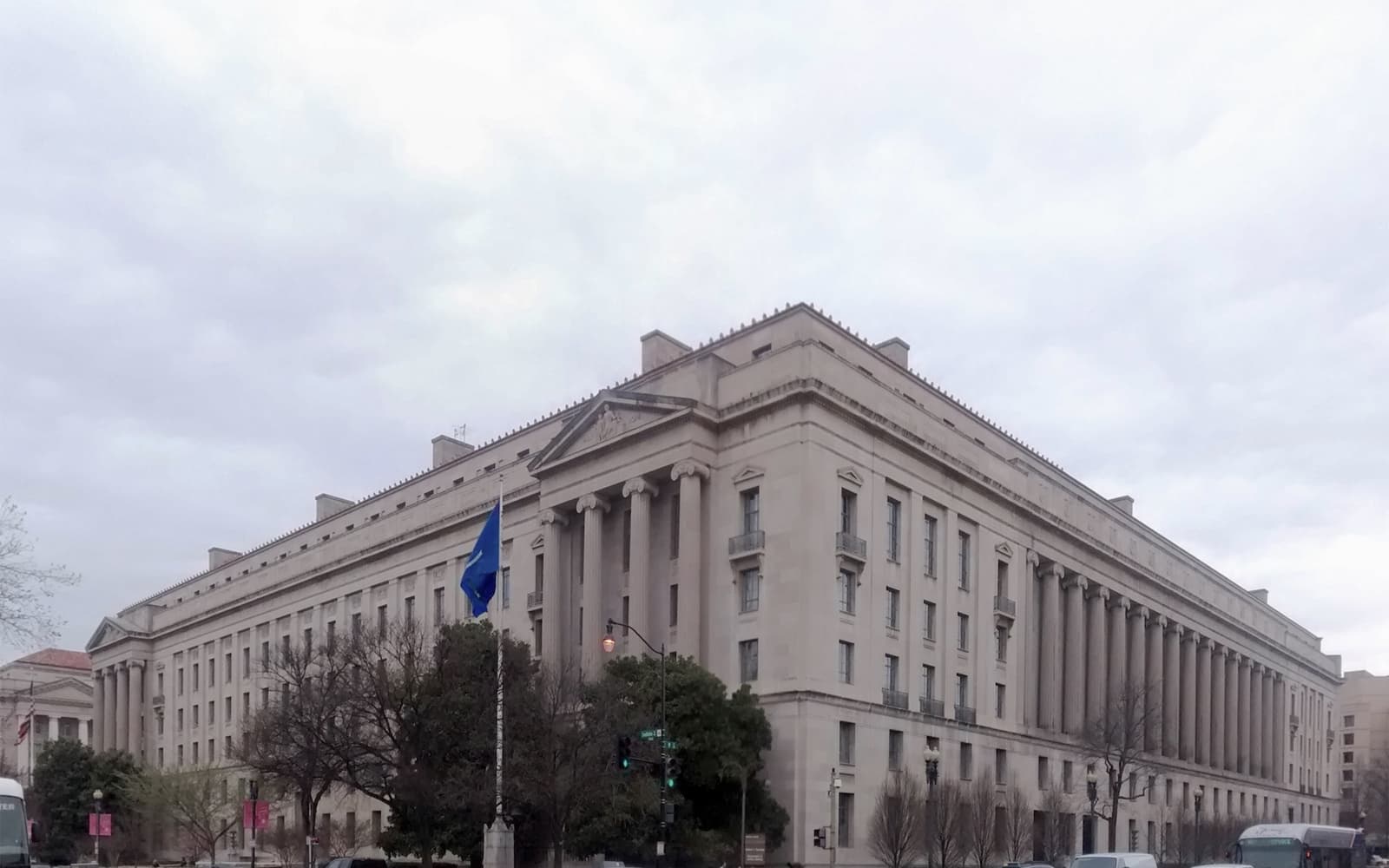
*ARCHIVE PHOTO: Robert F. Kennedy Department of Justice Building, Washington, in April 2014; archive institutional context. Capture date: 2014-04-04. Photo: Gunnar Klack / Wikimedia Commons / CC BY-SA 4.0 (https://creativecommons.org/licenses/by-sa/4.0). Resized/cropped; cards add typography and gradient. Adaptations retain the source license. No endorsement implied.*
*Prepared with AI assistance for NewsCubby.*
Sources, credits & editorial notes
- CBS News: October 28 investigation of Epstein release questions
- DOJ OIP: FBI review packet, classified summary at Bates 25-cv-3200_024
- DOJ OIP: Posting dates for October Epstein records
- GovInfo: Epstein Files Transparency Act, Public Law 119-38
- National Archives: Executive Order 13526 classification standards
- DOJ: January 4, 2026 attorney review protocol
- Phang v. Blanche: September 16, 2026 memorandum opinion and order
- DOJ: January 30 release statement and explanations of exclusions
- DOJ Epstein Library: Search limitations and victim privacy notice
- Photo: Gunnar Klack; CC BY-SA 4.0