Politics
Two ex-FBI officials charged over Hunter Biden testimony: what the case alleges
Prosecutors cite messages and meetings to challenge 2023 congressional answers. The former officials deny wrongdoing; the charges have not been proved.
What to know
- Nikki Cole Floris and Bradley Benavides face false-statement charges over separate 2023 House Judiciary Committee interviews.
- Prosecutors allege that their answers concealed knowledge of and involvement in Hunter Biden investigations; both defendants' legal teams reject the case.
- The government's affidavit cites records from 2019 through 2021 and witness interviews conducted in October 2026.
- The case began through a criminal complaint, not a grand jury indictment. A preliminary hearing is scheduled for Tuesday, October 27.
Two former senior FBI officials surrendered Friday after being charged with making false statements to Congress about their knowledge of investigations into Hunter Biden. The case concerns what Nikki Cole Floris and Bradley Benavides told House investigators in 2023 about events surrounding the 2020 election. It is a prosecution of the former officials, not a new criminal charge against Biden.
The Justice Department says emails, messages and witness accounts contradict their descriptions of the FBI Foreign Influence Task Force's work. The defendants dispute the accusations. Lawyers for Floris say the government is pursuing a politically motivated, factually unsupported case; attorneys for Benavides likewise rejected the charges as baseless and political, according to Reuters and The Associated Press.
The allegations have not been proved at trial. The 27-page affidavit made public by the department presents the government's account of probable cause. It does not establish guilt, and the former officials retain the presumption of innocence.
The charge is about testimony
The Justice Department identified Floris as a 46-year-old resident of Alexandria, Virginia, and Benavides as a 56-year-old resident of Aiken, South Carolina. It said both surrendered on arrest warrants following the filing of a complaint. The supporting affidavit was filed October 20 in federal court in Washington, while the department announced the case on October 23.
The cited offense is making a materially false statement in a matter within the legislative branch's jurisdiction, under 18 U.S.C. 1001(a)(2). The statute requires knowing and willful conduct; a disagreement over an institution's work or an inaccurate recollection does not automatically establish every element of that offense. In this case, prosecutors contend the specific answers were deliberate and mattered to the congressional inquiry.
The interviews occurred on different dates. Floris spoke to House Judiciary Committee investigators on July 19, 2023. Benavides gave his transcribed interview on September 28 that year. The affidavit says each was warned that knowingly providing false information to Congress could lead to prosecution. Those warnings are part of the government's argument about their awareness of the obligation to answer truthfully.
What the task force did
According to the affidavit, Floris was the deputy assistant director and functional head of the Foreign Influence Task Force from mid-2019 through mid-2022. Benavides was its section chief from mid-2019 through the 2020 election. The unit initially concentrated on Russian influence before expanding its attention to other countries' efforts to interfere in the election. It was disbanded in 2025.
The government's account says the Baltimore field office investigated Hunter Biden and that FBI headquarters units received information and coordinated with the case team. The affidavit describes the Criminal Investigative Division and the foreign-influence unit as having different responsibilities but exchanging information. Its central argument is that the defendants' involvement was more substantial than their later testimony acknowledged.
That distinction is important. Having responsibility for a criminal investigation, receiving information about it and assessing a possible foreign-influence angle are different activities. The case will turn on what the witnesses were asked, what they knew and what their answers meant in context—not simply on whether a task force's name appeared somewhere in a file.
The allegations against Floris
The affidavit quotes Floris as denying personal involvement in discussions about Hunter Biden within the task force. Prosecutors contrast those answers with messages and meetings they say show repeated contact with investigators. They allege she both received updates and passed information to colleagues during 2020 and 2021.
One example concerns a September 2020 report by Senators Chuck Grassley and Ron Johnson. Prosecutors say Floris circulated the report on the day it appeared and provided a summary to an FBI colleague. They compare those records with her 2023 statements about not having seen the report or having contemporaneous familiarity with the senators' inquiry.
Another set of examples concerns the FBI's response when reporting about Biden's laptop emerged in October 2020. The affidavit says Floris received questions, forwarded messages and approved additions to talking points. It also cites later messages about a subject investigators called Sportsman, which the affidavit identifies as the FBI's code name for Hunter Biden.
These are the prosecution's selections and interpretations of records. Their existence in an affidavit does not mean the defense has accepted the government's characterization or that the entire context has been tested in court. Floris's lawyers have directly challenged the factual and political basis of the case, rather than conceding that the listed communications prove a crime.
The allegations against Benavides
For Benavides, prosecutors focus partly on his statements that he learned from a Wikipedia article, while preparing for his 2023 interview, that the FBI possessed the laptop. The affidavit quotes several exchanges in which investigators asked about his knowledge during his time at the bureau and whether it came from sources beyond later media reading.
The government says contemporaneous communications contradict that account. It cites his participation in discussions following the October 2020 news coverage, requests for information from the case team and an October 22 meeting invitation concerning the laptop. A witness interviewed in October 2026 told investigators that the participants discussed the FBI's possession of the laptop's contents at that meeting, according to the affidavit.
The filing also describes an exchange in which Benavides proposed wording for the FBI director's conversation with Senator Mark Warner. In the government's account, that work is evidence of contemporaneous awareness, not simply later exposure to an account on the internet. Whether it proves the charged knowledge and intent remains a question for the proceedings.
Benavides's attorneys have called the complaint baseless and politically motivated. Their response is relevant to the allegations against him specifically; it should not be replaced with an assumption that silence from a defendant means agreement with prosecutors. The public dispute now has both an accusation and an explicit defense rejection.
Why prosecutors say the answers mattered
Section 1001 concerns material false statements, not every inconsequential error. The affidavit addresses this issue through an account from a congressional staff member who attended the 2023 interviews. The staffer told investigators that the answers affected the committee's direction and prevented follow-up efforts, including additional interviews and requests for documents.
The prosecution therefore advances two linked propositions: that the statements were knowingly false and that they affected an authorized congressional inquiry. Those are allegations the government must support. A document showing that someone received an email could be relevant, but it does not eliminate questions about what the person understood, remembered or was specifically asked years later.
The affidavit also refers to a task-force project called Round River and describes the government's view of its relationship to reporting about Biden and possible Russian disinformation. Those passages provide background to the claimed involvement. They should not be treated as a judicial determination that every intelligence assessment mentioned in the filing was right or wrong.
Three different timelines
Understanding the case requires keeping three periods separate. The underlying investigative communications largely concern 2019, 2020 and 2021. The statements now charged were made during the 2023 congressional interviews. The criminal investigation described in the affidavit includes fresh witness interviews in October 2026.
That means the prosecution is comparing statements made years after the underlying events with both contemporaneous documents and later witnesses' recollections. Documents and recollections are different kinds of evidence. The chronology can help readers assess the government's argument without assuming that all the events happened during a single investigation or election campaign.
The filing's descriptions of earlier allegations involving Hunter Biden are also background, not additional charges against him in this case. Repeating every accusation contained in an investigative document would obscure the narrower question before the court: whether these two defendants knowingly made materially false statements to Congress.
What happens next
Axios reported that the case was brought through a complaint and that the pair had not been indicted by a federal grand jury. NPR reported that they are due back for a preliminary hearing on Tuesday. That is October 27, based on the October 23 report; it is not a trial date or a prediction of the outcome.
The distinction between a complaint and a verdict matters here. The affidavit seeks to establish probable cause to proceed. A criminal conviction requires proof beyond a reasonable doubt. The Justice Department's own announcement explicitly states that the charges are allegations and that each defendant is presumed innocent unless and until that standard is met in court.
The next substantive developments will be the hearing, any additional charging documents and the parties' presentation of the records and testimony in dispute. The existing filing gives a detailed account of why prosecutors brought the case. The defense responses make clear that the account will be contested. Neither the political controversy surrounding Hunter Biden nor the force of a prosecution announcement resolves that contest.
Sources, credits & editorial notes
- DOJ: October 23 charges announcement
- Federal affidavit: United States v. Floris and Benavides, October 20
- 18 U.S.C. 1001: federal false-statements statute
- Reuters: charges and Floris defense response
- Associated Press: defendants reject allegations
- NPR: first court appearance and preliminary hearing
- Axios: complaint rather than grand jury indictment
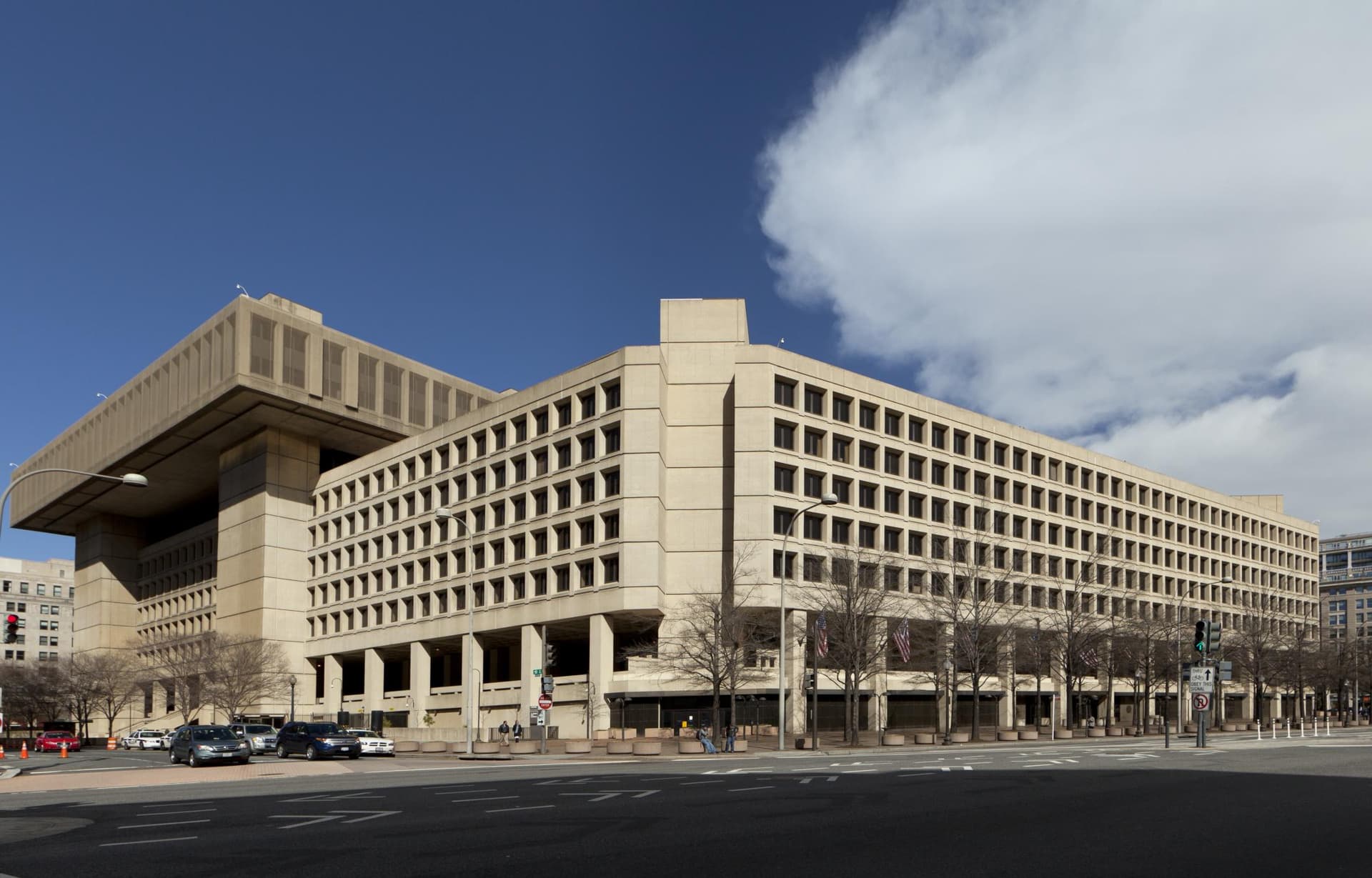
- Photo: Carol M. Highsmith / Library of Congress; public domain