Health
Flu is rising early, but U.S. activity remains low: what to do now
The latest CDC update signals an early increase, not a nationwide crisis. How to read the measures, prepare for care and protect vulnerable people.
What to know
- CDC's October 23 update covers the week ending October 17, rather than infections occurring on the publication day.
- National flu activity remains low even as several indicators have risen over recent weeks.
- Different surveillance measures answer different questions; a symptom-based visit is not necessarily a confirmed flu infection.
- Vaccination, a plan for prompt treatment and precautions when sick offer useful actions without predicting how severe the season will become.
Flu activity is picking up ahead of the winter travel and holiday season, but the national picture is still one of low activity. Those two facts belong together. An early rise is a reason to prepare, especially around people vulnerable to serious illness; it is not evidence that every community is already experiencing a severe outbreak.
Read the direction and the level separately
The dated CDC FluView report describes an increase in several measures since late August or early September. Its headline assessment remains low national activity. Earlier-than-usual movement does not establish the eventual peak, duration or total burden of this season. Those outcomes cannot be read from one autumn update.
The previous week's report had already described an early increase. That gives the current news a more useful frame than a single dramatic comparison: officials are following a developing pattern. A higher starting point deserves attention without turning an unfinished season into a record that has already been set.
What the surveillance measures actually count
CDC's surveillance methods bring together laboratory, medical-visit and other reporting systems. A test-positivity percentage describes the share of tested specimens found positive, not the share of all Americans infected. Medical visits describe people who sought care within participating systems, not every illness in every household. These are complementary windows, with different denominators and limitations.
Reading them together is more informative than choosing whichever number sounds most alarming. For example, an increase in tests, a change in who gets tested and an increase in infections can affect the interpretation of laboratory results. That does not make the data useless. It makes the description of the measure essential to understanding its meaning.
A national average is not a neighborhood forecast
CDC's respiratory illness data channel provides a broader setting for flu, COVID-19 and RSV. Local conditions can differ from a national summary, and the viruses do not necessarily move together. A low national flu assessment cannot tell a parent what is circulating in a particular classroom or a resident what is happening in a specific nursing home.
The practical response is to use local health-department information alongside national surveillance, while checking the date each measure covers. A local notice and a national report may describe different periods. Apparent disagreement can reflect geography, reporting delay or the type of illness being counted rather than a contradiction about the same patients.
Symptoms help identify illness, not its exact cause
The CDC's flu overview describes influenza as a respiratory infection that can affect the nose, throat and lungs. Its onset can be abrupt, with fatigue, aches and respiratory symptoms. The word flu is sometimes used casually for many illnesses, but that loose usage is not a laboratory diagnosis.
The agency's diagnosis guidance explains that similar symptoms can come from other viruses. A clinician may evaluate symptoms and decide whether testing would change care. Someone should not conclude that a cough must be influenza simply because flu is in the news, or assume that the absence of one familiar symptom excludes it.
Who has more reason to make a plan
CDC's higher-risk guidance identifies older adults, young children, pregnant people and people with certain chronic or immune conditions among those more vulnerable to complications. The relevant issue is not whether everybody faces the same risk. It is whether a particular household includes someone for whom delay in seeking advice could matter more.
A useful preparation step is identifying how to contact that person's clinician and which symptoms should prompt a call. Keep an accurate medication list available and know how to reach care outside normal office hours. This is planning for access, not a recommendation to choose or stockpile a prescription treatment without an assessment.
Vaccination is preparation, not instant protection
CDC's seasonal vaccine information recommends annual vaccination for people six months and older, with rare exceptions. It explains that immune protection takes about two weeks to develop. Vaccination reduces risk; it does not establish that a vaccinated person can never become infected or transmit illness.
The agency's current clinical considerations discuss age-appropriate products, special circumstances and timing. For most people needing one seasonal dose, September or October is the preferred period, while vaccination can continue later during circulation. Questions about a previous severe reaction, pregnancy, immune suppression or the appropriate product belong with a qualified health professional.
Why last season's shot is not the whole answer
The CDC's vaccine misconceptions guidance explains that immune protection can decline and circulating viruses change. Annual vaccination addresses those issues; it is not evidence that a person did something wrong if they become sick despite being vaccinated. Protection against illness and protection against its worst outcomes are related, but different, questions.
That distinction helps families evaluate claims about vaccine failure. An anecdote about one infection cannot measure how many hospitalizations a vaccination program prevented. Equally, a promise that vaccination guarantees a symptom-free winter would be too strong. The reasonable expectation is risk reduction under the applicable recommendations, not certainty about an individual's entire season.
Treatment works on a different timetable
CDC's flu treatment guidance says prescription antiviral medicines work best when started early, ideally within two days of symptom onset. People at higher risk or with severe illness should seek prompt medical advice. The two-day window is not an instruction to give up on care after that point; a clinician may still recommend treatment in important circumstances.
Its guidance for children emphasizes early assessment for children at greater risk or those hospitalized with suspected or confirmed influenza. The choice and dosing depend on the patient. Antibiotics do not treat influenza itself, and another person's prescription is not a substitute for the child's own clinical assessment.
Reduce the chance of passing illness onward
CDC's guidance for people who are sick recommends staying home and away from others until symptoms improve overall and there has been no fever without fever-reducing medicine for at least 24 hours. It recommends additional precautions for the following five days, especially around vulnerable people. Separate healthcare or workplace rules may also apply.
Its cleaner-air recommendations describe ventilation, filtration and outdoor gatherings as ways to reduce exposure. These measures are particularly relevant to crowded indoor settings. A family can consider which options are practical before someone becomes ill, rather than treating an open window or one device as a guarantee of safety.
Put a percentage change in perspective
A hypothetical increase from two positive tests out of 100 to three out of 100 is a 50% relative increase, but only a one-percentage-point increase in positivity. Both descriptions can be mathematically correct while conveying different impressions. Neither says that half the population newly became infected. These invented numbers illustrate the calculation; they are not the current FluView findings.
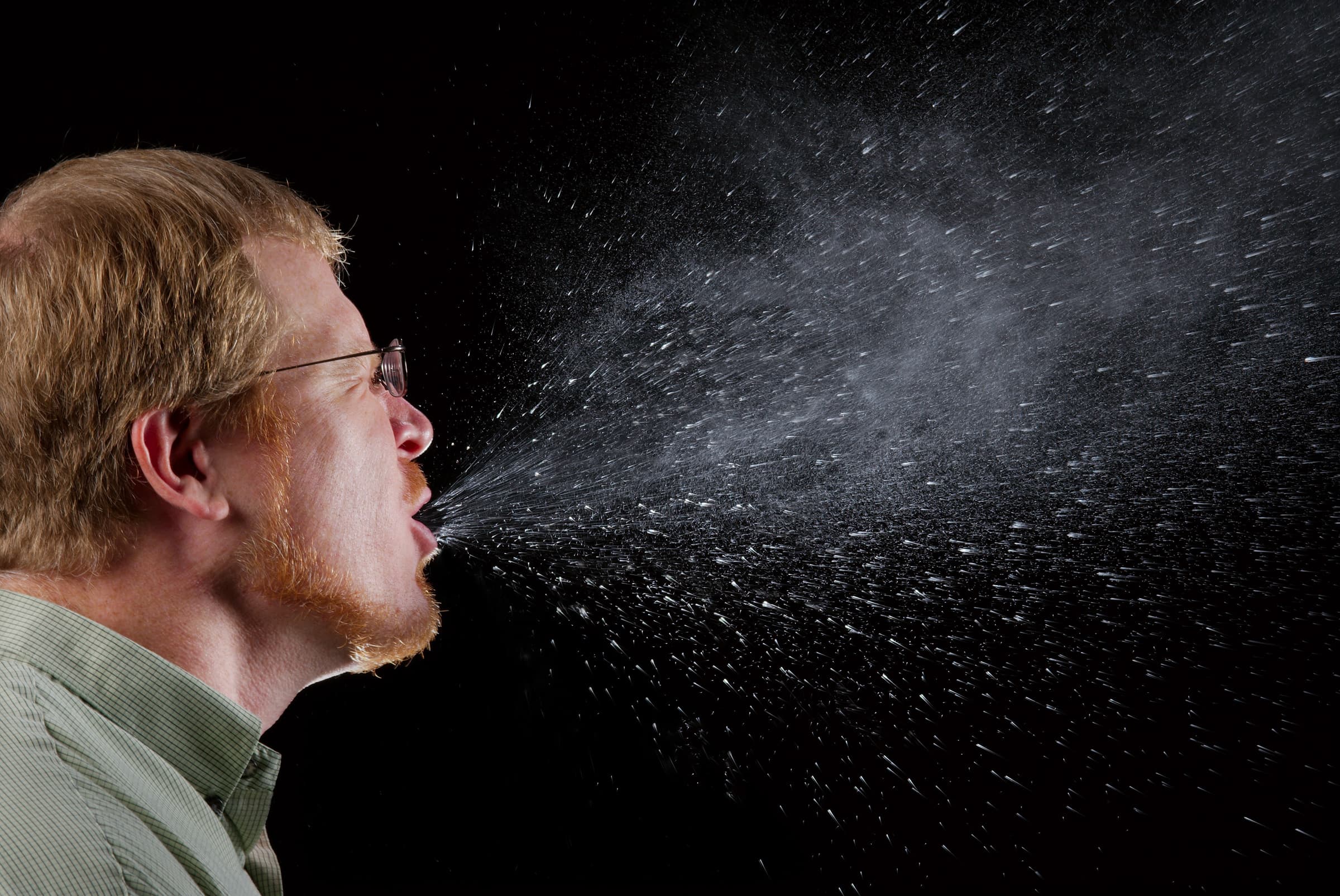
CDC's healthy-habits guidance adds ordinary measures such as covering coughs and washing hands to vaccination and cleaner air. Planning around a vulnerable relative can involve several of these measures together. The useful decision is which exposures can reasonably be reduced, not whether one precaution eliminates every possible infection. Clear measurement and practical prevention serve different purposes, but both are more helpful than a frightening percentage without its denominator.
Know when the question is urgent
CDC's warning-sign guidance calls for immediate medical care for concerning symptoms such as difficulty breathing, persistent chest pain or confusion; children have additional warning signs, including dehydration and poor alertness. The agency's list is not exhaustive. Serious deterioration needs attention regardless of whether a test has confirmed influenza.
For an otherwise stable household, the current signal supports sensible preparation rather than panic. Check vaccination and care access, reduce exposure when someone is sick, and follow dated local information. The important question for the coming weeks is whether the early upward pattern broadens and intensifies. Today's low national level leaves that question open; it does not answer it in advance.
Sources, credits & editorial notes
- dated CDC FluView report
- previous week's report
- surveillance methods
- respiratory illness data channel
- flu overview
- diagnosis guidance
- higher-risk guidance
- seasonal vaccine information
- current clinical considerations
- vaccine misconceptions guidance
- flu treatment guidance
- guidance for children
- guidance for people who are sick
- cleaner-air recommendations
- healthy-habits guidance
- warning-sign guidance
- Photo: James Gathany / CDC; public domain
- Image reuse terms