Entertainment
Lily Allen turns Ticketmaster's blue dots into a Halloween costume
The singer transforms a concert seating map into a Halloween joke. We explain the costume, the tour context and what the blue dots actually mean.
What to know
- Allen's October 30 Instagram post presents a Halloween outfit inspired by Ticketmaster's seating maps and uses the hashtag #bluedotfever.
- Blue seats on Ticketmaster indicate tickets available within a shopper's selected search criteria; the costume is a joke, not a financial report.
- Earlier changes to North American tour venues provide context, but the Halloween post does not announce a new cancellation or establish why a particular show changed.
Lily Allen has turned a concert seating chart into her Halloween costume. The singer shared the look on Instagram on October 30: a white outfit patterned with rows of blue seats, a stage label at the neckline and a caption that turned online criticism into the punch line. The costume connects a recognizable ticket-buying screen with the scrutiny surrounding live music, without requiring viewers to know every detail of her tour.
The costume's small details explain the joke
In Allen's original Instagram post, the white puffer jacket and matching bodysuit carry a pattern that initially resembles polka dots. Look more closely and the rows become a venue's seating plan. At the neckline, the word identifying the stage occupies the position a shopper would expect to find at the front of a concert map. Different colored markings complete the impression of a ticketing interface translated into clothing.
Allen captioned the photographs, “Never beating the allegations. #bluedotfever.” The phrase is self-mocking internet language in this context. Rather than choosing a completely unrelated character, she has made the conversation around her own concerts the subject of the outfit. The result can be understood as both a seating chart and a response to the comments that seating charts inspire.
The outfit's strongest feature is its specificity. A conventional Halloween costume usually points to a character, creature or famous person. Allen chose a screen that many music fans recognize from trying to select concert seats. The setting has changed from a browser window to a jacket, but the arrangement of dots and the stage marker preserve the reference.
What the blue dots actually mean
Ticketmaster's official explanation of its interactive seat map describes blue seats as available tickets matching the user's search. Online, “blue dot fever” has become a mocking shorthand for a map with substantial availability. It is a description used in fan conversation, not a standardized measurement of an artist's commercial performance.
The difference matters when a costume becomes a news story. A large number of visible seats may prompt questions, but it does not supply a complete account of purchases, revenue, costs or attendance. Nor does a playful reference to that interface prove the reason an event moved or was cancelled. NewsCubby is reporting what Allen posted and explaining the reference, rather than treating the joke as a box-office disclosure.
The map also serves the shopper, which is a different purpose from judging a tour. Someone looking for a particular price range or seating area is viewing an answer to that request. A screenshot copied into a social feed can lose the event date, the search settings and other context. Reading it as a definitive verdict about an artist asks it to answer questions it was not designed to settle.
The outfit uses more than one map symbol
The blue dots are the main reference, but they are not the only details. The photographed costume also includes pink circular-arrow markings and green check symbols. Ticketmaster's interactive-map guide identifies the pink resale mark as tickets offered by other fans. Its help-page legend identifies a green check as a selected seat. The costume borrows the interface's small distinctions as well as its overall arrangement.
That gives the design another layer: it recreates the process of looking, comparing and choosing. A jacket can establish the broad idea from a distance, while the smaller symbols make the reference more precise up close. The outfit's combination of repeated rows and recognizable selection marks is why a closer view reveals more than an ordinary blue-and-white print.
The resale distinction is useful in reading an actual ticket map, too. A resale listing is different from a ticket that no one has previously purchased. Shoppers need to read the ticket type and details rather than treating every visible listing as the same thing. This is part of what makes the interface recognizable to concert fans, even when it has been transformed into clothing.
The real tour changes predate Halloween
There is established background to the reference. LOS40 reported in July that several North American stops changed venues, including the San Francisco engagement that moved to Oakland. That report also described a Montreal cancellation and a Seattle addition. These were earlier schedule changes, rather than developments announced by the October 30 costume post.
For readers encountering the story through a cropped photograph or a short video, the chronology is useful: the venue changes happened first, and the costume followed months later. No verified new October 31 cancellation announcement was found in NewsCubby's fresh check for this story.
A theatrical album provides another connection
The reference also sits alongside Allen's recent creative work. Her label BMG announced West End Girl as her fifth studio album, released after a seven-year gap. Official Charts dates the release to October 24, 2025. The title belongs to the record and the show, rather than to a new release unveiled with the Halloween outfit.
Promoter Frontier Touring's description of the live production emphasizes theatrical presentation and the album's running order. That gives listeners useful context: this tour was conceived as a particular staged work, not simply an unspecified collection of familiar hits. The promoter's account describes the intended format; it is not independent proof of how every audience member experienced an individual performance.
Seen alongside that approach, the Halloween costume offers a smaller example of using visual choices to carry a story. The stage label and the seat pattern communicate their reference together. That is an interpretation of the visible design, not a claim that Allen announced a new stage production, sponsorship or collaboration with the ticketing company.
The pop career behind the Halloween headline
Allen's music career gives the self-directed joke a longer backdrop. Official Charts records an unbroken run of five UK Top 10 studio albums, beginning with Alright, Still in 2006 and continuing through West End Girl. Her second album, It's Not Me, It's You, and the later Sheezus both reached Number 1. Those are UK chart achievements, a different measurement from an individual concert's ticket availability.
Her earlier singles also remain useful reference points for listeners discovering her through the costume. Smile reached Number 1 in 2006; The Fear followed at Number 1 in 2009. The present story adds an internet-era visual joke to a career that already connects several generations of pop listeners. It does not require treating Halloween attention as equivalent to music sales or chart performance.
How much attention did the post receive?
At 8:24 a.m. Eastern on October 31, the original Instagram page's public metadata displayed 49K likes and 390 comments. A separate Pop Base post on Bluesky had 354 likes and 33 reposts at the same check. The Instagram figure is rounded as the platform displayed it. These measurements refer to those specific posts, not every upload of the photographs.
They also cannot be added together to produce a unique audience. The same person may encounter a costume on multiple platforms, and a news account's engagement is distinct from the artist's own. The numbers establish observable circulation and reaction at a stated time. They do not establish that everyone liked the look, that the costume was the day's most popular, or that engagement will continue at the same pace.
Where to see the original
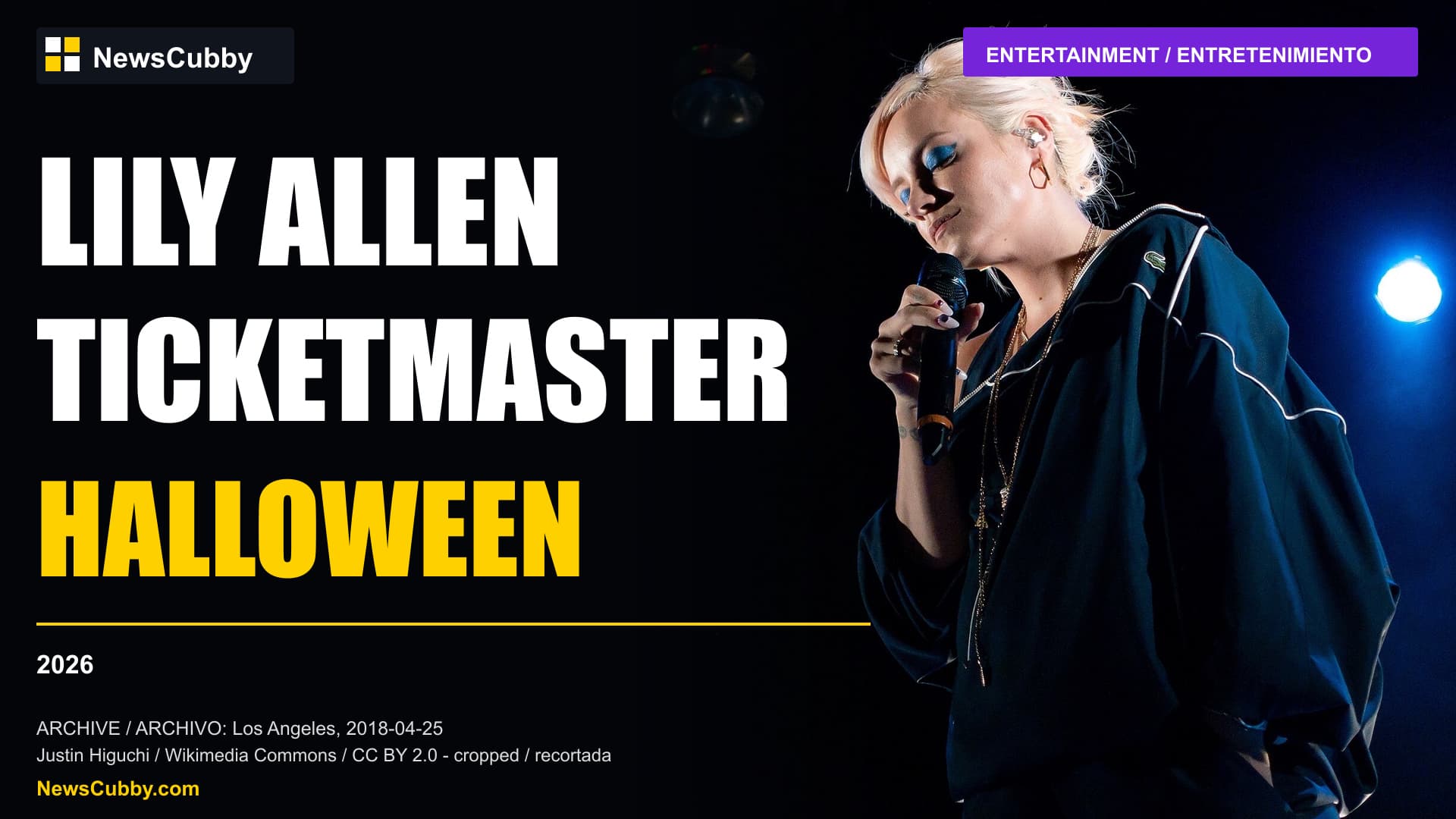
The original Instagram post is the clearest place to inspect the design and Allen's own caption. Readers comparing reposts should distinguish the artist's words from descriptions or jokes added by other accounts. NewsCubby's accompanying archive photograph shows Allen at an earlier performance; it does not depict the new Halloween outfit.
For now, the new development is the costume itself: Allen has taken a recognizable symbol from the conversation around concert tickets and made it part of her Halloween look. Its humor depends on that recognition, while the underlying questions about individual shows still require their own evidence.
NewsCubby articles are prepared with AI assistance. Reporting and social measurements checked October 31, 2026; source links and image credits are provided with this article.
Reporting Sources
- Allen's original Instagram post
- official explanation of its interactive seat map
- interactive-map guide
- LOS40 reported in July
- BMG announced West End Girl
- Official Charts dates the release
- Frontier Touring's description of the live production
- Official Charts records
- Smile reached Number 1
- The Fear followed at Number 1
- Bluesky