Politics
Ohio race shifts toward Acton as Ramaswamy ad divides Republicans
Cook moved the governor’s race to Lean Democrat; earlier polling cannot establish the controversial advertisement’s effect.

What to know
- Cook changed the Ohio governor's race from Toss Up to Lean Democrat on October 23, favoring Acton while leaving the outcome competitive.
- Trump and Ramaswamy have defended the advertisement; Governor Mike DeWine and other Republicans have criticized it.
- A Marist poll released October 20 put Acton ahead among likely voters, but its interviews took place October 15–18, before the current advertising uproar.
- A race rating, a survey estimate and a certified election result measure different things.
- Ohio is already voting, so subsequent developments occur after some residents have cast their ballots.
Ohio's governor's race has moved from a toss-up to an advantage for Democrat Amy Acton in the Cook Political Report's assessment, a significant late-campaign change as Republican Vivek Ramaswamy defends an advertisement featuring her estranged mother. Cook announced the shift October 23, saying its concerns about Ramaswamy's position had developed over several weeks rather than starting with one advertisement.
The rating is an analyst's judgment about the contest, not an election result, a new vote count or proof that the advertisement changed a measurable number of minds. It adds a new electoral development to a controversy NewsCubby previously covered: a Republican campaign facing public criticism from prominent members of its own party while President Donald Trump urges it to continue.
What actually changed in the forecast
Cook's publicly available announcement describes the campaign's decision to air the personal attack as confirming a trajectory its analysts had already observed. The organization moved the race from a category without a favored party to one indicating a Democratic advantage. That is a qualitative assessment of a particular contest, not a statement that Ohio as a whole has changed party allegiance.
The wording also matters for timing. The change was announced Friday, October 23. Calling it a new Saturday poll would be wrong. Cook's public notice explains its reasoning but does not present a fresh experiment comparing voters who saw the advertisement with otherwise similar voters who did not.
For readers, the useful conclusion is limited but meaningful: a prominent election-analysis organization now sees Acton as better positioned than Ramaswamy. That makes turnout, remaining campaign decisions and later polling worth watching. It does not make votes already cast irrelevant or turn Election Day into a formality.
Why the ad has divided Republicans
The advertisement features Acton's long-estranged mother questioning her character and account of her childhood. Acton has publicly described childhood sexual abuse and has said she has had no contact with her mother since she was a child. The family history is central to the criticism that the campaign is exploiting trauma rather than simply testing a candidate's public record.
ABC News reported that Acton's stepfather was charged, pleaded not guilty and left before trial; he later died. NBC News separately described court documents it obtained concerning the 1978 indictment. Those reports provide important context, but a charge that never reached trial must not be presented as a conviction. There is no need to reproduce graphic details to explain the political dispute.
Acton has condemned the advertisement. Ramaswamy has said it is about truthfulness rather than childhood abuse. His campaign told NBC News it planned a $4 million advertising push. Those are the opposing campaign positions and the spending plan as reported, not a finding by NewsCubby about either candidate's motives or the amount ultimately spent.
DeWine called for the advertisement to be withdrawn, according to ABC and NBC. NBC also reported that Senator Jon Husted said he would not have run it and that Representative Nancy Mace criticized it. These are consequential disagreements within the Republican coalition, though opposition to a particular advertisement does not automatically equal support for Acton.
That distinction is particularly clear in DeWine's case: NBC reported that he continued supporting the Republican ticket, including Ramaswamy, even as he rebuked the advertisement. Readers should not turn an advertising criticism into an endorsement that the person has not made.
Trump is pushing in the other direction
Trump defended the advertisement publicly Thursday and again Friday, according to ABC's reporting. He portrayed the mother's criticism as legitimate campaign material and rejected suggestions that the family background should change his view. At his Iowa rally, he encouraged Ramaswamy to stay with the approach.
Ramaswamy likewise defended it at a Friday campaign stop. NBC reported that he accused the media of mischaracterizing the message. The campaign has therefore not simply encountered criticism and immediately changed course; its own response is part of the story voters are evaluating.
The disagreement illustrates a campaign-choice problem rather than a neatly unified party response. A candidate can receive encouragement from a president while hearing objections from a governor and other Republicans. Whether voters follow either camp, reject the premise or focus on unrelated issues remains a question for evidence rather than assumption.
What the Marist poll can and cannot show
Marist's October 20 release reported Acton at 50 percent and Ramaswamy at 43 percent among likely voters. Its Ohio interviews were conducted October 15–18. The release describes a multimode survey of 1,176 registered voters and gives a margin of sampling error of plus or minus 4.5 percentage points for likely-voter results.
These details are essential to interpreting the numbers. Registered and likely voters are different analytical groups. A margin reported for an individual estimate should not be treated as an exact prediction of the eventual winning margin. Sampling error is only one source of uncertainty; participation and changes in preference also matter.
Most importantly, the field dates come before the advertising controversy examined here. The poll is evidence that Acton had strength before Cook's latest decision. It cannot demonstrate how much the advertisement helped or hurt either candidate after voters saw it. A claim that the ad caused a seven-point shift would require a different comparison and is not supported by this release.
Marist also asked about Ohio's Senate race and congressional preferences. Those are separate questions involving different candidates and choices. A favorable result for one Democrat is not a license to assume identical behavior in every contest on the same ballot.
Voting is already part of the story
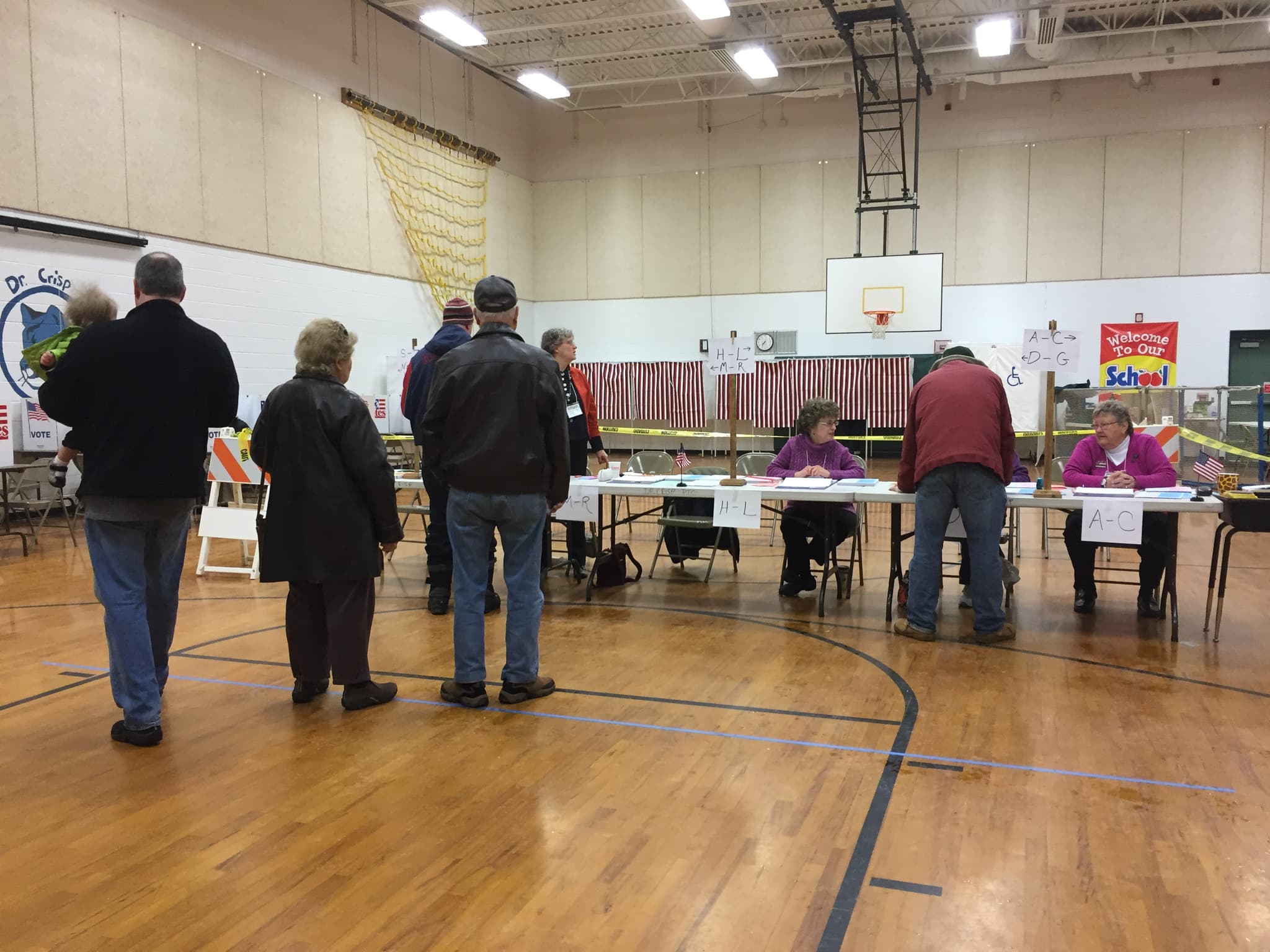
Ohio's official election schedule says early in-person voting began October 6. Saturday's listed hours were 8 a.m. to 4 p.m.; the next listed session is Monday, October 26, from 7:30 a.m. to 7:30 p.m. There is no October 25 Sunday session on that statewide schedule. Readers should check their county board for the authorized location before traveling.
The absentee-ballot application deadline is October 27 at 8:30 p.m. The secretary of state's calendar says regular domestic absentee ballots must be received by the county board by 7:30 p.m. on Election Day, November 3. Different provisions apply to covered military and overseas voters. A voter should use the official instructions for their own circumstances rather than infer a deadline from a campaign message.
These dates help explain why a late rating change matters without overstating it. Some people have already voted; others are still deciding. A controversy unfolding now reaches an electorate whose choices are being made over time, not a single audience waiting until election morning.
What to watch before calling the race decided
The next informative evidence would be later surveys with clearly stated field dates, documented changes in campaign strategy and ultimately the ballots and certified results. Readers should distinguish a forecast revision from those later stages. Cook's move is news because it changes an informed assessment of a competitive race. The result still belongs to Ohio's voters, and neither a bitter advertisement nor a favorable rating counts their ballots for them.
Sources, credits & editorial notes
- Cook Political Report: October 23 public rating announcement
- Cook Political Report: original race-rating analysis
- ABC News: Trump and campaign responses, October 23
- NBC News: Republican reactions and reviewed court records
- Marist Poll: Ohio results and October 15–18 methodology
- Ohio Secretary of State: 2026 official voting schedule
- Archive photo: General Ization; CC BY 3.0