World
Poland's tribunal leadership dispute sparks protests and a presidential return
Disputed suspensions at the court that reviews laws brought police and protesters to its Warsaw headquarters. Nawrocki now calls Saturday talks; Tusk defends restoring the rule of law.
What to know
- Nawrocki announced urgent parliamentary consultations for Saturday; his statement did not provide a meeting time or report an agreement.
- Judge Anna Korwin-Piotrowska announced a one-month interruption of the duties of tribunal president Bogdan Święczkowski and deputy Bartłomiej Sochański. Their authority and her replacement role are contested.
- Warsaw police reported three detentions and said their operation was confined to exterior grounds, rather than the tribunal building.
- A separate signed order on the tribunal website calls a judges' assembly for November 3 to consider the institution's 2027 budget. It does not resolve the contested suspensions.
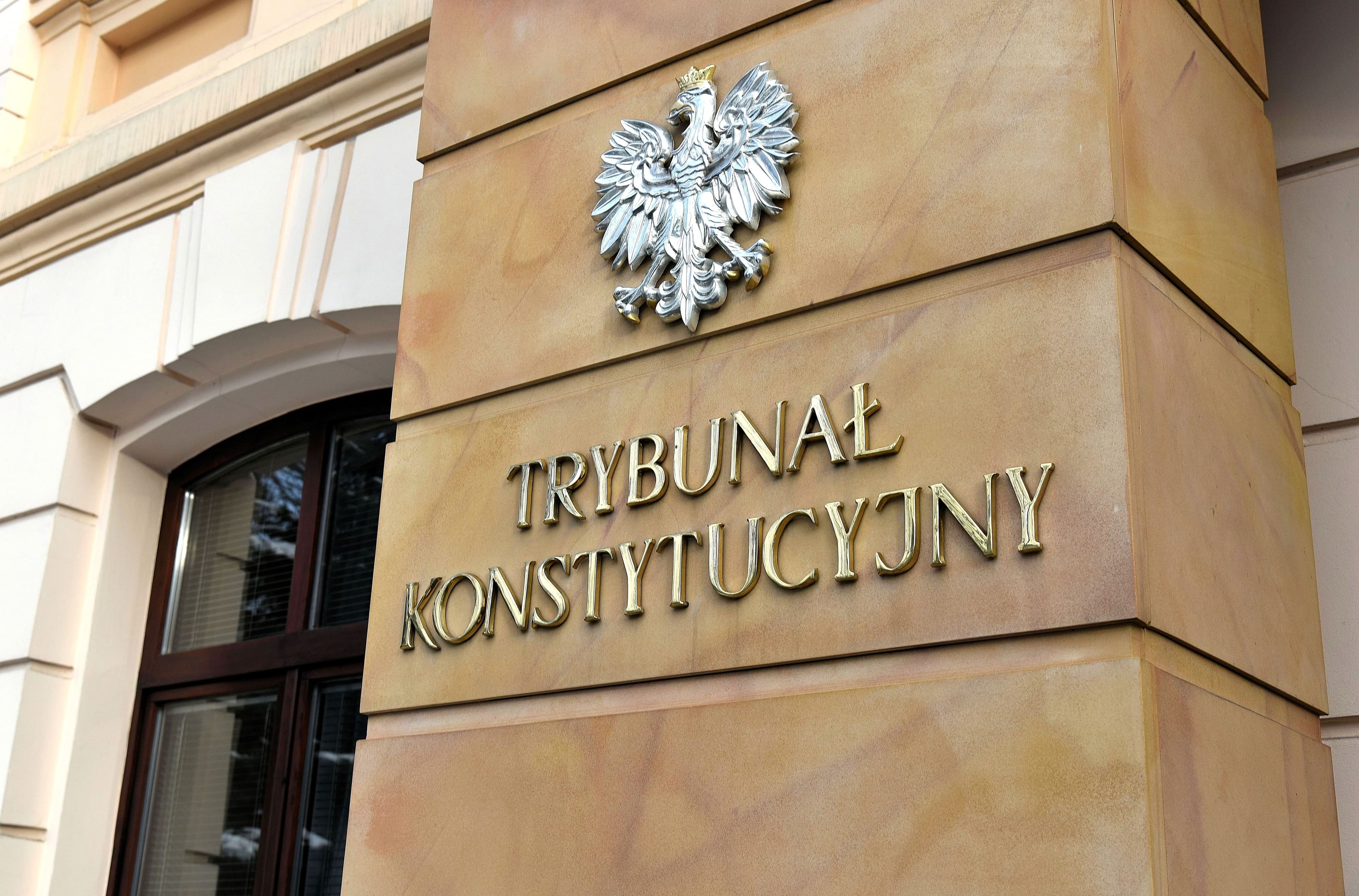
A disputed suspension of the leadership of Poland's Constitutional Tribunal brought protesters and police to its Warsaw headquarters on Friday, October 30, and prompted President Karol Nawrocki to interrupt a journey to Senegal and return home. After an overnight visit to the tribunal, Nawrocki called urgent consultations with parliamentary representatives for Saturday.
In his Saturday statement, Nawrocki alleged an unconstitutional seizure of the institution and said Poland's internal security was threatened. Prime Minister Donald Tusk defended the effort as restoring the rule of law. Those competing descriptions reflect the central dispute: which judges can lawfully exercise authority, and whether the steps taken to change the tribunal's leadership comply with the law.
Friday's leadership dispute became an overnight confrontation
The immediate escalation began on Friday evening, when information appeared on the tribunal website about interrupting the duties of its two senior officials. Reuters reported the leadership change and the competing political accounts. Korwin-Piotrowska claimed responsibility for directing the institution, while the displaced leadership and the president's camp rejected the move.
The announced orders interrupt the officials' duties for a month, while Korwin-Piotrowska asserts a replacement role in running the tribunal. Święczkowski's camp says he remains its president. The competing positions concern both participation in the court's work and control of its administration, including the assembly that prepares the next annual financial plan.
Polish reporting describes orders providing for a month-long interruption. In Wirtualna Polska's account of the documents, Korwin-Piotrowska accused the leadership of preventing participation by judges elected by the current parliament, obstructing a general assembly needed for the 2027 budget and improperly organizing adjudication. These are the stated reasons offered by the side seeking the change; they are not criminal findings.
What police say happened outside
The Warsaw police statement dated October 30 gives its own sequence of events. Police say they received correspondence from the prosecutor general requesting particular attention to security, as well as a tribunal judge's warning about possible risks to judges, employees and public order during planned activities at the site.
Officers say they were deployed to the external area and nearby Aleja Szucha. The statement reports dangerous objects thrown at police and three people detained after crossing the fence onto tribunal grounds. It says procedural steps concerning those detained would be pursued in connection with Article 193 of the criminal code. No prosecution outcome was announced in that statement.
Police also denied operating inside the headquarters or taking action against the tribunal's guards. Their account says officers on the grounds had been summoned by an authorized person and were securing a publicly accessible area. The force presented the operation as protection of people and public order, rather than intervention in the tribunal's work. Its description contrasts with the president's allegation that coercive forces had been sent to take control.
The president returned, then called consultations
The presidency's Friday announcement confirms that Nawrocki interrupted his journey to Senegal because of events at the tribunal. It also records a meeting at the Presidential Palace with Supreme Court First President Zbigniew Kapiński. Nawrocki later went to the tribunal during the night.
Polish Radio's Saturday report describes opposing accusations about physical encounters around his entrance. Judge Maciej Berek accused the president of attacking judges; presidential representatives accused people obstructing the entrance of violating the president's physical inviolability. Berek published recordings of encounters, while presidential spokesman Rafał Leśkiewicz disputed the account of who was responsible for the confrontation.
Nawrocki's subsequent statement said he had facilitated Sochański's entry and called for government-directed coercive forces to leave. He described Sochański as lawfully serving and rejected the authority asserted by others. He also said his assessment was shared by Kapiński. The president announced consultations with parliamentary representatives for Saturday, without specifying a time or reporting an agreement.
Tusk's government presents a different account
Tusk says restoring the rule of law is an obligation after the previous Law and Justice government's intervention in the judiciary. His Friday response, reported by Polish Radio, defended decisive action despite the difficulty of the process. The president and opposition politicians instead portray the current intervention as an assault on judicial independence.
The appointments conflict began a decade earlier
The updated Reuters account traces the dispute to 2015, when Law and Justice sought to appoint judges to places already filled by the previous government. Its nominees gained a majority on the tribunal. Critics in Poland and abroad challenged whether the resulting institution met the requirements of an independent court established by law.
Tusk's coalition took office in 2023 promising to reform the judiciary after eight years of Law and Justice government. Nawrocki, elected president in 2025 and aligned with that opposition party, has opposed the coalition's approach. The conflict has continued through the selection of new tribunal judges, the taking of their oaths and whether they can enter the institution and participate in its work.
Reuters reports that Nawrocki declined to swear in some parliament-selected judges during 2026 and that Święczkowski refused to seat judges chosen by the current majority. The conflict also extends to the government's own choices: parliament selected Tusk ally Maciej Berek in September, an appointment critics said weakened the coalition's argument that it was restoring checks and balances. Berek was among the people involved in the overnight dispute at the tribunal.
A European judgment addressed earlier appointments
On December 18, 2025, the Court of Justice of the European Union ruled against Poland in case C-448/23. The official published operative decision identifies irregularities in the appointment of three tribunal members in December 2015 and the person appointed its president in December 2016. It held that the tribunal did not meet EU-law requirements for an independent and impartial court previously established by law, and that Poland had consequently failed to meet its treaty obligations.
The judgment also concerned two Polish tribunal decisions from July and October 2021. The EU court found breaches involving effective judicial protection and the autonomy, primacy, effectiveness and uniform application of EU law, together with the binding effect of its case law. The proceeding was brought by the European Commission, with Belgium and the Netherlands supporting it.
That judgment gives the present confrontation a documented European legal background. It addresses specified earlier appointments and decisions, rather than deciding the validity of Friday's suspension orders. The dispute now combines the consequences of those earlier deficiencies with disagreement over the procedures being used to change the institution.
Why control of this particular court matters
The Constitutional Tribunal is different from Poland's Supreme Court. Its official explanation of jurisdiction identifies constitutional review of legislation, constitutional complaints, certain disputes between central state organs and examination of political parties' purposes or activities. It can therefore affect how government and parliament exercise power, as well as the legal rules applied to individuals.
The same explanation distinguishes those functions from deciding the validity of elections and referendums, which belongs to the Supreme Court, and from the responsibilities of the Tribunal of State. The names can sound interchangeable to readers outside Poland, but they refer to different institutions. A confrontation at the Constitutional Tribunal is not, on its own, an announcement that a national election has been overturned or that a government has lost parliamentary office.
The constitutional text published by the presidency assigns different roles in selecting judges and choosing the court's leadership. Article 194 provides for 15 tribunal judges, individually elected by the Sejm for nine-year terms, without re-election. The president appoints the tribunal's president and vice-president from candidates presented by its General Assembly of Judges.
Article 195 states that tribunal judges are independent and subject only to the constitution, and bars political-party membership while they hold office. Article 190 gives tribunal judgments universally binding and final status and provides for their publication. Those provisions explain why the membership and leadership dispute reaches beyond control of an office: the institution is responsible for decisions that affect the legal system as a whole.
A November 3 budget meeting is documented
A one-page order now published by the tribunal, dated October 30 and signed by Korwin-Piotrowska as substituting for its president, convenes the General Assembly of Judges on November 3. The stated agenda concerns the tribunal's draft income and expenditure for 2027. This is a concrete scheduled institutional step, rather than an inferred plan based on political remarks.
The order's agenda is confined to the financial plan. It invokes provisions of the 2016 law on the tribunal's organization and proceedings and says it takes effect on announcement. Korwin-Piotrowska signs in the capacity she claims as substituting for the president. The November 3 assembly and Nawrocki's Saturday consultations are separate processes, involving the judges and parliamentary representatives respectively.
What to watch on Saturday
Nawrocki said the purpose of Saturday's consultations was to stabilize the political situation and restore constitutional order. His announcement left the timing, participating parties and possible proposals unspecified. The competing leadership groups had not accepted a common account of their authority in the documents reviewed for this report.
Beyond the political talks, the scheduled November 3 assembly supplies the next documented administrative deadline. Its handling of the budget will show whether the judges asserting control can carry out the business they have announced. The immediate dispute remains unresolved, with the president, government and rival tribunal leadership advancing incompatible positions about the lawful way forward.
Reporting checked October 31, 2026 at 03:26 EDT.
NewsCubby articles are produced with AI assistance.
Sources, credits & editorial notes
- Presidency of Poland, October31 statement
- Presidency of Poland, return and Supreme Court meeting
- Warsaw Metropolitan Police, October30 operational statement
- Constitutional Tribunal, assembly-order publication
- Constitutional Tribunal, signed General Assembly order
- Constitutional Tribunal, official jurisdiction explanation
- Reuters, Marek Strzelecki, Justyna Pawlak and Anna Wlodarczak-Semczuk
- Polskie Radio24, Łukasz Lubański, Saturday consultations
- Polskie Radio, Friday Tusk statement
- Wirtualna Polska, Adam Zygiel, stated suspension grounds
- Documentary archive photograph: Adrian Grycuk / Wikimedia Commons
- Reuters, updated October30 at20:21EDT, judicial appointment chronology
- Court of Justice of the European Union, operative judgment C-448/23, December18,2025; Official Journal May26,2026
- Constitution of Poland, ChapterVIII, Articles188-196, official presidency publication