Entertainment
Prince Harry renews his reconciliation appeal: what he said, and what remains private
Harry renews his wish to reconcile with his father and brother in a GQ interview. No joint family agreement has been announced.

What to know
- Harry discussed family relationships in GQ's One More Question interview, released October 20.
- He said he wants reconciliation; that does not establish that Charles or William has agreed to a particular next step.
- His spokesperson said a remark about unnamed people opposing reconciliation was not directed at his brother or another relative.
- Harry had already expressed a wish to reconcile in a separate BBC interview in May 2025.
Prince Harry says he wants his relationship with King Charles III and Prince William to improve, returning to the subject of family estrangement in a new GQ interview. His comments express a wish for reconciliation, not the announcement of an agreement between the three men. No joint family statement or confirmed timetable for repairing those relationships accompanied the interview.
The conversation, published on October 20, was recorded in New York in late September with GQ's Zach Baron. That timing matters: the release is new, but the conversation is not a live account of what happened inside the family this week. Harry speaks for himself, and his account should not be converted into an authorized description of his father or brother's private intentions.
What is new in the interview
Baron's question placed family difficulties within a wider conversation about grief. Harry answered that strained relationships are something he experiences as a loss. The news is his renewed public statement of what he wants, rather than proof that the dispute has ended. It is a modest distinction with significant consequences for how the remarks are presented.
After the interview drew coverage, a spokesperson clarified the meaning of Harry's reference to unspecified people who might not want a resolution. The Associated Press reported that clarification alongside his comments. It makes a difference to the story: using an unnamed reference as proof of an accusation against William would claim more than Harry's representatives say he intended.
A family interview can be newsworthy without every phrase becoming a coded attack. Viewers can examine the original question and answer, consider the clarification and still acknowledge that the relationship is difficult. What they cannot establish from an edited headline is which relative has agreed to forgive whom, or what a private conversation between them would require.
The earlier break from official duties
The institutional background begins with decisions made well before this interview. In January 2020, Queen Elizabeth II and Buckingham Palace published statements about Harry and Meghan's transition away from working royal duties. Those statements distinguished remaining members of a family from formally representing the monarch. They also set out changes involving official duties, public funding and the use of HRH styles.
The Queen's message described Harry, Meghan and Archie as loved family members and supported the couple's wish for greater independence. The accompanying palace statement said they would retain private patronages and associations, while no longer formally representing the Queen. These were public arrangements about roles. They did not provide a complete account of every personal disagreement behind them.
That distinction continues to be useful. A change of residence or an appearance at an event does not automatically restore a former official role. Equally, stepping away from duties did not erase a family relationship. Questions about constitutional responsibilities, security arrangements, charitable work and personal contact need to be considered separately, even when they overlap in public discussion.
This is not the first appeal
Harry made another public appeal for reconciliation in a BBC interview in May 2025, following the loss of a legal challenge over his security arrangements. At that time, he described a breakdown in communication with his father and linked it to the security dispute. Those were his comments in that earlier interview, not an independently confirmed account of the family's current private communications.
The previous interview helps establish continuity. The October remarks are renewed statements of a wish he has expressed before, rather than the first time he has ever suggested ending the conflict. The important follow-up would be a concrete development: an acknowledged conversation, a joint statement or another confirmed action showing what has changed.
Security litigation also should not be simplified into a claim that one relative can personally grant any protection Harry requests. The 2020 palace statement explicitly described independent processes for assessing publicly funded security. Disagreement about those arrangements is a real part of the public record, but it is not interchangeable with the emotional question of whether family members speak to one another.
Grief in a public setting
GQ frames its conversation around loss, identity and family, as well as the royal dispute. That broader setting explains why a question about reconciliation arose. It does not make Harry a source of individualized mental-health advice, or turn a magazine interview into a clinical assessment of anyone involved. His descriptions are personal accounts of his experiences.
There is a practical difference between reporting such an account and diagnosing its speaker. An observer can describe what a person says, compare it with earlier public statements and note where facts are unconfirmed. Assigning a psychiatric label, declaring a hidden motive or claiming to know another relative's internal response would go beyond the available evidence.
For readers who recognize something of their own family difficulties, the interview may feel familiar. That response does not require taking a side in every royal disagreement. A widely watched family offers an unusually public example of a problem that is normally private. Its visibility cannot supply an easy formula for resolving somebody else's circumstances.
Work beyond the dispute
Harry's public role also includes organizations whose work exists apart from family coverage. WellChild identifies him as its patron and describes its purpose as helping children with serious and complex health needs receive care at home where possible. The charity's own materials are the appropriate source for what it does; a royal headline is not a substitute for that information.
The Invictus Games Foundation likewise documents a movement centered on wounded, injured and sick service personnel and veterans. Its reporting marked a decade since the first Games in September 2014. Harry's role as founder and patron is part of his public identity, but participants' achievements and the foundation's work should not be reduced to a subplot in a family disagreement.
These distinctions help readers evaluate future appearances. Attending a charitable event may be important for the people involved without proving that a separate personal dispute has been settled. A useful account can report both activities accurately and avoid making each public engagement a supposed referendum on reconciliation.
What would show that something changed
The evidence needed for the next stage is straightforward. A confirmed meeting would establish that a meeting occurred. A statement agreed by participants could explain what they chose to make public. A restored official responsibility would require its own announcement. None of those facts follows automatically from one person's declaration of hope.
Nor does the absence of a joint statement prove the opposite: that reconciliation is impossible or that a particular relative has rejected every form of contact. Private relationships can change without a running public record. Reporting should preserve that uncertainty rather than turn silence into a newly discovered fact.
For now, Harry has renewed an intention he has described before. The interview gives audiences his perspective and a clarification from his spokesperson. Whether it leads to a different relationship with his father and brother remains a question for the people involved, and a subject on which the public evidence is still limited.
Sources, credits & editorial notes
- gq.com: reporting or primary record
- gq.com: reporting or primary record
- apnews.com: reporting or primary record
- royal.uk: reporting or primary record
- youtube.com: reporting or primary record
- wellchild.org.uk: reporting or primary record
- invictusgamesfoundation.org: reporting or primary record
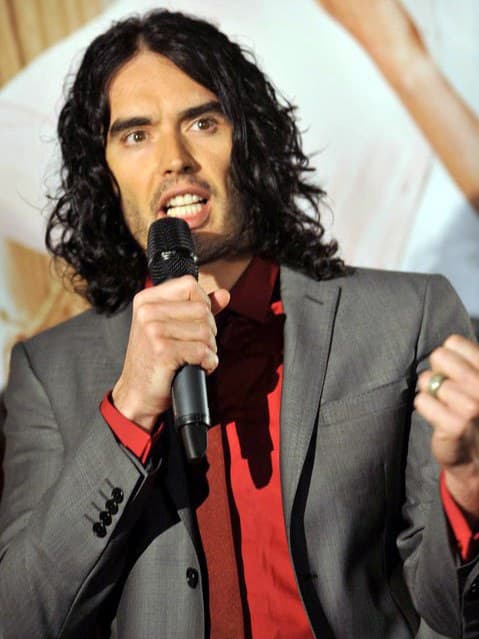
- Photo: Mykola Swarnyk; CC BY-SA 3.0; archive 2017-09-29
- Image reuse license: CC BY-SA 3.0