Entertainment
Russell Brand’s London trial: seven disputed charges, six women and what comes next
The London trial involves seven disputed charges and six women. Brand denies all counts; the jury has not returned a verdict in the reporting reviewed.
What to know
- Six women are involved in the London prosecution, which concerns alleged offenses between 1999 and 2009.
- Brand denies all seven charges and has entered not-guilty pleas.
- Witness accounts and defense challenges are evidence and arguments for the jury to assess, not findings of guilt.
- The complainants' identities are protected. No verdict was reported in the sources reviewed for this update.
Russell Brand's criminal trial in London has heard accounts from six women who accuse the actor and comedian of sexual offenses dating from 1999 to 2009. Brand has pleaded not guilty to all seven charges: three counts of rape, three of sexual assault and one of indecent assault. The case is being heard at Southwark Crown Court, and the allegations remain contested.
The latest reporting describes testimony, police interviews and questioning by the defense. Those are stages in a trial, not a verdict. The central questions will be determined from the evidence heard in court and the legal directions given to the jury. Neither the number of headlines nor Brand's public reputation settles the charges.
Where the proceedings stand
Reports available on October 22 describe a trial that is still hearing evidence. The Associated Press summarized accounts from the six women, while ABC's correspondent in London reported the most recent complainant's evidence and cross-examination. Their courtroom reporting provides a record of what was said, with the competing positions attributed to the people advancing them.
In the latest evidence described by ABC, a woman alleged that an encounter in 2009 changed from consensual activity to something she had not agreed to. Brand's barrister challenged her account. This article is not reproducing graphic descriptions or details that could identify her. The allegation and the challenge both remain part of proceedings whose outcome has not been determined.
Coverage can make this sequence difficult to follow when an accusation appears as a statement in a headline and the denial appears only much later. The essential context belongs alongside the allegation: Brand denies the charges, the defense can question the evidence, and the jury has not returned a verdict in the reporting reviewed. That remains true even when individual testimony is distressing.
How the charge list developed
The Crown Prosecution Service's December 23, 2025 statement provides a useful record of the case's expansion. It authorized two additional charges involving two further women, concerning alleged offenses in 2009. The statement distinguished those counts from the earlier charges relating to four women and alleged offenses between 1999 and 2005.
That dated record helps explain why older articles sometimes describe a different total. An early report of five charges involving four women was not the complete charge list later brought to trial. Readers should compare dates and the specific proceedings being described before assuming that different figures necessarily contradict one another.
The CPS also reminded the public that proceedings were active and that Brand had a right to a fair trial. Authorizing a charge is a decision to put an allegation before the courts. It is not a conviction, and it should not be described as prosecutors having already proved an offense merely because a case has reached trial.
A decision to prosecute is not a jury's decision
The CPS explains that it uses a two-stage test when deciding whether to prosecute: whether the evidence provides a realistic prospect of conviction and whether a prosecution is in the public interest. That assessment is different from the trial standard. At trial, the jury must be sure of guilt before convicting.
The distinction protects the meaning of both stages. Prosecutors are responsible for assessing whether a case should proceed, while jurors determine the charges after hearing the evidence. A not-guilty plea means a charge is disputed; it does not remove the prosecution's responsibility to prove it. Equally, a charge does not reverse the presumption of innocence.
Questions from a lawyer also need context. Cross-examination tests an account, but a proposition put in a question is not automatically an established fact. A witness's answer is part of the evidence. Reporting should make clear which side is advancing an argument and should not turn an adversarial question into the court's own conclusion.
The court's roles
The judiciary's public explanation of Crown Court proceedings separates the roles of judge and jury. A jury decides guilt; the judge oversees fairness, resolves legal issues and directs jurors on the law. The judge's role also includes sentencing if the necessary conviction occurs. Describing an ongoing hearing as though it has already reached that final stage misstates what is happening.
The distinction matters in a celebrity case because images outside the courthouse can dominate the public account. An arrival photograph establishes an arrival. A person's expression in a still image does not reliably show what they believe about the evidence, predict a verdict or replace what was actually said in court.
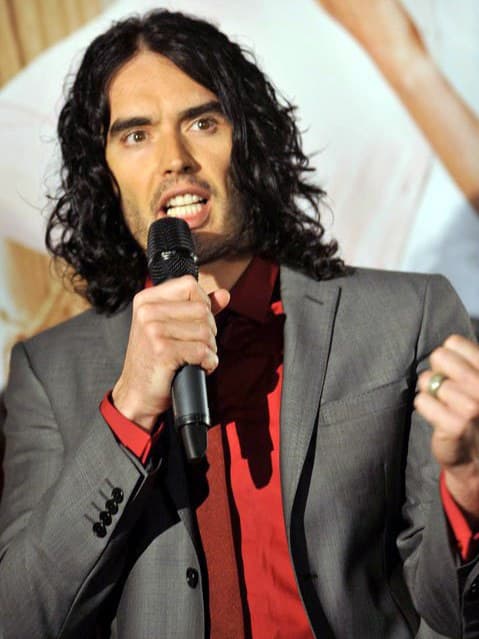
This article's illustration is an archive photograph rather than an image of the present trial. Its date and source are identified. It should not be read as depicting a court appearance, a witness encounter or the alleged events. Keeping that boundary visible prevents a familiar face from being used as fabricated visual evidence.
Consent and the historical period
Consent is central to the allegations, but a general explanation should not pretend to decide this case. Current CPS public guidance describes agreement by choice, with freedom and capacity, and explains that agreement to one activity does not necessarily mean agreement to another. A person can also withdraw agreement. Those principles help explain the public discussion without determining whose account the jury will accept.
The alleged events span a period that crosses changes in sexual-offense legislation. Applying the correct offense, legal test and instructions to each count is a matter for the court. It would be misleading to take one short summary of today's law and present it as a complete direction on every historical charge in this prosecution.
Readers can therefore understand the issue without being given a speculative verdict. The case requires assessment of the relevant evidence and law for each count. General statements about celebrity, sexual history or a complainant's behavior cannot substitute for that process.
Why the women are not identified
English law protects the identities of complainants in sexual-offense cases. The protection concerns information likely to identify a person, not merely whether an article prints a name. Details can become identifying when combined, which is why responsible reporting must consider photographs, workplaces, relationships and social-media posts as well as direct naming.
The CPS explains that this anonymity generally lasts for life and does not simply expire if a prosecution ends without a conviction. The fact that a name may have been spoken in court is not permission to republish it. This report omits identifying detail and does not link readers to speculation about the women's identities.
The public interest is in a fair, accurate account of the prosecution and defense. It does not require encouraging audiences to investigate complainants themselves. Nor does withholding identifying detail tell readers anything about whether a particular allegation is true or false; it reflects the legal protection attached to the report of a sexual offense.
What to watch next
The trial continues. The meaningful updates will be further admissible evidence, the defense case, the judge's directions and eventually the jury's decisions on the individual charges. The reports reviewed do not establish whether Brand will personally give evidence, and this article does not predict that decision or a completion date.
A final outcome will require its own precise report, including which charges it covers. Until then, the accurate description is an ongoing prosecution involving seven disputed charges and six women. Brand's denials remain part of that account, alongside the allegations and the evidence the court is hearing.
Sources, credits & editorial notes
- apnews.com: reporting or primary record
- abc.net.au: reporting or primary record
- cps.gov.uk: reporting or primary record
- cps.gov.uk: reporting or primary record
- judiciary.uk: reporting or primary record
- cps.gov.uk: reporting or primary record
- cps.gov.uk: reporting or primary record
- legislation.gov.uk: reporting or primary record
- Photo: Eva Rinaldi; CC BY-SA 2.0; archive 2011-04-16
- Image reuse license: CC BY-SA 2.0