World
U.S. orders some staff out of Saudi Arabia as deadly airport attacks disrupt travel
Dammam airport reopened after an attack whose reported toll rose to two dead. The U.S. order covers non-emergency personnel and families in Saudi Arabia only.
What to know
- The United States ordered non-emergency government employees and their families to leave Saudi Arabia on October 21, a State Department spokesman said.
- Saudi aviation officials updated the toll from Wednesday's Dammam airport attack to two dead and eight injured, according to Thursday reporting; airport operations resumed.
- A separate drone interception near the Shaybah oilfield killed two people. Saudi officials said operations there were unaffected. These are separate incidents and casualty counts.
- The U.S. departure order concerns specified personnel and families in Saudi Arabia. It is not an announcement that every American must leave or that every Gulf embassy is closing.
Deadly attacks on Saudi civilian infrastructure have brought a new U.S. diplomatic precaution: an order for non-emergency government personnel and their families to leave the kingdom. The October 21 decision comes as airports face repeated disruption, making the reliability of transport a concern alongside the immediate danger from missiles, drones and falling debris.
The latest attack on King Fahd International Airport in Dammam occurred Wednesday evening. Thursday reporting of an updated Saudi General Authority of Civil Aviation statement put the death toll at two, with eight people injured. The authority said operations had resumed while damage assessment continued. A reopening is an operational development, not a guarantee that the wider threat has ended.
What the U.S. order covers
State Department spokesman Tommy Pigott specified that the ordered departure applies to non-emergency U.S. government employees and family members in Saudi Arabia. He cited increased Houthi attacks on civilian airports and other critical infrastructure, civilian casualties and severe travel disruption.
The scope is important. Earlier reporting discussed possible departures across the Gulf, but the spokesman's public clarification concerned Saudi Arabia only. The confirmed order should not be expanded into a claim about every embassy or every American in the region. Nor does the distinction between emergency and non-emergency personnel mean that the people remaining face no danger.
An ordered staff departure is also different from an instruction covering all private U.S. citizens. Employers can direct their own personnel, while private travelers must consider the government's public advice, their circumstances and local conditions. The announcement did not establish a blanket embassy closure, a universal evacuation flight or a new right to board a government aircraft.
The Dammam attack and the revised toll
Initial accounts of the airport attack reported one person killed and eight injured. Gulf News subsequently reported the aviation authority's updated total of two deaths: a Saudi citizen and an Indian national residing in the kingdom. India's embassy also said Saudi authorities had informed it that an Indian national was among two people killed and that two other Indians were injured.
Those updates explain why early and later reports give different totals. They should not be combined as if they describe separate airport attacks. Eight injuries were reported in the updated aviation account, while the Indian embassy's statement identified the Indian nationals within the wider incident rather than providing a complete list of everyone injured.
The airport sustained material damage, but the reports reviewed did not establish a complete inventory or independently verified assessment of every affected area. Saudi authorities said operations resumed. Travelers still need current information for their particular airline and flight: an airport accepting traffic does not mean every canceled service has been reinstated or every connecting itinerary is workable.
A separate incident at Shaybah
The Energy Ministry reported a different incident Wednesday morning near an Aramco processing facility at the Shaybah oilfield. Debris from an intercepted drone killed a Filipino and a Nepali national and injured a Pakistani and an Indian national, according to the ministry's account carried by the Saudi Press Agency.
The debris caused a fire in a contractor's vehicle outside the facility's perimeter. The ministry said operations were unaffected. The location, timing and victims distinguish this event from the later airport attack. Combining their tolls without explaining the incidents would conceal what is known about each.
The operational statement also limits economic claims. An attack near an oilfield is significant, but it does not by itself demonstrate lost production, a shutdown of Saudi exports or a particular increase in American gasoline prices. Such claims require their own production, shipping and market evidence. The confirmed human consequences are consequential without attaching an unsupported forecast.
Attribution requires care
The U.S. spokesman linked the personnel decision to the wider campaign by Iranian-supported Houthis. Saudi airports have faced repeated Houthi attacks. That context does not automatically identify who launched every individual drone or establish responsibility for each separate incident.
The early Associated Press account of the Dammam attack said the Houthis had not commented on that particular attack. The reporting reviewed did not provide an independently verified weapons analysis connecting the specific airport strike and Shaybah interception. A group claiming one operation, an official attributing a campaign and investigators identifying a particular weapon are different kinds of evidence.
This distinction matters beyond wording. Describing an unconfirmed attribution as settled can imply that a retaliatory action or wider military confrontation is inevitable. Neither the staff departure nor the infrastructure attacks establish the timing or scope of any future U.S. decision to use force.
What the public travel guidance says
The State Department's Saudi advisory page, checked Thursday, displayed Level 3, meaning reconsider travel, with an October 12 issue date. It separately warned against travel to the Yemen border. The advisory predates the new staff departure and should not be presented as if its overall level changed on October 21.
The page describes risks to cities, airports, diplomatic facilities, energy infrastructure and other locations from missiles and drones, including falling debris after interceptions. It says U.S. government employees require special authorization to use any Saudi airport. A restriction on government employees is evidence of official precautions; private citizens should read the accompanying advice rather than assume the employment rule applies to them identically.
The advisory also warns people not to photograph, film or share information about missile or drone interceptions or impact sites, noting detention risks. People witnessing an incident should follow local emergency instructions instead of moving closer to document it. A social-media video can lack reliable information about when or where it was recorded.
Why an airport reopening is only part of the story
Air transport depends on more than an open terminal. Airlines decide whether to operate routes, crews and aircraft must be positioned, and passengers need functioning connections. An interruption at one hub can therefore affect a journey even when another airport remains operational. The useful question is whether the actual itinerary is operating, not whether a single national headline says flights have resumed.
The U.S. country page acknowledges that commercial flights have operated while suffering significant disruptions. Its continuing caution and Thursday's reported reopening are not contradictory: one describes a country's risk environment, while the other describes an airport's operational status at a particular time.
What to watch next
The immediate points to monitor are official casualty updates, the damage assessment, confirmed airline operations and any change to the U.S. staffing order or public advisory. None of those should be inferred from an older alert or a photograph circulated without a date.
The latest developments combine a deadly airport attack, a separate lethal interception near energy infrastructure and a narrower U.S. personnel decision than some early regional headlines suggested. Keeping those facts distinct shows both the seriousness of the situation and the limits of what has been established. It also gives people with family or travel plans in the kingdom more useful information than an unqualified claim that all flights—or all diplomatic operations—have stopped.
Sources, credits & editorial notes
- thenationalnews.com: reporting or primary record
- moneycontrol.com: reporting or primary record
- gulfnews.com: reporting or primary record
- moneycontrol.com: reporting or primary record
- arabnews.pk: reporting or primary record
- travel.state.gov: reporting or primary record
- sa.usembassy.gov: reporting or primary record
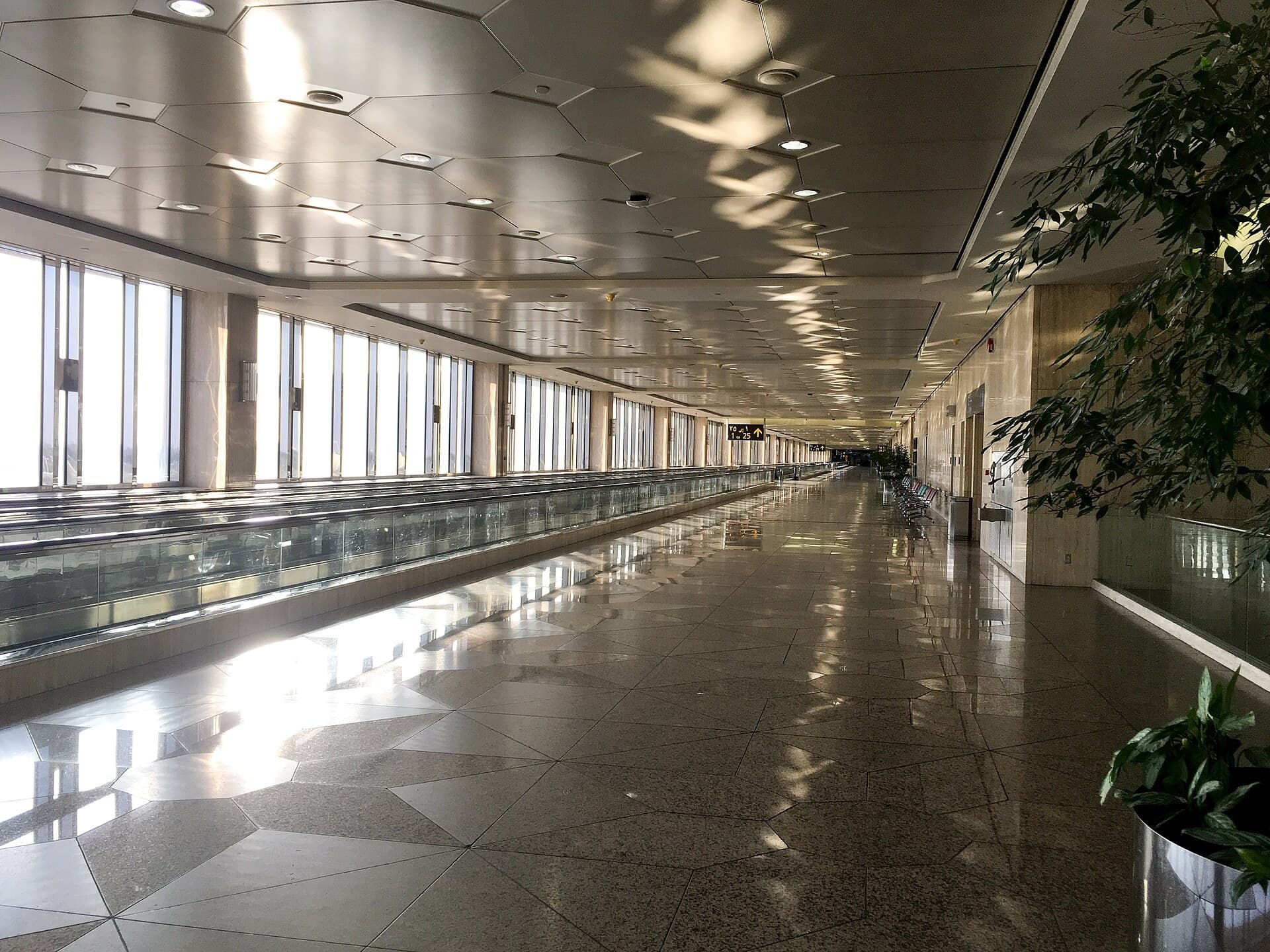
- Photo: Francisco Anzola; CC BY 2.0; archive 2016-11-29
- Image reuse license: CC BY 2.0