Entertainment
Sofia Coppola finishes her mother’s Making Marie Antoinette documentary
Eleanor Coppola’s record of the Versailles production reaches theaters, with a November streaming date and a new perspective on a film turning twenty.
What to know
- Eleanor Coppola directed the documentary; Sofia helped complete it after her mother's death in 2024.
- The project draws on footage Eleanor recorded during the Versailles production in 2005.
- *Making Marie Antoinette* is in theatrical release, with MUBI streaming announced for November 6.
- The separate Versailles anniversary exhibition runs into January, but the Trianon estate is closed on Saturday, October 24.
Sofia Coppola has helped finish a film that lets her see her younger self through her mother's camera. *Making Marie Antoinette*, directed by the late Eleanor Coppola, has arrived in theaters with a story that stretches beyond an anniversary: a daughter completing the documentary her mother wanted to leave behind. The release invites audiences to look at the work surrounding a familiar movie, rather than only its finished images.
The project returns to the production of Sofia's 2006 *Marie Antoinette*, starring Kirsten Dunst. It belongs to a wider twentieth-anniversary celebration, but the documentary and the original drama are different films. For viewers making weekend plans, that distinction matters: one tells a stylized story about the French queen; the other examines people making that story. The new release also preserves the perspective of a filmmaker whose own work deserves recognition.
A production becomes a family archive
OUR FILMS, the documentary's producer, describes the project as the fulfillment of Eleanor's wish to turn previously unseen material into a feature. Its account identifies editor Aaron Matthews and collaborators Davia Nelson and Liz Bird. Those credits make an important distinction: Sofia's involvement in finishing the project does not erase Eleanor's authorship, or the other people responsible for bringing the archive to the screen.
An archive and a completed documentary are different creative objects. A recording preserves an occasion; editing decides what relationship that occasion has to everything around it. A glance, a production discussion or a costume fitting can acquire a different meaning when placed before or after another scene. That is why the story of finishing this film is more than the practical recovery of old tapes. It involves shaping material while retaining the point of view that made someone record it.
Eleanor's camera, Sofia's working life
Film at Lincoln Center's festival entry identifies Eleanor as the director and describes Diane Lane reading from her journals. This creates two ways into the production: what the camera recorded and what Eleanor wrote about being there. A spoken diary should not be confused with a newly recorded interview or the subject's own present-day narration.
The mother-daughter relationship gives the production an unusual frame. The person holding the camera knew the director before she had a film career, while the director was responsible for a large professional undertaking. Those roles can coexist without turning the documentary into a simple endorsement. For a viewer, the useful question is what becomes visible when observation is both personal and work-related: how someone communicates, listens, makes decisions and occupies authority among collaborators.
Why the costumes deserve attention
The Academy of Motion Picture Arts and Sciences' 2007 record lists Milena Canonero as the costume-design winner for *Marie Antoinette*. That is a specific craft award, rather than a best-picture honor. It helps explain why an account of making this movie can be valuable even to people who already know its plot. Clothes are part of the production's storytelling, and designing them is work with its own authorship.
A finished costume appears to belong naturally to its character. Behind that appearance are choices about silhouette, color, texture and how a performer will move. Looking for those decisions offers a more concrete way to engage with a making-of documentary than counting familiar faces. The question becomes how separate departments contribute to an overall visual language, and how the director coordinates those contributions without being their sole creator.
Twenty years can change a conversation
Vogue's June announcement placed the documentary alongside a restoration, a book and an exhibition. That collection of formats allows the same production to be revisited from different directions. A restored drama presents the work to an audience again; a documentary follows its making; a book lets readers linger over selected images. They can complement one another without being interchangeable.
Anniversaries do not prove that everyone has reached the same judgment about a movie. Their value can lie in reopening the argument with more evidence. Audiences who disliked an artistic choice can learn how it was made without being required to change their minds. Admirers can discover the collaboration behind something they once experienced simply as a director's signature. A useful retrospective expands the conversation rather than declaring it settled.
Versailles separates film from history
Versailles lists the Petit Trianon exhibition for September 22, 2026–January 24, 2027, exploring the film's origins, aesthetics and cultural impact. This framing opens a useful distinction: an artistic interpretation of a historical person is not the same thing as a comprehensive account of that person's life.
For viewers, this is an opportunity to keep two kinds of questions separate. One concerns the history a drama depicts. The other concerns what the film chooses to emphasize, omit or make emotionally immediate. The new documentary can illuminate the second question without replacing historical research on the first. Understanding a production's intentions is useful context, but it does not turn its fictional scenes into historical records.
A closure to check before traveling
The palace's current notice says the Estate of Trianon is closed Saturday, October 24. An exhibition's advertised date range therefore does not mean it is available on every day within that range. Readers considering a visit should check the official notice and their booking, rather than relying on an anniversary announcement published months earlier.
This is especially relevant to a story that invites people to move between screens, books and a real location. The documentary's availability and the estate's access arrangements are separate matters. A film release does not override a museum closure, and a future exhibition closing date is not a promise that a particular afternoon's ticket can be used. The operational notice is the relevant source for an immediate visit.
Which film is available, and when?
The Museum of the Moving Image's release information lists October 23 for the documentary's theatrical release and November 6 for its MUBI debut. Its listing separately identifies the anniversary restoration of the 2006 drama. The similar titles make that distinction easy to miss when searching a cinema or streaming service. Check the director and year, as well as the name.
MUBI's own film page identifies the new documentary as a 2026 work by Eleanor Coppola. Local showtimes and platform availability should be checked for the reader's country. An announced streaming date does not make the documentary available to stream today, and a theatrical opening does not mean every local cinema is showing it.
Watching for the people around the image
The festival and MUBI list an 86-minute documentary assembled from a much larger body of recorded material. That scale makes editing central to the project: preserving every recorded moment would produce an archive, while a feature requires choices about rhythm, sequence and emphasis. Those choices are one reason the documentary is a new work even though its images record an earlier production.
For a first viewing, a useful approach is to notice a decision rather than hunt for a revelation. Watch how an idea moves between the director, performers and crew; then consider what the completed drama lets you see of that process. The distinction between the film, its documentary and the archive is worth keeping in view: a screenplay shapes a character, a documentary shapes a production story, and a diary preserves the observer's personal account.
The strongest reason to revisit the production may be the shift in perspective. An audience usually encounters a movie after the work has disappeared into the result. Here, the new documentary brings that work back into view while preserving a mother's record of her daughter doing it. Sofia's contribution to completing it gives Eleanor's filmmaking a new audience, without making her camera merely an accessory to someone else's career.
Sources, credits & editorial notes
- AP: Eleanor Coppola documentary, Oct. 23
- OUR FILMS: production and distribution announcement
- Film at Lincoln Center: documentary credits
- Museum of the Moving Image: release dates
- MUBI: official film listing
- Versailles: exhibition and October 24 access notice
- Academy: 2007 costume-design award
- Vogue: twentieth-anniversary projects
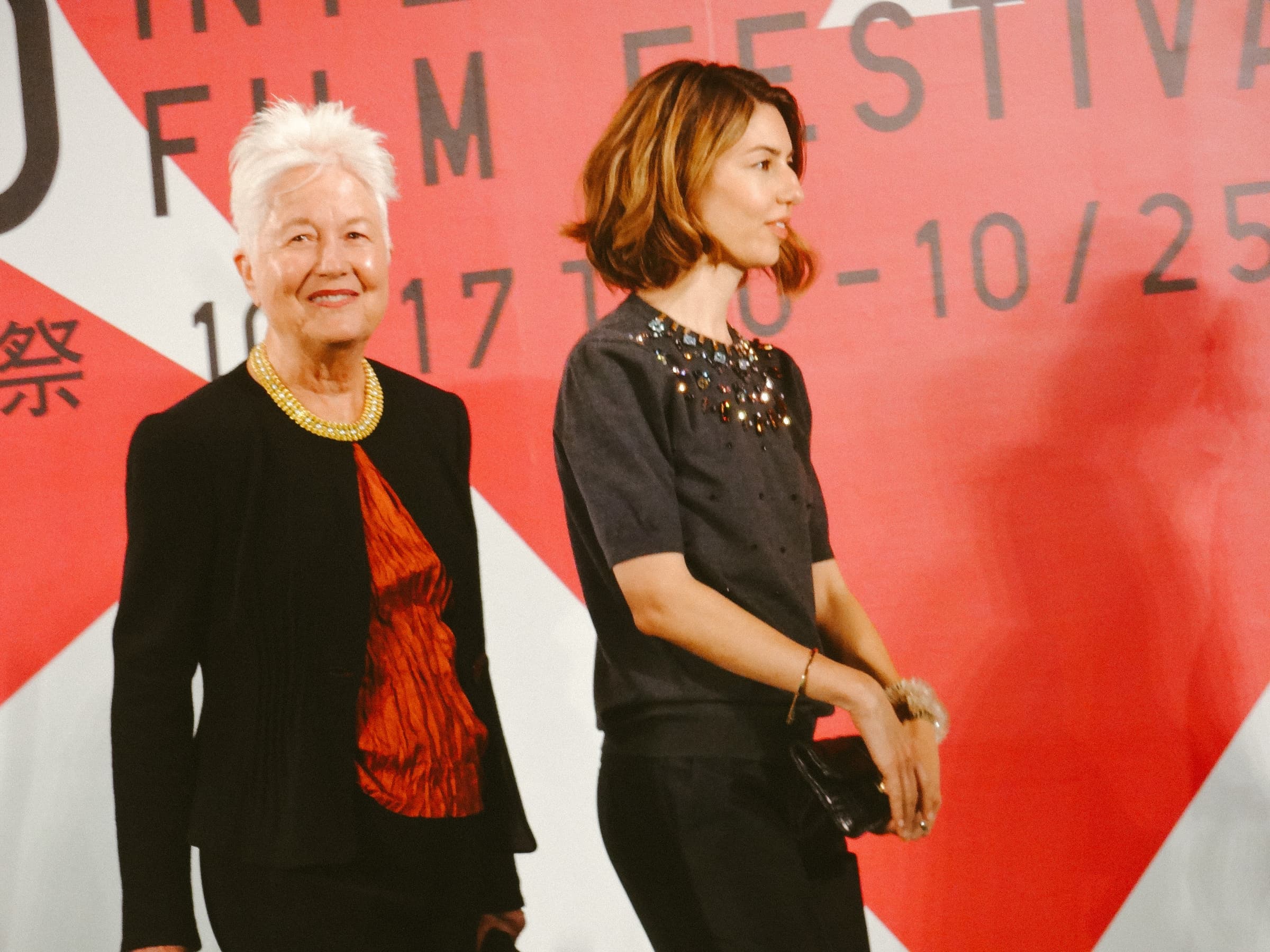
- Photo: Dick Thomas Johnson, Tokyo 2013; CC BY 2.0
- Photo license: CC BY 2.0