Entertainment
Anson Williams at 77: From Happy Days' Potsie to a long TV directing career
Born Sept. 25, 1949, Anson Williams spent a decade as Potsie Weber on Happy Days and later became a prolific television director.
What to know
- Williams was born on Sept. 25, 1949, and grew up in Burbank, California.
- He first played Potsie Weber in a 1972 *Love, American Style* segment that led to *Happy Days*.
- *Happy Days* aired on ABC from Jan. 15, 1974, to July 19, 1984, for 255 half-hour episodes over 11 seasons.
- As Potsie, Williams played Richie's best friend and an aspiring singer, and he was nominated for a Golden Globe for the role.
- After the sitcom, he became a prominent TV director with credits that include *Beverly Hills, 90210*, *Melrose Place*, *Sabrina the Teenage Witch*, *Lizzie McGuire*, *7th Heaven* and *Star Trek: Deep Space Nine*.
Anson Williams is still best known to many viewers as Potsie Weber, the good-natured singer from *Happy Days*. Born on Sept. 25, 1949, Williams is 77 as of Nov. 5, 2026, and his career stretches well beyond the role that made him a familiar face in the 1970s. He spent 10 years on one of ABC's defining sitcoms, then built a substantial second act behind the camera.
How did Anson Williams get his start?
Williams was born Anson William Heimlich and grew up in Burbank, where he attended Burbank High School. He was captain of the track team and also acted in multiple school productions. That combination of athletics and stage work was the kind of all-around school experience that often launched performers of his generation.
By 1971, he had begun building professional credits in entertainment. That year he appeared in the Sherman Brothers' original musical *Victory Canteen* at the Ivar Theater in Los Angeles. He also appeared with John Amos in a McDonald's commercial. Those are small but useful markers, because they show he was already moving between live performance and on-camera work before television audiences knew his name.
His breakthrough came through ABC's anthology series *Love, American Style*. In 1972, he played Potsie Weber in a segment that introduced several characters who would later carry over into *Happy Days*. Only Williams, Ron Howard and Marion Ross reprised their roles when the concept became a weekly series. That continuity mattered. It meant Williams was part of the show's foundation before *Happy Days* was even officially *Happy Days*.
The sitcom itself grew out of a period when 1950s nostalgia was commercially powerful in American entertainment. That setting helped make the role of Potsie legible right away: he was a teenage friend in a world of drive-ins, school dances and neighborhood routines that viewers could recognize, remember or imagine.
What made Potsie Weber stand out on Happy Days?
*Happy Days* premiered on ABC on Jan. 15, 1974, and eventually ran until July 19, 1984. Created by Garry Marshall, it was set in Milwaukee in the 1950s and early 1960s and centered on Richie Cunningham, his family and his friends. In the early seasons, the series focused heavily on Richie and his circle, which meant Williams had a larger place in the show's original design than some casual viewers may remember today.
Williams received second billing after Howard during the first season. That fits the earliest version of the show, when Richie and Potsie were central teenage figures. Potsie was written as Richie's best friend, and the character was both earnest and comic: a singer, a little gullible, well-intentioned and often part of the social scramble that drove high school stories.
As the show evolved, the dynamic changed. Henry Winkler's Fonzie became the breakout character, and *Happy Days* increasingly shifted toward broader comedy built around Fonzie's popularity. But that did not erase Potsie's importance. Williams was one of the few cast members who remained for the entire run of the series, even though his appearances became less frequent in later seasons.
Part of what made Potsie memorable was music. In some episodes, Richie, Potsie and Ralph Malph formed a band combo that performed at Arnold's Drive-In and elsewhere, and Williams sang the lead vocals. That gave the character a specific texture inside the ensemble. Potsie was not only a sidekick or classmate. He was also one of the show's built-in performers, someone who could help turn an ordinary hangout scene into a number or a joke.
Williams also had a real recording credit during the show's run. In 1977, he released the single "Deeply," which peaked at No. 93 on the Hot 100. It was not a major chart event, but it connected neatly with the image viewers already knew from the series.
His performance as Potsie also brought awards recognition. He was nominated for the Golden Globe Award for best supporting actor in a series, miniseries or television film. For an actor closely tied to a long-running network comedy, that nomination remains a meaningful marker of how visible the role became at the time.
Why did Happy Days matter so much in the 1970s?
Williams's public identity is still so tied to Potsie because *Happy Days* was not just a hit sitcom. It was one of the most successful series of its decade. The show opened to mixed reviews and was initially only a moderate success, but it grew steadily more popular.
When ratings slipped in the second season, Marshall retooled the format. The stories leaned more into broad comedy, and Fonzie moved closer to the center. The shift worked. *Happy Days* became the No. 1 program on television in the 1976-77 season.
That success changed the place of the show in popular culture. It spawned spin-offs including *Laverne & Shirley* and *Mork & Mindy*. Fonzie became one of the most merchandised characters of the 1970s. And the series established a durable TV vision of the 1950s and early 1960s: cleaner, brighter and more nostalgic than real life, but highly effective as mass entertainment.
For Williams, this matters because Potsie was part of the original social fabric that made the series work before it became a phenomenon. He was there in the early Richie-centered version, there through the retooling, and still there at the end. That gives him a distinctive place in *Happy Days* history. He was not a late addition or a guest who became popular. He was one of the show's through lines.
The structure of *Happy Days* also helped preserve characters like Potsie in memory. The show returned again and again to school life, friendship, Arnold's Drive-In and the rituals of teenage hanging out. Those recurring situations gave side characters room to become familiar in a way that many single-camera comedies do not. Potsie did not need to dominate every episode to stay fixed in viewers' minds.
What did Williams do after Happy Days?
After and during the later part of his *Happy Days* years, Williams began moving toward work behind the camera. One early credit came in 1980, when he served as producer for the TV movie *Skyward*, which was directed by his *Happy Days* co-star Ron Howard and starred Bette Davis.
He then developed a much more prolific career as a television director and producer. Among his earlier directing work were the afterschool specials *No Greater Gift* in 1985 and *The Drug Knot* in 1986, along with the TV movie *Lone Star Kid* in 1986. Those titles show him taking on youth-oriented material early in his directing career.
From there, his résumé spread across many kinds of television. His directing credits include episodes of *The Pretender*, *Beverly Hills, 90210*, *Melrose Place*, *seaQuest 2032*, *Star Trek: Deep Space Nine*, *Star Trek: Voyager*, *Xena: Warrior Princess*, *Hercules: The Legendary Journeys*, *Sabrina the Teenage Witch*, *Charmed*, *7th Heaven*, *Lizzie McGuire* and *The Secret Life of the American Teenager*.
That list helps explain why Williams is more than a one-role nostalgia figure. He became part of the machinery of television production, working on teen dramas, fantasy series, family shows and science fiction. Viewers who never connected his name to Potsie may still have watched shows he directed.
He did return to his *Happy Days* identity from time to time, but usually in retrospective ways. In 1996, he played himself in a *Happy Days*-themed episode of *Boy Meets World*. In 2003, while directing a *Sabrina the Teenage Witch* episode titled "Sabrina in Wonderland," he appeared as Potsie in a fantasy sequence. He also took part in two reunion specials, *The Happy Days Reunion Special* in 1992 and *Happy Days: 30th Anniversary Reunion* in 2005.
Williams also had ventures outside standard acting and directing credits. In 1987, he and fellow *Happy Days* cast member Al Molinaro opened a short-lived diner chain called Big Al's. He founded Starmaker Products, a cosmetics company, and in 2008 he was a featured speaker at the U.S. Patent and Trademark Office's National Trademark Expo, where he discussed the importance of registered trademarks for small businesses. He is also the author of the memoir *Singing to a Bulldog: From Happy Days to Hollywood Director, and the Unlikely Mentor Who Got Me There*.
Taken together, those projects show a career that kept branching outward. The face people knew from a sitcom booth at Arnold's turned into a working television director, producer, businessman and author.
Where is Anson Williams now?
At 77, Williams remains strongly associated with *Happy Days*, and that is not hard to understand. The show ran for a full decade, stayed visible through reruns and reunion specials, and helped define an era of network sitcoms. For many fans, Potsie is still the clearest image.
But the fuller picture is broader than one role. Williams spent years helping shape other television series from behind the camera, which gave him a second career that lasted well beyond his years in front of the studio audience.
His career now reads as two connected chapters: first, the actor who grew up with one of television's best-known ensemble sitcoms; second, the industry professional who kept working in TV in a different capacity. For classic-TV fans, that kind of long arc is part of what makes his directing legacy endure.
For more on classic TV and familiar screen faces, visit NewsCubby's TV & Streaming, Movies, Entertainment and Videos pages.
Timeline
- **1949:** Anson Williams is born on Sept. 25.
- **1971:** He appears in the musical *Victory Canteen* and in a McDonald's commercial with John Amos.
- **1972:** He plays Potsie Weber in a *Love, American Style* segment that leads to *Happy Days*.
- **Jan. 15, 1974:** *Happy Days* premieres on ABC.
- **1977:** He releases the single "Deeply," which reaches No. 93 on the Hot 100.
- **1980:** He serves as producer for the TV movie *Skyward*.
- **1984:** *Happy Days* ends after 11 seasons and 255 episodes.
- **1990s-2000s:** He builds a long directing career on series including *Beverly Hills, 90210*, *Melrose Place*, *Sabrina the Teenage Witch*, *7th Heaven* and *Lizzie McGuire*.
*Want more? Explore today's headlines on NewsCubby and join My Day free to make NewsCubby part of your day.*
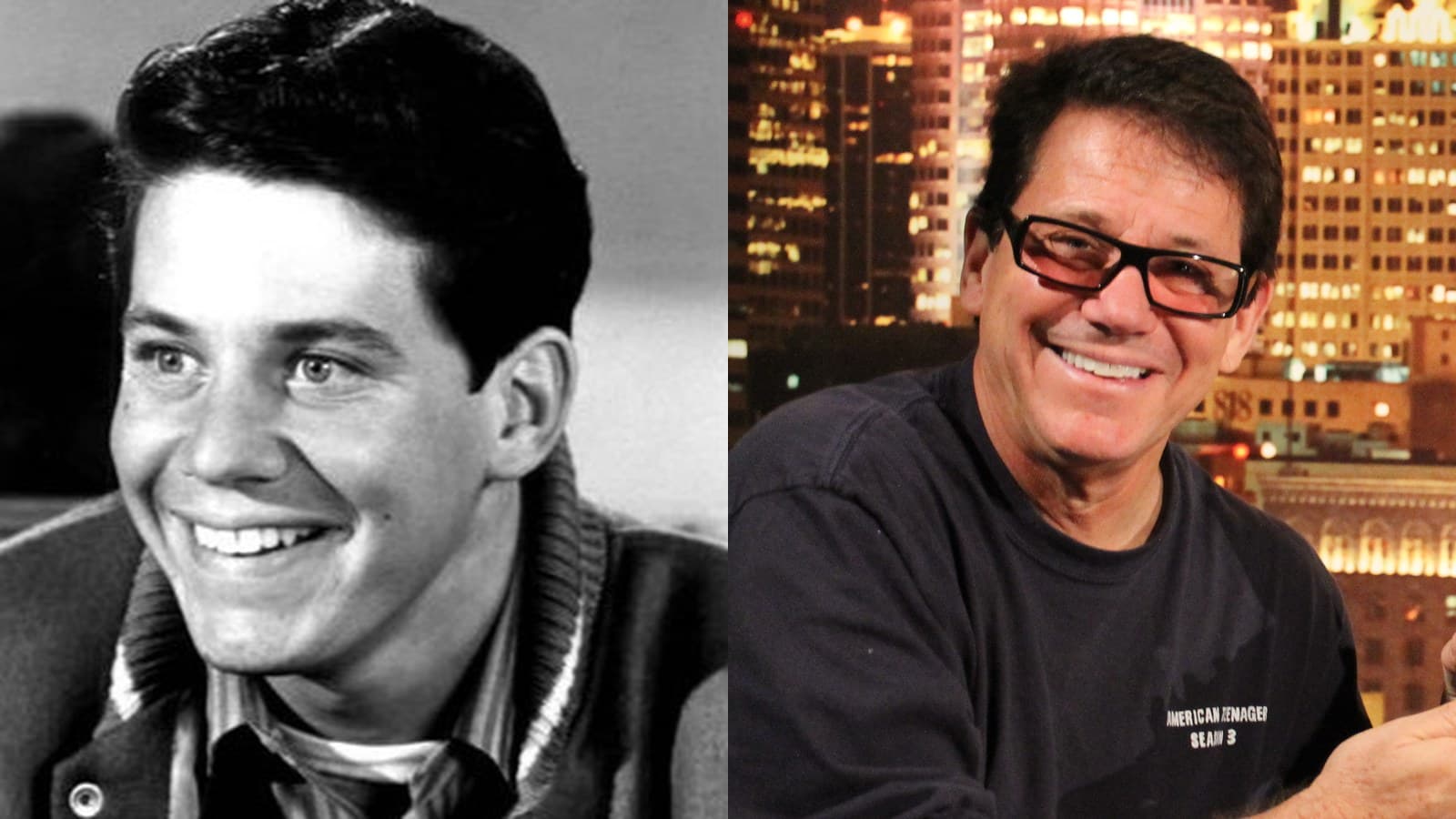
*ARCHIVE PHOTOS: Anson Williams as Potsie Weber in a December 1973 ABC press photo for Happy Days (left), and Anson Williams in October 2011 (right). Photos: ABC Television / Wikimedia Commons / Public domain (left); Bob Bekian / Wikimedia Commons / CC BY-SA 2.0 (right). Both cropped.*
*NewsCubby articles are produced with AI assistance and reviewed by humans.*
Reporting Sources
Photo & Video Credits
Credit: ABC Television / Wikimedia Commons (left); Bob Bekian / Wikimedia Commons (right). License: CC BY-SA 2.0. Source: file page.