Entertainment
Barbara Barrie dies at 95: the career beyond ‘Breaking Away’ and ‘Barney Miller’
The Oscar and Tony nominee moved between Broadway, film, television and books, leaving a body of work that reached several generations.
What to know
- Barrie was 95 when she died on October 28, according to reporting that cited her daughter.
- Her supporting performance in the 1979 film *Breaking Away* earned an Oscar nomination at the 1980 ceremony.
- She originated Sarah in Broadway’s *Company* and received a 1971 Tony nomination.
- Her work also included three Emmy nominations, children’s fiction and a memoir about living after cancer surgery.
Barbara Barrie, the actress audiences knew from *Breaking Away*, *Barney Miller* and *Suddenly Susan*, died Wednesday, October 28, at her Manhattan home. She was 95. PEOPLE reported the news, citing her daughter, Jane Harnick, who confirmed her death to The New York Times. Her representatives separately confirmed the death to the Los Angeles Times.
For many viewers, Barrie was a familiar face before she was a familiar name: a mother in a coming-of-age film, a police captain’s wife or a grandmother in a sitcom. But those credits tell only part of a career that also included a Cannes acting prize, an original role in Stephen Sondheim’s *Company* and books written for both young readers and adults.
Her story is worth revisiting through those different forms. It offers several ways into an actress’s work, whether a reader remembers a television character, knows the original *Company* recording or is discovering the films for the first time.
The film role that brought Oscar recognition
*Breaking Away* follows a young bicycle enthusiast and his friends in Bloomington, Indiana, as they confront the distance between the town’s working families and its university students. The American Film Institute’s synopsis describes Dave’s fascination with Italian cycling and the friends’ decision to enter the Little 500 race.
That premise makes the film sound like a sports story. It is also a family story: ambition develops alongside the expectations, worries and loyalties waiting at home. Barrie played Dave’s mother, Evelyn Stohler, opposite Paul Dooley as his father. Her place in that household is an important part of the film’s appeal beyond its racing scenes.
The Academy’s official record lists Barrie among the supporting-actress nominees at the 52nd Oscars. The dates matter: *Breaking Away* was released in 1979; the awards ceremony was held in 1980. She was a nominee, while Meryl Streep won the category for *Kramer vs. Kramer*.
Barrie later returned to the role for television. The Television Academy records a 1981 supporting-actress nomination for the ABC adaptation. Few entries in a performer’s résumé illustrate the passage between film and television as neatly as recognition for two versions of the same character.
A Cannes breakthrough before the familiar television roles
Barrie had already received major international recognition for *One Potato, Two Potato*, the 1964 film directed by Larry Peerce. The AFI Catalog documents her best-actress award at Cannes and the difficulty the independent production encountered in securing distribution.
The film centers on Julie, a divorced white mother who marries a Black man, Frank, played by Bernie Hamilton. Her former husband then challenges her custody of their child. Distributor Kino Lorber’s description identifies the conflict as a confrontation with a biased system, placing the family’s relationship at the center of the drama.
Its importance to Barrie’s career extends beyond a prize. This was a leading role built around a woman’s choices and the consequences imposed on her family. Remembering that performance alongside her later supporting parts gives a fuller account of the work: she could carry the central conflict as well as help define the lives surrounding another character.
The Library of Congress has described its acquisition of preservation materials for the film, supported by James Earl Jones. That preservation history provides another reason the title belongs in a look back at Barrie: it is a work that institutions have taken steps to keep available for future research.
Broadway was a continuing part of the story
The Broadway League’s Internet Broadway Database places Barrie’s Broadway debut in *The Wooden Dish* in 1955. It lists her as the original Sarah in *Company*, which opened in 1970, and records her Tony nomination for featured actress in a musical in 1971.
For readers who know *Company* through a later production, that original credit connects Barrie to the musical’s first Broadway company. The Paley Center’s catalog for D. A. Pennebaker’s *Company: Original Cast Album* also identifies her as Sarah, alongside the show’s composer and lyricist Sondheim and book writer George Furth.
Her stage career continued through plays including *California Suite* and, decades later, Joshua Harmon’s *Significant Other*. The latter opened at the Booth Theatre in March 2017, with Barrie as Helene, the grandmother of Gideon Glick’s Jordan. The production’s synopsis follows a single New Yorker watching his friends pair off and wondering where he fits as their lives change.
In a 2017 Observer interview, Barrie discussed the grandmother’s relationship with Jordan as a source of connection for both characters. The conversation is a useful counterpart to the awards lists: it centers the relationship she was playing and what it meant inside a scene. At 85, she was still talking about a new role and the people within it.
Television connected her to different generations
On *Barney Miller*, Barrie played Elizabeth, the wife of Hal Linden’s title character. On *Suddenly Susan*, she played Helen, the grandmother known as Nana to Brooke Shields’s Susan. TVLine’s account of her career identifies both roles and traces appearances across decades of television.
Those two characters help explain why different viewers may associate Barrie with different eras. Television brings a performer into a continuing routine: a familiar voice and face can become part of how an audience remembers a series, even when the actor’s wider theater or film career remains less familiar.
Her dramatic work received recognition, too. Beyond *Breaking Away*, the Television Academy lists nominations for *Law & Order* in 1992 and *Law & Order: Special Victims Unit* in 2003. The latter recognized her guest performance as Paula Haggerty. The three nominations span more than two decades and different kinds of television work.
That range is a reason to resist reducing the career to one affectionate character. Comedy, family drama, a guest performance in a procedural and a demanding stage role ask different things of a performer. Barrie’s credits give viewers a chance to explore those differences for themselves.
Her writing opened another route to readers
Barrie also published fiction for younger readers. *Lone Star* follows a Jewish girl who moves from Chicago to Texas and struggles with belonging and family identity. Publishers Weekly’s 1990 review describes a story set in 1944, with the child’s wish to fit in complicated by the pressures within her family.
*Adam Zigzag*, published in 1994, turns to a boy with dyslexia and the effects of his difficulties on his family. The novel uses the voices of Adam and his sister Caroline. These are fictional characters; their experiences should not be treated as a medical history of Barrie’s own children.
Her nonfiction was more directly personal. Scribner’s publisher page describes *Don’t Die of Embarrassment: Life After Colostomy and Other Adventures* as her first-person account of cancer and life after surgery. The 1999 paperback followed the earlier *Second Act*. These books belong in her cultural legacy as writing that addressed an experience people can find difficult to discuss, rather than as a substitute for current medical advice.
Where to begin with her work
A useful introduction is to pair *Breaking Away* with *One Potato, Two Potato*: one is the familiar Oscar-nominated performance, the other an earlier leading role. The original *Company* cast recording and Pennebaker’s documentary offer another route into the stage work. Availability varies by service and location, so those titles are starting points rather than a promise that any particular platform currently carries them.
There is also a physical record of the career. The New York Public Library’s guide to the Barbara Barrie papers describes materials spanning 1949–2008, donated by Barrie, including correspondence, photographs, programs and records connected to her books and performances.
Taken together, the films, television roles, stage credits and writing show why her work reached beyond a single audience. The most useful tribute is to keep that range visible—and to give a familiar face her full name and career.
*Want more? Explore today's headlines on NewsCubby and join My Day free to make NewsCubby part of your day.*
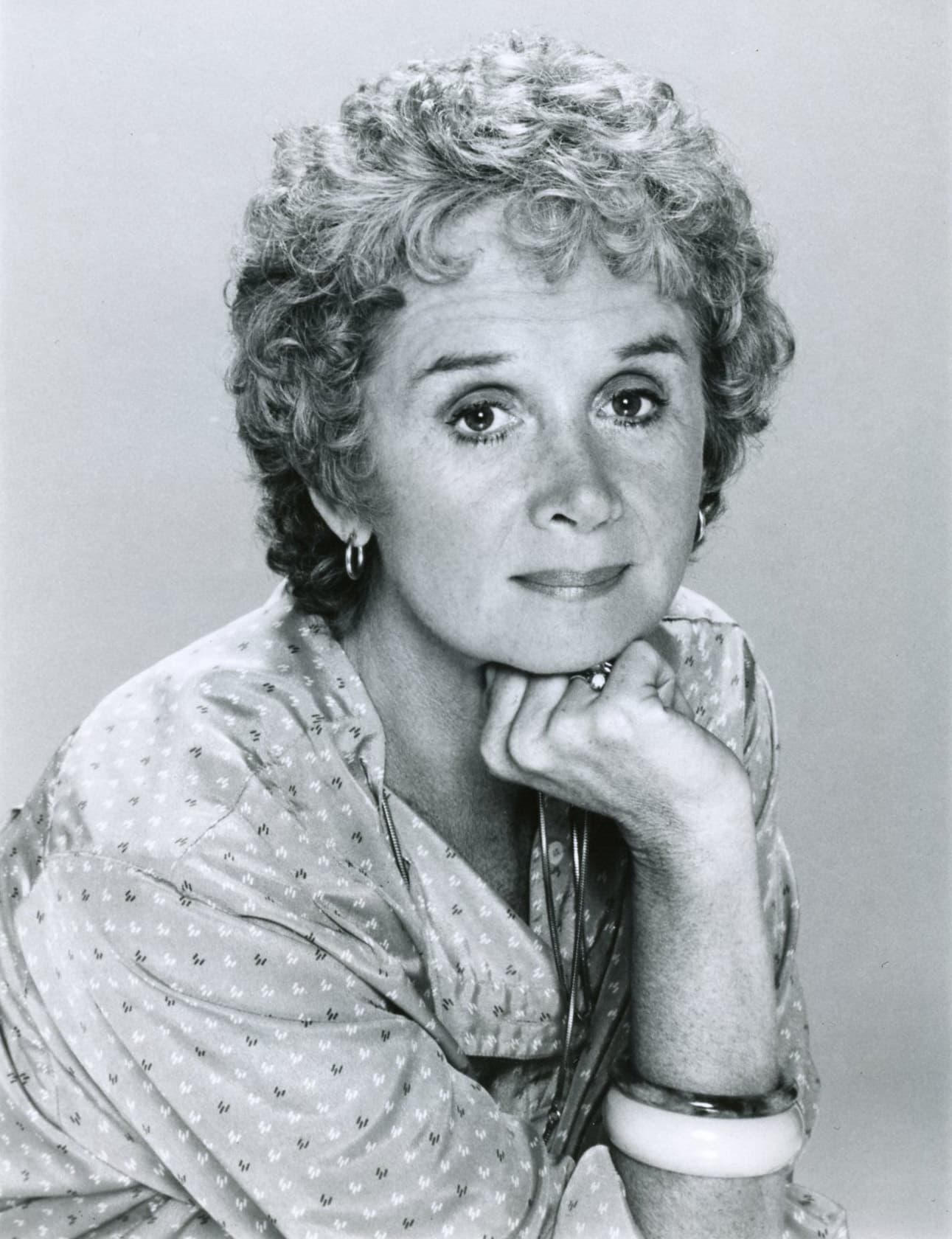
*ARCHIVE PHOTO: Barbara Barrie, ABC publicity portrait, July 29, 1980. Photo: ABC Television / Wikimedia Commons; public domain in the United States.*
*NewsCubby articles are produced with AI assistance and reviewed by humans.*
Sources, credits & editorial notes
- PEOPLE — death reported October 28
- TVLine — television roles and family reporting
- Academy of Motion Picture Arts and Sciences — 1980 ceremony
- Television Academy — three nominations
- AFI — Breaking Away synopsis and credits
- AFI Catalog — One Potato, Two Potato history
- Festival de Cannes — Barbara Barrie filmography
- Kino Lorber — One Potato, Two Potato
- Library of Congress — 2000 annual report, preservation gift
- Broadway League / IBDB — credits and 1971 Tony nomination
- Paley Center — Company: Original Cast Album credits
- Broadway.com — Significant Other production and cast
- Observer — original March 2017 interview
- Publishers Weekly — Lone Star, August 1990 review
- Publishers Weekly — Adam Zigzag, February 1994 review
- Scribner — 1999 memoir edition
- Kirkus — Second Act, 1997
- NYPL — Barbara Barrie papers, official finding aid
- Los Angeles Times — representatives confirm death
- Photo: ABC Television / Wikimedia Commons, 1980 archive; public domain