Politics
Election eve 2026: Senate races, poll closing times and Trump's day
The Senate races that will decide control, the latest PollCubby averages and poll closing times in Eastern time before Tuesday's midterm vote.
What to know
- Americans vote in the midterm general election on Tuesday, Nov. 3. Democrats need a net gain of four seats to control the Senate.
- Georgia and South Carolina polls close first among the key Senate races, at 7 p.m. Eastern; Alaska's last polls close at 1 a.m. Eastern Wednesday.
- PollCubby, the NewsCubby polling average, shows Democrats ahead by 9.3 points on the generic congressional ballot as of Nov. 1.
- President Donald Trump is scheduled to speak at the Lincoln Memorial Reflecting Pool at 2 p.m. Eastern Monday, according to White House guidance.
- Some races may not be settled on election night.
Monday, November 2, is election eve, and the fight for the U.S. Senate has never looked wider this cycle. Americans vote in the midterm general election on Tuesday, November 3, with competitive Senate races stretching from Maine to Alaska and polls closing across five time zones.
Democrats need to flip a net four Republican-held seats to win control of the chamber, NPR reported in its final ratings roundup. The Cook Political Report rates Alaska, Iowa, Kansas, Maine, Michigan, Ohio and Texas as toss-ups. Several of those races sit within the margin of error in the final public surveys.
Why is the Senate map so wide?
When the cycle began, Democrats were seen as long shots for the majority because most seats on the ballot are in states Trump carried. That changed over the year. NPR's Domenico Montanaro wrote that polling, ad spending and candidate travel now point to competitive races in states Trump won by double digits in 2024, including Alaska (Trump +14), Iowa (Trump +13), Kansas (Trump +16), Ohio (Trump +11) and Texas (Trump +13).
The national numbers explain the shift. As of Nov. 1, PollCubby's average puts Trump's job approval at 36.4% and disapproval at 60.3%. The generic ballot stands at 52.4% for Democrats and 43.1% for Republicans, based on Emerson, Ipsos/Reuters and Marist surveys that ended in late October. In the latest Ipsos/Reuters poll, 68% of registered voters said the country is on the wrong track.
Sen. Kirsten Gillibrand of New York, who chairs the Democratic Senatorial Campaign Committee, told NPR she was "very energized" by candidates "winning" in "deep red and purple places." The National Republican Senatorial Committee countered that voters in red-leaning battlegrounds will reject what it called the unaffordable agendas of Democratic nominees in Michigan, Maine and Alaska.
Republicans still have targets of their own, chiefly the open Democratic seat in Michigan, plus New Hampshire and Minnesota. Flipping even one of them would complicate the Democrats' path.
Which Senate races are on the ballot?
**Michigan:** Democrat Abdul El-Sayed faces Republican Mike Rogers for the open seat held by retiring Democrat Gary Peters. PollCubby's average gives El-Sayed a 5.5-point lead across seven polls. On Sunday, Democratic Rep. Haley Stevens endorsed Rogers.
**Alaska:** Democrat Mary Peltola challenges Republican incumbent Dan Sullivan. Daniel J. Sullivan, a different candidate who shares the senator's name, is also on the ballot, and on Sunday a federal judge dismissed a Justice Department lawsuit over ballots cast for him; the department has appealed. The most recent public poll, from mid-October, showed Peltola ahead 51% to 49%.
**Texas:** Democrat James Talarico, a state representative, faces Republican Attorney General Ken Paxton, who beat Sen. John Cornyn in a Trump-backed primary runoff. NPR reported more than $500 million has been spent since the primary. Talarico leads by 2.9 points across nine polls. No Democrat has won statewide in Texas since 1994.
**Kansas:** Democrat Adam Hamilton, a pastor, challenges Republican incumbent Roger Marshall. Hamilton leads by 4.9 points in an average of three polls, including Emerson's Oct. 28 survey showing him ahead 49.5% to 47.1%.
**Georgia:** Democratic incumbent Jon Ossoff faces Republican Mike Collins. The race, once a top Republican target, is rated likely Democratic, and the latest poll on PollCubby shows Ossoff up 15 points.
**South Carolina:** Republican Darline Graham, the sister of the late Sen. Lindsey Graham, faces Democrat Annie Andrews for the open seat. NPR rates it lean Republican in a state Trump won by 18 points.
**Iowa:** Republican Rep. Ashley Hinson faces Democrat Josh Turek for the seat Sen. Joni Ernst is leaving. The only recent public poll, from Echelon Insights, has Turek ahead 45% to 43%.
**Maine:** Republican incumbent Susan Collins faces Democrat Troy Jackson in the only toss-up state Kamala Harris won in 2024. Jackson leads by 3.7 points across four polls. Polls also showed Collins trailing in 2020, and she won.
Which other races could decide control?
In **Ohio**, former Sen. Sherrod Brown is trying to win back a seat, challenging appointed Republican Sen. Jon Husted. Brown leads by 2.1 points across four polls. In **North Carolina**, former Gov. Roy Cooper leads Republican Michael Whatley by 10.5 points for the seat Sen. Thom Tillis is leaving; NPR calls it a likely Democratic pickup.
Democrats are defending open seats in **New Hampshire**, where Rep. Chris Pappas leads former Sen. John E. Sununu by 7 points in the latest poll, and **Minnesota**, where Lt. Gov. Peggy Flanagan led Republican Michele Tafoya by 3 points in a mid-October survey. NewsCubby's Minnesota Senate polling coverage has more on that race.
PollCubby's averages are not predictions. Individual polls in these races have run three to nine points apart, so most leads sit inside normal polling error.
When do polls close?
Georgia and South Carolina close polls at 7 p.m. Eastern. North Carolina and Ohio follow at 7:30 p.m. Eastern. Maine closes at 8 p.m. Eastern. Iowa closes at 8 p.m. Central, which is 9 p.m. Eastern, and Minnesota also closes at 8 p.m. Central.
Michigan closes at 8 p.m. local time: most of the state closes at 8 p.m. Eastern, while its Central-time counties close an hour later on an Eastern clock. Texas closes at 7 p.m. local time, which is 8 p.m. Eastern in Central-time areas and 9 p.m. Eastern in the Mountain-time areas around El Paso.
Kansas generally closes at 7 p.m. local time across its Central and Mountain zones, but the secretary of state says counties can set different hours. Voters should confirm hours with their county election officer.
Alaska closes at 8 p.m. local time, which is midnight Eastern for most of the state and 1 a.m. Eastern Wednesday in the Aleutians. After the weekend clock change, every time above is Standard Time. A voter in line at closing time can still vote, and a court order can extend hours at individual sites.
What is Trump doing Monday?
The White House's public daily guidance, preserved in an independent press-pool archive, schedules President Trump's remarks at the Lincoln Memorial Reflecting Pool for 2 p.m. Eastern Monday.
The guidance also lists closed-press tele-rallies at 11 a.m., 11:45 a.m., 4 p.m., 4:45 p.m., 5:30 p.m., 6:15 p.m., 7 p.m., 7:45 p.m. and 8:15 p.m. It does not name the states those calls target.
What to watch Tuesday night
The first big signal comes at 7 p.m. Eastern from Georgia and South Carolina. NPR flagged Black turnout in South Carolina as the factor that could make that race competitive. Ohio and North Carolina at 7:30 p.m. will show whether Brown's comeback and Cooper's lead hold.
Texas and Michigan report through the 8 p.m. and 9 p.m. hours. NPR noted that in 2018 Democrat Beto O'Rourke lost to Sen. Ted Cruz by less than three points without leading a single poll, while Talarico has led most. Watch turnout among Latino voters in South Texas, where Democrat Gina Hinojosa is running for governor against Greg Abbott.
Republican turnout is the biggest unknown nationally. NPR reported that low Republican turnout could be the difference between Democrats gaining one or two seats and gaining six or seven.
Close races may take days to call as officials count mail and provisional ballots. Alaska, the last state to close, often takes the longest to count.
What's next
Polls open Tuesday morning. Check your polling place and hours with your state or county election office. Follow the latest polling averages for Michigan, Alaska, Texas, Kansas, Georgia, Iowa, Maine and other races on PollCubby.
*Want more? Explore today's headlines on NewsCubby and join My Day free to make NewsCubby part of your day.*
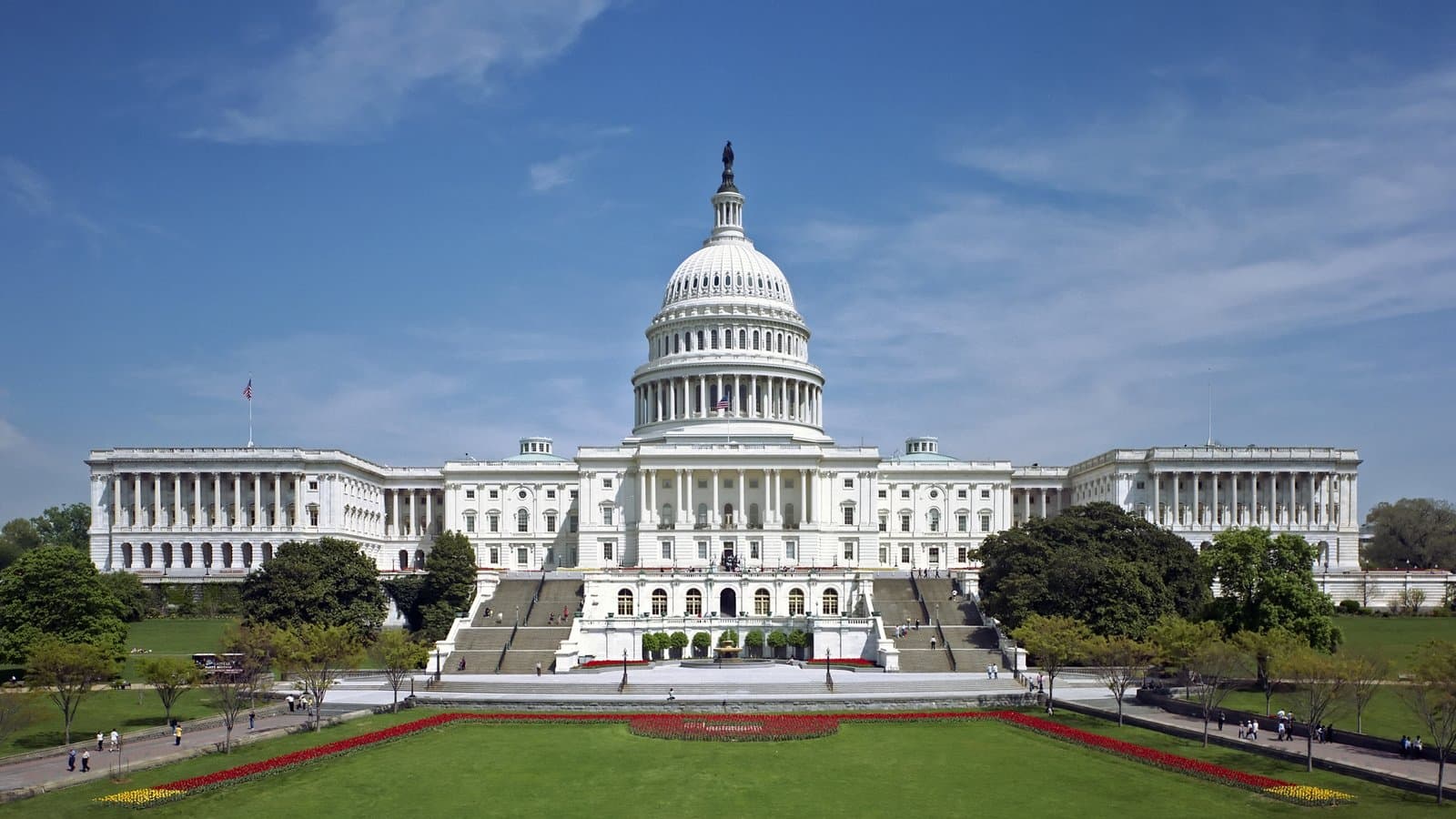
*ARCHIVE PHOTO: The west front of the U.S. Capitol in Washington. Photo: Architect of the Capitol / Wikimedia Commons / Public domain.*
*NewsCubby articles are produced with AI assistance and reviewed by humans.*
Reporting Sources
- White House daily public guidance for MondayNovember2, independent pool archive
- Alaska Division of Elections, general-election candidates
- Texas Secretary of State,2026 ballot certification
- Johnson County Iowa, November 3 general-election candidates and hours
- South Carolina Public Radio, Darline Graham and Annie Andrews Senate contest
- AP Decision Notes, Georgia Senate election
- AP Decision Notes, Maine Senate election
- Michigan Secretary of State, voting hours
- Kansas Secretary of State, polling hours and county discretion
- VoteTexas official voting FAQ
- Georgia official general-election guide
- South Carolina State Election Commission,2026 candidate toolkit and voter hours
- Maine Secretary of State voter guide
- AP Decision Notes, Alaska closing times
- Georgia Public Broadcasting/NPR, Senate landscape
- PollCubby, NewsCubby polling average, Senate and national averages as of Nov. 1, 2026
- North Carolina State Board of Elections, Election Day voting hours
- Minnesota Secretary of State, Election Day voting hours
- Ohio Secretary of State, voter information and polling hours
Photo & Video Credits
Credit: Architect of the Capitol / Wikimedia Commons. License: Public domain. Source: file page.