Business
Fed decision October 28: time, rates and what to watch
The Fed announces its decision at 2 p.m. Eastern. Here is what to watch after September’s increase and what it means for borrowers.
What to know
- The Fed's official calendar lists the October 27–28 meeting's decision for 2 p.m. Eastern on October 28 and the news conference for 2:30 p.m.
- On September 16, the committee voted 12–0 to raise its policy target by a quarter percentage point, to 3.75%–4.00%.
- October is not marked as a meeting with a new Summary of Economic Projections. The next scheduled projections meeting is December 8–9.
- The policy rate influences borrowing conditions, but a Fed decision does not set every mortgage, credit-card or savings-account rate directly.
The Federal Reserve is scheduled to announce its interest-rate decision at 2 p.m. Eastern on Wednesday, October 28, followed by a news conference at 2:30 p.m. The morning question is what officials will say about inflation and the economy after September's rate increase, not the outcome of a decision that has yet to be released.
The Federal Open Market Committee's last published decision raised its target range to 3.75%–4.00%. Wednesday's meeting gives borrowers, savers and investors a fresh assessment of whether policymakers think that setting is sufficient. This is a preview prepared before the announcement; it does not report a new rate decision.
Why is this meeting important?
The September decision changed the immediate backdrop. In its statement, the Fed described resilient domestic spending and solid economic activity while saying inflation remained elevated. Officials said a higher policy rate would help return inflation to their 2% objective more quickly. That combination puts the focus on how much further restraint they consider necessary.
For households, the debate is about the cost of financing purchases and the persistence of price increases. For businesses, it affects investment calculations, demand and working-capital costs. The same policy can influence those decisions in different directions: higher rates can reward some savers while making new borrowing more expensive. There is no single household experience that captures the entire economy.
AP's preview identified the outlook for further rate increases and the committee's internal views as issues to watch. That is an account of the questions surrounding the meeting, rather than confirmation that any particular action will occur. The official statement and the subsequent explanation will provide the actual policy news.
Reuters reported on October 26 that officials had signaled a pause in rate increases this week, while inflation concerns kept the possibility of later tightening in focus. An expected pause is different from a completed decision, and leaving rates unchanged would not itself establish that the inflation problem is resolved.
What is the federal funds rate?
The federal funds rate is an overnight money-market interest rate. The FOMC sets a target range and the Fed uses its operating tools to keep the market rate consistent with that range. It is a reference point for broader financial conditions, not a retail loan available to an individual customer.
The September implementation note shows the distinction. Alongside the policy target, it set the interest paid on reserve balances at 3.90%, effective September 17, and gave operating instructions to the New York Fed's market desk. Those technical settings help implement the committee's chosen stance. They should not be confused with a promise that banks will pay depositors 3.90%.
Changes can reach short-term borrowing markets relatively quickly. Other rates reflect additional factors, including expected future policy, inflation expectations, credit risk and the length of a loan. That is why a news headline announcing a quarter-point move cannot accurately describe every borrowing cost as changing by exactly the same amount.
What will the statement reveal?
The first item is the target range itself: whether the committee changes it or maintains it. The next is how officials characterize inflation, employment, spending and uncertainty. Comparing those descriptions with September's language can reveal a change in emphasis even if the numerical target stays the same.
The vote is also informative. A unanimous decision and a decision with dissents can carry different information about the range of views on the committee. A dissent, however, does not necessarily identify a durable faction or determine the next meeting. Its stated reason matters more than an assumption about someone's motives.
The implementation note deserves separate attention because it explains how the decision will operate. Readers looking at a single number on a market screen can miss the difference between the target range, the rate paid on reserve balances and an actual market transaction. The Fed publishes these details together to distinguish policy from its operational machinery.
Why does the news conference matter?
The 2:30 p.m. Eastern conference lets reporters ask how the committee interpreted the evidence and what developments could change its assessment. A statement is necessarily concise; answers may clarify which risks policymakers see as most important and how they are weighing the costs of acting against the costs of waiting.
It also creates a timing distinction for readers following markets. An immediate reaction after 2 p.m. occurs before the chair's full explanation. A later reaction can reflect answers at the conference as well as trading conditions. Neither movement, by itself, proves that policymakers intended a particular signal or that investors agree on its meaning.
There is no new scheduled projection package at this October meeting. The Fed's calendar marks December 8–9 as the next meeting associated with a Summary of Economic Projections. September's forecasts therefore remain dated individual assessments, not a newly updated October promise about where rates must go.
How could borrowers and savers feel the effects?
People with variable-rate debt should distinguish a policy announcement from the terms in their contract. An interest rate may be linked to a specified benchmark and adjust on a particular schedule. Fees, margins and billing dates can also matter. The payment effect depends on those terms and the outstanding balance, rather than on the policy headline alone.
A fixed-rate mortgage already in place does not become a variable-rate loan because the Fed meets. New mortgage offers, meanwhile, are influenced by longer-term market rates and expectations. The Fed's explanation of monetary policy notes that expectations about future short-term rates can affect medium- and longer-term rates today. That can produce movements before the official announcement.
Deposit products have their own differences. An advertised savings yield, a certificate of deposit and a checking-account rate are not interchangeable, and banks do not all price them identically. A central-bank move changes the environment in which financial institutions operate; it does not rewrite every customer's agreement at the same moment.
How should readers interpret the inflation debate?
The Fed's long-run 2% inflation goal refers to the annual change in the personal consumption expenditures price index. It is not a commitment that every item will rise by 2%, nor a promise to return the entire price level to where it stood several years earlier. Slower inflation means prices generally rise more slowly; it does not automatically mean prices fall.
That distinction matters when economic statistics and household frustration appear to diverge. A family's expenses can remain high after the pace of inflation eases. Differences in housing, transportation, health care and other purchases can make its experience differ from an aggregate index. The policy discussion concerns broad conditions, while individual budgets reflect a particular mix of prices and income.
Employment is the other part of the mandate. Monetary policy can restrain demand as it works to bring inflation down, so officials must assess labor-market conditions along with prices. A single data point is not the whole judgment. The committee's explanation of the balance will be more useful than treating the decision as a response to only one headline statistic.
What do we know, and what remains unknown?
The known facts before the announcement are the meeting schedule, the last published target range and the Fed's established objectives. The September statement and implementation note provide a documented starting point. They are historical policy records, not Wednesday's result.
The unknowns include the new decision, its vote, any change in the committee's assessment and the guidance offered at the conference. The December meeting is scheduled, but its outcome is not fixed. Neither an analyst's expectation nor a financial-market price can substitute for the committee's eventual announcement.
What's next?
The immediate checkpoints are Wednesday, October 28, at 2 p.m. Eastern for the policy announcement and 2:30 p.m. for the news conference. The most useful read-through will separate what changed in the actual decision from what changed in the explanation. Any later report should identify those developments rather than silently treating this morning's preview as a results story.
*Want more? Explore today's headlines on NewsCubby and join My Day free to make NewsCubby part of your day.*
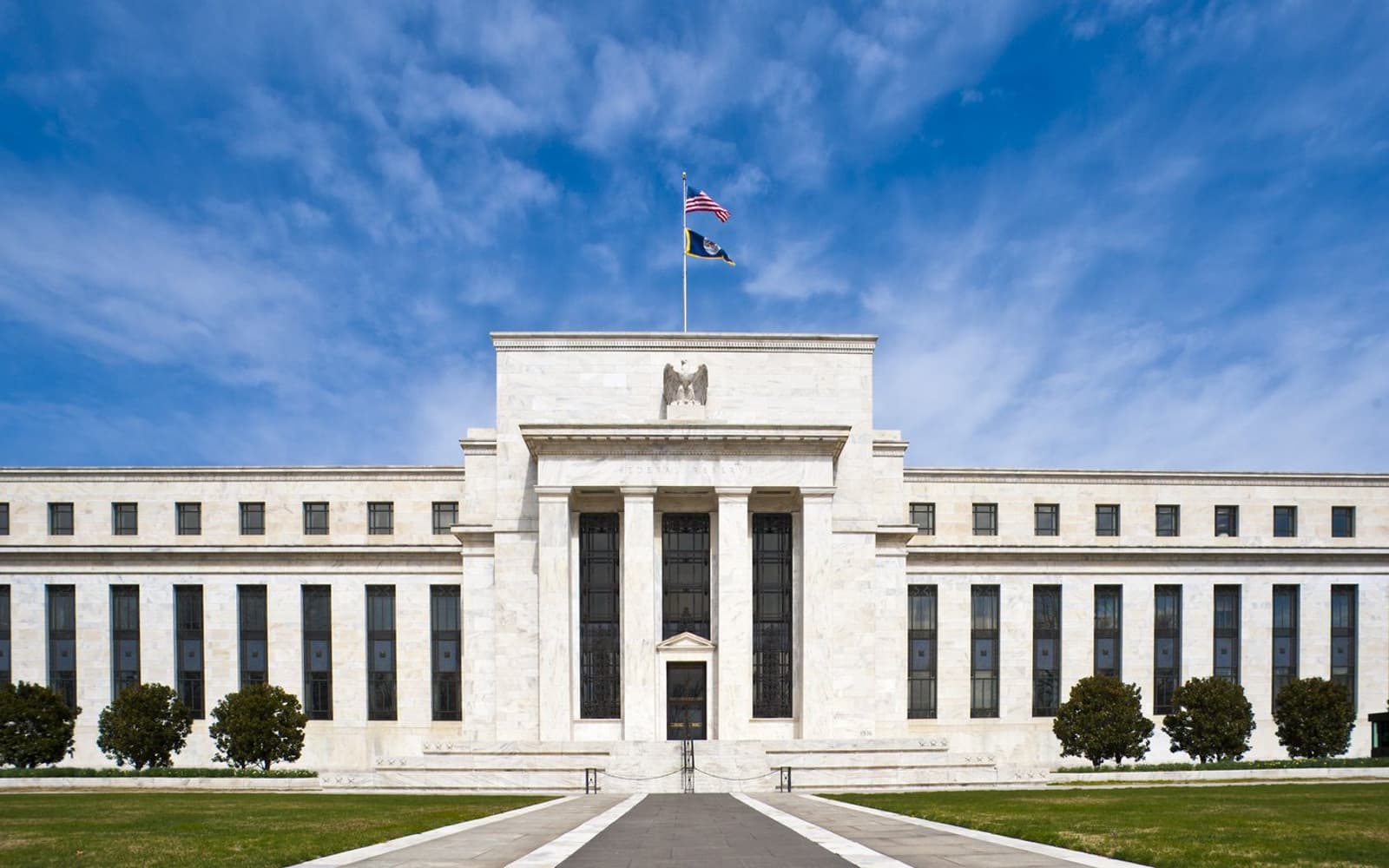
*ARCHIVE PHOTO: The white marble facade of the Federal Reserve's Eccles Building in Washington, with columns at its center entrance and a U.S. flag flying above it against a blue sky. Capture date(s): 2011-03-29. Photo: Federal Reserve / Wikimedia Commons / Wikimedia Commons, Public domain (https://creativecommons.org/publicdomain/mark/1.0/). Cropped/resized; social cards add typography and gradient. Not a photograph of the October 2026 event. No endorsement implied.*
*Prepared with AI assistance for NewsCubby.*
Sources, credits & editorial notes
- Federal Reserve: October 2026 official calendar
- Federal Reserve: FOMC meeting calendar
- Federal Reserve: September 16 policy statement
- Federal Reserve: September implementation note
- Federal Reserve: How monetary policy works
- Federal Reserve: Why the inflation goal is 2 percent
- Federal Reserve: Why interest rates matter
- AP: Five things to watch at the Fed meeting
- Reuters: Fed expected to pause rate hikes
- Photo: Federal Reserve / Wikimedia Commons; Public domain