Business
Why this harvest is putting new pressure on American farmers
A dated USDA forecast helps explain the squeeze: production expenses are rising faster than many farms can absorb, even as the national profit picture varies sharply by business.
What to know
- USDA's September 3 forecast projects 2026 net farm income of $158.4 billion, down 2.6% before inflation from 2025.
- Production expenses are forecast to reach $492.8 billion, up 4.5%; fuel and oil spending is projected to rise 28.8%.
- Those are national, full-year estimates. They do not describe every farm or establish today's diesel price.
- A farm-profit squeeze alone cannot tell consumers exactly what will happen to grocery prices.
Bringing in a crop is only one part of a successful harvest. Farmers also have to pay for the fuel, fertilizer, labor and equipment that make it possible—and the latest federal forecast shows those bills taking a larger bite out of the farm economy.
A harvest measured in margins
The Economic Research Service's current forecast, released September 3, puts total production expenses $21.2 billion above their estimated 2025 level. Fertilizer, lime and soil-conditioner expenses are forecast to increase 15.3%, alongside the larger percentage rise in fuel and oil.
That combination matters during harvest because selling more output does not automatically mean keeping more money. What remains after expenses depends on the prices received, the amount sold and the cost of producing and moving it. A farm can bring in a substantial crop while still finding its financial cushion thinner.
The figures also show why a single national headline needs qualification. USDA forecasts lower spending on feed and pesticides, while purchases of livestock and poultry are expected to become the largest expense category. Crop growers, livestock producers and farms with different debt or land costs will not experience the same year.
Two income measures tell different stories
Net farm income is USDA's broad measure of sector profits. Its projected 2.6% decline is in nominal dollars. After inflation, the forecast decline is 5.5%.
Net cash farm income, a separate measure focused on cash receipts and expenses, is forecast to edge up 0.4% before inflation to $176.4 billion. After inflation, it is projected to fall 2.5%. Neither measure is a typical farmer's salary, and neither means every operation is losing money.
USDA says both inflation-adjusted measures would remain above their 2006–25 averages if the forecast is realized. That longer view belongs beside the immediate pressure: a difficult cost increase and a historically elevated sector total can exist at the same time.
Why shoppers should avoid a simple price prediction
Farm costs are one part of a food supply chain that also includes processing, transportation and retailing. This forecast measures farm finances; it does not calculate the future price of a particular grocery basket. Turning a 28.8% projected rise in farm fuel spending into an equivalent supermarket increase would misuse the data.
For readers following the harvest, the useful questions are narrower: which expenses are rising, which prices farmers receive, and whether later estimates change the outlook. September's forecast is a benchmark for understanding the pressure, not a final accounting of the 2026 harvest.
Sources and photo
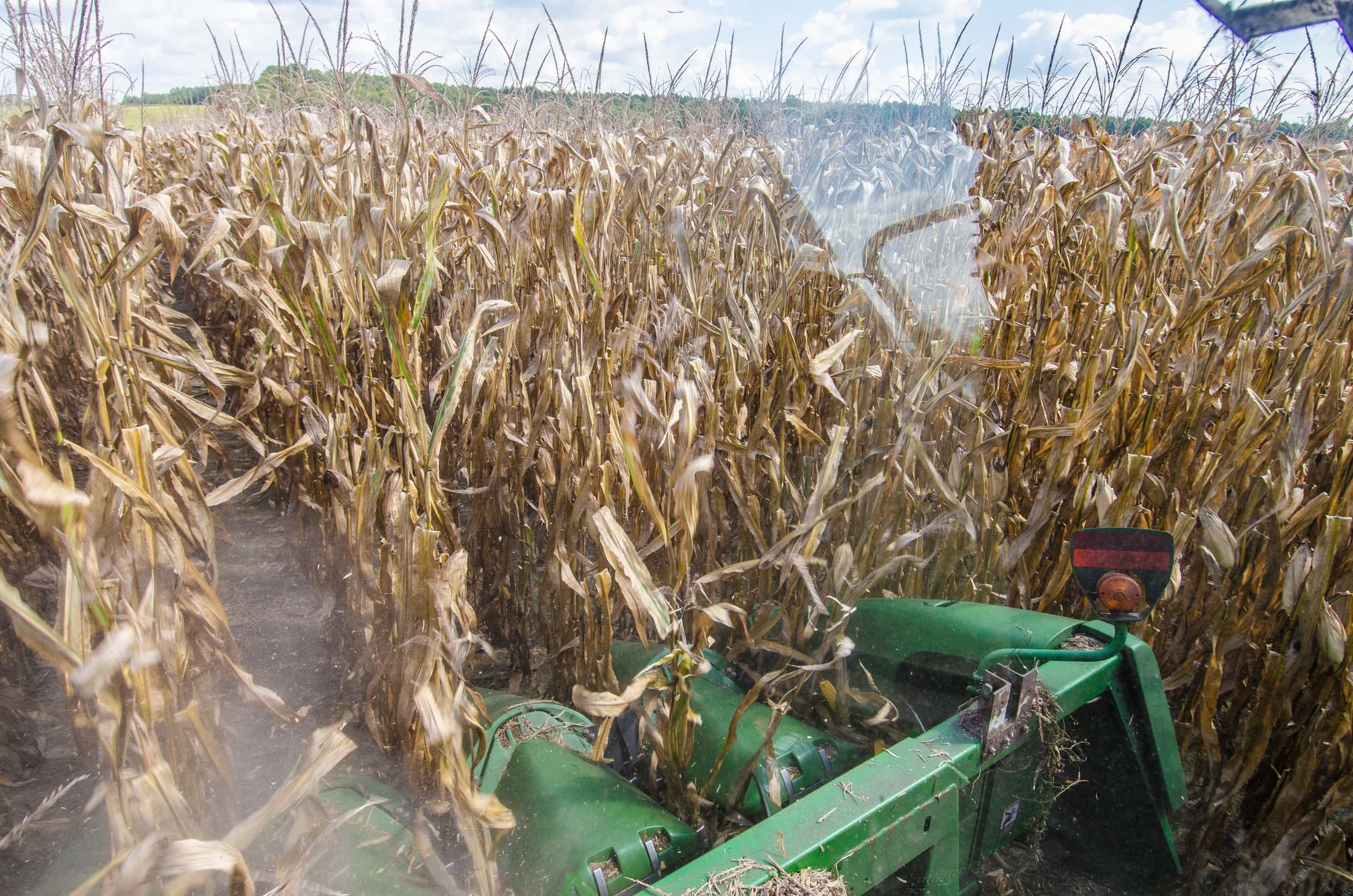
This explanation is based on USDA's September 3 farm-income forecast. Figures are forecasts rather than final outcomes. Archive photograph: corn harvesting at John N. Mills & Sons in Virginia, September 20, 2013, by Lance Cheung / USDA, public domain. It does not depict this year's harvest.
Photograph and reuse notes
Corn harvesting at John N. Mills & Sons in Virginia on September 20, 2013. Archive photograph; not the 2026 harvest. Lance Cheung / USDA, public domain. The website photograph is resized/compressed with responsive display cropping. Social adaptations add a crop, contrast gradient, NewsCubby branding and translated headline. No endorsement by the photographer, subject or organization is implied. Original photograph and rights record.jpg); license.