Entertainment
Henry Winkler: Part 2 of 5 - The Fonz's Jacket Goes to the Smithsonian
ABC first said no to leather. On Feb. 13, 1980, Henry Winkler gave the Fonz's famous jacket to the Smithsonian's American history museum.
What to know
- ABC executives did not want Fonzie in leather at first, so Winkler wore windbreakers during the first season of *Happy Days*; one was green, and the original light grey McGregor windbreaker was later thrown in the garbage after ABC relented.
- Creator Garry Marshall won a compromise that allowed the leather jacket in scenes with Fonzie's motorcycle, then made sure the motorcycle was written into every scene until the network backed down.
- On Feb. 13, 1980, Winkler donated the leather jacket he wore during *Happy Days* to the National Museum of History and Technology's history of entertainment collection.
- The Smithsonian record lists the object as ID 1980.0094.01, with leather and satin materials and a metal zipper, made by Western Costume Co. in Hollywood and credited to Paramount Television Productions.
- Fonzie's leather-jacket image remained part of his legacy through Winkler's 1981 Hollywood Walk of Fame star, Milwaukee's Bronze Fonz in 2008, and the still-famous shark-jump episode.
On Feb. 13, 1980, Henry Winkler donated the leather jacket he wore as Fonzie on *Happy Days* to the National Museum of History and Technology, now the National Museum of American History. By then, the jacket had become inseparable from the character and from the show's rise. That was not how the series began. ABC executives initially objected to leather because they thought it would imply that Fonzie was a criminal, so Winkler spent the first season in windbreakers instead. Only after a compromise involving Fonzie's motorcycle did the leather jacket become a regular part of the character's look. Once that happened, it moved quickly from disputed wardrobe choice to trademark.
Why wasn't Fonzie wearing leather from day one?
When *Happy Days* premiered on ABC on Jan. 15, 1974, the leather jacket most viewers now associate with Fonzie was not yet a settled part of the series. ABC executives did not want Fonzie wearing leather because they believed it would suggest that he was a criminal. That decision shaped the first season in a very visible way.
Instead of leather, Winkler wore windbreakers. There were two different windbreaker jackets in the first season, including one that was green. The original first-season jacket was a light grey McGregor windbreaker. After ABC relented and allowed the leather jacket, that windbreaker did not gain museum status of its own. It was eventually thrown into the garbage.
That early wardrobe detour is useful because it shows how some durable TV images take shape. Fonzie is now remembered first in leather, but the character reached the screen in a softer, safer network-approved look. The version preserved in popular memory came only after an argument, a compromise and a retooling of the show itself.
How did the motorcycle solve ABC's problem?
The breakthrough came through a compromise pushed by creator Garry Marshall. He argued with ABC executives over the wardrobe issue, and the eventual deal was simple: Fonzie could wear the leather jacket, but only in scenes with his motorcycle. Marshall then responded in the most direct possible way. He made certain that the motorcycle was written into every scene.
The motorcycle appeared in all of Fonzie's scenes, even indoors, until ABC relented. That arrangement let the show connect the jacket to the biker image the producers wanted while staying inside the network's rule.
There was one practical complication. In real life, Winkler did not know how to ride a motorcycle. He almost crashed it the first time he tried, and he subsequently never rode the motorcycle during the series. Even so, the visual pairing of motorcycle and leather did its work. The compromise kept the jacket on screen long enough for viewers to accept it as natural to the character. What started as a negotiated exception quickly became the look that defined Fonzie.
When did the jacket become Fonzie's trademark?
The jacket's rise went hand in hand with Fonzie's rise. *Happy Days* began with Richie Cunningham at the center, and Fonzie was initially written as a minor role. But the show changed course as its ratings began to fall during the second season. Garry Marshall retooled the format, leaned more into broad comedy and put a brighter spotlight on Fonzie.
By the middle of the second season, in December 1974, Fonzie's transition into breakout character was clear in the episode *Guess Who's Coming to Christmas*, where he was featured as the central protagonist. By the third season, he had become the lead of the series as storylines shifted away from Richie Cunningham and toward the Fonz. The larger commercial shift followed. *Happy Days* became the No. 1 program on television in 1976-77, and Fonzie became one of the most merchandised characters of the 1970s.
At that point, the leather jacket was no longer just a costume piece that had survived network resistance. It was Fonzie's trademark. The Smithsonian later described the jacket as a symbol of coolness itself, which fits the path it took on screen: first restricted, then tolerated, then central. The jacket and the character ended up strengthening each other. As Fonzie became the breakout star, the leather became the shortest visual route to recognizing him.
What happened on Feb. 13, 1980?
The museum chapter of the story has a precise date. A Smithsonian Archives record for a 1980 photographic print summarizes the event this way: Henry Winkler donated the leather jacket he wore during the television show *Happy Days* to the National Museum of History and Technology's history of entertainment collection on Feb. 13, 1980. The same archival record notes that the museum is now the National Museum of American History.
A second Smithsonian Archives entry, drawing on *The Torch* from March 1980, says that Henry Winkler, who played the Fonz on the sitcom *Happy Days*, donated his leather jacket to the museum's History of Entertainment collection. In other words, this was not just a later retrospective tribute. The donation happened while *Happy Days* was still on the air.
That timing matters. By 1980, the jacket had already crossed from active television wardrobe into museum material. The act of donating it treated a recent TV prop and costume as part of American entertainment history, not just as memorabilia. The Smithsonian was preserving not only an object from a popular show, but also a visual marker of how quickly Fonzie had entered the culture.
What does the Smithsonian record say about the jacket today?
The Smithsonian object record is direct and detailed. Its title is *Fonzie's Jacket, worn by Henry Winkler on Happy Days*. The object name is simply Jacket, and the ID number is 1980.0094.01. The credit line is Paramount Television Productions.
The record says the jacket was made between 1974 and 1980. It lists the maker as Western Costume Co. and places its manufacture in the United States: California, Los Angeles, Hollywood. Its physical description identifies leather and satin as overall materials and metal as the zipper material. The accession number is 1980.0094.
The museum record also answers the question many fans would ask first: can you see it now? The Smithsonian listing says the jacket is currently not on view. So the item remains in the National Museum of American History's collection, but not in current public display. Even off view, the record keeps the jacket legible as a historical object, with production, material and ownership details attached to a costume millions of viewers once knew instantly.
Why does the jacket still stand for the Fonz?
One clear answer comes from Smithsonian curator Eric Jentsch, whose description of the jacket distilled the larger point: “Fonzie was a representation of cool at a time when you were learning about what cool was.” That line helps explain why the jacket remained attached to Winkler's public image long after the costume first appeared on camera.
The association showed up in formal honors and public art. In 1981, Winkler received a star on the Hollywood Walk of Fame for Television, largely due to his portrayal of Fonzie. Decades later, the image resurfaced in Milwaukee, the city where *Happy Days* was set. On Aug. 18, 2008, American artist Gerald P. Sawyer unveiled the Bronze Fonz on the Milwaukee Riverwalk in downtown Milwaukee.
The sculpture depicts Henry Winkler as the Fonz in the familiar outfit: a leather jacket, white T-shirt and jeans, with a two-handed thumbs up. That is a useful measure of the jacket's staying power. When Milwaukee turned Fonzie into public art, it did not need to explain the wardrobe. The leather jacket was already doing that work. Between the Smithsonian collection, the Walk of Fame star and the Bronze Fonz, the costume kept functioning as a durable public symbol of the character.
What about the jump-the-shark jacket moment?
No account of Fonzie's jacket is complete without the episode that later gave television one of its best-known phrases. The idiom jump the shark was coined in 1985 by Jon Hein in response to *Happy Days* season 5, episode 3, *Hollywood: Part 3*, which originally aired on Sept. 20, 1977.
In that episode, the central characters visit Los Angeles, and a water-skiing Fonzie answers a challenge to his bravery by wearing swim trunks and his trademark leather jacket while jumping over a confined shark. However people feel about the later phrase, the scene is also a reminder of how fixed the wardrobe had become. By 1977, even a stunt built around water-skis still kept the jacket in place.
That is the lighter side of the story. The jacket had started as something ABC did not want at all. A few years later, it was so central to Fonzie's identity that the show put it on water-skis.
What's next in this Henry Winkler series?
Part 2 stays close to one object and the larger image attached to it. Part 3 moves to a very different chapter of Henry Winkler's career: the *Hank Zipzer* children's books he co-wrote with Lin Oliver. The original series spanned 17 books published from 2003 to 2010.
That shift from a leather jacket in the Smithsonian's collection to a long-running children's book series is part of what makes Winkler's career unusually broad. The jacket explains one enduring public image. The books show what came next when that image was no longer the whole story.
For more on classic TV and film careers, visit NewsCubby's TV & Streaming, Movies, Entertainment and Videos pages. This article is Part 2 of NewsCubby's five-part Henry Winkler career series, and short videos from the series are on the Videos page.
Timeline
- **Jan. 15, 1974:** *Happy Days* premieres on ABC.
- **1974:** ABC objects to Fonzie wearing leather, and Winkler appears in windbreakers during the first season.
- **Dec. 1974:** Fonzie is featured as the central protagonist in *Guess Who's Coming to Christmas*.
- **1976-77:** *Happy Days* becomes the No. 1 program on television, and Fonzie becomes one of the most merchandised characters of the 1970s.
- **Sept. 20, 1977:** *Hollywood: Part 3* airs, with Fonzie in swim trunks and his leather jacket for the shark-jump stunt.
- **Feb. 13, 1980:** Winkler donates the leather jacket he wore as Fonzie to the National Museum of History and Technology's history of entertainment collection.
- **1981:** Winkler receives a star on the Hollywood Walk of Fame for Television, largely due to Fonzie.
- **Aug. 18, 2008:** Gerald P. Sawyer's Bronze Fonz is unveiled on the Milwaukee Riverwalk.
Catch up on the series: Part 1: From Yale to the Fonz
*Want more? Explore today's headlines on NewsCubby and join My Day free to make NewsCubby part of your day.*
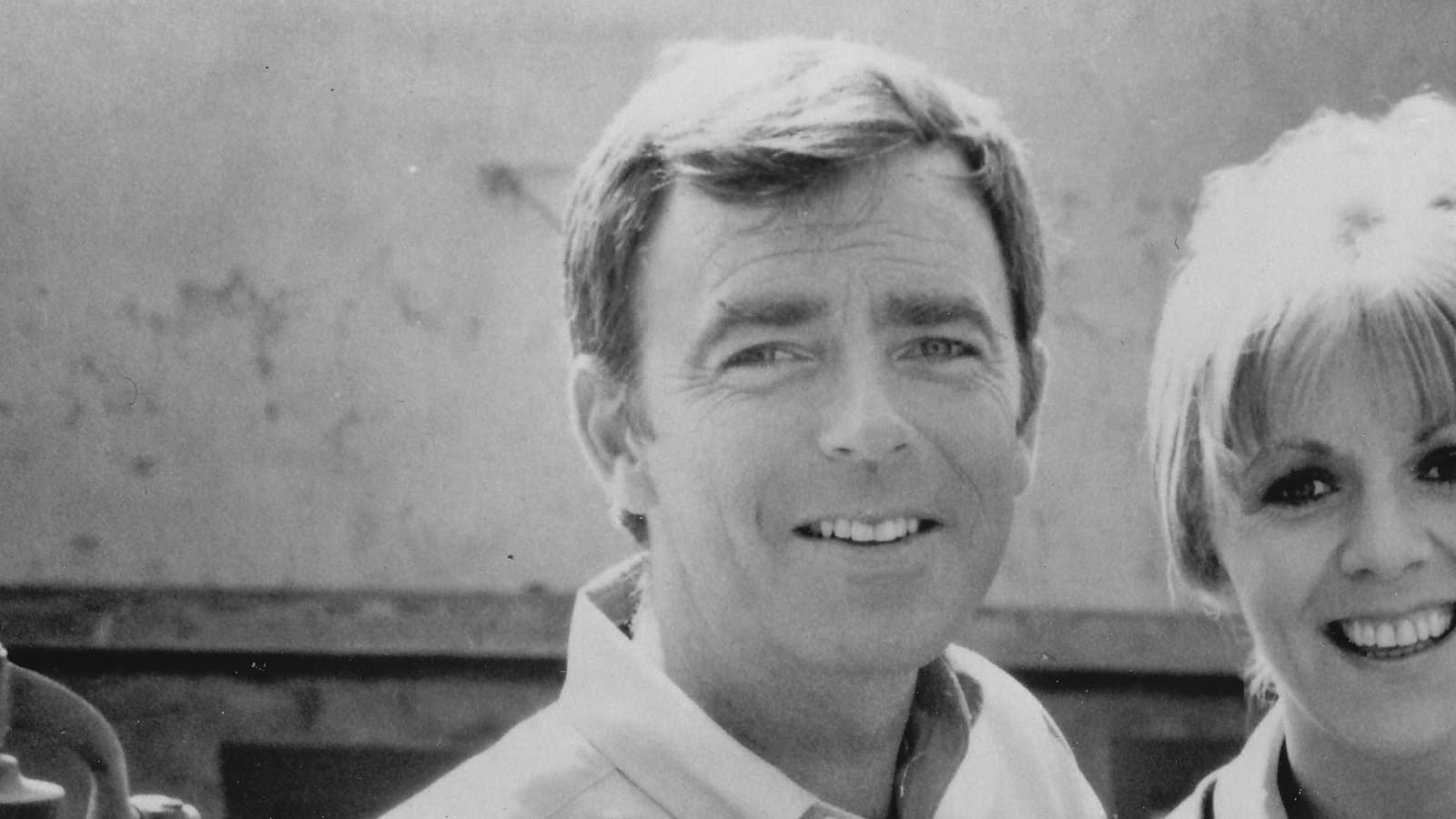
*ARCHIVE PHOTOS: Henry Winkler as Fonzie in a 1977 Happy Days photo (left) and the Smithsonian's National Museum of American History in Washington in 2022 (right). Photos: ABC Television / Wikimedia Commons / Public domain (left); DestinationFearFan / Wikimedia Commons / CC BY-SA 4.0 (right).*
*NewsCubby articles are produced with AI assistance and reviewed by humans.*
Reporting Sources
Photo & Video Credits
Credit: ABC Television / Wikimedia Commons (left); DestinationFearFan / Wikimedia Commons (right). License: CC BY-SA 4.0. Source: file page.