Sports
Jeffery Simmons joins Bears practice after Chicago pays two first-round picks
The veteran defensive tackle is learning a new game plan before Monday in Seattle. Friday’s introduction explains the cost and ambition without settling his workload.
What to know
- Chicago acquired Simmons and a 2028 fifth-round pick; Tennessee receives Chicago's first-round picks in 2027 and 2028 and a 2027 fourth-round pick.
- Simmons practiced with the Bears on Friday and reunited with former Mississippi State teammate Montez Sweat.
- The next game is Monday night at Seattle. His precise role and playing time remained unsettled in Friday's reporting.
- General manager Ryan Poles says the decision is also a longer-term investment: the Bears report that Simmons is under contract through 2030.
Jeffery Simmons took the practice field with the Chicago Bears for the first time Friday, October 30, a day after Tennessee traded its veteran defensive tackle for a package built around two first-round draft picks. His arrival turns an expensive roster decision into a more immediate football problem: how much of a new defense can an experienced player learn before Chicago visits Seattle on Monday night?
The Bears' account of his first practice and introductory press conference establishes that Simmons is already working with his new teammates. It does not establish a final workload. Simmons said he was learning the playbook and game plan, while defensive coordinator Dennis Allen described an integration process shaped by what he can absorb during the remaining preparation.
From a Thursday phone call to Friday practice
Simmons described receiving the news while having breakfast at the Titans' facility. By Friday he was at Halas Hall, meeting teammates and explaining the emotional transition from the organization where he had spent his entire NFL career. His account included a difficult goodbye to his young daughter before traveling to Chicago. The first practice was therefore both a professional introduction and a rapid personal move.
The transaction itself is no longer merely a trade rumor. Chicago's official acquisition announcement lists the player and all four draft selections involved. Tennessee's earlier Thursday announcement described an agreement pending a physical; the later Chicago announcement says the club has acquired him. Those accounts represent different points in the transaction's chronology.
For Tennessee, the return moves resources into two future drafts. Controlling owner Amy Adams Strunk's statement thanked Simmons for his football and community work, including his foundation's activities in Middle Tennessee and Mississippi. For Chicago, the cost is immediate access to a proven player in exchange for significant future opportunities to select players. Neither the selections nor their eventual draft positions identify who Tennessee will ultimately acquire.
What Chicago is paying for
Simmons is an interior defensive lineman, a position whose work can be less visible than that of an outside pass rusher. Pressure up the middle can make a quarterback move before a receiver's route has developed. Against the run, controlling the space between offensive blockers can also affect where the ball carrier is able to go. A sack total captures only some of that job, rather than every useful play.
The production behind Chicago's interest is substantial. Its acquisition release credits Simmons with 11 sacks and 17 tackles for loss in 2025, both career highs and the leading figures among NFL interior defensive linemen that season. The club says he earned first-team Associated Press All-Pro recognition. That is a description of his previous work, not a projection that he will reproduce the same numbers in a different defense.
The Bears also report four sacks in Tennessee's first seven games this year. Across his Tennessee regular-season career, their release lists 106 appearances, 104 starts and 46.5 sacks. Those figures help distinguish an established acquisition from a prospect being bought mainly for potential. They also explain why the adjustment question is about a veteran learning new instructions, rather than a player returning from a long absence from competitive football.
The short-term test is the game plan
Allen's Friday comments, reported by A to Z Sports, described narrowing a much larger playbook to the specific assignments needed against Seattle. The coordinator connected opportunities on the field to how much Simmons could learn. That approach leaves room to expand his responsibilities as preparation continues; it is not an announced snap count or a guarantee of a full workload.
For a defensive tackle, a familiar-looking front does not eliminate the learning process. Calls determine alignment, responsibility and how a player works with the defenders beside and behind him. A player can be physically ready while still needing repetitions with a new group. This is the practical distinction behind Allen's emphasis on the week's game plan: the team can teach a usable set of assignments before expecting complete command of every option.
Simmons's own Friday comments fit that explanation. He expressed readiness to help but also said he was still catching up with the material. Chicago's next scheduled game supplies the deadline for preparation; it does not supply the answer about his role. A Saturday practice update, the final availability information and Monday's active list will be more informative than treating the excitement around a major trade as a lineup announcement.
Why the Sweat reunion matters
Simmons and Sweat played on the same defensive line at Mississippi State. Their reunion gives the newcomer a familiar teammate inside a new workplace. That relationship is an established part of their history, rather than proof that two professional roles automatically fit together. The Bears still have to coordinate their work within Allen's defense and determine how the whole front operates against different opponents.
Poles's Friday explanation of the deal focused on both performance and influence inside the team. He portrayed Simmons as someone whose approach could raise expectations around him. Those judgments belong to the general manager evaluating his own acquisition. The relevant test will be how the defense functions after the arrival, not whether a press-conference description alone establishes a transformed locker room.
Chicago had an opportunity to observe him before the trade. Poles pointed to the Bears-Titans joint practice in Nashville on August 27 and described evaluation that continues even when a player belongs to another organization. He also credited a long working relationship with Tennessee general manager Mike Borgonzi. Their shared background in Kansas City's personnel department helps explain the negotiation's institutional connections without changing the price each team accepted.
Two first-round picks, with a longer horizon
The two first-round selections make the deal more consequential than a low-cost late-season addition. First-round picks give a team options to acquire young talent or make other transactions. Chicago has committed two of those opportunities to this player. The fifth-round selection coming back matters to an accurate description of the exchange, but it does not cancel the larger commitment of premium picks going the other way.
Poles said Chicago considered the effect on future seasons, and the Bears report Simmons is contracted through 2030. That distinguishes the plan from acquiring someone only for the remaining weeks of 2026. It does not resolve every future decision about roster construction, performance or finances. It explains the club's stated reasoning: paying for immediate help while expecting an established player to remain part of the defense beyond this season.
For the first weekend, the measurable development is simpler. Simmons is in Chicago and has practiced; the coaching staff is building his introduction around Seattle. The next evidence will be his assigned role, actual participation and how the front works together. Those are football questions that the size of the trade makes urgent, but that the trade itself cannot answer.
Reporting checked October 30, 2026. Availability and role reflect Friday's statements and require a fresh check before the Monday game.
NewsCubby articles are produced with AI assistance.
Reporting Sources
Photo & Video Credits
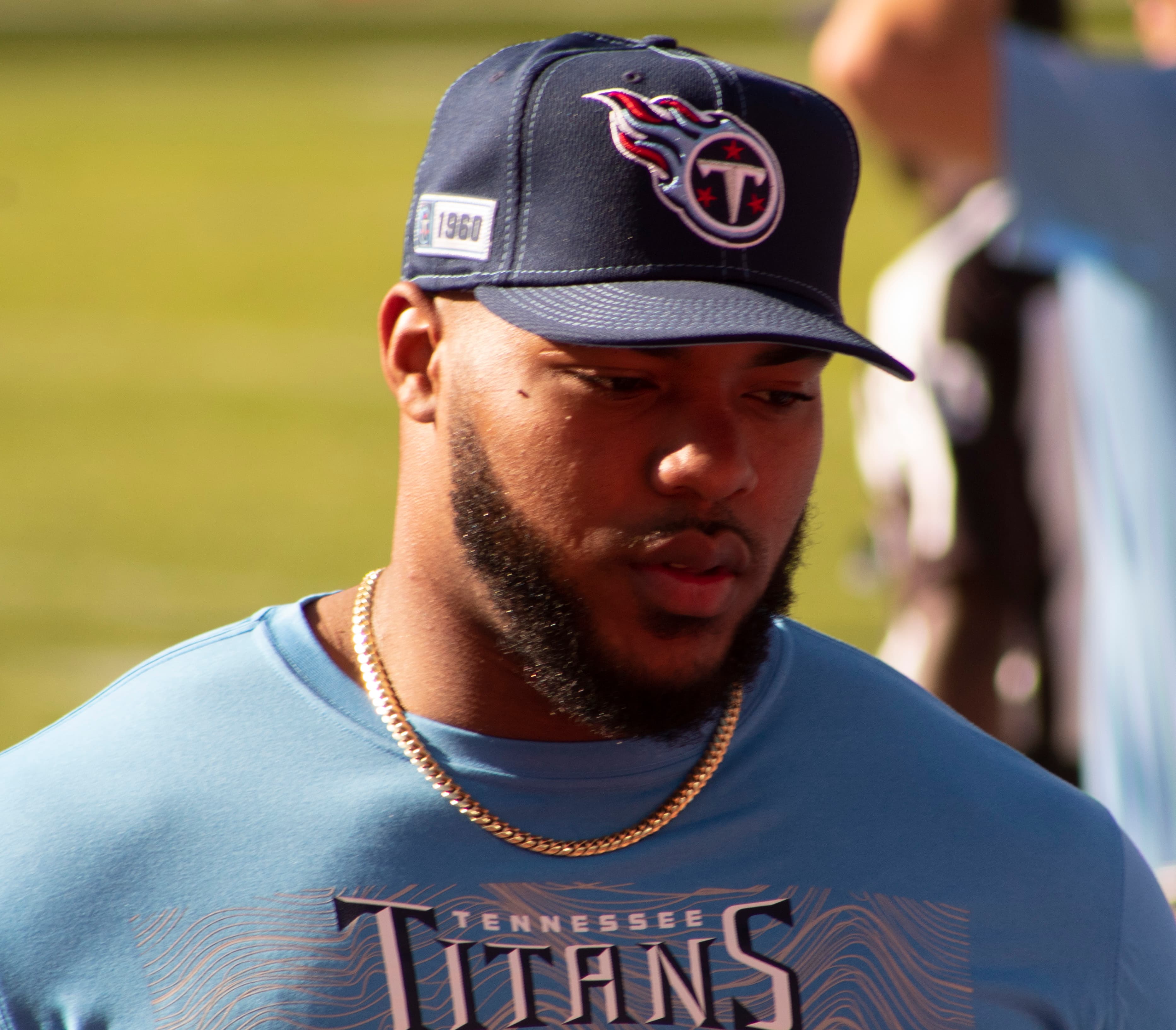
Credit: Chipermc / Wikimedia Commons, CC BY-SA 4.0. License: CC BY-SA 4.0. Source: file page.