World
María Corina Machado in Caracas: what comes next for Venezuela
A day after crowds walked her into the capital, Machado's team says she's willing to meet Delcy Rodríguez, who says the return was an avoidable "show."
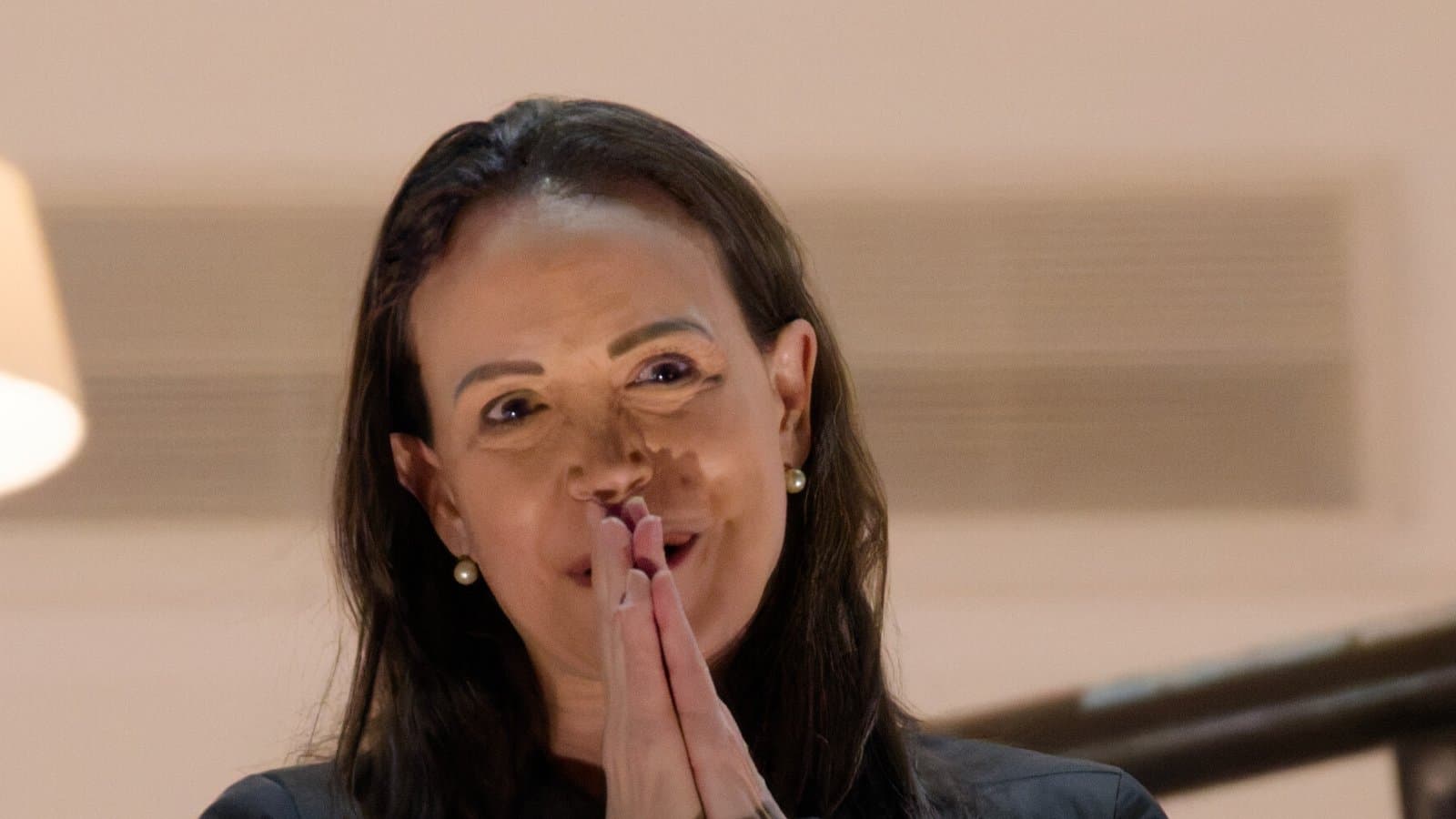
What to know
- Opposition leader María Corina Machado woke up in Caracas on Monday, Oct. 26, after a Sunday caravan that ended late at night in the capital. As of about 2:15 p.m. ET, she hadn't spoken publicly. Her spokeswoman said she was expected to address the country within hours.
- The spokeswoman, Claudia Macero, told Unión Radio that Machado is willing to sit down with interim President Delcy Rodríguez, and with anyone else she needs to, openly and with an agenda.
- Rodríguez responded Monday afternoon. She told reporters that Machado's "show" could have been avoided because people covered by Venezuela's amnesty law have come back through airports, and she said there is no political persecution in the country, EFE and Europa Press reported. As of the update, NewsCubby had found no public response from Machado.
- Secretary of State Marco Rubio credited U.S.-backed talks for her safe return and said Washington expects all political actors to support them. President Donald Trump suggested the U.S. would keep backing Rodríguez. Germany and the European Union called the return a chance to move toward free elections.
- No presidential election date has been set. The next round of government-opposition talks, which don't include Machado's party, is expected in November.
*Updated 3:07 p.m. ET: Adds interim President Delcy Rodríguez's comments on Machado's return.*
María Corina Machado spent her first night in Caracas in nearly a year on Sunday. By Monday, the question in Venezuela had shifted from whether she could get back to what she will do now that she is here.
Machado, the 2025 Nobel Peace Prize laureate, reappeared in Barquisimeto on Sunday and then rode in a caravan to the capital, as NewsCubby reported Sunday. Her team hadn't announced a public event for Monday as of about 2:15 p.m. ET.
Her return comes as doubts grow about Venezuela's democratic future and the U.S. role in it, The Associated Press reported. Rodríguez, who took over after U.S. forces captured Nicolás Maduro in January, has stayed in office past the period she was authorized to serve as interim president, and no election has been scheduled, AP said.
What happened when she reached Caracas?
Supporters gathered along the routes into the city around 10 p.m. Sunday, at the Hoyo de La Puerta toll booth, the Tazón descent, the Valle-Coche highway and Santa Mónica, El Pitazo reported. Reuters and The Wall Street Journal described tens of thousands of people crowding the highway as her vehicle crept forward and she leaned out of the sunroof to wave and shake hands. There is no official crowd count.
Spain's ABC reported that the trip covered about 847 kilometers (about 526 miles) from the Colombian border area, and Reuters said the last stretch from Lara state took about eight hours because of the crowds. Supporters chanted that they would not leave her alone and handed her rosaries, ABC said. El Diario reported she wore several rosaries around her neck and didn't stop to talk to reporters.
Late Sunday she wrote on Instagram that she had badly needed to be back with her supporters. In her last post on X that night, at 11:25 p.m. ET, she said the day would always be remembered and that together they would win freedom.
What did people in the crowds say?
The mood was hopeful, and some were impatient. Marisol Morgado, a 64-year-old homemaker, told El País she believed Machado had come to get things organized because many people are struggling. Seferino Guadarrama, 64, a local leader in Machado's party, told the paper that opposition negotiator Dinorah Figuera had been moving too slowly. Many in the crowd said the same thing, El País reported: they expect Machado to speed things up.
Not everyone was swept up. Darío Delgado, 19, from Barquisimeto, told El Confidencial at a gathering of more than 200 people in Caracas' Plaza Altamira that the country stays the same whether she comes back or not. He said his home region goes five to eight hours a day without power.
Is she willing to meet Delcy Rodríguez?
Her team says yes. Macero told Unión Radio on Monday that Machado is ready to sit down with Rodríguez and with anyone else she has to, in full view of the country and with a clear agenda, according to AFP.
Macero argued that no transition or election can be credible without the backing of the people Machado represents. She said the plan now is to work closely to support the transition, in partnership with the United States.
Henry Alviarez, national coordinator of Vente Venezuela, told the same station that Machado came back to build a broad national agreement and to apply enough pressure to get an election timetable set, El Pitazo reported. Asked about her safety, he said her only protection in Venezuela is the people. He also said the negotiating table isn't listening to Venezuelans, and he claimed that more than 350 political prisoners remain jailed. That is his figure; NewsCubby could not independently verify it.
What has the government said?
Rodríguez addressed Machado's return on Monday, speaking to reporters after opening a women's care center run by the armed forces, according to EFE, Europa Press and Venezuelan outlets. Asked how Machado got into the country, she said it made no difference to her, but that the "show" could have been avoided, because many people covered by the amnesty law have come in through new temporary arrangements at airports. She said the government didn't know how Machado entered and suggested that, if she came in that way, she must have had some goal in mind.
Without naming Machado, Rodríguez said the government-opposition dialogue is a very serious matter that takes experience, and she said she hoped people who had sought sanctions and outside pressure on Venezuela would show remorse and change course so they could contribute to the country, Europa Press and Caraota Digital reported. Asked about political persecution, she said there is none in Venezuela and said she and her family had been persecuted themselves.
Machado's team has said she tried to return at least seven times and accused Rodríguez's government of blocking her, according to Euronews and Semana. Her spokeswoman said Monday that Machado is willing to meet Rodríguez. As of 3:07 p.m. ET, NewsCubby had found no public response from Machado or her team to Rodríguez's remarks.
Before Rodríguez spoke, the government side had been quiet. As of about 2:15 p.m. ET, NewsCubby had found no post about Machado on the X accounts of Rodríguez, Cabello, Jorge Rodríguez, former Foreign Minister Jorge Arreaza or the Foreign Ministry, and AFP had reported that the interim government hadn't commented.
On Monday morning, state broadcaster VTV reposted Rodríguez's address from last week, after she met in Miraflores with the two chief negotiators, Jorge Rodríguez and opposition delegation head Dinorah Figuera. In it, she praised the parties' work toward political guarantees for all parties.
The closest thing to a reaction from the government side came Sunday. Arreaza wrote on X, without naming Machado, that the dialogue is not meant to sideline or eliminate the other side. Before her return, Rodríguez had warned that Machado would have to answer for herself when she came back, without saying to whom or for what, Latin Times noted.
Cabello, who leads the ruling PSUV party, had also weighed in before she came back. On his TV show, according to a Europa Press report published Oct. 15, he challenged her to return and said no one was stopping her, adding that her real problem would be the political landscape she would face once back. Those remarks came 10 days before her return; they were not a response to it.
Where does Washington stand?
Washington is welcoming her return while asking her to back the talks. In a statement Sunday, Rubio said the conditions that allowed her safe return were a direct result of the U.S.-supported reconciliation talks, which he said have freed hundreds of political prisoners. He said the U.S. expects the freedoms of all sides of Venezuelan politics to be respected and expects all political actors to support the talks, Reuters reported.
Trump told reporters at the White House on Sunday that he didn't know about her return. He called her a very nice woman but said the U.S. is doing very well in Venezuela, Reuters reported, suggesting continued support for Rodríguez. He also noted that she had given him her Nobel Prize and said he hoped she was safe, according to the WSJ. In September, Trump said it was too soon to consider elections in Venezuela, Reuters noted.
The Journal reported that some Trump officials worry her presence could spark a confrontation with Rodríguez and upset a fragile arrangement that has brought U.S. oil deals. An unnamed U.S. person involved in the talks told the paper there is no fallback if the current transition framework fails. Figuera told the WSJ on Thursday that Machado had been offered ways to take part but refused unless she could play a leading role. Machado has said she was shut out.
An unnamed source close to Machado gave CNN en Español a different picture, saying her relationship with Washington is strained but intact and that the United States remains the movement's main strategic ally. The source said her team decided it was time to act rather than to consult.
How she got in has not been officially confirmed, and her team hasn't disclosed details. A person briefed directly on her movements told Reuters that the return was coordinated with the U.S., Panamanian and Colombian governments and that Trump approved it and was kept informed. Four people familiar with the trip told Reuters she flew on a private plane from Panama to Colombia and crossed into Venezuela by land on Sunday. The person briefed on her movements said U.S. security contractors guarded her and that the U.S. warned Venezuelan authorities not to interfere. The WSJ reported a similar account. The White House and the State Department didn't respond to Reuters' questions.
How have other governments reacted?
Germany's Foreign Office spokesman, Martin Giese, said Monday that the return is another step toward political and economic opening and a democratic transition, DW reported. He noted that the borders are watched, so it could not have happened without the government's consent, and said Germany has no information of its own on how it was arranged.
The European Union's foreign affairs spokesman, Anouar El Anouni, said Monday that the bloc hopes Venezuelan authorities and all political actors will use the moment to move toward free and fair elections.
What do analysts say it changes?
Political scientist Benigno Alarcón of the Polis firm told El País that her presence could change the incentives and the balance of power among the government, the opposition and the United States. He also said the return alone does not mean a transfer of power, and that its real impact depends on how the main players react in the coming days.
Geoff Ramsey of the Atlantic Council wrote that the return gives a lift to efforts toward reconciliation, reform and a real transition, Tal Cual reported.
Ricardo Ríos, president of the consulting firm Poder & Estrategia, told El Confidencial that his firm's latest survey had Machado at 68% in a presidential race and Rodríguez at 14%. The WSJ reported that recent polls show two in three Venezuelans disapprove of Rodríguez's leadership.
What we know
- Machado is in Caracas and hadn't spoken publicly as of 3:07 p.m. ET. Her team says an address is coming.
- Her spokeswoman says she's willing to meet Delcy Rodríguez, with a public agenda.
- Rodríguez said Monday afternoon that Machado's return was an avoidable "show" and that there is no political persecution in Venezuela, EFE and Europa Press reported.
- The U.S., Germany and the EU have all tied her return to the path toward elections. Trump has signaled continued support for Rodríguez.
What we don't know yet
- How Machado will answer Rodríguez, and whether Cabello or Jorge Rodríguez will weigh in.
- Whether any meeting with Rodríguez is being arranged. None has been announced.
- Whether her team will join, back or compete with the U.S.-backed talks.
- What protection she has. Her party says the people are her only guarantee.
What happens next
Machado told the WSJ in August that she pictured herself traveling the whole country, down to the smallest communities. Her party says she will tour Venezuela to press for elections. The next round of talks is expected in November, and no election date has been set. NewsCubby will update this story when Machado speaks.
*Credits: reporting from AFP (via El Universo, RFI and NTN24), Reuters, The Associated Press, El Pitazo, El Diario, Tal Cual, VTV, El Político, The Wall Street Journal, CNN en Español, Latin Times, El País, El Confidencial, ABC (Spain), Europa Press, EFE, Caraota Digital, Monitoreamos, Euronews, Semana and DW. Quotes are summarized in NewsCubby's words. NewsCubby articles are produced with AI assistance and reviewed by humans.*
*Want more? Explore today's headlines on NewsCubby and join My Day free to make NewsCubby part of your day.*
Sources, credits & editorial notes
- El Universo (AFP): María Corina Machado está dispuesta a reunirse con Delcy Rodríguez, Oct. 26, 2026
- RFI (with AFP): Machado, dispuesta a reunirse con Delcy Rodríguez; EU statement, Oct. 26, 2026
- NTN24 (AFP): Claudia Macero on the transition after Machado's return, Oct. 26, 2026
- El Pitazo: Henry Alviarez says Machado returned to press for an electoral timetable, Oct. 26, 2026
- El Pitazo: María Corina Machado llega a Caracas, Oct. 25, 2026
- El Diario: En imágenes, el recibimiento de María Corina Machado en Caracas, Oct. 26, 2026
- The Wall Street Journal: Venezuela's Machado Returns Home, Challenging U.S.-Backed Government, Oct. 25-26, 2026
- CNN en Español (analysis): Machado ya está en Venezuela, Oct. 26, 2026
- Reuters: Venezuela opposition leader Machado returns home after fraught year away, Oct. 25, 2026
- Latin Times: Marco Rubio message to Delcy Rodríguez and María Corina Machado, Oct. 26, 2026
- El País: El regreso de María Corina Machado a Venezuela, live coverage, Oct. 26, 2026
- El Confidencial: Machado regresa a Venezuela, Oct. 26, 2026
- ABC (Spain): María Corina Machado recorrerá toda Venezuela para exigir elecciones, Oct. 26, 2026
- AP: Machado returns to Venezuela from exile, as doubts over democracy deepen, Oct. 25, 2026
- DW (with EFE): Alemania celebra el regreso de María Corina Machado a Venezuela, Oct. 26, 2026
- Tal Cual: ¿Qué implica el regreso de Machado, según analistas y activistas?, Oct. 25, 2026
- El Político: Delcy Rodríguez after meeting Dinorah Figuera in Miraflores, Oct. 23, 2026
- VTV (state broadcaster) on X: repost of Delcy Rodríguez address, Oct. 26, 2026
- Europa Press: Diosdado Cabello reta a María Corina Machado a volver a Venezuela, Oct. 15, 2026
- Photo: Kevin Payravi / WikiPortraits / Wikimedia Commons; CC BY-SA 4.0 (archive photo, Dec. 2025; cropped)