Entertainment
Marion Ross: Part 1 of 4 - From Minnesota to the Movies
Long before Happy Days, Marion Ross went from Watertown, Minnesota, to Forever Female, Sabrina, Operation Petticoat and dozens of TV guest roles.
What to know
- Ross was born Marian Ellen Ross on Oct. 25, 1928, in Watertown, Minnesota, and grew up in Minnesota, eventually living in Albert Lea.
- At 13, she changed the spelling of her first name from Marian to Marion because she thought it had a more pleasing appearance and would look better on a theatrical program and a theater marquee.
- After studying drama in Minneapolis and later moving to San Diego, she graduated from Point Loma High School and earned her undergraduate degree from San Diego State University.
- Her film debut came in *Forever Female* in 1953 with Ginger Rogers and William Holden, and the decade that followed brought credits in *The Glenn Miller Story*, *Sabrina*, *Lust for Life*, *Teacher's Pet*, *Some Came Running*, and *Operation Petticoat*.
- Her early television work included two years on *Life with Father*, a 1961-62 recurring role on *Mrs. G. Goes to College*, and guest appearances on series including *The Lone Ranger*, *Perry Mason*, *The Outer Limits*, and *The Brady Bunch*.
Born Marian Ellen Ross on Oct. 25, 1928, in Watertown, Minnesota, Marion Ross built a substantial screen career long before television viewers came to know her as Marion Cunningham on *Happy Days*. Her path ran from drama study in Minnesota and San Diego to a 1953 film debut in *Forever Female*, followed by steady studio work in pictures such as *The Glenn Miller Story*, *Sabrina*, *Lust for Life*, *Teacher's Pet*, *Some Came Running*, and *Operation Petticoat*. At the same time, she was building a television career that began on *Life with Father* and expanded through westerns, mysteries, sitcoms, and science fiction. Part 1 follows that early stretch, ending just before the role that made her best known.
How did Minnesota and a new spelling shape Marion Ross's start?
Ross was born Marian Ellen Ross on Oct. 25, 1928, in Watertown, Minnesota. The early geographical outline of her life is straightforward: she grew up in Minnesota and eventually lived in Albert Lea. Before Hollywood and before national television, that Midwestern beginning was the backdrop for her first serious steps toward acting.
One small change became permanent very early. At 13, she changed the spelling of her first name from Marian to Marion because she thought it had a more pleasing appearance and would look better on a theatrical program and a theater marquee. It was a practical, show-business-minded choice, and it stayed with her for the rest of her career.
Her training moved in stages. After completing her sophomore year in high school, she moved to Minneapolis, where she studied drama at the MacPhail Center for Music and attended Southwest High School. A year later, she moved to San Diego, California, when she was 16. She graduated from Point Loma High School in San Diego and later earned her undergraduate degree from San Diego State University. By the time film and television work arrived, Ross had already put years into study, school productions, and preparation.
What happened when she reached Hollywood in 1953?
Ross's professional screen career began on two tracks in the same year. In films, she made her debut in *Forever Female* in 1953. The black-and-white movie starred Ginger Rogers and William Holden, and Ross was cast as Patty. For any young actor, that was a notable first credit: a studio feature opposite two established stars, right at the start of a career.
Television also opened up for her in 1953. She began on TV that year when she played the Irish maid on *Life with Father* for two years. The series itself ran from 1953 to 1955, and Ross appeared as Nora in the replacement cast. That meant her earliest television exposure came not from a one-night anthology appearance but from regular work on a network sitcom.
Taken together, those two 1953 starts say a lot about the pace of her early years. Ross was not waiting around for one breakout moment. She entered films and television almost at once, and from there she kept moving. The pattern that emerges from the rest of the 1950s is consistency: one supporting part after another, across genres, with her name turning up in both studio features and weekly television.
Which 1954 films put her around major studio stars?
Just one year after her debut, Ross appeared in two well-known 1954 releases. One was *The Glenn Miller Story*, the biographical film about bandleader Glenn Miller. That picture starred James Stewart as Miller and June Allyson alongside him, and Ross appeared in the cast as Polly Haynes. The film was first shown to the public in January 1954, and it went on to win the Academy Award for Best Sound Recording.
Her other 1954 credit was *Sabrina*, produced and directed by Billy Wilder. The film starred Humphrey Bogart, Audrey Hepburn, and William Holden, and it opened in New York and Los Angeles on Sept. 23, 1954. In film history, *Sabrina* is often discussed for Wilder, Hepburn, and its place in Paramount's 1950s output. For Ross's story, it is another sign of how quickly she was working her way into major productions.
Those two films also show the variety of projects she was entering so early. *The Glenn Miller Story* was a musical biographical drama rooted in American popular music, while *Sabrina* was a romantic comedy-drama built around a very different tone and setting. Ross was still at the beginning, but her resume was already widening.
How did the late 1950s make her a familiar supporting presence?
Ross found steady work in film through the rest of the decade. Her credits included *Lust for Life* in 1956, *Teacher's Pet* in 1958, *Some Came Running* in 1958, and *Operation Petticoat* in 1959. Seen together, those titles show an actor moving through biography, comedy, drama, and wartime farce without getting locked into only one kind of assignment.
*Lust for Life* was the Vincente Minnelli-directed film about Vincent van Gogh. It starred Kirk Douglas as Van Gogh, with James Donald and Anthony Quinn also in key roles. Two years later came *Teacher's Pet*, a romantic comedy directed by George Seaton and starring Clark Gable, Doris Day, Gig Young, and Mamie Van Doren. Ross played Katy Fuller, Erica Stone's secretary, placing her in another polished studio comedy with a major cast.
That same year, she also appeared in *Some Came Running*, and in 1959 she was in *Operation Petticoat*, the Blake Edwards submarine comedy starring Cary Grant and Tony Curtis. By then, Ross had become the kind of reliable supporting performer who could fit into many different ensembles. No single 1950s film defined her image the way a later sitcom role would, but the accumulation mattered. It gave her a durable screen foundation and kept her visible in Hollywood while television opportunities continued to grow.
What did her earliest television roles look like?
If film gave Ross scale, television gave her range. After *Life with Father*, she continued to work across a long list of series. In 1954, she appeared as Ginny Thorpe on *The Lone Ranger*. In 1958, she appeared on NBC's *Mickey Spillane's Mike Hammer* as Mary Williams. In 1959, she played the teacher Miss McGinnis on ABC's *The Donna Reed Show*.
Those are only some of the specifically identified parts. Her broader guest list from this era also included *The George Burns and Gracie Allen Show*, *The Millionaire*, *Steve Canyon*, *Perry Mason* in *The Case of the Romantic Rogue*, *Buckskin*, *The Barbara Stanwyck Show*, and *Father Knows Best*. That is a cross-section of mid-century television all by itself: comedy, courtroom drama, westerns, and domestic sitcoms.
The list continued into the 1960s with *The Outer Limits* in the episode *The Special One*, *Thriller* in *The Prisoner in the Mirror*, *The Brothers Brannagan*, *The Eleventh Hour*, *Route 66*, *Mr. Novak*, *Death Valley Days*, *Mannix*, *Hawaii Five-O*, *The Brady Bunch*, and *The Fugitive*. Even without one signature TV role yet, Ross was becoming a familiar working presence. Viewers might not always have known her name immediately, but they were seeing her in many corners of the schedule.
Why did *Mrs. G. Goes to College* matter in 1961-62?
Among Ross's early television credits, *Mrs. G. Goes to College* stands out because it gave her a recurring place in a network sitcom built around a major star. The CBS series aired from Oct. 4, 1961, to April 5, 1962, and ran for 26 episodes. Starting with episode 14, it was retitled *The Gertrude Berg Show*.
The series starred Gertrude Berg as Sarah Green, a 62-year-old widow who enters college. Ross appeared in five episodes as Berg's daughter, Susan Green. Her part can be described more simply as playing Gertrude Berg's daughter during the 1961-62 television season, but either way the significance is clear: this was more than a passing guest shot. It was recurring sitcom work beside a performer already well known to television audiences.
That same season, Ross also starred as a mail order bride on *Rawhide*. Taken together, those credits show how adaptable she had become by the early 1960s. She could move from a western to a family sitcom, then back into one-off dramatic television assignments, all while maintaining a film career. The versatility that later helped *Happy Days* feel effortless had already been tested for years.
How did the late 1960s and early 1970s bridge her to the next phase?
Ross's long list of television guest appearances did not stop as the 1960s moved on, and film work returned in notable ways around 1970. In *Airport* that year, she had an uncredited and non-speaking role as one of the passengers on board Trans Global Flight No. 2. It was a small part, but it placed her in one of the era's major ensemble releases.
In the same year, she played a computer scientist in the science-fiction thriller *Colossus: The Forbin Project*. That credit is a useful counterpoint to *Airport*. One was a large-scale disaster picture where she was briefly seen, and the other gave her a clearly identified profession inside a science-fiction thriller. In 1971, she also appeared in *Honky*.
By the early 1970s, Ross had spent years moving between movies and television, between named supporting roles and quick guest appearances, and between comedies, westerns, melodramas, and science fiction. Part 1 ends there, just before the shift that changed how mainstream audiences would identify her. She did not arrive at that next chapter as a newcomer. She arrived as a seasoned actor with a long, varied body of work already behind her.
What comes next in Part 2?
Part 2 picks up with the role most closely associated with Ross: Marion Cunningham on *Happy Days*. The ABC sitcom aired from 1974 to 1984, and Ross received Primetime Emmy Award nominations for her work on the show in 1979 and 1984.
That next chapter is where the broad early apprenticeship of this first installment pays off. The years covered here show Ross learning how to work inside studio films, live-action television, recurring sitcom parts, and guest roles of every kind. Part 2 will follow how that background fed directly into her best-known television work as Mrs. C.
This article is part of NewsCubby's four-part Marion Ross career series. For more, visit TV & Streaming, Movies, Entertainment, and find short videos on the Videos page.
Timeline
- **Oct. 25, 1928:** Marion Ross is born Marian Ellen Ross in Watertown, Minnesota.
- **1953:** She makes her film debut in *Forever Female* and begins her television career on *Life with Father*.
- **January 1954:** *The Glenn Miller Story* is first shown to the public, with Ross in the cast as Polly Haynes.
- **Sept. 23, 1954:** *Sabrina* opens in New York and Los Angeles.
- **1956:** Ross appears in *Lust for Life*.
- **March 19, 1958:** *Teacher's Pet* opens in the United States.
- **1959:** She appears in *Operation Petticoat*.
- **Oct. 4, 1961:** *Mrs. G. Goes to College* debuts on CBS, with Ross appearing as Susan Green.
- **1970:** Ross appears in *Airport* and *Colossus: The Forbin Project*.
- **1971:** She appears in *Honky*.
*Want more? Explore today's headlines on NewsCubby and join My Day free to make NewsCubby part of your day.*
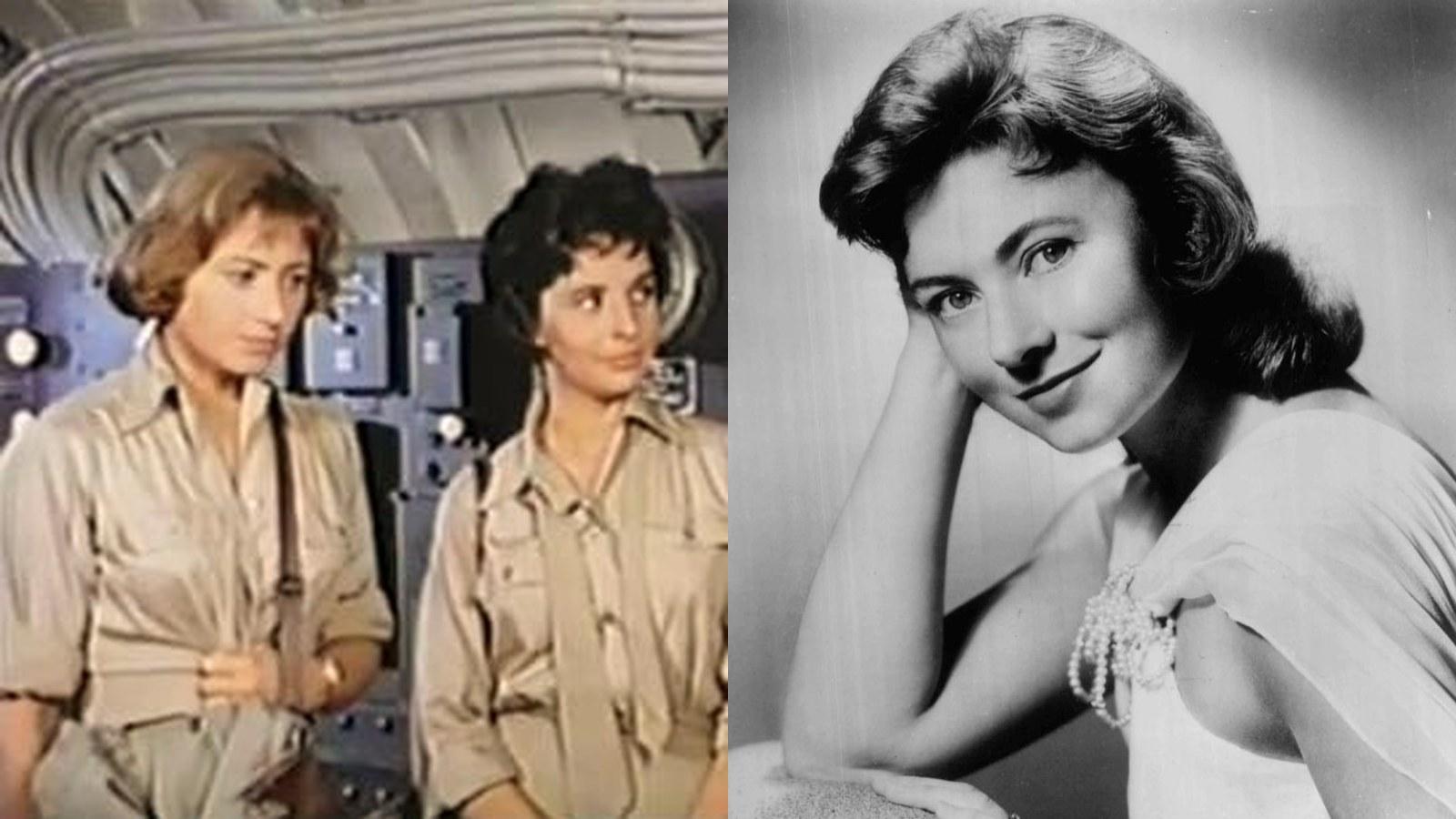
*ARCHIVE PHOTOS: Marion Ross (left) and Madlyn Rhue in a 1959 trailer for Operation Petticoat (left), and Marion Ross in a 1961 CBS publicity photo for Mrs. G. Goes to College (right). Photos: Universal Pictures trailer screenshot / Wikimedia Commons / Public domain (left); CBS Television / Wikimedia Commons / Public domain (right). Both cropped.*
*NewsCubby articles are produced with AI assistance and reviewed by humans.*
Reporting Sources
Photo & Video Credits
Credit: Universal Pictures trailer screenshot / Wikimedia Commons (left); CBS Television / Wikimedia Commons (right). License: Public domain. Source: file page.