Entertainment
Marion Ross: Part 2 of 4 - Becoming Mrs. C
Marion Ross played Marion Cunningham on Happy Days from 1974 to 1984, a role that brought two Emmy nominations and made Mrs. C a TV icon.
What to know
- *Happy Days* aired on ABC from Jan. 15, 1974, to July 19, 1984, producing 255 half-hour episodes across 11 seasons.
- Ross played Marion Cunningham from 1974 to 1984 and appeared in all but two episodes of the series.
- The sitcom grew out of the 1972 *Love, American Style* segment *Love and the Television Set*, after an unsold pilot titled *New Family in Town*.
- After ratings fell in season two, Garry Marshall retooled the series to emphasize broader comedy and Fonzie; *Happy Days* became the No. 1 program on television in 1976-77.
- Ross received Primetime Emmy nominations for *Happy Days* in 1979 and 1984, and later reprised Marion Cunningham on *Joanie Loves Chachi* and *Family Guy*.
Marion Ross, born Marian Ellen Ross, who turned 98 on Oct. 25, 2026, is best known for one role above all others: Marion Cunningham on ABC's *Happy Days*. The sitcom ran from Jan. 15, 1974, to July 19, 1984, for 11 seasons and 255 half-hour episodes, and Ross appeared in all but two of them. Over that long run, the series changed from a show centered on Richie Cunningham and his high school world into one of the most successful programs of the 1970s, while Ross remained one of its most consistent presences. In Part 2 of NewsCubby's four-part Marion Ross career series, the focus is on how an unsold pilot became *Happy Days*, how Ross fit into its ensemble, and why two Primetime Emmy nominations followed.
How did *Happy Days* start before it reached series television?
Before *Happy Days* was a weekly ABC sitcom, it existed as an unsold pilot. In late 1971, that pilot was filmed under the title *New Family in Town*. Marion Ross was already in place as Marion, with Ron Howard as Richie and Anson Williams as Potsie. Harold Gould played Howard Cunningham in that earlier version.
Paramount passed on the project as a series, but the material did not disappear. Instead, it was recycled for ABC's anthology series *Love, American Style*. A version titled *Love and the Television Set* aired on Feb. 25, 1972, and for syndication it was later retitled *Love and the Happy Days*.
That detour turned out to matter. George Lucas asked to see the pilot to decide whether Howard could play a teenager in *American Graffiti*. He cast Howard immediately, and the success of the 1973 film helped ABC take a renewed interest in the pilot. Ross was there at both stages: in the unsuccessful first try and then in the network series that followed.
What did ABC's *Happy Days* look like at the beginning?
*Happy Days*, created by Garry Marshall, premiered on ABC on Jan. 15, 1974. Set in Milwaukee, Wisconsin, during the 1950s and 1960s, the sitcom eventually ran to 255 half-hour episodes over 11 seasons, ending on July 19, 1984. It opened to mixed reviews from critics, but became successful and popular over time.
The first two seasons were built around the experiences and dilemmas of Richie Cunningham, his family, and his high school friends. That structure gave Ross a clear place from the start. Marion Cunningham was part of the original design of the series, not a later addition.
Ross played Marion Cunningham as the show's matriarch and a traditional homemaker. Because the early format centered on Richie, the Cunningham home was essential to the series from the beginning, and that made Ross a regular part of the weekly storytelling even before the program evolved into a broader ensemble hit.
Who made up the ensemble around Ross?
In many ways, *Happy Days* was an ensemble from the beginning. The series starred Ron Howard as Richie Cunningham, Henry Winkler as his friend Fonzie, and Tom Bosley and Marion Ross as Richie's parents, Howard and Marion Cunningham. Anson Williams and Don Most were also central to Richie's circle.
Across the broader cast, names associated with the sitcom included Al Molinaro, Erin Moran, and Scott Baio. As the show continued, the cast expanded and the balance of attention shifted, but Ross remained one of the figures viewers saw throughout nearly the entire run.
That ensemble balance is important to Ross's story because *Happy Days* did not place Marion Cunningham on the margins. The character was part of the home scenes, part of the generational contrast with Richie and his friends, and part of the wider comic rhythm that helped define the show as it grew.
Why did Marion Cunningham become such a constant presence?
Ross's durability on the show can be measured very directly. She appeared in all but two episodes of the entire series. Marion was also one of only four characters to remain with the show throughout its full run.
Within the story, Marion had a specific relationship with Fonzie that set her apart. She was the only character allowed to call him by his real first name, Arthur, and she did so affectionately. It is a small detail, but it marks her place in the show's world.
The role also was not limited to brief reactions in family scenes. In the episode *Marion Rebels*, Marion gets into an argument with Howard and briefly takes a job as a waitress at Arnold's. That example matters because it shows the part could support stories centered on Marion herself, even inside a sitcom better known for teen plots and Fonzie's rise.
How did the show change from moderate success to No. 1?
*Happy Days* did not become television's top program overnight. The series was initially a moderate success, but its ratings began to fall during its second season. Garry Marshall responded by retooling the format. The revised version emphasized broad comedy and gave greater attention to Fonzie, who had started as a minor character.
The shift worked. Following those changes, *Happy Days* became the number-one program on television in 1976-77. By then, the series was no longer defined only by Richie's perspective. Fonzie had become a breakout figure, and the show's center of gravity had changed.
Through that transition, Ross stayed in place. That continuity linked the earlier, family-centered version of *Happy Days* to the later hit that audiences knew as one of the most successful series of the 1970s. Even as the balance inside the ensemble changed, Marion Cunningham remained one of the show's fixed points.
What recognition did Ross receive for playing Marion Cunningham?
The role brought Ross major awards recognition. She received Primetime Emmy Award nominations for *Happy Days* in 1979 and again in 1984. Those dates matter because they show that recognition for her work came both in the middle of the series' run and again in its final season.
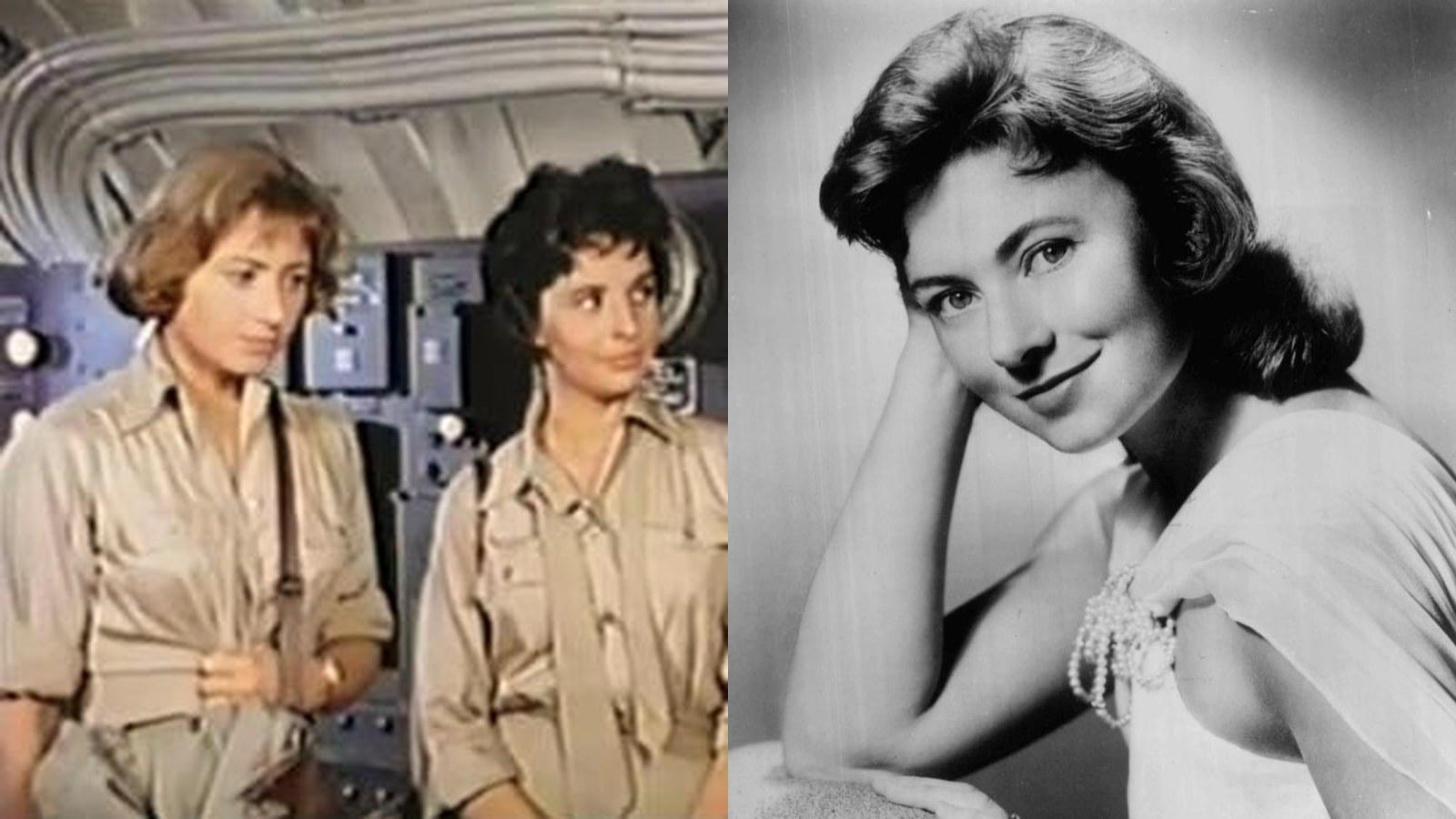
They also underline how central Marion Cunningham was to Ross's career. The part was her best-known role, and *Happy Days* is the credit most closely associated with her name. Part 1 of this series followed the years that led up to 1974, including film work in *Sabrina*, *Teacher's Pet*, and *Operation Petticoat* as well as many television appearances. *Happy Days* is where that long professional background turned into the role most viewers remember first.
Where did Ross take Marion Cunningham after the original run?
Ross did not leave Marion Cunningham behind completely when the original ABC run ended. She later reprised Marion Cunningham on the spin-off *Joanie Loves Chachi*. She also returned to the character much later on *Family Guy*.
Those follow-up appearances were smaller pieces of a much larger career, but they show how durable the role remained. A character introduced during the early development stage of an unsold pilot was still the part many people associated with Ross years later, even as she continued working in television and film after *Happy Days*.
How is Ross's *Happy Days* work being remembered in 2026?
The role is still being remembered publicly in 2026. Ross celebrated her 98th birthday on Oct. 25, 2026. On that date, her former *Happy Days* co-star Henry Winkler posted a tribute on X that read: “Marion is my friend, was an extraordinary acting partner. Marion is so wise, and HAPPY BIRTHDAY TO you. You are a loving human.”
That line, especially “an extraordinary acting partner,” reflects the years the two actors shared on screen. It also fits Ross's place in *Happy Days*: she was there from the show's early development through its full 11-season run, working inside an ensemble that kept changing while she remained one of its constants.
Part 3 of this Marion Ross series follows the years after *Happy Days*, including *The Love Boat* and *Brooklyn Bridge*. Those credits did not replace Marion Cunningham in public memory, but they did extend Ross's television career in important ways after the ABC sitcom ended.
This article is part of NewsCubby's four-part Marion Ross career series. For more, visit TV & Streaming, Movies, Entertainment, and find short videos on the Videos page.
Timeline
- **Oct. 25, 1928:** Marian Ellen Ross is born in Watertown, Minnesota.
- **Late 1971:** The unsold pilot *New Family in Town* is filmed, with Ross as Marion.
- **Feb. 25, 1972:** *Love and the Television Set* airs on *Love, American Style*.
- **1973:** The success of *American Graffiti* helps renew ABC's interest in the pilot property.
- **Jan. 15, 1974:** *Happy Days* premieres on ABC.
- **1976-77 season:** *Happy Days* becomes the No. 1 program on television.
- **1979:** Ross receives her first Primetime Emmy nomination for *Happy Days*.
- **1982-83:** Ross reprises Marion Cunningham on *Joanie Loves Chachi*.
- **1984:** Ross receives her second *Happy Days* Primetime Emmy nomination, and the series ends on July 19, 1984.
- **Oct. 25, 2026:** Ross turns 98, and Henry Winkler posts a birthday tribute on X.
*Want more? Explore today's headlines on NewsCubby and join My Day free to make NewsCubby part of your day.*
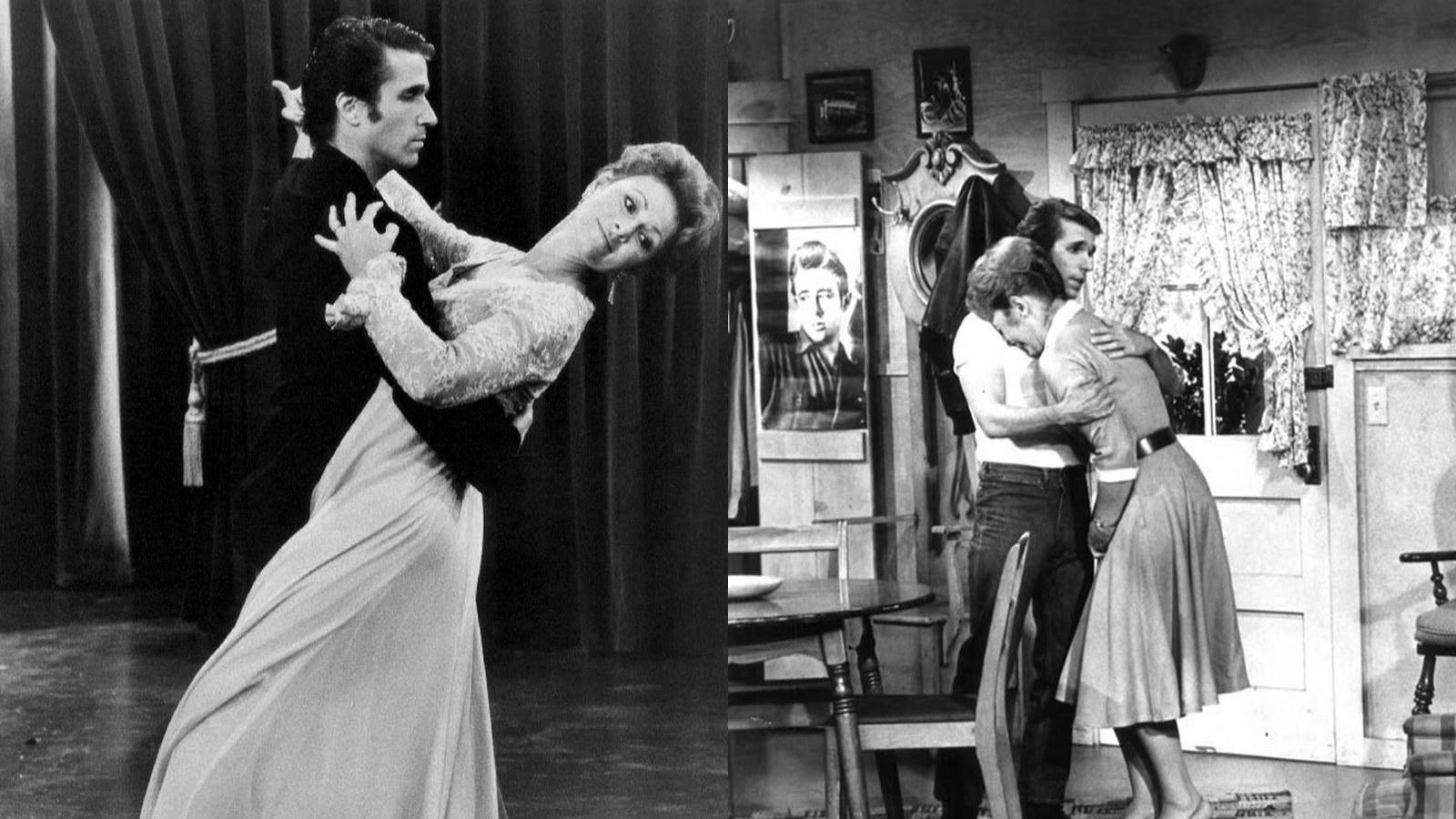
*ARCHIVE PHOTOS: Henry Winkler and Marion Ross as Fonzie and Marion Cunningham in a January 1976 ABC press photo for the Happy Days episode "Dance Contest" (left), and the two in a 1977 ABC press photo from Happy Days (right). Photos: ABC Television / Wikimedia Commons / Public domain (left); ABC Television / Wikimedia Commons / Public domain (right). Both cropped.*
*NewsCubby articles are produced with AI assistance and reviewed by humans.*
Reporting Sources
Photo & Video Credits
Credit: ABC Television / Wikimedia Commons (left); ABC Television / Wikimedia Commons (right). License: Public domain. Source: file page.