Business
Wendy's weighs $7.35-a-share take-private proposal from Trian group
The unsolicited, nonbinding offer values the burger chain's equity at about $1.4 billion, but an independent committee has not accepted a deal.
What to know
- The investor group proposed $7.35 in cash for every Wendy's share it does not already own.
- The SEC filing describes the offer as nonbinding and says it can be changed or withdrawn.
- Trian and related parties report beneficial ownership of about 16.25% of Wendy's outstanding common stock.
- Wendy's independent committee is evaluating the proposal; the board has not announced an acceptance.
- The reported $1.4 billion figure is an equity-value estimate, not a complete statement of the company's enterprise value or the cash required to close.
Wendy's has received a proposal to be taken private, but no sale has been agreed. Trian Fund Management, Flynn Group, BlueFive Capital and Sixth Street Partners offered $7.35 in cash for each Wendy's share the investor group does not already own, according to the company's statement and an amended Schedule 13D filed with the U.S. Securities and Exchange Commission on October 28.
The proposal is unsolicited and nonbinding. Wendy's said a committee of independent directors will review it with financial and legal advisers. The company also warned that there is no assurance it will pursue the transaction, approve a definitive agreement or complete any strategic deal. Shareholders have not been asked to vote or take any other action.
Those limits are central to understanding the announcement. The roughly $1.4 billion figure in news reports describes the implied value of Wendy's equity under the offer. It does not mean a buyer has already paid that amount, and it is not the same as the full enterprise value of a company that also has debt and cash on its balance sheet.
What exactly did the investor group propose?
The October 28 Schedule 13D amendment says the four-party investor group wants a newly formed entity to acquire the Wendy's common shares that the filing parties do not already beneficially own. The stated price is $7.35 per share in cash. The filing says that price was calculated on the assumption of about 194 million fully diluted shares using the treasury-stock method.
That fully diluted estimate included approximately 190.7 million common shares, 12 million outstanding stock options with a weighted-average exercise price of $15.57 and 3.3 million restricted stock units and related awards. Options with exercise prices above the offer do not contribute to the diluted count in the same way as ordinary shares, which is one reason a headline valuation and the eventual cash requirement are not always identical.
The filing described the price as an approximately 20% premium to Wendy's closing share price on October 27. The Associated Press calculated the premium at nearly 19%, while Reuters reported it at roughly 20%. Those descriptions reflect rounding, not two different bids.
The SEC document says the proposal remains subject to negotiation and mutually acceptable definitive documents. It calls the bid an expression of interest, says no assurance can be given that an agreement will be reached and reserves the investor group's right to modify or withdraw it. A take-private transaction is therefore the group's intended outcome, not a completed corporate event.
Who is behind the offer?
Trian Fund Management is leading the group. It is joined by Flynn Group, BlueFive Capital and Sixth Street Partners. Reuters reported that Flynn operates more than 340 Wendy's restaurants, making it one of the chain's largest U.S. franchisees, and also serves as Wendy's master franchisee in Australia and New Zealand.
Trian has a long relationship with Wendy's. Its founders and related parties have held substantial ownership and board roles over many years. The amended filing lists Nelson Peltz as beneficially owning 30,946,510 shares, or 16.23% of outstanding stock, under securities-law attribution rules. It also states more broadly that Trian Management, its affiliated funds and related parties beneficially own approximately 16.25%.
That existing position matters because the $7.35 offer applies to shares the investor group does not already own. It also explains why Wendy's created a committee of directors who are not affiliated with the group. The committee structure is meant to give the unaffiliated board members responsibility for considering the proposal and negotiating, rejecting or recommending it according to their fiduciary duties.
Trian previously explored a possible Wendy's transaction in 2022 and decided in early 2023 not to proceed. That history shows interest in a deal has surfaced before, but it does not determine what the current committee will decide.
What does the $1.4 billion figure mean?
AP and Reuters described the offer as valuing Wendy's at about $1.4 billion. That is an equity-value headline produced by multiplying the proposed price by an assumed diluted share count, with details about options, awards and already owned shares affecting the precise calculation.
Equity value represents the value attributed to shareholders' ownership. Enterprise value is a different measure. It generally starts with equity value, adds debt and similar obligations, then subtracts cash and cash equivalents. Reuters reported that Wendy's had about $2.4 billion of net debt as of June 28. That debt does not disappear because a buyer offers cash for the stock.
The investor group's filing says it expects to fund the proposed transaction with equity from the proposal parties, BlueFive, Sixth Street and other investors, together with a rollover of shares already owned by the filing parties. The proposal says no new debt would be required and that existing securitization financing is expected to remain in place. Those are the bidders' proposed financing terms. They are not evidence that financing has been finalized or that Wendy's has accepted the structure.
This distinction is especially useful when reading takeover headlines. A $1.4 billion equity value can be accurate while the financial obligations associated with owning the whole business are much larger. It can also differ from the cash needed to buy the remaining shares because the investor group already holds a significant stake and expects to roll that interest into the new ownership structure.
What is Wendy's board doing now?
Wendy's said its board formed an independent committee after Trian filed an earlier Schedule 13D amendment on February 18. The committee is not affiliated with the investor group. Morgan Stanley is serving as its financial adviser, and Simpson Thacher & Bartlett is serving as legal counsel.
The committee can examine more than the headline price. It may consider the company's stand-alone plan, the certainty and sources of financing, conditions attached to a transaction, treatment of stock awards, regulatory issues, the proposed timetable and whether another strategic alternative would produce better value. Wendy's has not disclosed the committee's conclusion.
The company specifically told shareholders they do not need to act now. That means there is no current tender deadline, proxy vote or election attached to the announcement. If negotiations produce a definitive agreement, Wendy's would be expected to disclose its material terms and explain any required shareholder or regulatory steps. Until then, the SEC filing and company statement describe a proposal under review.
Why is the approach arriving now?
The investor group argues that Wendy's needs patient capital and would be better positioned to pursue a turnaround outside public markets. Its letter cites pressure on U.S. consumers, commodity inflation, economic uncertainty and stronger competition in the quick-service burger category. Those are the bidders' arguments for the deal, not findings by Wendy's independent committee.
Wendy's is confronting measurable business pressure. In its own second-quarter release, the company reported that global systemwide sales fell 6.5% from a year earlier and U.S. same-restaurant sales fell 7%. It withdrew its 2026 outlook while new leadership assessed the business and developed a turnaround plan. Reuters reported that the stock remained down about 26% for the year even after the proposal sent shares sharply higher on October 28.
The company has also been reducing its U.S. restaurant count. Wendy's second-quarter release showed a net decline of 81 U.S. restaurants during the quarter and 245 during the first half of 2026. The totals include both openings and closures, so they should not be read as a count of closures alone. Management described restaurant quality and franchisee economics as issues the turnaround needs to address.
CEO Bob Wright, who took the role in May, has identified five areas for improvement: rebuilding a quality menu at a compelling value, strengthening marketing, improving restaurant operations, developing a digital experience that increases visit frequency and using restaurants as an engine for growth. Wendy's plans to discuss its strategy and third-quarter results on November 5.
How large is the Wendy's system?
Wendy's was founded by Dave Thomas in 1969 and is based in Dublin, Ohio. Its June 28 quarterly filing counted 7,180 restaurants: 5,724 in the United States and 1,456 in foreign countries and U.S. territories. Only 430 were company-operated; franchisees operated the other 6,750. The company therefore relies heavily on franchise operators rather than owning every location itself.
That structure spreads the capital and operating responsibility for restaurants across many business owners, but it also makes a turnaround more complicated. Menu changes, technology investments, remodeling and value promotions can affect the company and franchisees differently. Flynn's presence in the investor group adds another layer because it is both a major operator in the system and a prospective buyer.
For readers following corporate transactions, NewsCubby has also explained what workers should know about proposed Microsoft and Skydance buyouts.
What remains unknown?
The public documents do not establish whether Wendy's believes $7.35 is adequate, whether the investor group will raise or lower the price, whether another bidder will emerge or whether the parties will sign a merger agreement. They also do not provide a closing date, a shareholder-meeting date or a complete set of financing commitments.
There is also no disclosed decision on how all employees, franchisees, suppliers or creditors would be affected if a transaction eventually closes. The bidders say private ownership would support a long-term turnaround. Wendy's has said only that the independent committee will evaluate the proposal and that its current management team is moving ahead with its operating plan.
The next concrete milestones are Wendy's November 5 earnings report, any amendment to the investor group's securities filing and any company disclosure announcing a committee decision or definitive agreement. Silence between those events should not be interpreted as approval or rejection.
Question for readers
Should Wendy's independent committee prioritize the immediate cash premium, or demand stronger proof that a private owner can improve the restaurant system without weakening franchisees and workers?
Sources, credits & editorial notes
- The Wendy's Company: receipt of unsolicited proposal
- SEC: Schedule 13D/A, Amendment No. 65
- The Wendy's Company: second-quarter 2026 results
- SEC: Wendy's second-quarter 2026 Form 10-Q
- Associated Press: Wendy's receives buyout proposal
- Reuters: Wendy's gets take-private offer
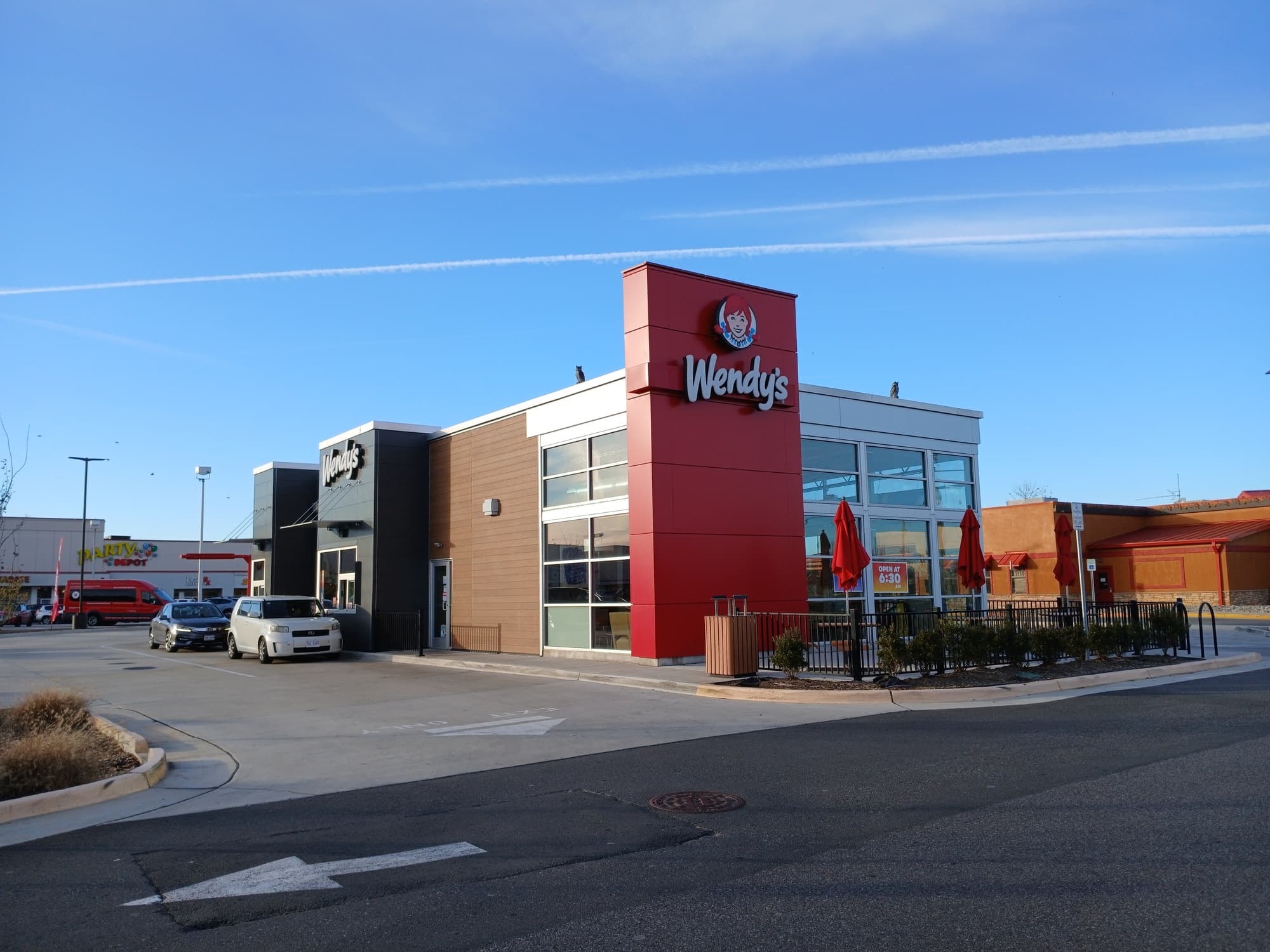
- Wikimedia Commons: Groveton Wendy's exterior
- Creative Commons Attribution-ShareAlike 4.0