Health
Congo Ebola deaths pass 5,000 as official bulletin exposes gaps in the response
The INSP reports 10,351 confirmed cases and 5,026 confirmed deaths through October 29, with contact monitoring below its target.
What to know
- INSP's October 30 bulletin records 10,351 confirmed cases and 5,026 confirmed deaths through October 29, alongside 2,788 recorded recoveries.
- The report added 77 confirmed cases and 34 confirmed deaths in its latest reporting period. Twenty of those deaths occurred in the community.
- Only 84.5% of the contacts under follow-up in reporting provinces were seen that day, below the bulletin's 95% target.
- There is no approved vaccine or specific treatment for Bundibugyo disease, according to WHO. Supportive care and research activities continue; that does not mean patients cannot be treated.
The Democratic Republic of Congo has recorded more than 5,000 confirmed deaths in its Ebola outbreak, according to the country's public-health institute, while its latest detailed bulletin shows gaps in contact monitoring, treatment support and infection control. The figures are cumulative through October 29: 10,351 confirmed cases, including 5,026 deaths. They are not infections or deaths occurring in a single day.
The Institut national de santé publique, or INSP, published its situation report on October 30. Its daily operational details help explain why the milestone is more than a larger total. Thousands of known contacts were not seen during the reporting period, some patients were being cared for outside dedicated centers, and several provinces reported shortages or disruption. The disease is caused by Bundibugyo virus, which presents different vaccine and treatment questions from the better-known Zaire Ebola virus.
What the official numbers count
The original INSP situation report, preserved in a public mirror, is numbered 168 and identifies October 29 as its reporting date and October 30 as its publication date. The headline case and death totals are explicitly labeled confirmed. A positive result and a suspected illness are different categories in this document, and the distinction affects how the scale of the outbreak is described.
The report's surveillance table lists hundreds of daily alerts validated as suspected cases. Those alerts are not an additional cumulative total of confirmed infections or probable deaths. They trigger investigation and, where appropriate, testing and referral. Treating every alert as another confirmed patient would overstate the laboratory-established count; ignoring suspected patients would miss work that the response still has to carry out.
The bulletin gives a reported fatality ratio of 48.6% among confirmed cases. That is a measure derived from the recorded cases and deaths at this point in the outbreak, not an individual patient's prognosis. Case detection, reporting delays and patients whose illnesses have not yet resolved can affect the picture. The recorded recoveries likewise do not allow every remaining case to be assigned automatically to one current treatment category.
The eastern epicenters remain central
Ituri accounted for 7,346 confirmed cases and 3,436 confirmed deaths in the bulletin's provincial table. North Kivu accounted for 2,436 cases and 1,356 deaths. Those figures describe cumulative burdens. In the latest reporting period, North Kivu reported 45 new confirmed cases and Ituri 28; Haut-Uélé reported three and Tshopo one.
No new health zone became affected during that reporting period, according to the report. That limited observation does not mean transmission stopped. The same bulletin records new cases within the already affected areas and identifies 67 affected health zones across eight provinces. Geographic expansion and ongoing transmission inside an existing zone are different measurements of the outbreak's reach.
The Associated Press's October 31 reporting from Congo describes the human cost behind the totals and the strain on responders. Its account includes health workers' complaints about delayed pay and officials' concerns about access to care. Those reports complement the operational problems documented directly in INSP's bulletin; the primary report supplies the dated numerical baseline used here.
A gap in daily contact monitoring
The official report lists 37,367 contacts under follow-up in six provinces that supplied data. Of them, 31,573 were seen during the preceding 24 hours, a coverage rate of 84.5%. The report says that was below its required 95% threshold and down from 87.2% the day before. These figures describe the monitoring of known contacts, not the proportion of every infected person detected.
The national summary also hides regional differences. Tshopo reported 68.6% contact follow-up, with strikes and attacks on response teams disrupting visits. North Kivu reported 81.1%, compared with 98.7% in Bas-Uélé. A high rate in one place cannot compensate operationally for a contact missed elsewhere: follow-up has to reach the particular people who may have been exposed.
Contact monitoring is part of the response because an illness can begin after an exposure rather than immediately. The CDC's Ebola guidance explains that symptoms can develop two to 21 days after contact with a virus that causes Ebola disease. Checking exposed people helps identify illness and connect them with assessment before further exposure occurs.
Deaths outside treatment centers
Among the 34 confirmed deaths reported for the latest period, 20 were community deaths and 14 occurred inside Ebola treatment centers. This is a reporting-period breakdown, not the lifetime division of all 5,026 deaths. It shows why a response has to include surveillance outside dedicated facilities as well as care inside them.
The bulletin also describes practical limits on treatment. Ituri continued to face a shortage of blood supplies, and some patients in Mandima did not receive meals. North Kivu reported 188 patients being cared for outside its dedicated treatment or transit centers. These are specific operational observations, rather than a claim that every treatment site across Congo has the same conditions.
The national headline of 1,101 patients in isolation or treatment should also be read with its category intact. Isolation can include people being investigated, not only laboratory-confirmed patients. The report separately lists confirmed and suspected patients in provincial treatment accounts. Providing safe assessment for a suspected case is itself part of controlling the outbreak, even when a test later excludes Ebola.
Why the virus species changes the medical response
The World Health Organization's disease explanation distinguishes Bundibugyo disease from illness caused by Ebola virus, also called the Zaire species. Existing approved vaccines and specific treatments for the latter do not establish an approved product for Bundibugyo. WHO says candidate products for the other Ebola diseases remain under development.
At the same time, INSP's bulletin records vaccination and research activities. Its Ituri section describes use of Ervebo with research into its effectiveness against Bundibugyo, alongside named trials. These activities are not evidence that an approved Bundibugyo vaccine has become available or that a study has already proved effectiveness. Research use and an established species-specific indication answer different questions.
Care remains important while those questions are studied. WHO says early intensive supportive care, including rehydration and treatment of symptoms, improves survival. The absence of an approved virus-specific therapy should therefore not be translated into an absence of medical help. The bulletin's supply, staffing and access problems matter precisely because delivering that care requires functioning services.
Exposure, protection and community work
Ebola does not spread like influenza or COVID-19 through ordinary proximity, the CDC explains. Infection can result from contact with the body fluids of a sick or deceased infected person and contaminated materials. Family caregivers and health workers face particular risks when infection-control precautions are inadequate. These are exposure-based risks, not a reason to stigmatize a nationality or a community.
INSP describes work beyond the treatment wards: decontamination, safe burial activity, household visits, training, laboratory testing and psychosocial support. Its report also records gaps, including areas without functioning triage and disruption from strikes or insecurity. The different activities fit together: finding a case is less useful if transport, assessment, safe care or follow-up cannot then be sustained.
The next official bulletin will show whether contact coverage, treatment support and daily case reporting improve. A declining number in one reporting period would need to be read alongside testing and reporting completeness before establishing a durable trend. For now, the confirmed milestone is severe and the operational needs are concrete: reach exposed people, detect illness, protect care teams and deliver care early.
Information here explains public-health reporting and attributed guidance, not an individual diagnosis. Reporting checked October 31, 2026; the numerical cutoff is October 29.
Related reading
Separate NewsCubby coverage: Nigeria’s imported Bundibugyo case; the dated U.S. measles update; the latest CDC flu surveillance explained.
Want more? Explore today's headlines on NewsCubby and join My Day free to make NewsCubby part of your day.
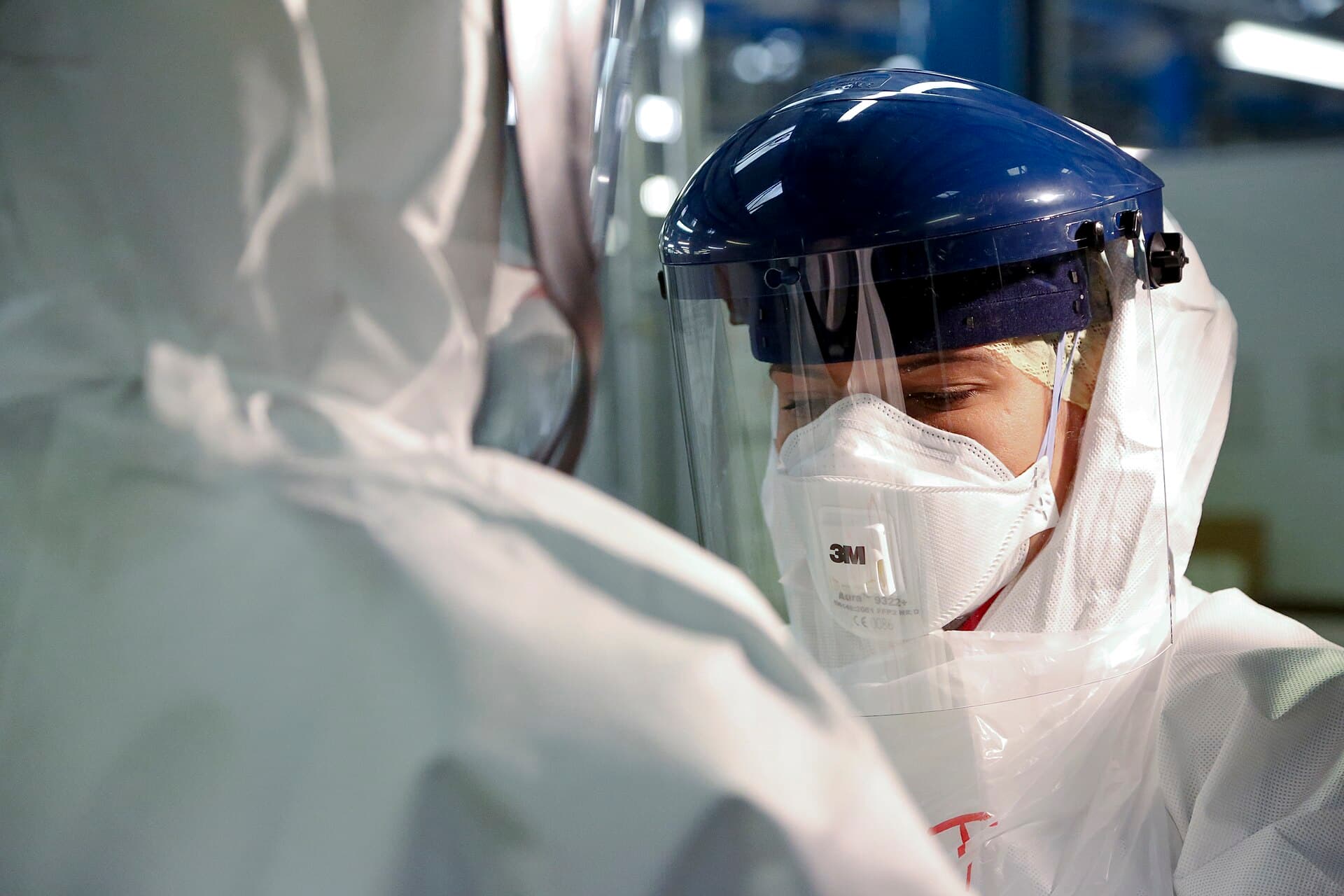
ARCHIVE TRAINING PHOTO — NHS volunteers practise Ebola protective-equipment procedures at the Army Medical Services Training Centre in Strensall, near York, United Kingdom, November 17, 2014, before deployment to Sierra Leone. This is training, not a patient or a scene from the 2026 Congo outbreak. Simon Davis/DFID, CC BY 2.0. Wikimedia-served 1920-pixel resize; no local crop.
NewsCubby articles are produced with AI assistance.