Health
Congo’s Ebola deaths pass 5,000 as spread widens
Health officials warn of “very tragic milestone” amid conflict, strikes and no vaccine for Bundibugyo strain
What to know
- 5,026 deaths out of 10,351 infected; 2,788 recoveries; nearly 50% lethality rate, per Congo’s health ministry on Saturday (NBC News).
- Outbreak declared in mid-May; driven by Bundibugyo virus, with no known vaccine or treatment (AP).
- Confirmed spread to 67 health zones across 8 provinces; Ituri and North Kivu are epicenters (NBC News).
- WHO declared a public health emergency of international concern in May for Congo and Uganda (WHO).
- CDC urges “Avoid All Travel” to Ituri and North Kivu; enhanced precautions elsewhere; guidance in place for U.S.-bound travelers (CDC Level 4, CDC guidance).
Deaths in Congo’s Ebola outbreak have topped 5,000, a marker officials called a tragic measure of a crisis that continues to spread despite months of emergency response, according to data released Saturday, with a lethality rate near 50% and thousands more infected across multiple provinces, according to the Congolese Ministry of Health as reported by the Associated Press via NBC News (NBC News). The latest figures list 5,026 deaths out of 10,351 infected, alongside 2,788 people who have recovered, underscoring a severe toll from the Bundibugyo virus, which has no known vaccine or treatment and is managed through symptom care (AP).
“It is a very tragic milestone because it is just not a number,” said WHO program area manager Dr. Patrick Otim, who stressed that the figure reflects families and communities devastated by the outbreak and highlights its severity as it expands through dozens of health zones in eastern Congo amid violence and mistrust (NBC News). The outbreak, declared in mid-May and caused by the Bundibugyo strain, is now the second deadliest Ebola event on record after the 2014–2016 West Africa epidemic, which killed about 11,000 people across a much larger caseload (Al Jazeera).
How did the outbreak reach this point?
Reuters, reporting via Al Jazeera, cited delayed detection, conflict and strained health services as key factors that allowed the virus to take hold and spread, with the Bundibugyo strain complicating response because vaccines and treatments are not available and care focuses on managing symptoms rather than curing the disease (Al Jazeera). The World Health Organization’s Dr. Patrick Otim emphasized the human costs and severity of the situation, saying the milestone reflects the scale of devastation among families and communities as responders contend with barriers to tracing and treatment in insecure areas (NBC News).
The outbreak has reached 67 of Congo’s 178 health zones spread across eight of the country’s 26 provinces, and 50 of those zones currently have active cases, a sign that transmission remains broad and persistent despite months of efforts to identify and isolate cases (AP). Public health teams are also battling gaps in the contact-tracing chain: the Africa CDC estimates about 80% of new cases arise outside the network of monitored contacts, which limits the ability to preempt new transmission clusters or move patients quickly into care (NBC News).
Where is the virus spreading now?
The epicenters remain Ituri and North Kivu, which together account for 9,782 confirmed cases and 4,792 deaths, illustrating how the burden is concentrated in eastern regions facing overlapping crises and access constraints for health teams (NBC News). Nationally, the ministry counts 10,351 people infected and 2,788 recoveries, a reminder that many patients do survive with supportive care (AP).
One-third of recorded deaths occurred outside treatment centers before testing, according to Dr. Otim. “These are people we never had opportunity to try to save them and it is one of the biggest concerns for us in this outbreak,” Otim said (NBC News). Authorities say the 2014–2016 West Africa epidemic infected more than 28,600 people and killed about 11,000; by contrast, the current Congo outbreak has fewer cases but is already the country’s deadliest and the second deadliest global Ebola event, making control urgent (Al Jazeera).
What are health workers up against?
Eastern Congo’s conflict, including fighting with Rwanda-backed M23 and an Islamist insurgency by the Allied Democratic Forces near the Uganda border, is limiting health access, while disbelief has fueled attacks on responders, including the killing of a nurse last week during an Ebola alert and a ruling-party politician in September after he advocated health measures on the radio (NBC News). Simultaneously, strikes over unpaid wages are disrupting services: on Friday, Ebola treatment center staff in Tchomia, Ituri, stopped work over four months of unpaid wages, with five confirmed and 10 suspected patients at the facility, and Dr. Justin Mukonkole urged patience as response head in Ituri (AP).
In Beni, North Kivu, some treatment services have halted, with a local official, Alain Siwako, citing a lack of fuel and money from the central government(AP). These operational setbacks compound the surveillance challenge captured by the finding that roughly 80% of new cases are emerging outside monitored contact chains, leaving responders to play catch-up in communities with limited trust and difficult access (NBC News).
How are governments and agencies responding?
The World Health Organization in May determined the Bundibugyo Ebola epidemic in Congo and Uganda to be a public health emergency of international concern, a status intended to mobilize international coordination and resources as authorities try to slow spread across borders and within hard-hit provinces (WHO). The U.S. CDC advises avoiding all travel to Ituri and North Kivu and practicing enhanced precautions in Congo and Uganda, with screening protocols for travelers returning to the United States from affected countries (CDC Level 4, CDC guidance).
Regionally, Kenya and Nigeria confirmed cases in October—Kenya eight cases and two deaths, and Nigeria a single confirmed case later evacuated to Switzerland—marking the first time an outbreak has been recorded across three African regions and the continent’s most geographically widespread event. NewsCubby reported on Nigeria’s imported case on Oct. 22 (NBC News, NewsCubby briefing). On Friday, Saudi Arabia suspended travel to and entry from Kenya, adding to June restrictions on Congo, Uganda and South Sudan as officials in Riyadh tightened controls tied to Ebola-affected countries (Al Jazeera).
What we know
This is Congo’s deadliest Ebola outbreak on record and the second deadliest globally, driven by Bundibugyo virus, without a vaccine or treatment, and spreading across 67 health zones with the greatest concentration in Ituri and North Kivu, where insecurity, disbelief and resource gaps are impeding care and surveillance, according to health authorities and international agencies (AP). With 5,026 deaths, 10,351 infected and 2,788 recoveries, responders face both an urgent mortality burden and a surveillance problem, as roughly 80% of new cases arise outside monitored contacts and one-third of deaths occur before patients reach treatment centers, officials say (NBC News).
What we don’t know yet
Officials have not projected when the outbreak will peak, whether new vaccines or treatments for Bundibugyo might become available, or how funding and wage disputes disrupting care will be resolved, leaving the trajectory uncertain despite international emergency status and travel advisories warning of high risk in eastern Congo and elevated caution elsewhere (WHO). Those unknowns persist as countries adjust border and travel policies, from CDC notices to Saudi suspensions, in response to the expanding geographic footprint, including confirmed cases in Kenya and Nigeria this month (Al Jazeera).
What’s next
No officials have projected when the outbreak will peak. The next updates from Congo’s health ministry will show whether deaths keep climbing in Ituri and North Kivu, the two provinces that account for 4,792 of the 5,026 deaths, and whether the strike by unpaid workers at the Tchomia treatment center and the service halts in Beni are resolved (NBC News).
For travelers, the CDC’s Level 4 “Avoid All Travel” notice for Ituri and North Kivu remains in place, along with a Level 2 notice for Congo and Uganda and screening guidance for people returning to the United States from affected countries (CDC Level 4, CDC guidance). Saudi Arabia’s new suspension of travel to and from Kenya, announced Friday, shows how governments outside the region are reacting as cases appear in more countries (Al Jazeera).
*Want more? Explore today's headlines on NewsCubby and join My Day free to make NewsCubby part of your day.*
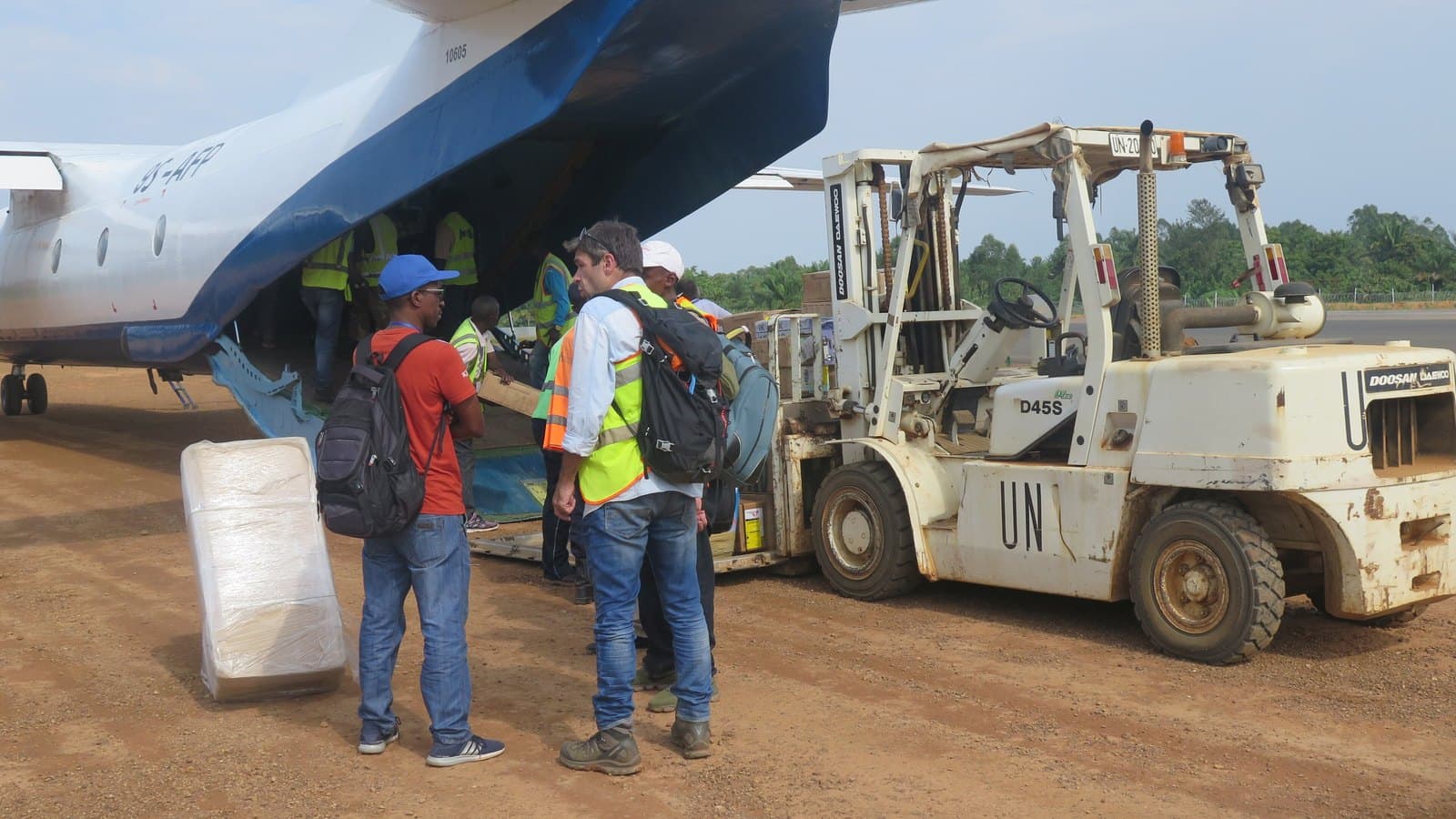
*ARCHIVE PHOTO: Medical supplies for the Ebola response arrive at Beni airport in North Kivu, Congo, Aug. 5, 2018. Not the current event. Photo: MONUSCO / Mamadou Alain Coulibaly / Wikimedia Commons / CC BY-SA 2.0 (cropped).*
*NewsCubby articles are produced with AI assistance and reviewed by humans.*
Reporting Sources
- AP: Congo's Ebola deaths top 5,000
- NBC News (AP): Congo Ebola outbreak deaths top 5,000 as fear of continent-wide spread mounts
- Al Jazeera: Ebola death toll in DR Congo passes 5,000
- WHO: Ebola epidemic in DR Congo and Uganda determined a public health emergency of international concern
- CDC: Level 4 travel notice, Ebola in DR Congo provinces
- CDC: Guidance for travelers returning to the U.S
Photo & Video Credits
Credit: MONUSCO / Mamadou Alain Coulibaly / Wikimedia Commons. License: CC BY-SA 2.0. Source: file page.