Politics
The races that will decide control of Congress: what to watch
Republicans hold the Senate 53-47 and a narrow House majority. The Senate, House and governor races to watch, and the first states to report.
What to know
- Senate: The chamber has 53 Republicans, 45 Democrats and two independents, according to senate.gov. Democrats need a net gain of four seats to win the majority, the AP says.
- House: The House has 218 Republicans, 214 Democrats, one independent and two vacancies, according to the Clerk of the House. Democrats need to win three more seats than they did in 2024, per the AP.
- Tie-breaker: Vice President JD Vance breaks tie votes in the Senate. That is why Republicans can lose no more than three of their 53 seats and still keep control, the AP notes.
- Governors: 36 states elect governors today, and 19 of those seats are open, according to the AP.
- First signals: The first polls close at 6 p.m. Eastern in Indiana and Kentucky. Georgia, Virginia and most of Florida follow at 7 p.m., and North Carolina and Ohio at 7:30 p.m.
Control of both chambers of Congress is on the ballot today, Tuesday, Nov. 3, along with 36 governorships. Republicans control the Senate and House, and both chambers have tight margins. A shift of just one or two seats could decide control, The Associated Press reported. As of this writing, no race has been called.
This guide describes the races and does not rate them or predict winners. Candidate details come from the AP's state-by-state "Decision Notes" guides and other AP reporting. Seat counts come from the U.S. Senate and the Clerk of the House.
What does each party need to win the Senate?
Thirty-three Senate seats in the regular "Class II" group are up this year, according to the Senate's list of Class II senators, whose terms end Jan. 3, 2027. Special elections are also being held in Ohio and Florida for seats filled by appointment in 2025. The winners will serve the last two years of those terms, the AP reports.
With a 53-47 majority and a Republican vice president to break ties, Republicans can keep control with 50 seats. Democrats, counting the two independents who caucus with them, need 51. The Senate says the vice president "has the sole power to break a tie vote."
Which Senate races are the most closely watched?
The AP lists Alaska, Georgia, Iowa, Kansas, Maine, Michigan, North Carolina and Ohio among the key Senate battlegrounds. In alphabetical order:
Alaska (polls close midnight Eastern): Sen. Dan Sullivan (R) faces former Rep. Mary Peltola (D). A second candidate, listed on the ballot as "Daniel J. Sullivan Jr." with no party label, is also running. The Justice Department has filed a lawsuit to block certification of the result if the incumbent loses, the AP reports. NewsCubby covered the court fight over that lawsuit earlier.
Florida (7 p.m., 8 p.m. in the Panhandle): Sen. Ashley Moody (R), appointed in January 2025 to the seat Marco Rubio left, faces state Rep. Angie Nixon (D) and an independent. The state's official candidate list names Neil J. Gillespie as the no-party candidate.
Georgia (7 p.m.): Sen. Jon Ossoff (D) faces Rep. Mike Collins (R). Ossoff is the only Democratic senator seeking reelection in a state President Donald Trump carried in 2024, the AP says.
Iowa (9 p.m.): For the open seat of retiring Sen. Joni Ernst, Rep. Ashley Hinson (R) faces state Rep. Josh Turek (D). Libertarian Thomas Laehn is also on the ballot, according to the Iowa secretary of state's candidate list.
Kansas (8 p.m., 9 p.m. in Mountain-time areas): Sen. Roger Marshall (R) faces Adam Hamilton (D), a Methodist megachurch pastor. A Democrat has not won a Kansas Senate seat since 1932, the AP notes.
Maine (8 p.m.): Sen. Susan Collins (R) is seeking a sixth term against Troy Jackson (D), a former state Senate president. Democratic delegates chose Jackson in July after Graham Platner, who won the June primary, withdrew.
Michigan (8 p.m., 9 p.m. in part of the Upper Peninsula): For the seat of retiring Sen. Gary Peters (D), Abdul El-Sayed (D) faces former Rep. Mike Rogers (R). Rep. Haley Stevens, whom El-Sayed beat in the August primary, endorsed Rogers on Sunday, the AP reported.
Nebraska (9 p.m.): Sen. Pete Ricketts (R) faces independent Dan Osborn, a union organizer. The Democratic nominee dropped out in July. Osborn says he would not caucus with either party.
New Hampshire (7 to 8 p.m.): For the seat of retiring Sen. Jeanne Shaheen (D), Rep. Chris Pappas (D) faces former Sen. John E. Sununu (R).
North Carolina (7:30 p.m.): For the seat of retiring Sen. Thom Tillis (R), former Gov. Roy Cooper (D) faces former Republican National Committee Chair Michael Whatley (R). The State Board of Elections also lists Shannon W. Bray (Libertarian) and Michael Dublin (Green).
Ohio (7:30 p.m.): In a special election, Sen. Jon Husted (R), appointed in 2025 to the seat JD Vance left when he became vice president, faces former Sen. Sherrod Brown (D).
South Carolina (7 p.m.): Sen. Darline Graham (R) faces Annie Andrews (D). Gov. Henry McMaster appointed Graham after her brother, Sen. Lindsey Graham, died in July. She then won the Republican nomination for a full term. Whoever wins will be the first woman elected to represent South Carolina in the Senate, the AP notes.
Texas (8 p.m., 9 p.m. in El Paso-area counties): Attorney General Ken Paxton (R), who beat Sen. John Cornyn in a primary runoff, faces state Rep. James Talarico (D). Texas has not elected a Democrat to the Senate since 1988, the AP notes.
Also on the ballot: Minnesota's open seat, where Lt. Gov. Peggy Flanagan (D) and former sportscaster Michele Tafoya (R) are among four candidates to replace Sen. Tina Smith (D).
What does each party need to win the House?
All 435 House seats are up. A majority is 218 when every seat is filled. Democrats need to flip three more seats than they won in 2024, according to the AP. Both parties redrew congressional maps between elections. Republicans redrew maps in Texas, Florida and other states. In California, voters approved a new map in a November 2025 referendum. Louisiana's House races are open primaries today, with a Dec. 12 runoff if no candidate wins a majority.
House races named by the AP as among those being watched:
Pennsylvania (8 p.m.): In the 7th District, Rep. Ryan Mackenzie (R) faces Bob Brooks (D). In the 8th, Rep. Rob Bresnahan (R) faces Scranton Mayor Paige Cognetti (D). The 10th District is also on the AP's list.
New York (9 p.m.): In the 17th District, Rep. Mike Lawler (R) faces Cait Conley (D). In the 3rd, Rep. Tom Suozzi (D) faces Michael LiPetri Jr. (R). The 4th is also watched.
Virginia (7 p.m.): In the 2nd District, Rep. Jen Kiggans (R) faces former Rep. Elaine Luria (D). In the 1st, Rep. Rob Wittman (R) faces Shannon Taylor (D).
Texas (8 p.m.): In the 34th District, Rep. Vicente Gonzalez (D) faces Eric Flores (R). In the 15th, Rep. Monica De La Cruz (R) faces Bobby Pulido (D). Both districts were redrawn in 2025.
North Carolina (7:30 p.m.): In the 1st District, Rep. Don Davis (D) faces Laurie Buckhout (R), with Libertarian Tom Bailey also running, according to the State Board of Elections.
Wisconsin (9 p.m.): In the 3rd District, Rep. Derrick Van Orden (R) faces Rebecca Cooke (D) in a rematch of 2024.
Iowa (9 p.m.): The open 2nd District, left by Hinson's Senate run, is also on the AP's list of House races to watch.
Maine (8 p.m.): In the open 2nd District, state Auditor Matt Dunlap (D) faces former Gov. Paul LePage (R).
Arizona (9 p.m.): In the open 1st District, Jay Feely (R) faces former state Rep. Amish Shah (D).
California (11 p.m.): In the 22nd District, Rep. David Valadao (R) faces Randy Villegas (D).
New Hampshire: In the open 1st District, Stefany Shaheen (D) faces Anthony DiLorenzo (R). In the 2nd, Rep. Maggie Goodlander (D) faces Lily Tang Williams (R).
Which governor races are being watched?
Republicans hold 26 of the 50 governorships. Democrats are trying to win a majority of governor's offices for the first time since 2006, the AP reports. Among the governor races the AP highlights:
Seats now held by Republicans: Alaska, Georgia, Iowa and Ohio, where the incumbent governors are not on the ballot, and Nevada, where Attorney General Aaron Ford (D) is challenging Gov. Joe Lombardo (R).
Seats now held by Democrats: Kansas, where Gov. Laura Kelly (D) is term-limited, and Wisconsin, where Rep. Tom Tiffany (R) faces Milwaukee County Executive David Crowley (D). Republicans are also watching Michigan's open seat and Oregon, where Gov. Tina Kotek (D) faces state Sen. Christine Drazan (R).
Other matchups: Georgia, Rick Jackson (R) and former Atlanta Mayor Keisha Lance Bottoms (D); Ohio, Vivek Ramaswamy (R) and Amy Acton (D); Iowa, Zach Lahn (R) and state Auditor Rob Sand (D); Arizona, Gov. Katie Hobbs (D) and Rep. Andy Biggs (R); Texas, Gov. Greg Abbott (R) and state Rep. Gina Hinojosa (D); Florida, Rep. Byron Donalds (R) and former Rep. David Jolly (D); California, Xavier Becerra (D) and Steve Hilton (R); Minnesota, Sen. Amy Klobuchar (D) and state House Speaker Lisa Demuth (R), among three candidates.
Which early states will give the first real signals?
Results from the earliest-closing states will be the first hard numbers of the night. In 2024, several of them counted quickly, according to AP data:
6 p.m.: Indiana and Kentucky begin. Kentucky reached 90% of the 2024 vote by 9:30 p.m. Eastern.
7 p.m.: Georgia, South Carolina, Virginia and most of Florida. Georgia, South Carolina and Florida all have Senate races on the ballot. Florida counted about 99% of its 2024 vote by 10:51 p.m., and Georgia reached 90% by 10:21 p.m. Virginia's first updates usually include all types of ballots, the AP says.
7:30 p.m.: North Carolina and Ohio. Both reached 90% of the 2024 vote before midnight.
8 p.m.: Maine, Michigan, Pennsylvania, Texas and Kansas. Pennsylvania counties release early ballots at varied times. In 2024, Maine and Michigan did not reach the halfway mark until after midnight.
Some of tonight's decisive races are in slower-counting states. Alaska's polls close at midnight Eastern, and the bulk of its mail results usually arrives in the days after the election. Arizona and California have also taken more than one night to count. Control of either chamber may not be clear until those races are called.
The AP says it does not project winners. It declares a winner only when there is no scenario in which a trailing candidate can close the gap. For a state-by-state guide, see NewsCubby's poll closing times and results timing guide. For a guide to closing times and counting speeds in every state, see NewsCubby's election eve guide, and for the broader stakes, its overview of control of Congress.
*Want more? Explore today's headlines on NewsCubby and join My Day free to make NewsCubby part of your day.*
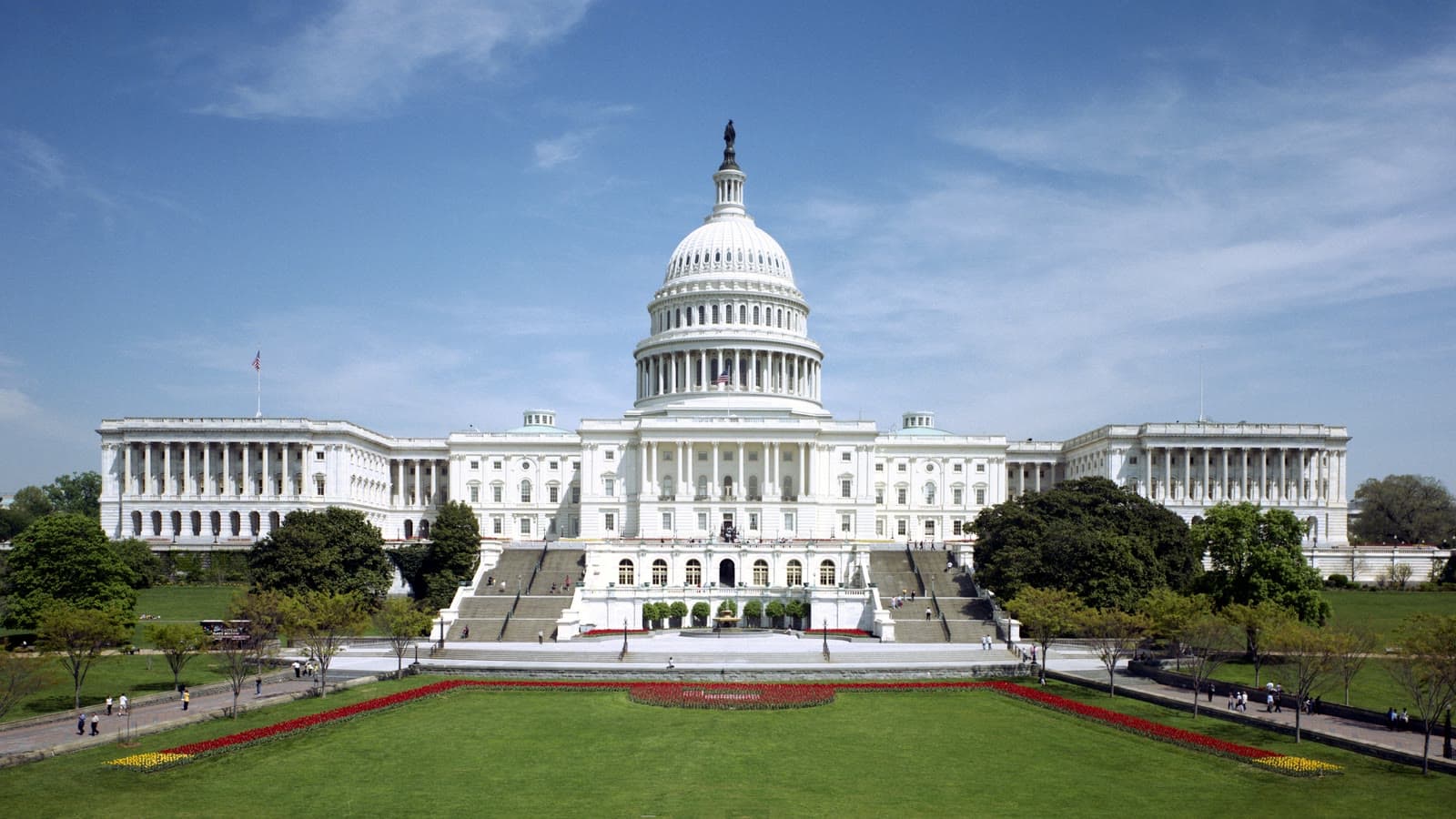
*ARCHIVE PHOTO, 1997: The west front of the U.S. Capitol in Washington. Not Election Day 2026. Photo: Architect of the Capitol / Wikimedia Commons / public domain.*
*NewsCubby articles are produced with AI assistance and reviewed by humans.*
Reporting Sources
- AP: What to watch as control of the House and Senate is decided
- AP: Decision Notes, state-by-state race calling guides
- U.S. Senate: Class II senators
- Clerk of the U.S. House of Representatives
- U.S. Senate: Senators contact list
- U.S. Senate: The vice president as president of the Senate
- Florida Division of Elections: 2026 general election candidate list
- Iowa Secretary of State: 2026 general election candidate list
- North Carolina State Board of Elections: 2026 general election candidate list
Photo & Video Credits
Credit: Architect of the Capitol / Wikimedia Commons. License: Public domain. Source: file page.