Politics
Election Day 2026: Control of Congress on the line as Americans vote
Voters choose all 435 House members, 35 senators and 36 governors Tuesday, with control of both chambers of Congress up for grabs.
What to know
- Voters on Tuesday, Nov. 3, choose all 435 House members, 35 senators and 36 governors, and decide 145 statewide ballot measures.
- Republicans hold the Senate 53-47. The final Fox News Power Rankings rate Senate control a toss-up and point to Democrats retaking the House.
- President Donald Trump, who is not on the ballot, gave his closing speech Monday at the Lincoln Memorial Reflecting Pool.
- The first polls close at 6 p.m. ET in parts of Kentucky and Indiana, and the last close in Alaska at 1 a.m. ET Wednesday.
Americans vote on Tuesday, Nov. 3, in midterm elections that will decide which party controls Congress for the next two years and how much room President Donald Trump has to push his agenda through the end of his term.
Trump is not on the ballot and will remain in the White House no matter the outcome. But every seat in the House of Representatives is being contested, along with 35 of the 100 seats in the Senate. Governors are being elected in 36 states, as well as in the territories of Guam, the Northern Mariana Islands and the U.S. Virgin Islands. All but four states are also holding legislative elections, and voters will weigh in on 145 statewide ballot measures.
Republicans go into the day defending narrow majorities in both chambers. History is against them: the party that holds the White House has traditionally lost seats in midterm years. The president himself acknowledged that pattern on the eve of the vote.
Who is favored to win the Senate?
Republicans currently hold the Senate 53 to 47. Because Vice President JD Vance casts tie-breaking votes, the GOP needs to hold 50 seats to keep control.
The final Fox News Power Rankings before Election Day rated the battle for the Senate a toss-up, with Democrats favored in 48 seats and Republicans ahead in 47. According to that forecast, a strong night for Democrats could leave them with as many as 54 seats, while a strong Republican night could leave the GOP with up to 52.
Forecasters do not agree on exactly which races are the closest. Newsweek identified seven Senate contests as the most competitive, all rated toss-ups: Alaska, Iowa, Kansas, Maine, Michigan, Ohio and Texas. All of those seats except Michigan are now held by Republicans. The Fox News ratings list Alaska, Iowa, Maine, South Carolina and Texas as Republican-held toss-ups, rate Kansas as leaning Republican and Ohio as leaning Democratic, and rate Michigan, a Democratic-held seat, as a toss-up.
In Maine, longtime Republican Sen. Susan Collins faces Democrat Troy Jackson, the former president of the Maine state Senate, in what is expected to be one of the closest races in the country. In Texas, Democrats are hoping to flip a state that has voted reliably Republican for decades, with Democrat James Talarico facing Republican Ken Paxton.
Michigan is the seat Democrats most need to defend. The race between Democrat Abdul El-Sayed and Republican Mike Rogers was shaken up in its final days when Democratic Rep. Haley Stevens endorsed Rogers for the Senate. Senate Minority Leader Chuck Schumer called the move a "despicable betrayal," and Stevens' longtime chief of staff resigned. El-Sayed brushed off the endorsement and said he was focused on issues such as the high cost of living.
Alaska's toss-up race between Republican Sen. Dan Sullivan and Democrat Mary Peltola has also been the subject of a legal fight over its ballot. The Justice Department said it would appeal after a judge threw out its lawsuit, a case NewsCubby has covered in detail.
What do the House and governors' races look like?
In the 435-seat House, Republicans hold a razor-thin majority. The Fox News Power Rankings point to Democrats taking back the chamber. A good night for Democrats could give them as many as 240 seats, according to the forecast, while a good Republican night could leave the GOP with 212, six short of a majority but enough to make governing difficult for a new Democratic speaker.
Some of the earliest clues may come from Kentucky, where the first polls close. Remy Numa, a Fox News contributor who runs the network's Power Rankings, pointed to Kentucky's 6th District, which covers Lexington and a large part of central Kentucky. Trump won the district by 15 points in the last presidential election, but Numa said college voters and farmers dealing with higher costs have made it look close this year.
There are currently 26 Republican and 24 Democratic governors. The Power Rankings list three Republican-held governor's offices as toss-ups: Alaska, Nevada and Georgia. Wisconsin, an open seat now held by a Democrat, is also a toss-up. The races in Florida, Kansas and Texas lean Republican, while Arizona, Michigan, Oregon, Iowa and Ohio lean Democratic. Democrats are defending Arizona, Michigan and Oregon, and Republicans are defending open seats in Iowa and Ohio.
What was Trump's closing argument?
Trump spent the final weekend on the road. He held rallies on Sunday in Iowa and Kansas, two states with unexpectedly tight Senate races, and spoke for almost 90 minutes outside an airport hangar in Salina, Kansas, at the last rally of what NBC News described as a 28-stop midterm blitz.
On Monday, he delivered his closing message at the Lincoln Memorial Reflecting Pool in Washington. A White House official said beforehand that Trump would focus on his administration's efforts to make the country safer and wealthier and would contrast the Republican agenda with what the official described as a radical Democratic one. Much of the speech focused on the newly reopened pool and other projects in the capital, the Associated Press reported. About 20 minutes in, Trump turned to the election, calling it "the most important midterm, I believe, in our lifetime," and acknowledged the historical headwinds: "For some reason, the sitting president doesn't win the midterms, but we gave this a very strong shot." On the campaign trail last week, he warned that if Democrats take control, "this country will go to hell."
Trump has urged voters to treat the election as a referendum on his presidency. He enters Election Day with a 40% approval rating in the latest NBC News poll. Republicans also face a difficult economic climate, with persistent inflation tied in part to the war with Iran, which polls show is unpopular. NBC News reported that 73% of voters are dissatisfied with the economy.
Analysts point to the cost of living, the economy, immigration and foreign policy as the issues most likely to shape the result.
What ballot measures are voters deciding?
Beyond candidates, voters will decide a long list of statewide questions. Measures requiring voters to show identification at the polls, or banning voting by noncitizens, are on the ballot in 11 states: Alaska, Arizona, Arkansas, California, Colorado, Kansas, Nevada, North Carolina, Ohio, South Dakota and West Virginia.
Alaska voters will also decide whether to repeal the state's ranked-choice voting system, its open primaries and a campaign finance disclosure rule. Virginia voters will decide whether convicted felons should have their voting rights restored when they are released.
California's Proposition 40 would impose a one-time 5% tax on the wealth of Californians worth more than $1 billion, with most of the money going to pay for health care. In Washington state, a referendum would repeal a 9.9% tax on income above $1 million a year that state lawmakers recently approved.
Abortion is on the ballot in several states. Missouri voters will decide whether to repeal a right to abortion, an Idaho initiative would overturn one of the nation's strictest abortion bans, and voters in Virginia and Nevada will decide whether to add a right to abortion to their state constitutions. Maryland, Missouri and Colorado have measures on congressional redistricting, and Arizona, Colorado, Nebraska and Washington state are voting on transgender students' participation in sports.
When will results come in?
Results will not arrive all at once. The first polls close at 6 p.m. Eastern time in parts of Kentucky and Indiana. Georgia, South Carolina, Vermont and Virginia close at 7 p.m. ET, followed by North Carolina, Ohio and West Virginia at 7:30 p.m. ET. A large group of states closes at 8 p.m. ET, including Maine and Pennsylvania, along with most polling places in Texas, Michigan and Kansas. The last polls close in Alaska at 1 a.m. ET on Wednesday, which means some of the closest Senate races may not be settled until well after midnight. NewsCubby's election-eve guide lists the full schedule.
The stakes extend beyond the next two years. Democrats need only a small net gain to win the House, and control of the Senate could come down to a handful of states. A Democratic majority in either chamber would give the party the power to block legislation, while Republican wins would let Trump keep pressing his agenda with a friendly Congress. The results will also shape the political landscape heading into the 2028 presidential election.
*Want more? Explore today's headlines on NewsCubby and join My Day free to make NewsCubby part of your day.*
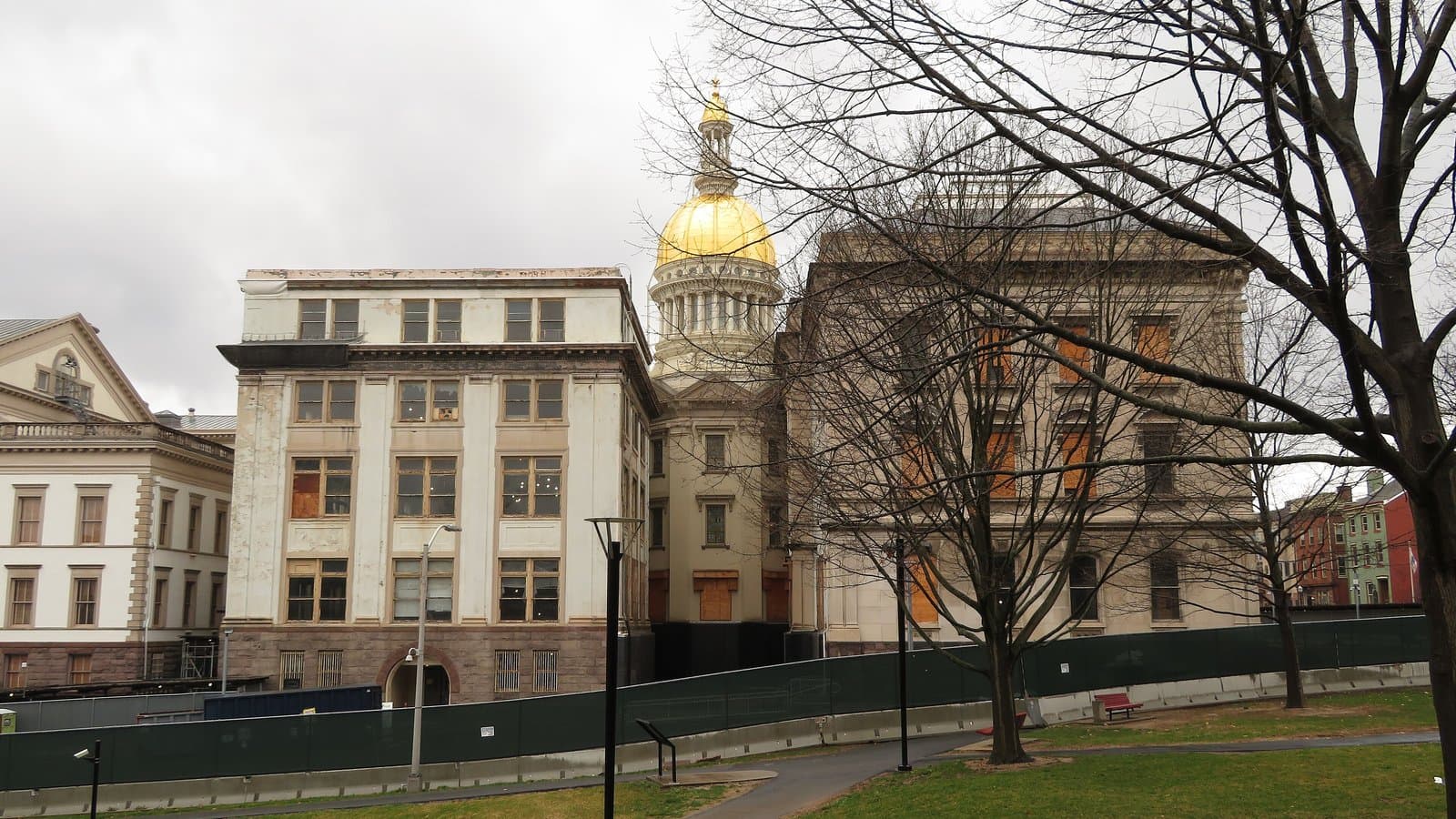
*ARCHIVE PHOTO: The west front of the U.S. Capitol in Washington, 1997. Photo: Architect of the Capitol / Wikimedia Commons / Public domain.*
*NewsCubby articles are produced with AI assistance and reviewed by humans.*
Reporting Sources
- Fox News: Poll closings, Senate, House control: Everything you need to know on Election Day (Nov. 1, 2026)
- AP News: Trump shows off Reflecting Pool in an odd closing midterms speech (Nov. 2, 2026)
- Newsweek: Midterms 2026: Map shows Senate races that will shape control of Congress (Nov. 2, 2026)
- NBC News: Trump holds final rally of a 28-stop midterm blitz before Election Day (Nov. 2, 2026)
- NBC News live updates: 2026 midterm elections (Nov. 2, 2026)
- CBS News live updates: 2026 elections, Monday, Nov. 2
- Euronews: US midterm elections 2026: What are they and when will we know the results? (Nov. 2, 2026)
- The National: Trump to make final midterms pitch amid concerns over US economy and Iran war (Nov. 2, 2026)
- Fox News live: 1 day until midterms, Stevens backs Rogers in Michigan (Nov. 2, 2026)
Photo & Video Credits
This article does not have a registered photo or video credit.