World
Europe youth protests: France counts 320,000; Frankfurt sees looting
France's Interior Ministry counted 320,000 marchers and 565 arrests by 9 p.m. Saturday, while looting followed peaceful Gen Z rallies in Frankfurt.
What to know
- France's Interior Ministry estimated Saturday's turnout at 320,000, including 70,000 in Paris; unions put it near 500,000.
- Police made 565 arrests by 9 p.m. and 214 more during Halloween night, for 779 in total.
- French turnout was down from 410,000 on Oct. 24 and 550,000 on Oct. 17, by ministry counts.
- In Germany, more than 100,000 people joined rallies in more than 30 cities, AP reported; organizers put the figure at about 120,000.
- Looting and Molotov cocktails hit Frankfurt's city center Saturday night.
Youth-led protests over schools, housing and living costs drew hundreds of thousands of people across Europe on Saturday, October 31. Most marches were peaceful, but looting in Frankfurt and clashes in Paris, Cologne and Hamburg produced the weekend's starkest images. French police made 779 arrests across the day and Halloween night.
The movement now faces its next test on Monday, when French high schools reopen after the autumn break, AP reported. Governments in Paris, Berlin, Rome and Madrid are under pressure to answer demands on education and affordability with little money to spare.
How many people marched in France?
France's Interior Ministry estimated Saturday's turnout at 320,000 nationwide, including 70,000 in Paris. Its Sunday release counted 565 arrests by 9 p.m. and 214 more during the Halloween night that followed, for 779 in total. The overnight figure includes arrests not tied to the marches.
That timing explains why NewsCubby's earlier France report listed 565 arrests. All attendance figures are government estimates; unions counted closer to 500,000.
Turnout has fallen for two straight Saturdays. The ministry counted 550,000 marchers on Oct. 17, a day that turned into some of France's worst rioting in years, AP reported, and 410,000 on Oct. 24.
In Paris on Saturday, clashes broke out near Porte de Charenton when protesters threw glass bottles and fireworks at police, who answered with stun grenades and tear gas, CNA reported. Protesters carried a banner reading, "We do not need tear gas for our future to be blurry," NBC News reported, and verified video showed fires burning in Marseille.
What happened in Frankfurt?
AP reported that more than 100,000 mostly young people protested peacefully across Germany on Saturday in demonstrations organized by the initiative Gen Z regelt, or "Gen Z has got this." The group's demands include more investment in education, social security, health and climate protection, more affordable living and opposition to any return of compulsory military service. Official counts Saturday afternoon suggested turnout fell short of the 182,000 people organizers had expected, NBC News reported.
The evening turned violent in Frankfurt. "In the city center, windows have been smashed at several shops," Frankfurt police posted on X. "Molotov cocktails are also being thrown at the emergency services." Rioters looted businesses, including a gun shop; police said one suspect was arrested and two weapons were seized. Hesse Interior Minister Roman Poseck said about 100 identified left-wing extremists had infiltrated the Frankfurt protest, according to CNA.
In Cologne, police ended a march early after some protesters used pyrotechnics, threw stones at officers and covered their faces in defiance of a ban, and water cannons were deployed. Barricades burned in Hamburg, where some businesses had boarded up ahead of time. Tagesspiegel reported that the situation had calmed by Sunday.
Organizers rejected the violence. "We are here today to fight for peace and freedom, rather than for war and coercion," Gen Z regelt spokesperson Lina Friedrich said in Berlin. "What matters most to us is better support for the health and education systems."
What is driving the protests?
In France, the movement began in mid-September with a teachers' strike at a high school in Créteil, near Paris, according to the Council on Foreign Relations, and spread to more than 1,000 high schools over teacher shortages, building conditions and the university admissions system. It later widened to living costs, public services and President Emmanuel Macron's leadership, drawing in trade unions and the Yellow Vests movement.
"At my school, the ceiling is collapsing because of water damage, nothing is being done about it, we have a shortage of teachers, the toilets are broken," Berlin high school student Janelle Schulz told AP. Our earlier coverage of Paris's education protests and the damage residents faced traces how those grievances spilled into the streets. Corentin Cabreux, a 21-year-old student, told AP his state-run residence had "damp stains all along the bottom of my walls, whole sections peeling off, cockroaches everywhere, rats."
Spain's protests center on housing; Italy's on living costs and education. Sascha Riaz, an assistant professor at Singapore Management University, told CNA that aging populations and slow growth link the grievances, pointing to "a widespread sense of generational unfairness." He described the wave as "diffusion rather than coordination," with each country's movement shaped by its own demands.
In a Le Monde interview, political scientist Donatella della Porta noted that movements in Italy, Belgium and Serbia began before the French protests. In Serbia, student-led activism helped unseat the country's longtime leader at the ballot box.
How are governments responding?
Macron has drawn a line between protesters making genuine demands and "those who destroyed, smashed and looted." France has pledged 3,000 additional substitute teachers and scrapped plans to raise some university fees, CNA reported. French think tank Fondation IFRAP estimated that the Oct. 17-18 violence caused up to 1.1 billion euros ($1.22 billion) in damage and losses.
Italy's government said it would deploy 500 army troops alongside police in Milan through the end of the year after masked groups looted stores earlier this month. In Spain, Prime Minister Pedro Sánchez called a snap election for Nov. 29 after parliament defeated his emergency housing bill, which would have extended an eviction ban to 2030. Police in Lisbon cleared a housing-protest tent camp early Sunday, Reuters reported.
Before Saturday, Poseck warned Germans against treating France as an example. "France must not be held up as a model in this regard," he said.
What are the political stakes?
Governments have less room to buy calm than in past waves of unrest. During France's Yellow Vests protests, Macron spent billions of euros on concessions while borrowing was cheap; today, new spending would likely require cuts elsewhere, Riaz said. "So it is hard to see how this ends soon, because what most governments can afford falls far short of what protesters are demanding," he told CNA.
France holds its presidential election in April 2027. Marine Le Pen, the National Rally's candidate, has backed the police, criticized the government's handling of the unrest and blamed the far left for the violence. Matthias Matthijs, a senior fellow at the Council on Foreign Relations, said the unrest could let her party cast itself as the party of law and order.
Timeline
- **Mid-September:** A teachers' strike in Créteil starts France's school protests.
- **Oct. 17:** About 550,000 march in France; rioting hits Marseille, Limoges and other cities.
- **Oct. 24:** French turnout falls to 410,000.
- **Oct. 31:** 320,000 march in France and more than 100,000 in Germany; violence in Frankfurt, Cologne and Paris.
- **Nov. 2:** French high schools reopen after the autumn break.
- **Nov. 29:** Spain holds a snap general election.
What to watch
- Whether French students stage walkouts or blockades as classes resume Monday.
- Whether Gen Z regelt or French unions announce a new national date.
- Arrest and damage tallies from Frankfurt and Cologne as German police complete their reviews.
- How housing protests shape Spain's Nov. 29 campaign.
What's next
Organizers in France and Germany have not announced their next national day of action. NewsCubby will update as plans are confirmed.
*Want more? Explore today's headlines on NewsCubby and join My Day free to make NewsCubby part of your day.*
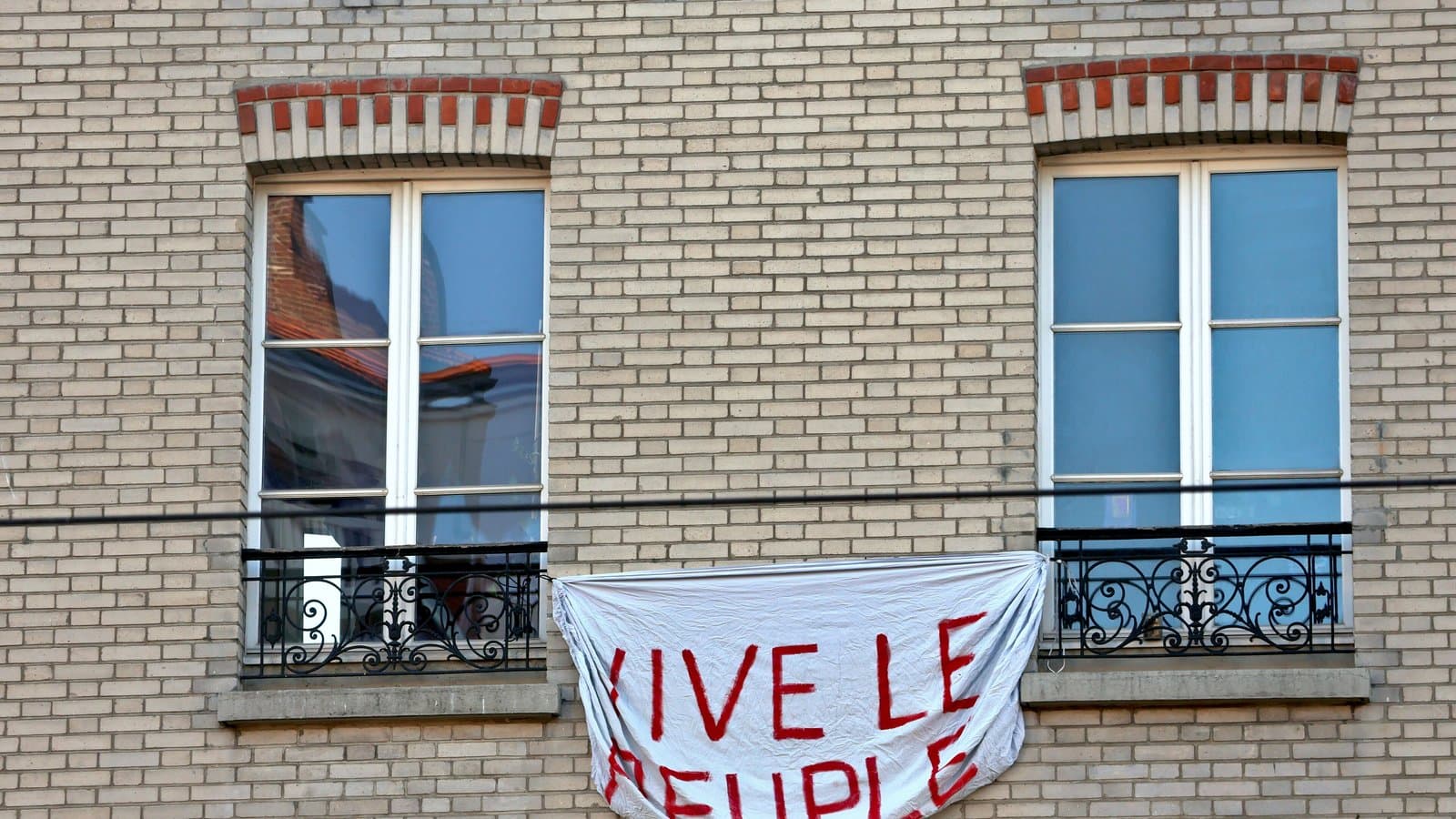
*PHOTO: Protesters march in Paris on Oct. 31, 2026. Photo: FreCha / Wikimedia Commons / CC BY-SA 4.0.*
*NewsCubby articles are produced with AI assistance and reviewed by humans.*
Reporting Sources
- AP — European protests, Saturday reporting
- AP — Sunday follow-up
- French Interior Ministry — full October 31 day/Halloween tally
- Tagesspiegel — German live reporting
- Le Monde — politicalscientist interview
- AP — broader European affordability background
- CNA, Why are violent Gen Z protests breaking out across Europe?
- NBC News, Rioters loot stores in Frankfurt as European youths protest living costs and military service
Photo & Video Credits
Credit: FreCha / Wikimedia Commons. License: CC BY-SA 4.0. Source: file page.