World
Iran leader warns of response as Araghchi rules out U.S. meeting
Mojtaba Khamenei warned of an "unrestricted" response as Foreign Minister Abbas Araghchi said no U.S. meeting is planned and talks go through Qatar.
What to know
- Khamenei met military commanders Saturday and ordered them to be ready for any attack; the military then announced steps to strengthen its readiness.
- Araghchi told Al Jazeera that no meeting with U.S. officials is planned and that Iran is ready for "both defense and diplomacy."
- Qatar is working to release more than $6 billion in Iranian assets as part of a deal that could reopen the Strait of Hormuz.
- President Donald Trump has said the U.S. will not launch new attacks before Tuesday's vote but has not ruled out strikes afterward.
- Iranian lawmakers say Tehran will not negotiate over its nuclear program.
Iran's Supreme Leader Mojtaba Khamenei has ordered the armed forces to prepare for any attack and warned of an "immediate, impactful, and geographically unrestricted response," while Foreign Minister Abbas Araghchi says Tehran is negotiating only through Qatari mediators and has no meeting planned with U.S. officials. The two messages arrived as indirect talks in Doha ran into a third day on Sunday, two days before the U.S. midterm elections.
At the center of the talks is a Qatari-brokered plan to reopen the Strait of Hormuz within two days of U.S. steps on sanctions and frozen Iranian assets. Washington has not publicly answered the proposal, and an Iranian delegation remains in Qatar to keep the channel open.
What did Iran's supreme leader say?
Khamenei's October 31 instructions to senior commanders called for an immediate, effective response without geographic limits to any new attack, according to official Iranian media as reported by AP and Euronews. The military announced later Saturday that it was taking steps to strengthen readiness, Reuters reported.
The order named no targets and announced no strike. Iran has repeatedly said it would answer any new attack by hitting U.S. and Israeli targets in neighboring countries, a threat that has kept Gulf governments on edge throughout the eight-month war.
State media said Khamenei, who has not been seen in public since the war began, also called for an updated list of potential U.S. and Israeli targets and said Iran would decide when any new war ends, Euronews reported. Commanders including Revolutionary Guard chief Maj. Gen. Ahmad Vahidi told him weapons production had increased "seven-fold." The Institute for the Study of War, a Washington think tank, assessed the threats as "likely part of an Iranian effort to deter the United States and Israel from striking Iran."
Are Iran and the U.S. talking?
Not directly. Iranian negotiators spent Sunday in Doha for a third consecutive day of discussions with Qatari mediators, an official briefed on the talks told Reuters. Qatari mediators were in Tehran on Friday before the talks moved to Doha on Saturday, and the official said the process was being coordinated in regular contact with Washington.
Speaking to Iranian state media on Sunday, Araghchi called the talks "ongoing and progressing" and said discussions on the two-day proposal were continuing without a final conclusion. "We are doing our best in this process, and we hope that there is rationality on the other side so that they prioritize diplomacy over other paths," he said. Iranian state broadcaster Press TV reported that he again ruled out a meeting with the American delegation after a parliamentary committee session.
Araghchi is not attending the Doha sessions himself. Other Iranian diplomats are leading the work there, and the foreign minister is due in Turkmenistan on Monday, The Guardian reported.
What is the two-day Hormuz plan?
In his Saturday interview with Al Jazeera, Araghchi said Iran had offered to reopen the Strait of Hormuz within two days of the United States lifting its blockade on oil ships, ending its obstruction of the release of Iranian assets and ending sanctions on Iranian oil exports. Last month Araghchi proposed a seven-day version with similar conditions, which Washington rejected, Euronews reported; Qatar's mediators pressed to compress it. Araghchi said a decision on whether talks would be direct or indirect would come "once Washington agrees to Iran's conditions."
Rezaei added a new condition: ships in a reopened strait would follow a route agreed by Iran and Oman, and "everyone passing through this waterway will do so under Iranian management."
Qatar's aim is to overcome distrust on both sides by shortening the gap between American sanctions steps and Iran's reopening of the waterway, which would then be followed by a restart of nuclear negotiations, according to The Guardian. Qatar is focusing on the release of more than $6 billion in Iranian assets as the first piece.
Iran's wider list of demands, described in a summary of the Al Jazeera interview, also covers sanctions relief, frozen funds, the presence of foreign military forces in the region and shipping arrangements through the strait.
What is Washington saying?
Secretary of State Marco Rubio said Saturday that Trump had not decided whether to launch new strikes on Iran and would prefer a diplomatic resolution, Reuters reported. Trump said the same day that the U.S. had knocked out much of Iran's military but still had to "take care of" one or two targets, and that negotiations were "going fine but you know they're not very reliable."
Iran's security chief, Mohsen Rezaei, said Saturday that he had received a letter from Vice President JD Vance seeking to revive talks. Rezaei described a positive change in "tone" from the American side but said he had not yet replied.
Will the nuclear program be on the table?
Iranian officials say no. Ali Nikzad, deputy speaker of Iran's parliament, said: "Our enemies must understand that the Iranian nation has made a decision not to negotiate on the nuclear issue under any circumstances or under any pressure." He cited what he called repeated broken promises and the bombing of nuclear facilities.
That stance clashes with the Qatari sequence, in which nuclear talks would follow the reopening of the strait. How the two positions are reconciled is likely to decide whether a Hormuz deal holds.
How are Gulf states reacting?
Anwar Gargash, a senior adviser to the president of the United Arab Emirates, said another round of escalation was not in the interest of Iran or its neighbors. "We are also, as we have shown before, braced for the worst," he said, adding that relations with Iran are essential because "Iran is our neighbour."
The risks were underlined Friday, when unidentified missiles struck a Pakistan-bound Qatari liquefied natural gas tanker near the strait, The Guardian reported. The ship had received clearance and safe-passage approval from Tehran hours earlier. Qatar's foreign ministry on Sunday condemned the strike as "a dangerous act that threatens the safety of maritime navigation and the security of global energy supplies," but continued its mediation.
How did we get here?
The United States and Israel began the war on Iran in February. Over eight months, the fighting has disrupted global oil supplies and spilled across the Middle East, Reuters reported, and shipping through the Strait of Hormuz, a key route for Gulf oil and gas, remains restricted. Gulf states have warned of post-midterm escalation as Washington weighed strike options.
Timeline
- **February 2026:** The U.S. and Israel launch the war on Iran.
- **Late October:** Vance sends a letter to Rezaei seeking to revive talks.
- **Friday, Oct. 30:** Qatari mediators meet Iranian officials in Tehran; missiles hit a Qatari LNG tanker near the strait.
- **Saturday, Oct. 31:** Talks move to Doha. Khamenei orders the military to prepare for any attack. Araghchi outlines the two-day plan. Rubio says Trump prefers diplomacy.
- **Sunday, Nov. 1:** Third day of Doha talks; Araghchi says there is no final conclusion.
What to watch
- Whether Washington formally answers the two-day proposal or the $6 billion asset release.
- Any change in tanker traffic through the Strait of Hormuz.
- Trump's posture after Tuesday's midterm elections, the point after which he has not ruled out new strikes.
- Araghchi's Monday visit to Turkmenistan and any new statement from Rezaei on the Vance letter.
What's next
Mediators in Qatar are expected to keep relaying messages between Tehran and Washington. No date has been set for direct talks. NewsCubby's election-eve Senate guide covers the U.S. vote that both sides are watching.
*Want more? Explore today's headlines on NewsCubby and join My Day free to make NewsCubby part of your day.*
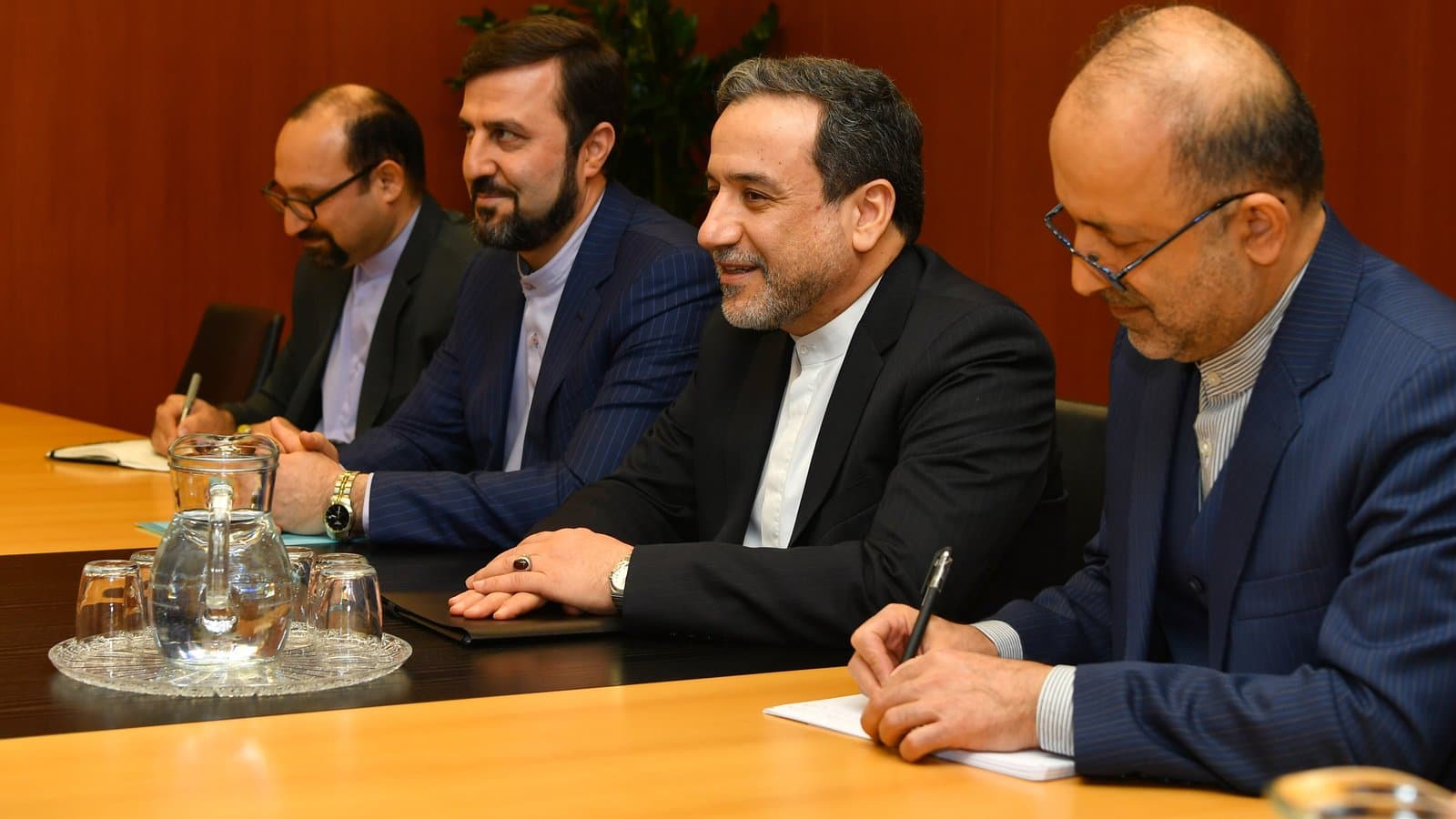
*ARCHIVE PHOTO: Abbas Araghchi at the International Atomic Energy Agency in Vienna in January 2019. Photo: IAEA Imagebank / Wikimedia Commons / CC BY 2.0.*
*NewsCubby articles are produced with AI assistance and reviewed by humans.*
Reporting Sources
- Reuters — Sunday Doha mediation (original wire carried by ThePrint)
- AP — Saturday Iranian leader warning and Araghchi interview
- Euronews — warning and diplomacy, November 1
- Press TV — Araghchi Sunday comments (Iranian state broadcaster; evidence of his position only)
- MarketScreener, Iran says no plans to meet U.S. officials as consultations with mediators continue
- The Guardian, Negotiators braced for worst over US-Iran talks to reopen strait of Hormuz, November 1
- CNBC (Reuters), Iran, Qatari mediators hold third day of talks to end U.S.-Iran war