World
World briefs: Black Sea grain corridor, G20 split, Bulgaria's vote
Ukraine and Türkiye agree to work on a grain corridor, G20 ministers end in Atlanta without a communiqué, and Iliana Yotova wins Bulgaria's runoff.
What to know
- Presidents Volodymyr Zelenskyy and Recep Tayyip Erdoğan agreed in Istanbul to work on a Black Sea grain corridor, and Erdoğan urged Russia and Ukraine to stop attacking civilian ships.
- Secretary of State Marco Rubio said the U.S. is reviewing Turkish and Indian proposals to get grain moving and sees growing interest in a limited Black Sea ceasefire.
- G20 foreign ministers ended their Atlanta meeting without a joint communiqué; the U.S. issued a chair's statement instead.
- With 99.68% of precinct protocols processed, Yotova had 57.66% to Andrey Gyurov's 39.38% in Bulgaria's runoff. Gyurov conceded, AP reported.
Ukraine and Türkiye agreed to work on a Black Sea grain corridor, G20 foreign ministers left Atlanta without a joint communiqué, and Bulgaria elected Iliana Yotova to a full presidential term in a runoff that pitted a Russia-friendly ticket against a pro-Western one. Here are the weekend's top international stories heading into Monday, November 2.
What did Zelenskyy and Erdoğan agree?
"Today, I reached an agreement with President Erdogan to work on the Black Sea grain corridor," Zelenskyy said at a joint news conference in Istanbul on Saturday, October 31, Al Jazeera reported. He said the goal was "to ensure that the corridor remains in place and operates effectively," according to Ukrinform, and that a significant part of the talks focused on unblocking the Black Sea.
Erdoğan called attacks on civilian vessels unacceptable "regardless of who carries them out or what justification is offered." "It is clear that attacks against civilian vessels and actions that further escalate tensions in the Black Sea serve no one's interests," he said. Ankara has sent Russia and Ukraine a proposal to end such attacks, but neither side has acted on it, according to Al Jazeera. Turkish Foreign Minister Hakan Fidan said Türkiye has stepped up talks with both sides to reconcile their positions.
Why does the grain corridor matter?
Ukraine is one of the world's major grain exporters, and attacks on merchant shipping have hit vessels well beyond Ukrainian waters. The Liberian-flagged container ship Contship Jet was struck by drones in Bulgaria's exclusive economic zone, and attacks off the Bulgarian and Romanian coasts, widely blamed on Russia, formed the backdrop to Bulgaria's election campaign, The Sofia Globe reported.
"This is threatening the world for food security and some energy security as well," Rubio said in Atlanta. He said the U.S. is reviewing proposals from Türkiye and India and that interest is growing in a limited Black Sea ceasefire covering grain and energy shipments by both countries. "It doesn't solve the war, but at least it solves a unique aspect of it," he said.
What about Ukraine peace talks?
Zelenskyy said Ukraine is preparing for a possible Ukraine–United States–Russia meeting in the first half of November. The Kremlin said last week that the next round of three-way talks is planned for November in the United Arab Emirates. Zelenskyy said he also discussed with Erdoğan formats involving Türkiye, Europe and other partners, including a meeting in Türkiye, which has hosted several earlier rounds.
"I believe that reaching an agreement on this issue would also give fresh impetus to efforts to secure lasting peace in Ukraine," Erdoğan said of the corridor. Zelenskyy also referred to the humanitarian operation in Oleshky, covered in NewsCubby's report on the evacuees' route. Separately, the U.S. last week approved a Patriot missile sale to Ukraine.
How did the G20 meeting in Atlanta end?
G20 foreign ministers concluded their October 30–31 meeting in Atlanta without a joint communiqué, AP reported, amid divisions that included Russia's war in Ukraine. The United States, which holds the G20 presidency in its 250th year of independence, issued a chair's statement instead.
What did the G20 chair's statement say?
The State Department text said the U.S. presidency was taking the G20 "back to basics," focusing on global economic challenges. It said ministers held "candid discussions" on energy security, supply chain resilience and geopolitical tensions, including the Strait of Hormuz and the Bab al-Mandab. "No country can have prosperity without energy," the statement said, adding that civil nuclear technology, including small modular reactors, can help meet demand while acknowledging that "every country is on its own energy path."
On supply chains, it highlighted fertilizer for food security and critical minerals for energy and advanced manufacturing. Rubio said in his closing remarks that governments recognized important problems but still disagreed over solutions. Our earlier coverage of the Atlanta meeting explains the diplomatic split.
What are Bulgaria's runoff results?
Bulgaria's Central Election Commission, with 99.68% of precinct protocols processed as of 5 a.m. local time on November 2 (10 p.m. Eastern on November 1), showed:
- Iliana Yotova and Kiril Vulchev: 1,091,206 votes (57.66%)
- Andrey Gyurov and Georgi Kandev: 745,303 votes (39.38%)
- "I support no one": 55,938 (2.96%)
Gyurov conceded and described Yotova as the apparent winner, AP reported. The commission has three days after election day to announce official final results, according to The Sofia Globe. Yotova's new five-year term begins in January 2027.
Who are Bulgaria's candidates?
Yotova, the incumbent head of state, ran with Vulchev, head of the state news agency BTA. She was backed by Prime Minister Roumen Radev's Progressive Bulgaria, which won April's early parliamentary elections, and by the Bulgarian Socialist Party. During the campaign she favored dialogue with Russia and opposed aid to Ukraine, and when asked whether Ukraine should cede territory, she said it was a matter for "negotiations," The Sofia Globe reported.
Gyurov, a former caretaker prime minister, ran with former Interior Ministry chief secretary Georgi Kandev on a pro-Western, pro-NATO and pro-EU platform. Both tickets were nominated by initiative committees.
"Today, Bulgarians chose the future over the past. They chose peace, stability, they chose normality," Radev said on election night. Yotova's first words after the results were: "Mr. Radev, I wouldn't have been able to do it without you." She also thanked voters who chose "I support no one," saying, "we will do a very serious analysis and respond to their concerns."
Radev's government was criticized in a European Parliament resolution over what it called weak responses to Russian attacks on civilian shipping in the Black Sea, The Sofia Globe reported, which ties Bulgaria's vote to the corridor talks in Istanbul.
How did Bulgaria's vote unfold?
No candidate in a field of 27 met the threshold to win outright in the October 25 first round, which required more than 50% of valid votes with turnout of at least 50%. First-round turnout was 22.98%, the lowest for any national election since Bulgaria became a democracy. An exit poll released after polls closed Sunday showed Yotova at 52.5% and Gyurov at 43.4%, a narrower margin than the official count. Turnout in the runoff ran higher; at 4 p.m. it stood at 19.33%, compared with 15.95% at the same point a week earlier.
The Interior Ministry received 461 reports of election violations by 2:30 p.m. on Sunday, 318 of them about vote buying, and opened 10 criminal proceedings.
What can Bulgaria's president do?
The president is commander-in-chief of the armed forces, sets parliamentary election dates, appoints caretaker governments when needed, grants citizenship, asylum and pardons, and has a limited veto over legislation. The president also signs decrees appointing top military officers and ambassadors.
What's next
- **Bulgaria:** The Central Election Commission announces official results by Wednesday. Radev's government postponed tabling its 2027 budget until after the presidential vote, so the budget is the next big test.
- **Black Sea:** Türkiye says talks on safe navigation will continue; no start date for the grain corridor has been announced.
- **Ukraine:** A three-way meeting with the U.S. and Russia is expected in the first half of November.
*Want more? Explore today's headlines on NewsCubby and join My Day free to make NewsCubby part of your day.*
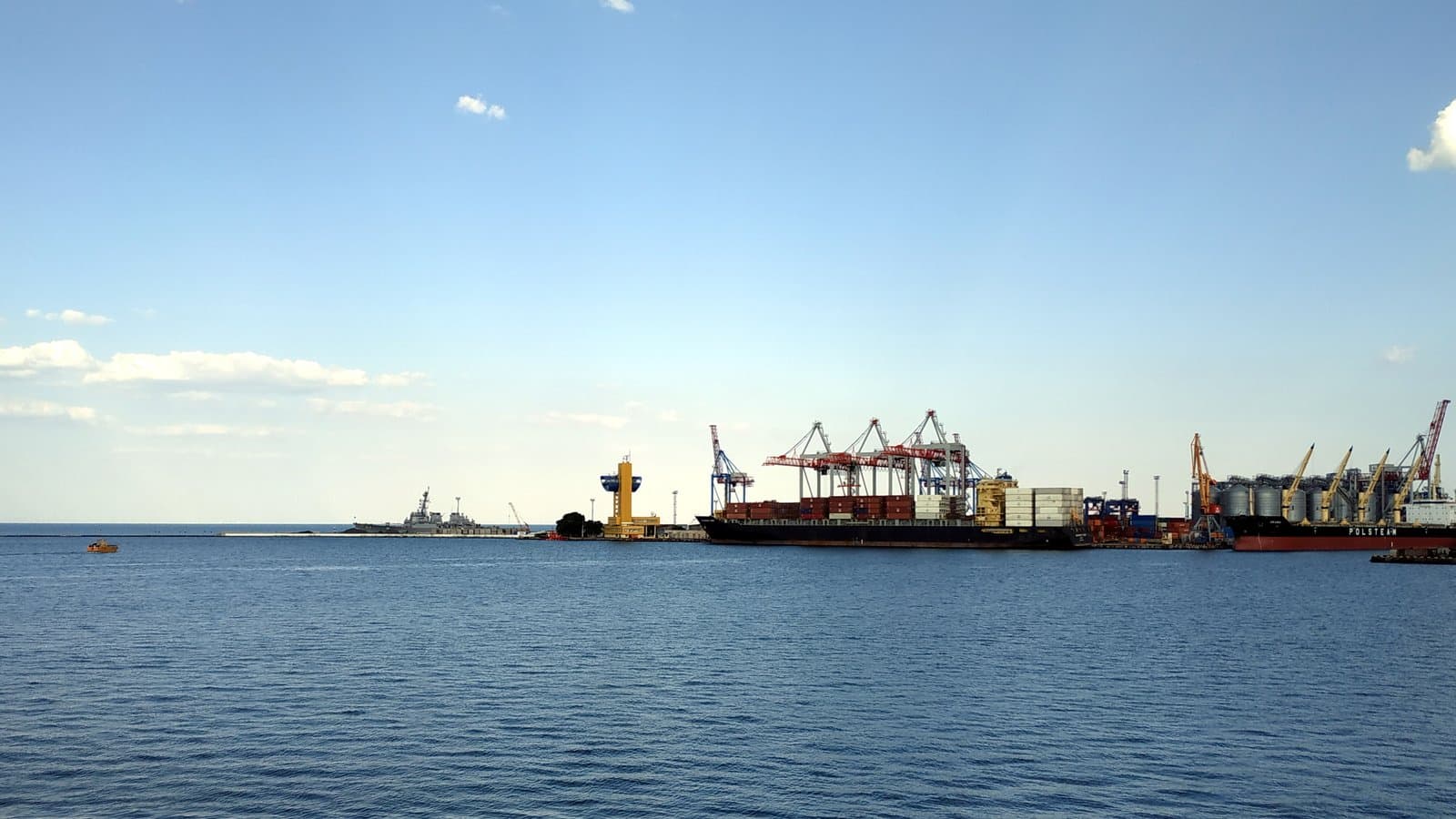
*ARCHIVE PHOTO: The container terminal at the port of Odesa, Ukraine, in 2019. Photo: Zinnsoldat / Wikimedia Commons / CC BY-SA 4.0.*
*NewsCubby articles are produced with AI assistance and reviewed by humans.*
Reporting Sources
- AP — G20 foreign ministers end Atlanta talks
- U.S. Department of State — chair statement, public-release mirror
- Secretary Rubio October 31 press availability — State Department transcript mirror
- President of Ukraine — October 31 joint news conference statement
- AP — Bulgaria presidential runoff apparent winner
- Bulgaria Central Election Commission — national runoff results
- The Sofia Globe — runoff, office and constitutional role
- Al Jazeera (AFP/Reuters), Erdogan urges Russia and Ukraine to stop Black Sea attacks
- Ukrinform, Zelensky, Erdogan discuss ways to unblock Black Sea
- The Sofia Globe, Radev and Yotova messages as finale shows win
- The Sofia Globe, Second round attracting higher turnout than record-low first
- The Sofia Globe, Yotova 52.5%, Gyurov 43.4% in second round exit poll
Photo & Video Credits
Credit: Zinnsoldat / Wikimedia Commons. License: CC BY-SA 4.0. Source: file page.