World
Flávio Bolsonaro leaves Brazil: Route, passports and U.S. visas
Argentina documents an onward flight toward Ecuador. What is confirmed about his departure, passport restrictions and Washington’s visa offer.
What to know
- Argentina's migration agency reported an entry Tuesday followed by a private flight with Guayaquil, Ecuador, listed as its destination.
- Washington's announced visa offer is separate from confirmed admission to the United States.
- Brazilian passport restrictions concern an investigation. Bolsonaro denies wrongdoing; no conviction of him is established by those restrictions.
- Brazil's electoral court announced Lula's reelection. An allegation or proposed challenge does not itself overturn that result.
Flávio Bolsonaro's departure from Brazil has become a dispute about documents, jurisdiction and diplomacy after his presidential election defeat. The latest documented itinerary points through Argentina toward Ecuador, while Washington has offered visas. That combination does not establish that the Brazilian senator has reached the United States, won asylum or escaped the reach of a Brazilian court.
What does the latest travel information establish?
Argentina's National Directorate of Migration described a land-border arrival and an onward private flight. Reuters reported that the aircraft's filed destination was Guayaquil and that the passengers' subsequent location remained unclear. The statement provides a firmer checkpoint than earlier reports that placed Bolsonaro on a journey to the United States, but it does not document every later leg.
The useful distinction is between a planned route, a departure and an arrival. A flight plan records an intended destination; it is not independently a border-admission record. An official account of leaving Argentina narrows the uncertainty without eliminating it. There is no reason to fill that gap with assumptions about where a political figure would prefer to go.
Agência Brasil separately reported the Argentine account on October 28. Its update advances the story beyond the previous day's uncertainty over whether Bolsonaro had crossed the border at all. Argentina said the travelers used valid documents. That statement addresses the documentation presented to Argentine officials, rather than deciding the effect of a Brazilian judicial restriction.
The account is also about Bolsonaro's family, but the political and legal issues concern the senator. The presence of relatives does not make them subjects of the Brazilian investigation or establish their knowledge of his legal situation. Their private arrangements do not need to be reconstructed to understand the public consequences of his departure.
Why are the passport restrictions important?
Agência Brasil reported on October 26 that Supreme Court Justice Alexandre de Moraes had prohibited Bolsonaro from leaving Brazil and ordered delivery of his passports. The proceeding was under seal. The senator himself disclosed the restriction, while news organizations reported further details from records and officials they had consulted.
A sealed proceeding limits what the public can verify directly. It calls for precise attribution, especially when describing the grounds for a restriction or an alleged failure to obey it. NewsCubby has not independently inspected that sealed order. Reporting about its contents should therefore remain identified as reporting, rather than presented as a complete public case file.
Bolsonaro disputes the basis for the restrictions and denies wrongdoing. A passport surrender order is a procedural measure, not a substitute for a trial. Likewise, leaving the country does not prove the financial allegations under investigation. Those questions require evidence and decisions through the relevant legal proceedings, including the opportunity for a defense.
Reuters subsequently reported that Brazilian authorities canceled the passports after the surrender deadline passed. Cancellation and physical possession are different: retaining a booklet would not by itself show that the issuing authority still recognizes it as valid. Whether an individual complied with a court's specific instructions remains another question, to be established from the order and the evidence of what occurred.
How could regional travel occur amid a passport dispute?
Brazil's Federal Police publishes general guidance allowing qualifying tourism travel to several South American countries with a national identity card. Argentina and Ecuador appear in that regional guidance. It also distinguishes tourism from purposes for which a passport is required and specifies that not every Brazilian identification document is accepted.
That background explains why the ordinary question, “Did he have a passport?”, does not resolve a regional itinerary. It does not establish which document Bolsonaro actually presented, his declared purpose of travel or whether any exception applied to him. Those details would require a more specific official record than the general traveler guidance.
Most significantly, a document acceptable at a foreign border is not permission from a Brazilian court to leave Brazil. The two authorities answer different questions. One decides whether a person can enter its territory using the papers presented; the other has imposed obligations within a legal proceeding. Treating one decision as automatically canceling the other would conflate separate legal processes.
What does the American visa announcement mean?
A senior State Department official said the United States would issue visas to Bolsonaro and his family. AP reported the announcement and noted the official spoke anonymously because of visa privacy rules. The declaration is an important diplomatic signal, but the information available does not establish the visa category or a completed immigration decision at an American port of entry.
The State Department's public guidance says a visa permits travel to seek admission; it does not guarantee entry. Admission is decided by Department of Homeland Security officials at the border. An offer reported by an administration official therefore should not be described as proof that a recipient has landed or has been admitted for a particular period.
Nor should a visa be casually relabeled asylum. Permission to travel, an immigration status and a protection claim are distinct matters. The announcement cited in this story does not identify an asylum decision. It also does not establish an extradition request or its outcome. Neither process can be inferred simply because a controversial traveler has been welcomed politically.
For readers following relations between Washington and Brasília, the immediate issue is the contrast between American willingness to receive Bolsonaro and Brazil's effort to enforce a court restriction. That tension is real even while the person's location is uncertain. Its eventual consequences depend on documented governmental actions, not predictions about which country might prevail in a hypothetical legal contest.
What is settled about the election, and what is disputed?
The Superior Electoral Court announced that Luiz Inácio Lula da Silva won reelection with 51.79% of valid votes. Its published account identifies Bolsonaro as the runner-up. Those are the electoral authority's announced results, separate from the senator's refusal to concede and objections concerning the conduct of voting.
The court's account also acknowledged operational difficulties involving an extension of voting hours. Recognizing that an administrative problem occurred is different from accepting a claim that the outcome was fraudulent. The questions are what actually happened, which voters were affected and what remedy, if any, a competent court finds justified by the evidence.
A concession is politically significant, but it is not the act that creates the official tally. Conversely, a candidate's decision to seek annulment does not itself annul an election. Readers should distinguish the announced count from a filed challenge, a court's agreement to hear it and a final ruling granting a remedy. Those are different stages with different consequences.
Bolsonaro also remains a senator in the official Senate directory. That record lists his term as running from February 2019 through January 2027. The departure should not be described as a resignation, removal from office or new criminal sentence without a separate decision establishing such a change.
What should readers watch next?
Three kinds of records would materially advance this story: an authenticated arrival or immigration account, a new Brazilian court decision and a substantive explanation from Bolsonaro or his representatives. Each could answer a different unresolved question. None should be replaced by a recycled photograph, a partisan accusation or an unverified map circulating online.
Any next update should also distinguish new information from a newly republished version of an older report. The Argentine account matters because it adds a specific stage to the itinerary; merely repeating yesterday's American visa announcement would not settle today's location. The same standard applies to claims that passports have been canceled, surrendered or used: the verb and the authority behind it matter.
The public interest is substantial without assuming guilt or a completed diplomatic rupture. A defeated presidential candidate has left while under travel restrictions, a neighboring country has documented part of his route, and Washington has signaled willingness to receive him. The remaining gaps are important facts of the story, not invitations to invent a conclusion.
Follow NewsCubby for clear explanations of international developments and the records behind them. Create a free account to organize the subjects you want to follow in My Day.
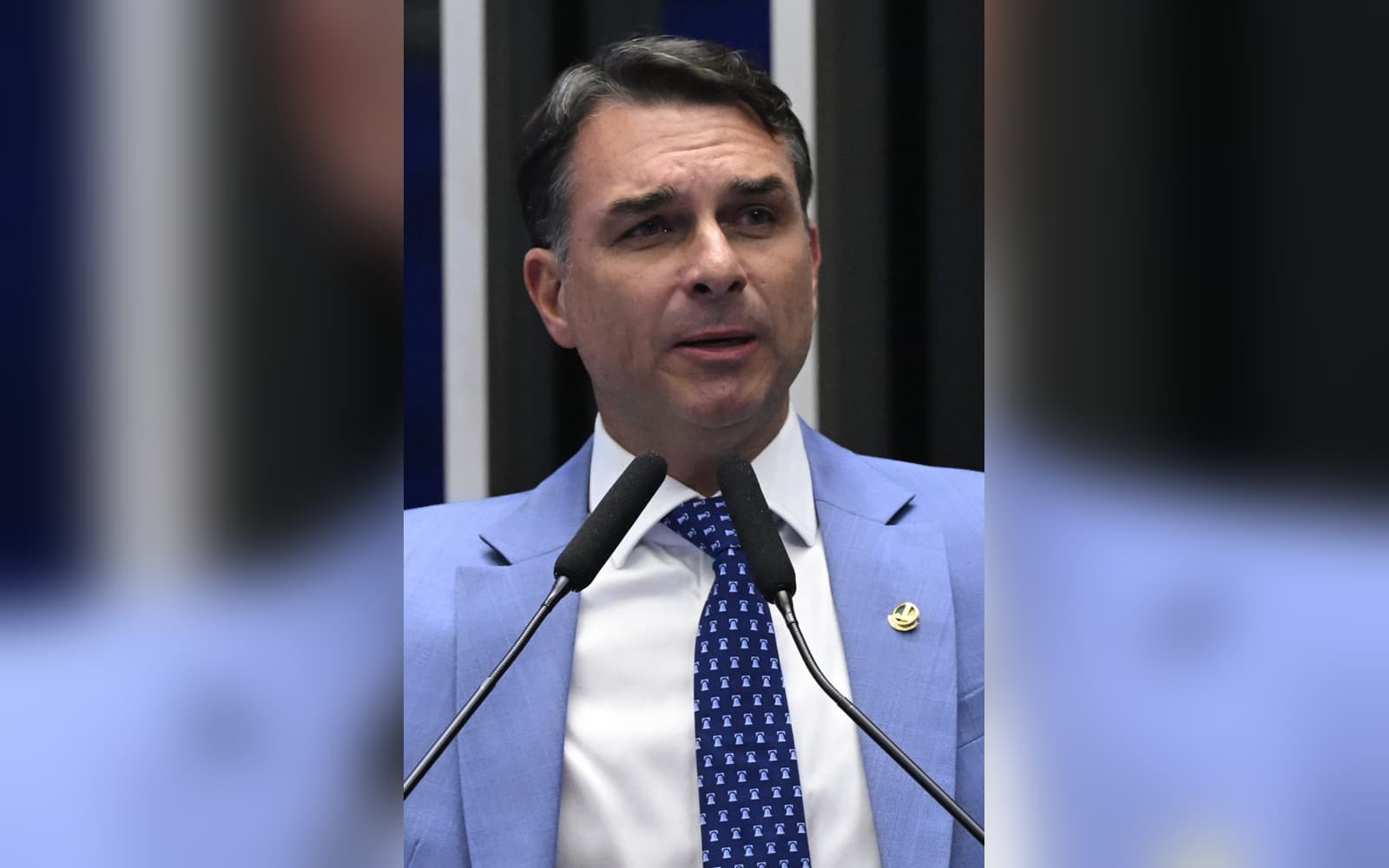
*ARCHIVE PHOTO: Flávio Bolsonaro speaking in the Brazilian Senate on September 1, 2026; archive portrait. Capture date: 2026-09-01. Photo: Carlos Moura / Agência Senado / Wikimedia Commons / CC BY-SA 4.0 (https://creativecommons.org/licenses/by-sa/4.0). Resized/cropped; cards add typography and gradient. Adaptations retain the source license. No endorsement implied.*
*Prepared with AI assistance for NewsCubby.*
Sources, credits & editorial notes
- Reuters: Bolsonaro travel, passport restrictions and U.S. visas, updated October 28
- AP: State Department says Bolsonaro and family will receive visas
- Argentina Migration: October 28 statement on border entry and Guayaquil flight
- Agência Brasil: Bolsonaro crosses Argentina toward Ecuador
- Agência Brasil: Moraes orders passport delivery and prohibits departure
- TSE: Official announcement of Lula reelection and runoff administration
- Federal Police: General regional travel and identity-document guidance
- State Department: A visa does not guarantee admission
- Brazil Senate: Flávio Bolsonaro current term
- Photo: Carlos Moura / Agência Senado; CC BY-SA 4.0