World
Israel's overnight count: leaders set coalition demands
Counting begins as Netanyahu and Eisenkot stake out rival positions. Why early returns do not settle who can form a government.
What to know
- Vote counting began overnight after Israel's October 27 election; the early returns were incomplete.
- Netanyahu called for a right-wing government, while Eisenkot pledged to try to assemble an alternative and urged Netanyahu to step aside.
- The political dispute concerns alliances and parliamentary support, not simply which individual party finishes first.
- Arab-led parties may have leverage, but an exit-poll projection is not a coalition agreement.
- The Central Elections Committee's published calendar sets November 4 for publication of official results. No final winner is declared here.
Israel's election moved from exit-poll projections to the first stages of vote counting overnight, while Benjamin Netanyahu and Gadi Eisenkot delivered competing accounts of what the result should mean. The immediate political development is not a confirmed winner: it is the beginning of a contest over who could assemble a government after the October 27 vote.
This October 28 edition uses reporting available late Tuesday evening, Eastern time, when it was already early Wednesday in Israel. AP reported that the first official tallies had begun arriving. The partial figures were not a final allocation of parliamentary seats. Updated reporting and the leaders' overnight speeches add to NewsCubby's earlier election-night account, which described the initial exit polls.
What changed after the first exit polls?
The earlier story concerned estimates released by television networks as voting ended. Those surveys suggested that no obvious governing alliance had secured a comfortable path forward. The overnight development is that actual counting has begun and the leading politicians have set out the terms on which they intend to pursue power.
AP's live coverage reported the arrival of initial official tallies. That first snapshot does not establish how many parliamentary seats each party will receive. This account does not offer a complete current seat allocation: the early figures must be distinguished from the eventual official result, and an unfinished count should not be represented as a settled mandate.
The Times of Israel's election dashboard likewise warned that the count was partial and might not be representative. That warning matters because the earliest reporting locations are not necessarily a miniature version of the country. A party's initial share can rise or fall as different communities and categories of ballots enter the total.
What did Netanyahu say overnight?
In the full speech published by The Times of Israel, Netanyahu called for a strong right-wing government and emphasized his alliance with President Donald Trump. He also argued against forming a government dependent on Arab-led parties. Those statements identify his preferred coalition direction; they do not establish that he has obtained the votes to implement it.
Netanyahu described his political camp as having a majority within a population category he defined in the speech. That is not the same measurement as a majority of seats in the Knesset. Electoral authority comes through the parliamentary process, and a leader's description of a political mandate should not be mistaken for an official nationwide count.
His comments about Iran also linked the government-formation dispute to regional security. The responsible reading is that the prime minister made a policy and political argument to supporters. The speech is not independent confirmation of every military claim it contains, nor is it an announcement that a new coalition has been established.
How did Eisenkot respond?
The Times of Israel published Eisenkot's overnight address, in which he pledged to work toward a government he described as Zionist and called on Netanyahu to step down. He also emphasized national service. The address showed that the opposition leader intended to press his claim to lead negotiations rather than accept Netanyahu's framing of the result.
But a pledge to form a government is not evidence that the necessary partners have agreed. The important next questions concern which parties would support such an arrangement, what conditions they would impose, and whether those commitments would survive negotiations. A speech can launch that effort without completing it.
The rival addresses are therefore more useful as a map of negotiating positions than as competing victory declarations. One leader stresses a right-wing alliance; the other seeks a change in leadership. The seats actually awarded and the agreements subsequently made will determine which ambitions can become a working administration.
Why could Arab-led parties matter?
Reporting by The Times of Israel described celebrations among Arab parties after projections of gains, while stressing uncertainty about their ability to become decisive partners. Electoral strength and acceptance as a coalition partner are separate questions. A party may have more seats without finding other leaders willing to negotiate with it.
There is also a difference between joining a cabinet and providing parliamentary support from outside it. Describing all possible cooperation as cabinet membership can exaggerate what has been proposed. Conversely, treating a declaration against cooperation as an irreversible outcome would ignore the negotiations that follow close elections.
For readers assessing a claimed majority, the practical test is specific: which lawmakers are committed, to what arrangement, and on what terms? Broad labels such as opposition or government camp describe political alignments but do not by themselves create a signed agreement. The Arab parties' final seat strength also remains dependent on the completed count.
How will the ballots become parliamentary seats?
Israel elects a 120-member Knesset through party lists. The 61-seat benchmark is a working parliamentary majority, rather than a separate presidential election result. The Knesset's electoral explanations describe the allocation process; the eventual balance depends on valid votes and the rules governing lists that qualify for representation.
The Central Elections Committee's voter information distinguishes ordinary polling-station counting from ballots cast through special double-envelope arrangements. The latter require checks designed to prevent a person being counted twice before the inner, anonymous ballot envelopes are separated and tallied. Different processing stages are part of the administration of the election.
Consequently, a change between an early share and a later share is not, on its own, evidence of misconduct. It can reflect which votes have been processed. A specific allegation would require specific evidence and an attributable official response; the existence of unfinished counting does not supply that evidence.
Who decides who gets the first chance to govern?
The Knesset's official guide explains that the president consults representatives of parliamentary groups before assigning a lawmaker the task of forming a government. That is why being leader of the largest party does not automatically settle the premiership. The process evaluates the possibility of assembling parliamentary backing, not merely the order of parties on a chart.
Under the framework described in Basic Law: The Government, the initial formation period is 28 days, with a possible presidential extension of up to 14 additional days. These are procedural windows after the task is assigned, not a prediction that a deal will take a particular number of days or begin immediately after an exit poll.
A proposed government must then present its composition and policy framework to the Knesset and obtain confidence. Until a replacement is formed, the outgoing government continues performing its functions. Continued incumbency during negotiations therefore should not be portrayed as proof of a newly won electoral mandate.
What we know
Voting has ended, counting has begun, and the principal leaders have made distinct public arguments about the next government. The official election calendar provides a publication date for results. These developments advance the initial exit-poll story, but they do not establish a finalized coalition or a completed transfer of power.
For background, read NewsCubby's pre-election guide, which explains the contest before votes were counted. The present article separates those earlier expectations from the overnight statements and counting process.
What we don't know yet
NewsCubby has not independently verified a complete current official seat allocation from the results portal. No signed governing agreement was identified in the reviewed material. Claims about the exact shape of the next cabinet, or that another election is inevitable, would therefore go beyond what this account can establish.
What's next?
Watch for further official returns, completed seat allocations and specific commitments from potential partners. The November 4 publication date on the committee calendar should be distinguished from preliminary counts that may emerge earlier. Subsequent reporting should identify its timestamp and source instead of silently presenting an early snapshot as final.
*Want more? Explore today's headlines on NewsCubby and join My Day free to make NewsCubby part of your day.*
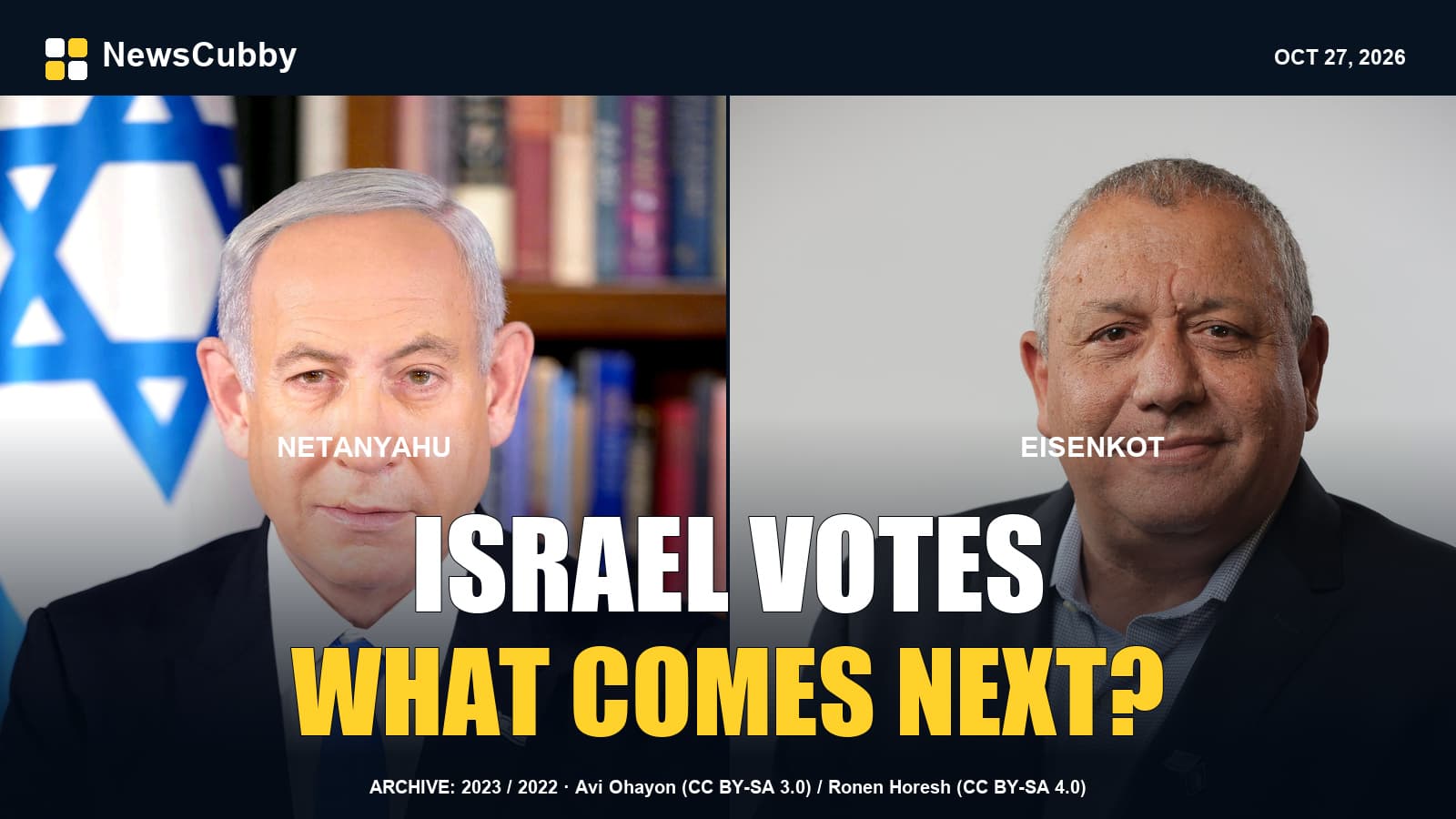
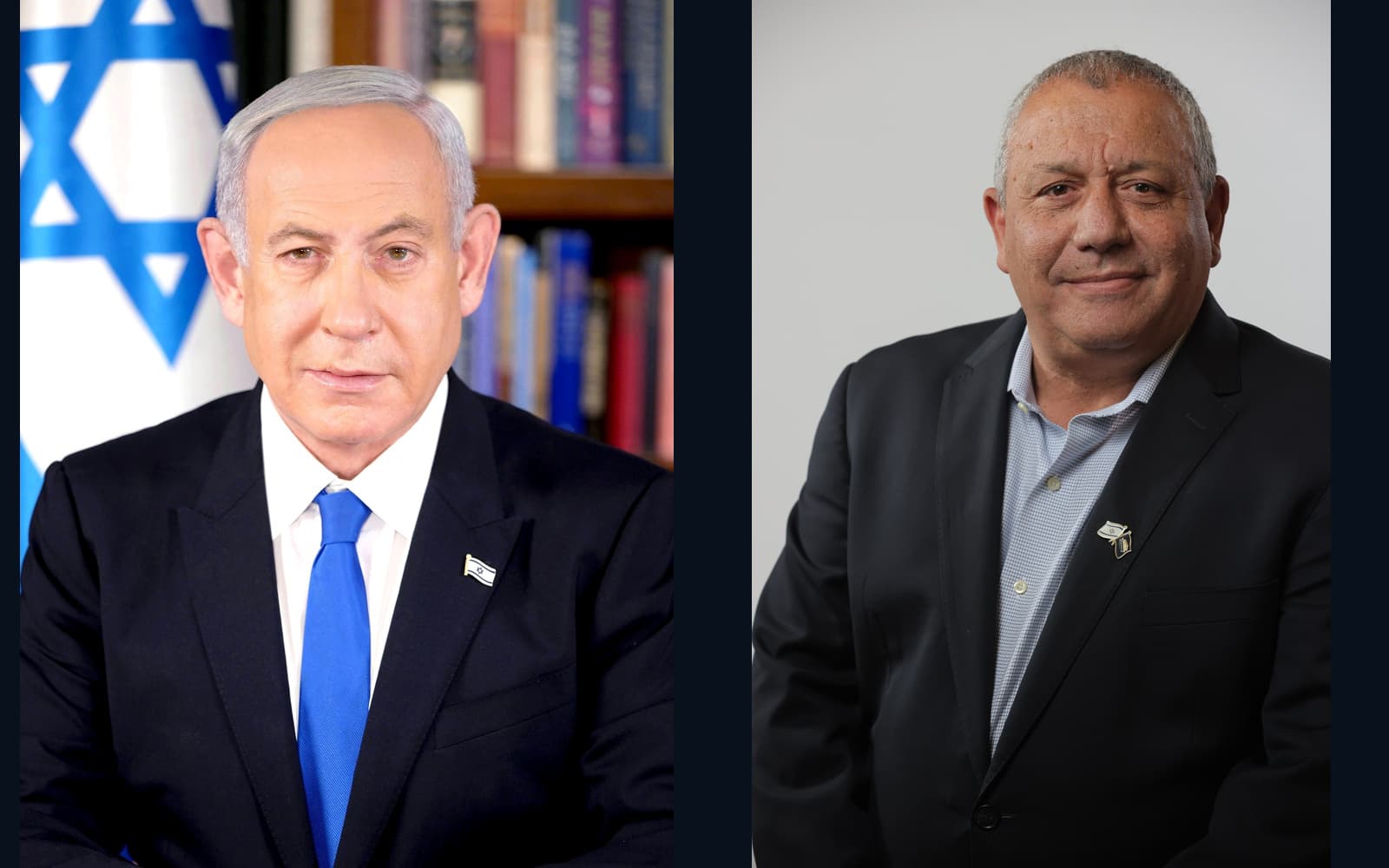
*ARCHIVE PHOTO: Benjamin Netanyahu at left in 2023 and Gadi Eisenkot at right in 2022, separate equal-sized archive portraits. Capture date(s): 2023-02-01 / 2022-11-14. Photo: Avi Ohayon / Wikimedia Commons, CC BY-SA 3.0 (https://creativecommons.org/licenses/by-sa/3.0/); Ronen Horesh / Wikimedia Commons, CC BY-SA 4.0 (https://creativecommons.org/licenses/by-sa/4.0). Cropped/resized; social cards add typography and gradient. Composite and cards shared under CC BY-SA 4.0. Not a photograph of the October 2026 event. No endorsement implied.*
*Prepared with AI assistance for NewsCubby.*
Sources, credits & editorial notes
- AP: Initial official Israel vote counts begin
- Reuters: Israel election deadlock and coalition negotiations
- Times of Israel: Netanyahu overnight speech
- Times of Israel: Eisenkot overnight speech
- Times of Israel: Arab parties' gains and coalition uncertainty
- Times of Israel: Election dashboard and incomplete count
- Central Elections Committee: Official 2026 election timetable
- Central Elections Committee: Voter information and counting
- Knesset: Forming a government
- Knesset: Basic Law, The Government
- Knesset: Allocation of seats
- Photo: Avi Ohayon; CC BY-SA 3.0
- Photo: Ronen Horesh; CC BY-SA 4.0