Sports
Appeals court revives Sunday Ticket verdict, orders new damages trial
The Ninth Circuit reinstated the jury’s finding that the NFL is liable but did not restore the $4.7 billion award. A new jury will set damages.
What to know
- A Ninth Circuit panel ruled on Friday, October 30, that the 2024 jury verdict finding the NFL liable in the Sunday Ticket antitrust case must be reinstated.
- The court said Judge Philip Gutierrez wrongly excluded the subscribers’ two economists, Daniel Rascher and Douglas Zona.
- It agreed that the jury’s roughly $4.7 billion award — $4.6 billion for residential and about $97 million for commercial subscribers — was improperly calculated and ordered a new damages trial.
- The class period ran from June 2011 to February 2023, when DirecTV carried Sunday Ticket.
- The NFL said it was disappointed and is weighing further review, Reuters reported.
The NFL’s long-running Sunday Ticket antitrust fight is moving back toward a courtroom, with a crucial distinction for subscribers: the finding of liability has been revived, but the multibillion-dollar damages award has not become a payment order.
In an October 30 decision, the U.S. Court of Appeals for the Ninth Circuit told the district court to reinstate the jury’s liability verdict and conduct a new damages trial. The ruling reverses the judgment that had wiped out the subscribers’ victory while preserving the lower court’s alternative decision that the money must be calculated again.
That combination gives the plaintiffs an important legal win without answering the question most customers will ask first: how much, if anything, will an individual subscriber receive? The appeals decision supplies no refund amount or payment schedule. It also does not restore the roughly $4.7 billion awarded in 2024 as an immediately collectible sum.
What did the subscribers challenge?
The case concerns Sunday Ticket’s DirecTV era, covering the 2011 through 2022 seasons. Residential customers and commercial establishments challenged the arrangements governing a premium package of Sunday afternoon games unavailable through their local broadcasts. Their complaint targeted the economics of distribution, rather than the results of any game.
As described in the appellate opinion, the subscribers argued that interconnected agreements among the league, teams, distributors and broadcasters suppressed competition. Pooling rights and distributing games through an exclusive package, they contended, kept prices above what a competitive market would have produced. The jury’s liability finding addresses that antitrust dispute.
There is a practical reason to separate access from price. A product can make games available while still raising questions about whether its contractual structure limits cheaper alternatives. Conversely, the existence of an expensive package does not, by itself, establish an unlawful overcharge. The litigation turned on evidence connecting the challenged agreements to competitive harm.
The NFL continues to defend its approach. Reuters reported that the league expressed disappointment and was considering further review. It maintains that its distribution strategy serves fans, pointing to broadcasts available in participating teams’ home markets alongside additional viewing choices. That defense remains the league’s position; Friday’s decision does not erase the underlying dispute.
Why did the expert testimony matter?
After the 2024 trial, U.S. District Judge Philip Gutierrez excluded testimony from the subscribers’ economists, Daniel Rascher and Douglas Zona. Without that evidence, he entered judgment for the NFL. The appeals panel concluded that the exclusions exceeded the trial court’s proper role in screening expert testimony under Federal Rule of Evidence 702.
The distinction is between evidence that cannot reliably assist a jury and evidence an opponent can challenge. The appellate judges found that criticisms of the economists’ assumptions and analysis did not justify excluding their testimony on the grounds used below. Those weaknesses could be tested through the adversarial process.
This is not an appellate certification that every number in either model is correct. Allowing an economist to testify leaves room for the NFL to dispute the analysis and for a jury to decide its weight. An admissibility ruling determines what evidence may be considered; it does not automatically turn that evidence into the final damages figure.
Because the judgment for the NFL depended on those exclusions, reversing them also removed the basis for that judgment. The restored liability verdict and the renewed damages proceeding follow from that sequence. They are separate parts of the same appellate result.
Why didn’t the $4.7 billion award survive?
The subscribers nevertheless failed to preserve the original dollar award. The appeals panel agreed that the jury’s calculation did not follow the required approach to damages. The opinion explains the problem with a concrete example: the award almost certainly multiplied each class’s membership by $191.26, the 2018 and 2019 residential list price of $294 minus economist Douglas Zona’s disputed estimate of the average price residential subscribers paid, $102.74.
That subtraction measures a discount from the advertised price. It does not measure the difference between what subscribers actually paid and what they would have paid without the anticompetitive conduct. The latter comparison is the overcharge the jury was instructed to assess. The court also noted that the calculation failed to account for the much higher prices commercial customers paid.
This matters beyond a mathematical technicality. An antitrust damages award must connect the proven violation to the loss being compensated. A conclusion that competition was unlawfully restricted does not authorize a jury to select a large number without a supported explanation of how that number measures customers’ injury.
What's next
The immediate consequence is another damages proceeding, not a new Sunday Ticket price list. The challenged period ended in 2022; the package moved to YouTube starting with the 2023 season. Friday’s decision therefore should not be presented as a ruling that every feature of today’s offering has already been tried and found unlawful.
Nor does the opinion require an immediate single-team subscription, establish a discount for current customers or tell former subscribers to expect checks by a particular date. Those would be additional claims about relief that this decision does not supply. The new trial must determine damages on a legally supported evidentiary basis.
Federal antitrust law provides for trebling qualifying damages, which explains why the financial stakes can be substantial. But multiplying the vacated 2024 award does not produce a newly payable judgment. The amount must first be resolved through the proceedings that remain. For subscribers and the league, the case has regained momentum while its ultimate price tag remains unsettled.
The case now returns to federal court in Los Angeles, where a new jury would decide only how much the league owes, Yahoo Sports reported; the NFL could also seek further review or settle. For more NFL coverage, read our Week 7 roundup, our report on the Steelers–Saints game in Paris and U2’s Thanksgiving Eve halftime show on Netflix.
*Want more? Explore today's headlines on NewsCubby and join My Day free to make NewsCubby part of your day.*
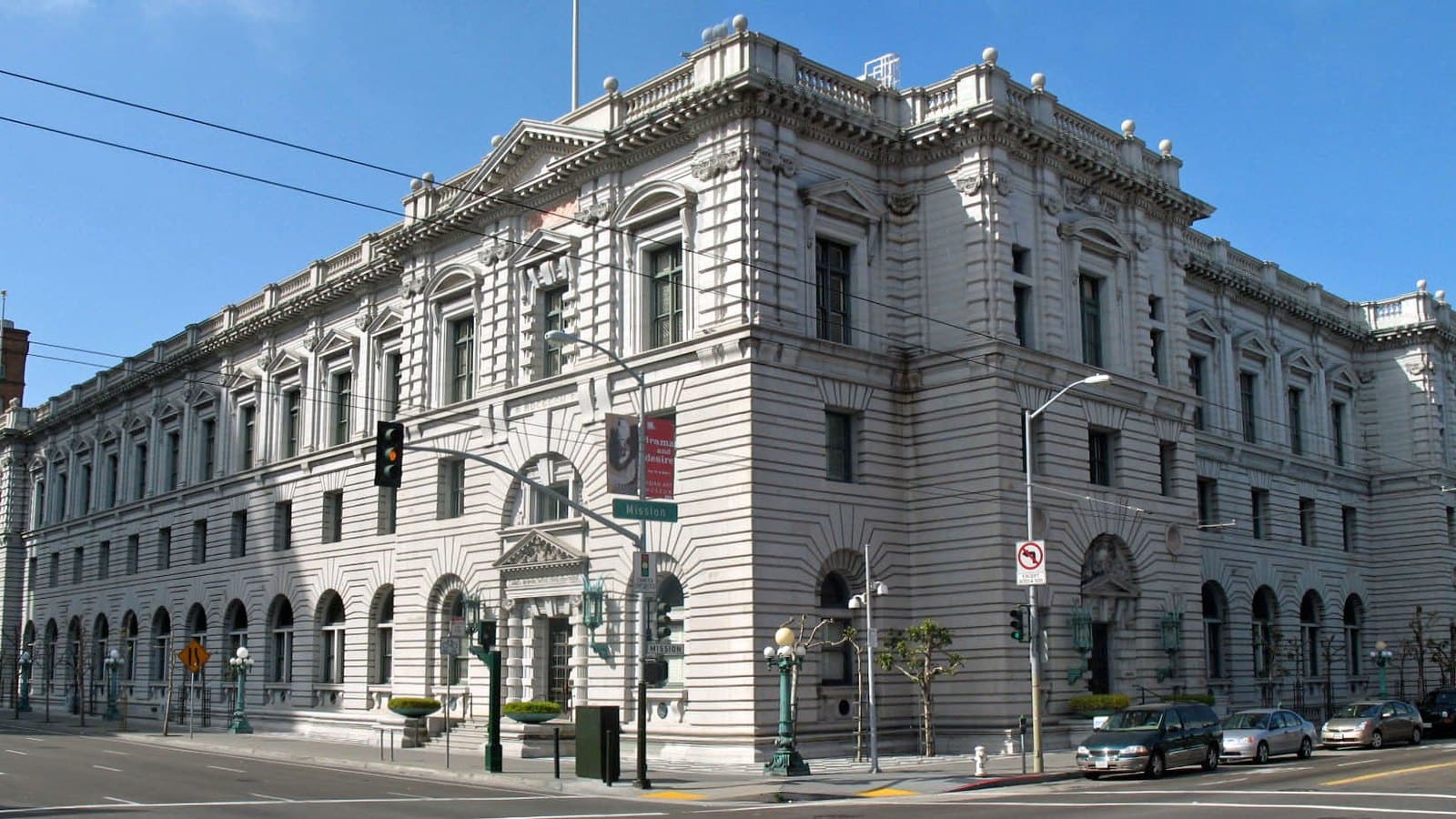
*ARCHIVE PHOTO: The James R. Browning U.S. Courthouse in San Francisco, home of the Ninth Circuit, in May 2008. Not the current event. Photo: Sanfranman59 / Wikimedia Commons / CC BY-SA 4.0 (cropped).*
*NewsCubby articles are produced with AI assistance and reviewed by humans.*
Reporting Sources
- Ninth Circuit opinion, Ninth Inning Inc. v. NFL, Nos. 24-5493 and 24-5691 (Oct. 30, 2026)
- Reuters (via WIN 98.5): US court reinstates Sunday Ticket class action verdict against NFL
- AP: Appellate court revives Sunday Ticket antitrust verdict against the NFL
- Yahoo Sports: Appeals court reinstates NFL Sunday Ticket verdict, orders new trial on damages
- 15 U.S.C. § 15 (civil antitrust damages)
Photo & Video Credits
Credit: Sanfranman59 / Wikimedia Commons. License: CC BY-SA 4.0. Source: file page.