Sports
Valkyries win first WNBA title, beating the Dream 68–63 in Game 7
Gabby Williams scored 30, 28 after halftime, as Golden State erased a halftime deficit to close out a 4–3 Finals win in its second season.
What to know
- Golden State beat Atlanta 68–63 in Game 7 at Chase Center on Saturday, October 31, to win the Finals 4–3.
- It is the Valkyries' first WNBA title, won in the franchise's second season. Atlanta was denied in its fourth Finals appearance.
- Gabby Williams scored 30 points, 28 of them after halftime, and made four 3-pointers.
- Kiah Stokes had 13 rebounds and two blocks; Veronica Burton sealed it with two free throws at 5.1 seconds.
- Jordin Canada (18) and Allisha Gray (16) led the Dream.
The Golden State Valkyries won their first WNBA championship Saturday, defeating the Atlanta Dream 68–63 in Game 7 at Chase Center in San Francisco. The league's official box score confirms the result, which completed a 4–3 series victory in the first Game 7 in WNBA Finals history, according to the AP. Golden State became a champion in its second season, with Gabby Williams driving the comeback that decided the final game.
Williams finished with 30 points, including 28 after halftime, according to the WNBA's scoring record. Her second-half total accounted for almost two-thirds of Golden State's 44 points over the final two quarters. That concentration of scoring explains her central role, but the championship also depended on rebounding, shot-blocking and free throws from a supporting group that kept the game within reach.
How did Golden State come back?
Atlanta led 30–24 at the break. That left the home team with a six-point deficit and an offense that needed a different answer. The third quarter supplied it: the Valkyries outscored the Dream 21–14 and moved ahead 45–44. An eleven-point second-half scoring advantage ultimately reversed Atlanta's earlier control of the scoreboard.
Williams scored Golden State's final 11 points of the third quarter, the AP reported, and kept attacking through the fourth. She finished with four triples overall. Her ability to produce from distance made an important difference in a game in which Golden State made only five three-pointers as a team. Most of its perimeter scoring came from the player leading the comeback.
How was the finish decided?
The lead remained vulnerable after that surge. Golden State's one-point edge entering the fourth quarter was followed by a 23–19 advantage in the final period. Rhyne Howard's layup tied the game at 57 with 2:41 left before Williams answered with a 3-pointer, according to the AP. The Valkyries still had to win the closing possessions; the third-quarter turnaround had created that opportunity rather than ended the contest.
Atlanta continued pressing until the final seconds. Allisha Gray made two free throws with about 11 seconds remaining, reducing Golden State's lead to 66–63. After Atlanta forced a jump ball, Veronica Burton secured it and answered with two free throws at 5.1 seconds, establishing the eventual 68–63 score. Those last four points illustrate how the title remained tied to execution at the line even after the game's biggest offensive momentum shift.
The full free-throw numbers reinforce that picture. Golden State converted 15 of 16 attempts, while Atlanta made eleven of fifteen. The four-point difference in made free throws was almost as large as the final margin. That comparison cannot recreate the game under different circumstances, but it identifies a concrete advantage the Valkyries built without needing another successful shot from the floor.
Who else made a difference?
Kiah Stokes provided a different kind of contribution, collecting 13 rebounds and blocking two shots. Williams added four blocks, and Golden State finished with eight to Atlanta's two. Rebounding ends or extends possessions; blocks interrupt a shooting opportunity. Neither statistic captures every defensive action, but together they show that the winning effort involved more than Williams' points.
Burton contributed ten points and five assists, while Tiffany Hayes added eleven points. Stokes scored eight. Those complementary totals mattered alongside Williams' 30: even an exceptional individual second half still required teammates to supply the remaining offense. Burton's late free throws also gave Golden State a finish that matched the collective work needed to stay competitive before the scoring breakthrough.
Jordin Canada led Atlanta with 18 points, Gray added sixteen and Angel Reese had eight points and 12 rebounds, the Guardian reported. Together, they accounted for 34 of the Dream's 63 points. Atlanta therefore had two substantial scoring contributions of its own, rather than relying on a single player to match Williams. The difference lay in the broader distribution of successful possessions and the way Golden State converted opportunities during the second half.
What do the numbers show?
The team shooting figures reveal how difficult those opportunities were. Golden State made 24 of 64 field-goal attempts, or 37.5 percent. Atlanta finished 23 of 69, or 33.3 percent. The Dream took five additional shots but made one fewer basket. That disparity helps explain why generating attempts did not, by itself, produce a winning offensive total.
From three-point range, Golden State went five for twenty and Atlanta six for thirty. The Dream made one additional triple, worth three extra points, but used ten more attempts from distance to reach that total. The contrasting numbers highlight the importance of conversion rather than volume. They also put Williams' four successful three-pointers in the context of an otherwise difficult perimeter shooting night.
Atlanta did find an advantage in second-chance scoring, finishing with 18 points to Golden State's nine. The Dream also scored twelve points from turnovers, compared with seven for the Valkyries. Those gains helped keep the contest close. Golden State's superior overall shooting percentage and free-throw conversion helped offset them, showing how different statistical strengths can pull a tight game in opposite directions.
What's next
The championship ultimately belonged to the team that turned a six-point halftime deficit into a five-point victory. Williams delivered the largest offensive change, Stokes anchored an important share of the rebounding and shot-blocking, and Burton closed the scoring at the line. The 68–63 result completed a seven-game series and gave Golden State the first WNBA title in franchise history.
The title capped a series that went the distance; read how the Dream forced the first Finals Game 7 and our Game 6 preview. It also arrived days after the Brewers' first World Series title.
*Want more? Explore today's headlines on NewsCubby and join My Day free to make NewsCubby part of your day.*
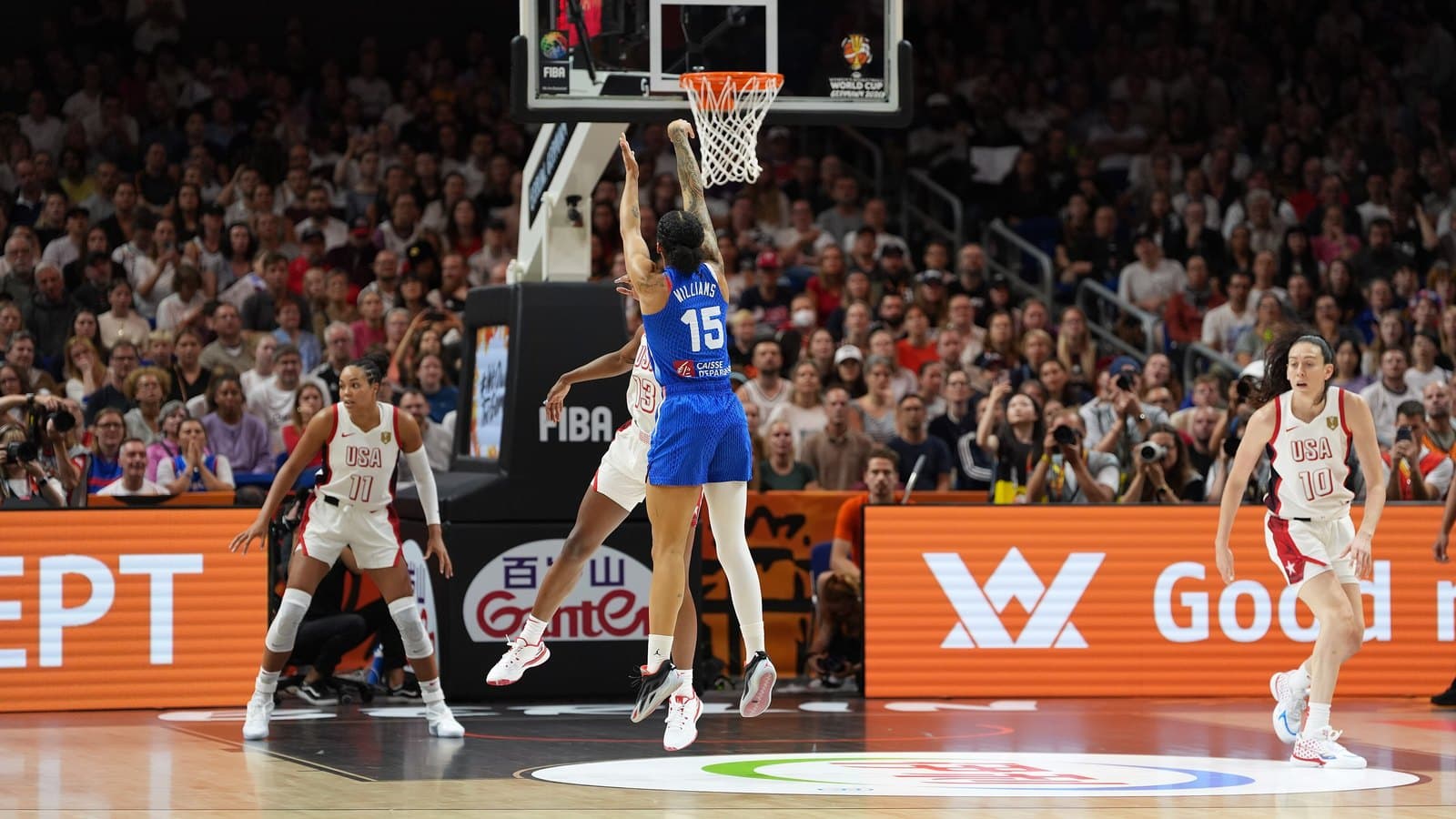
*ARCHIVE PHOTO: Gabby Williams shoots for France against the United States, September 13, 2026. Not the current event. Photo: Zafer / Wikimedia Commons / CC BY-SA 4.0 (cropped).*
*NewsCubby articles are produced with AI assistance and reviewed by humans.*
Reporting Sources
Photo & Video Credits
Credit: Zafer / Wikimedia Commons. License: CC BY-SA 4.0. Source: file page.