Politics
Amy Acton wins Ohio governor’s race. Governing is the next test
The Democrat defeats Vivek Ramaswamy and prepares to take her affordability agenda into a divided state government.
What to know
- The Associated Press called Ohio’s governor race for Democrat Amy Acton over Republican Vivek Ramaswamy.
- Acton is the first woman elected governor of Ohio and the first Democrat to win the office since 2006.
- The former state health director campaigned on household costs, health care and public schools.
- The election changes the governor’s office, but campaign promises still need funding, implementation and, in many cases, legislative approval.
Ohio has chosen a physician to lead its next administration. Democrat Amy Acton defeated Republican Vivek Ramaswamy in the November 3 governor’s election, according to The Associated Press, opening a new chapter for a state whose governorship has remained in Republican hands since 2011. She becomes the first woman elected to the office and the first Democratic winner of the race in twenty years.
The gap between Democratic election victories and the length of Republican control are different measures. Democrat Ted Strickland won in 2006 and served from 2007 to 2011. Republican John Kasich succeeded him, serving from 2011 to 2019, followed by Mike DeWine. The National Governors Association records those terms. Acton’s win ends the twenty-year wait for another Democratic winner; the transition will end nearly sixteen years of Republican control of the office.
The result gives Acton the opportunity to move from campaigning about everyday expenses to making decisions that affect them. The harder question now is how much of her program can become policy. Ohio Capital Journal’s election-night reporting says she will face a Republican-controlled legislature, making the relationship between the incoming executive and lawmakers central to the next administration.
What did voters decide?
They chose Acton to succeed term-limited Republican Governor Mike DeWine, rather than remove an incumbent seeking another term. Ramaswamy, a biotechnology entrepreneur and former Republican presidential candidate, was the GOP nominee. The open-seat contest put two candidates with markedly different professional backgrounds before the electorate.
The AP’s race call establishes the news outcome; it is separate from the state’s official certification. This article does not present a final vote percentage or margin because an election-night tally can change while valid ballots are reconciled and counted. The distinction matters even when the winner is clear. A changing total is not, by itself, evidence that a declared outcome is in doubt.
For the broader election context, NewsCubby’s guide to poll closing times and how results arrive explains why the reporting pace varies between states. Ohio’s governor race is a state executive contest. It should not be confused with the separate vote for a U.S. Senate seat or with control of either chamber of Congress.
Who is Amy Acton?
Acton is a doctor and former director of the Ohio Department of Health. Her campaign biography describes training in pediatrics and preventive medicine, a master’s degree in public health, and work at Ohio State University and the Columbus Foundation. DeWine appointed her health director in 2019, placing a future Democratic candidate in a Republican administration.
She became widely known through Ohio’s pandemic briefings. That public-health role gave voters a record of public service to assess, but it was not the same job as governing the entire state. The governor’s office requires decisions across agencies, the budget and legislation, including issues outside a physician’s professional expertise.
Her campaign foregrounded that background while arguing for broader changes in household costs. Evaluating the transition now means looking beyond a familiar public profile: who will run the agencies, what proposals will be submitted, which deadlines will be met and how the administration will explain tradeoffs when different priorities compete for limited resources.
What would her health-care agenda change?
Acton’s published health-care platform proposes an Ohio Rx purchasing initiative, changes intended to make Medicaid enrollment easier, greater hospital and insurance price transparency, and action on medical debt. These are campaign commitments, not benefits newly available because the election was called.
The platform also proposes counting certain out-of-pocket medication purchases toward insurance deductibles and strengthening efforts against surprise billing and predatory collection practices. Each proposal addresses a different part of a household’s health-care bill. Reducing the price of a prescription does not automatically reduce an insurance premium, and debt relief does not necessarily change the cost of future treatment.
The next useful information will be the actual program designs. Residents will need to know who qualifies, how an application works, which costs are included and where money comes from. An announcement that a program is being developed should not be confused with an enrollment opening. Any eventual benefit will depend on the rules adopted and the resources available to deliver it.
What happens to her school promises?
On education, Acton’s campaign calls for implementing the Fair School Funding Plan, changing the voucher system and providing free school breakfasts and lunches. It also proposes investments in literacy, mathematics and workforce preparation. Her stated approach places public-school funding at the center of the argument over the state’s priorities.
For families, the practical test is the detail of a budget and the implementation that follows. A proposal must explain how state funding reaches districts, when changes begin and which students or services are affected. The outcome can differ from the language of a campaign platform after lawmakers amend a bill or agencies establish its operating rules.
School funding also connects to the property-tax debate. A reduction in one source of revenue raises questions about replacement funding and the responsibilities retained by local communities. The election gives Acton a platform to pursue her approach; it does not make those fiscal choices disappear or settle them before a bill is written.
What relief did she propose for homeowners?
Her property-tax platform proposes expanding the homestead exemption and creating a rebate for certain homeowners facing increases. The campaign describes a rebate of up to $1,000 for eligible households below specified income and home-value limits when a tax bill rises by more than four percent from the previous year.
Those thresholds belong to the proposal. They should not be read as instructions to file a claim now. The campaign also links property-tax relief to its school-funding agenda and calls for tighter controls on collection practices. How the state would fund, administer and verify a rebate remains an important question for any legislation that follows.
Homeowners comparing future announcements should look for the effective year, eligibility calculation, application deadline and treatment of local taxes. A maximum rebate is not a guaranteed payment to every homeowner. Clear rules will matter as much as the headline amount when families try to understand whether a policy changes their own bill.
What power will the governor actually have?
Ohio’s constitution assigns executive power to the governor and requires the governor to communicate with the General Assembly about the state’s condition and recommend legislation. That gives the office a central role in setting an agenda, but a recommendation does not itself enact a law.
The constitution also provides a veto, including authority to reject individual items in appropriations bills. Lawmakers can override a veto with the required three-fifths vote in each chamber. Those provisions make legislative relationships important even after a decisive statewide win. The relevant question is not simply which party holds the governor’s office, but whether a particular proposal can assemble enough support to become law and remain funded.
A governor can lead an administration and press for changes. Major tax, spending and statutory proposals must still move through the institutions responsible for them. That is why the transition’s staffing and legislative negotiations deserve attention alongside the election result.
What comes next?
Ohio’s constitution provides four-year gubernatorial terms beginning on the second Monday in January. In 2027 that date is January 11. Before the new administration takes office, the immediate election work is the official canvass and certification, while the governor-elect prepares to govern.
The U.S. Election Assistance Commission explains that a canvass reconciles and confirms valid ballots, including Election Day, early, mail, provisional and eligible overseas ballots. Certification is the formal attestation by election officials that the results accurately account for the votes. A media call and that official process serve different purposes.
The campaign itself will also be studied. NewsCubby previously covered the controversy around a Ramaswamy advertisement and the race’s competitive rating. Neither a polling snapshot nor one advertisement establishes a single cause for the result. Acton’s victory is now clear in the AP’s call. The next measurable story is whether the new governor can translate her promises into workable policy.
Join NewsCubby free to follow the transition and personalize your daily news.
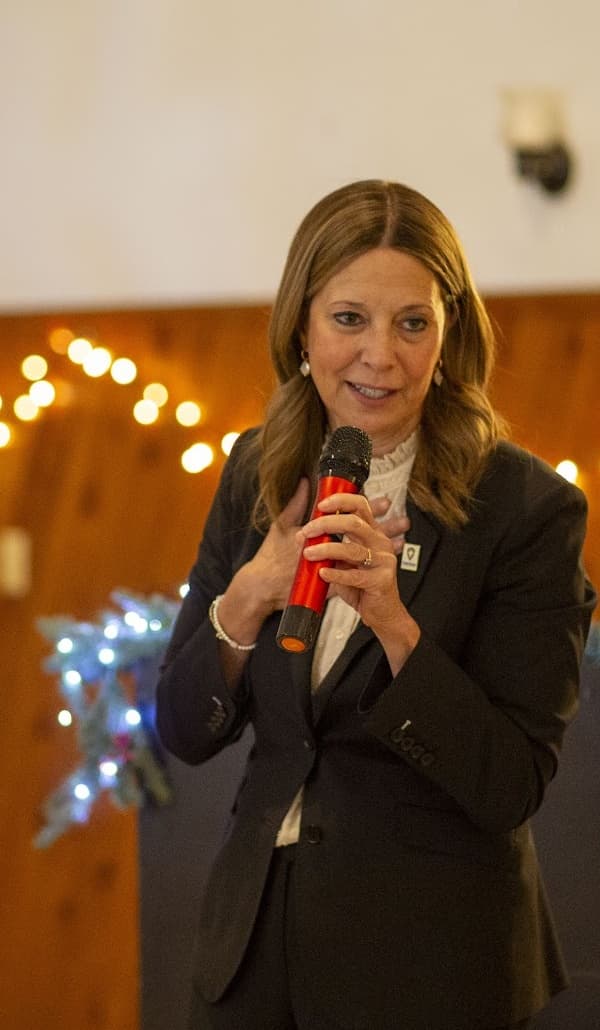
Photo: Amy Acton in December 2025. Myselfsour2724 / Wikimedia Commons, CC BY-SA 4.0. Archive photo, not Election Night 2026. Cropping permitted with attribution and share-alike terms.
Photo credits
The article and matching Short use archival photographs, not images of Election Night 2026. Video adaptations include cropping, resizing, motion and text overlays. The article and cover use the Amy Acton 05 photograph, cropped.
Amy Acton, December 2025. “Amy Acton 05.jpg” by Myselfsour2724. CC BY-SA 4.0. Source: Photo source License/terms: License The adapted photograph is shared under CC BY-SA 4.0.
Vivek Ramaswamy, Pittsburgh September 18 2024. “Vivek Ramaswamy” by Gage Skidmore. CC BY-SA 2.0. Source: Photo source License/terms: License The adapted photograph is shared under CC BY-SA 2.0.
Amy Acton at GuardCare, Ohio August 11 2019. “GuardCare 2019 [Image 12 of 12]” by Senior Airman Gwendalyn Smith, U.S. ANG. U.S. federal public domain. Source: Photo source License/terms: Photo source
Ted Strickland, Columbus November 2008. “Ohio Governor Ted Strickland” by Becker1999. CC BY 2.0. Source: Photo source License/terms: License
John Kasich, New Hampshire January 30 2016. “John Kasich” by Marc Nozell. CC BY 2.0. Source: Photo source License/terms: License
Ohio Statehouse, July 1 2019. “Ohio State House, Columbus, OH” by Warren LeMay. CC0 1.0 public-domain dedication. Source: Photo source License: License Cropped, resized, animated and text added.
Mike DeWine, distinct close-up at same SB7 signing January 27 2020. “Ohio Gov. Mike DeWine Signs Bill Into Law at the NMUSAF [Image 15 of 16]” by Wesley Farnsworth, U.S. Air Force. U.S. federal public domain. Source: Photo source License/terms: Photo source
Ohio State Senate chamber, January 2011. “Beagle Senate Confirmation 066” by John Beagle. CC BY 2.0. Source: Photo source License/terms: License
Ohio Senate Building, July 1 2019. “Ohio State House, Columbus, OH” by Warren LeMay. CC0 1.0 public-domain dedication. Source: Photo source License: License Cropped, resized, animated and text added.
Ohio Statehouse, June 12 2019. “C-_Users_pbecker1_Desktop_PrisonSolid_IMG_5047” by Becker1999. CC BY 2.0. Source: Photo source License/terms: License
The appearance of U.S. Department of War (DoW) visual information does not imply or constitute DoW endorsement. These photographs are used for neutral news reporting, not endorsement of a candidate.
Prepared with AI assistance.
Reporting Sources
- The Associated Press
- National Governors Association
- Ohio Capital Journal’s election-night reporting
- campaign biography
- published health-care platform
- Acton’s campaign calls
- property-tax platform
- assigns executive power
- recommend legislation
- provides a veto
- provides four-year gubernatorial terms
- U.S. Election Assistance Commission
Photo & Video Credits
Credit: Myselfsour2724 / Wikimedia Commons. License: CC BY-SA 4.0. Source: file page.