Politics
Early voting 2026: what the turnout numbers show
A dated look at Texas and other states, the deadlines approaching this week, and the limits of reading a partisan advantage into early turnout.
What to know
- Texas reported nearly 4.5 million voters in its first seven early-voting days, according to Tuesday’s Texas Tribune report.
- Early-vote counts measure participation; they do not reveal the choices on secret ballots.
- Early-voting calendars differ. Texas finishes October 30; South Carolina finishes October 31; New Jersey’s period continues through November 1.
- Check the date, voting method and geographic coverage before comparing any two turnout figures.
Millions of Americans are making their choices before the November 3 midterm election, but the emerging turnout picture is uneven and easily misread. Some states have been accepting early ballots for weeks. Others opened in-person sites only this past weekend. A busy polling location, a growing mail-ballot total or an advantage in party registration can reveal participation without establishing who is ahead.
Texas offers a useful example. The Texas Tribune reported Tuesday that nearly 4.5 million Texans voted during the first seven days of early voting. The participation rate was ahead of the comparable 2022 midterm period but slightly below 2018, when Beto O’Rourke challenged Ted Cruz. That comparison describes participation, not support for this year’s candidates. The Tribune’s October 27 report also notes that county reporting can be incomplete.
What does an early-voting tracker actually count?
The University of Florida Election Lab maintains a national early-voting tracker with state-level detail and links to underlying sources where available. Its page explains that states do not all update daily. The version checked Tuesday displayed an October 27 update time, but its numerical dashboard fields were not available in the accessible text. NewsCubby is therefore not presenting an independently verified national running total from that dashboard in this edition.
That distinction matters. A page can be current while one state’s underlying figures cover yesterday and another state’s cover an earlier period. A national total is an aggregation of those reports, not a simultaneous head count conducted everywhere at one moment. Readers should inspect the individual state’s timestamp before interpreting an apparent jump. A delayed upload can move the published figure even when the underlying ballots were cast earlier.
Ballot requests also belong in a different category from completed voting. A voter may request or receive a mail ballot without returning it. A returned ballot can have a status that requires attention before acceptance. A meaningful tracker identifies the stage being counted rather than treating applications, issued ballots and accepted ballots as interchangeable. The UF tracker separates several of these measures.
What do the Texas figures establish?
The Texas figure covers the first seven days of the early-voting period, not all voting through the moment this article is read. It should not be added to a later county update without checking whether the county’s ballots are already included. Nor should it be described as a Democratic or Republican vote total: the report does not disclose how those voters marked their ballots.
Texas’ official election calendar places early voting by personal appearance between October 19 and October 30. That leaves several days this week for eligible registered voters to use an early-voting location. Location and opening-hour details must be checked with the county. A location used in a previous election is not sufficient confirmation that it is open for this one.
The state’s mail-ballot application deadline was October 23. That was a request deadline, not the end of in-person early voting. Readers who missed a mail application deadline should not assume all voting options have ended; they should consult their election office about the options that apply to them. The Texas secretary of state’s calendar distinguishes these deadlines.
When does early voting end in other states?
South Carolina’s election commission lists early voting from October 19 through October 31, with centers open from 8:30 a.m. to 6 p.m. and closed Sunday, October 25. Those are South Carolina’s published hours, not a national schedule. Its official site provides an early-voting resource and county-office lookup so voters can identify the correct center rather than relying on a campaign graphic.
New Jersey’s state voter portal lists in-person early voting from October 24 through November 1. Published hours are 10 a.m. to 8 p.m. Monday through Saturday and 10 a.m. to 6 p.m. Sunday. October 27 is also the state’s listed deadline to apply for a mail-in ballot by mail. That application deadline should not be confused with the deadline to return an already issued ballot.
Michigan likewise provides separate instructions for early in-person voting and absentee voting. Its secretary of state advises using in-person options rather than relying on mail close to Election Day. For most absentee voters, the completed ballot must reach the local clerk by 8 p.m. on Election Day; military and overseas voters have a separate rule. The local clerk is the appropriate source for a voter’s individual ballot status or unresolved problem.
Why is party registration different from a vote?
Some early-vote datasets identify the party registration of voters who participated. That is useful administrative information, but it is not an opening of their ballots. A registered Democrat can vote Republican, a registered Republican can vote Democratic, and an unaffiliated voter’s choice cannot be assigned from the registration label. A chart of party registration should be labeled exactly that.
The voters who participate early may also differ from those who wait until Election Day. Comparing only one voting method can miss a party’s stronger use of another method. A lead among mailed ballots can coexist with a disadvantage among in-person early voters. Neither observation, by itself, measures all ballots that will ultimately be cast.
Historical comparisons need the same care. A presidential election and a midterm can have different levels of participation. Comparing identical calendar dates can also capture different numbers of voting days or different weekends. A useful benchmark specifies the election being compared, the point in the voting period, the methods included and whether the same counties have reported.
What should readers check before sharing a turnout claim?
Start with the original election office or the tracker’s linked underlying source. Identify whether the figure is cumulative or represents a single day. Then check whether it covers a county, a state or the entire country. A screenshot that removes a timestamp or a column heading can change the apparent meaning of otherwise accurate numbers.
Next, ask whether the claim makes a leap from participation to preference. “More registered members of a party have voted” and “that party is winning” are different statements. A campaign’s interpretation may be newsworthy, but it should remain attributed to the campaign rather than presented as an official result.
Finally, use the tracker as a prompt to check your own plan. Confirm your registration, location, hours, identification requirements and return instructions with the appropriate election authority. Do not publish a marked ballot or personal voter information to resolve a question on social media. Contact the office responsible for the record.
What happens next?
Counts will continue changing as election offices receive ballots and update records. The next meaningful developments are fresh, dated state reports and the approaching end of each state’s early-voting period. A new figure is useful only when its date, methods and coverage are clear.
The public value of an early-vote tracker is practical: showing participation, explaining what the numbers mean and helping voters find reliable instructions. Its value disappears when a partial count is repackaged as a forecast or a result. With a week remaining until November 3, there is still a difference between watching voting happen and knowing how the election ends.
How should a reader choose a useful comparison?
A state report can answer a narrow question well without answering a national one. If the question is whether your county has processed a returned ballot, the county’s own status tool is more useful than a national chart. If the question is how this midterm compares with a previous midterm, both observations need the same geographic scope and the same stage of voting. A statewide count compared with a handful of counties is not a trend. Nor does an increase in ballots necessarily establish an increase in the share of eligible voters participating: the population and registration base can change between elections. Keep the numerator, denominator and reporting period together.
For more context, see NewsCubby’s reporting on earlier early-voting figures, the Texas Senate contest, the Michigan campaign and the wider Senate map.
*Want more? Explore today's headlines on NewsCubby and join My Day free to make NewsCubby part of your day.*
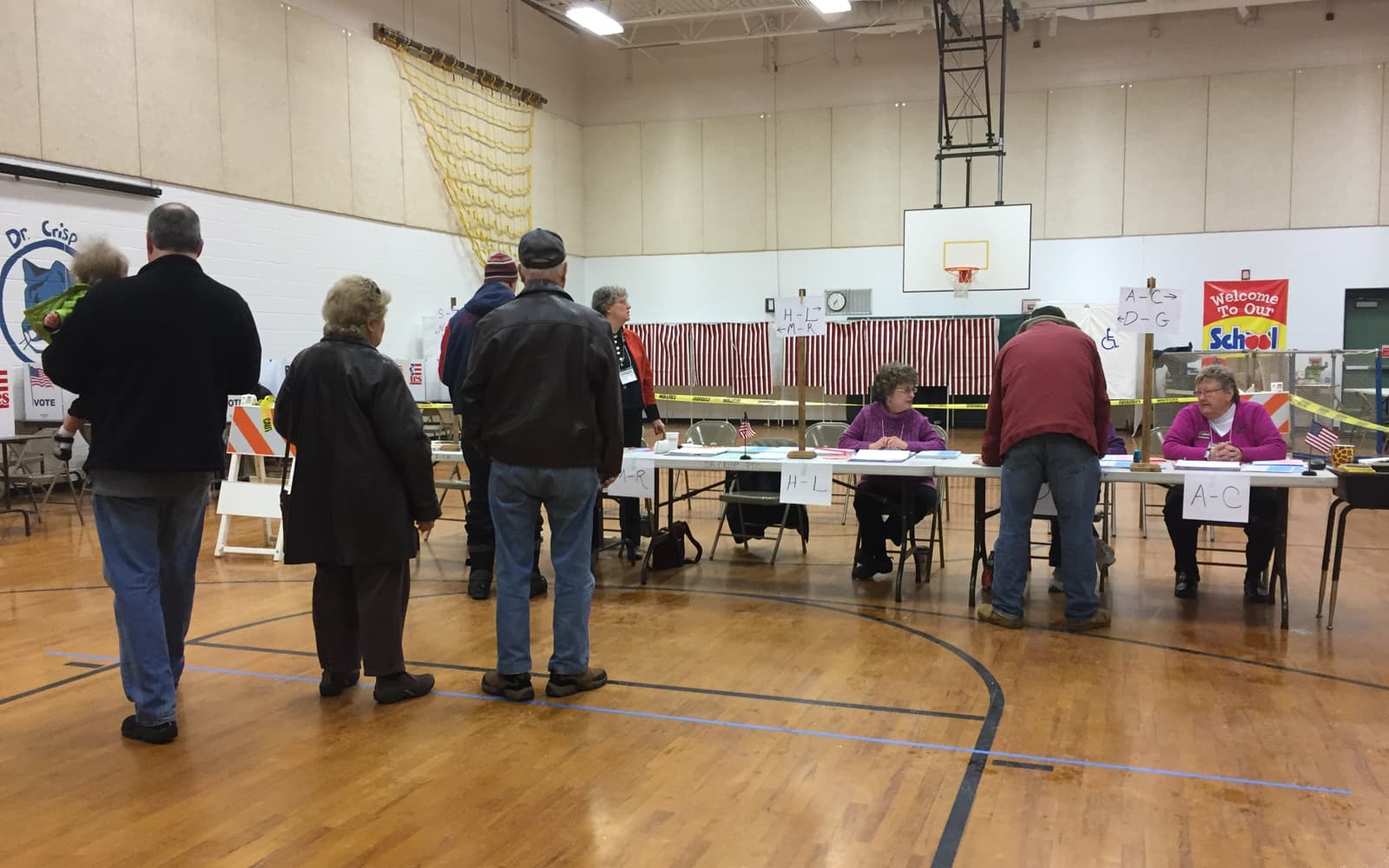
*Archive photograph; not an October 27, 2026 event. Nashua, New Hampshire, February 9, 2016; illustrative voting context, not a location in the states discussed. Sasha Gong / Voice of America / Wikimedia Commons, Public domain (https://creativecommons.org/publicdomain/mark/1.0/); source: https://commons.wikimedia.org/wiki/File:Early_voting_at_Ward_7_in_Nashua,_New_Hampshire_E5E89812.jpg. Resized for website; cards add gradient and typography. No endorsement implied.*
*NewsCubby articles are produced with AI assistance and reviewed by humans.*
Sources, credits & editorial notes
- The Texas Tribune, October 27 early-voting report
- UF Election Lab, early-voting tracker
- Texas secretary of state, election dates
- South Carolina Election Commission
- New Jersey Division of Elections voter portal
- Michigan secretary of state, absentee voting
- Photo: Sasha Gong / Voice of America; Public domain