Politics
Paxton and Talarico: checking the Texas tax-ad claims
The Senate advertising fight is about affordability, but clipped quotations, legislative votes and outside spending require separate checks.
What to know
- An October 23 independent review examined both campaigns’ descriptions of the tax record.
- Paxton’s advertising has presented tax-cut proposals and attacked Talarico’s tax record; Talarico has emphasized affordability and opposition to wealthy political donors.
- Campaign spending and independent outside spending are different measures; neither is a vote count.
- The ads discussed here were released or reviewed before today. This is a current recap, not a claim that every spot launched October 27.
The Texas Senate advertising battle is offering voters sharply different answers to the same question: who would make life more affordable? Republican Ken Paxton and Democrat James Talarico are using taxes, household expenses and political influence to define their closing arguments, while allied groups add messages that should not automatically be attributed to the candidates themselves.
The most useful way to assess that fight is to separate what an advertisement says from the record it cites. A vote on a large legislative package does not identify a lawmaker’s position on every provision inside it. A short quotation can omit who was being discussed. An advertisement’s promise can describe legislation a candidate wants, rather than a benefit already available.
What context does the tax dispute require?
The October 23 FactCheck.org review found that a Paxton ad omitted the wealthy-person context of a Talarico tax remark. It also distinguished Talarico’s documented support for tax relief from his broader claim of building its legislative coalition. Those are the organization’s findings, not NewsCubby interviews.
Which tax bills do the records identify?
Tax advertisements often compress several governments and several years into one sentence. Texas property taxes, a proposed state income-tax restriction and federal tax legislation concern different authorities and different measures. A reader should first identify which one the advertisement actually cites. Without that identification, an apparently simple statement can conceal a dispute over entirely different policies.
The Texas House journal for May 1, 2019 records Talarico among the lawmakers voting against Senate Bill 2, a measure concerning property taxation. That is a checkable vote on a specific bill. It does not, by itself, establish a position on every tax a household pays. The bill’s text and the stated reason for an opponent’s vote matter alongside the roll call.
The journal for July 13, 2023 records the House’s proceedings on another property-tax package. A later vote on tax relief can coexist with opposition to an earlier approach. The responsible comparison names both measures and their dates; it does not erase one vote to make a candidate look consistent or omit the other to make the candidate look contradictory.
What policies are the campaigns proposing?
Talarico’s campaign publishes a taxes-and-cost-of-living platform that argues for tax relief for the middle class and higher taxes on billionaires and corporations. That is his campaign’s stated policy, not an independent calculation of the effect on every household. Whether a particular family would pay more or less would depend on the details of legislation and its eventual passage.
Paxton’s earlier economy-focused advertising promoted deductions connected to housing and health expenses. The Texas Tribune’s September 15 report described a positive advertisement about his plan and a negative advertisement about Talarico. It reported a South Texas buy covering Harlingen, Laredo and Corpus Christi. Those details describe that earlier campaign purchase; they are not a verified description of every advertisement airing in Texas today.
The same Tribune report described Talarico answering attacks by framing large political donors as the reason he was being targeted. That is an argument about power and influence as well as an economic message. Voters can assess its appeal while still asking which specific policy would change a bill, a wage or a tax liability.
Who paid for the advertisement?
The name in an advertisement’s disclaimer helps establish who is responsible for the communication. An ad can support Paxton or Talarico without being paid for by that candidate’s campaign. The Federal Election Commission explains that an independent expenditure advocates a clearly identified candidate’s election or defeat without the specified consultation or cooperation with that candidate or party.
That distinction prevents a common reporting error: writing that a candidate “said” something when the statement appeared in another organization’s advertisement. The appropriate description names the sponsor and attributes the message. It also avoids treating every dollar spent on a candidate’s behalf as money received by the campaign.
Spending figures need their own labels. A reported total can mean money spent, advertising booked for future dates, television spending alone or spending across several platforms. Figures covering different periods are not directly interchangeable. NewsCubby is not presenting an October 27 running spending total without a matching current dataset and definition.
Does an advertising disclaimer establish accuracy?
The FEC’s advertising guidance describes required payer and authorization notices for covered communications. Such a notice identifies responsibility; it is not a government endorsement of the ad’s policy argument. A legally formatted advertisement can still require a factual correction or additional context.
The agency’s current guidance also carries a notice about a June 30, 2026 Supreme Court decision affecting political-party coordinated expenditure limits. That is a reason not to make sweeping assertions about every spending restriction from an older summary. For this recap, the practical point is narrower: identify the actual sponsor and keep candidate communications separate from outside-group communications.
For viewers, a useful check takes three steps. Find the complete statement rather than only the excerpt. Identify the exact vote or proposal being discussed. Then ask whether the ad describes an enacted policy, a campaign promise or an opponent’s interpretation. Those are different kinds of evidence and should remain different in the explanation.
What can advertisements tell us about the race?
Marist’s October 14 Texas release supplies earlier campaign context rather than a new October 27 measurement. It does not establish which commercial persuaded a voter or show that either candidate has secured the seat. Advertising effects require evidence that actually measures persuasion, rather than a comparison of unrelated headlines.
Polls, ad purchases and early turnout answer different questions. A poll measures reported preferences in a sample. An ad purchase measures a campaign’s allocation of resources. Turnout measures participation. Combining the three into a confident prediction requires assumptions that an ordinary recap cannot simply leave unstated.
The next useful developments are new source documents, newly released advertisements, updated financial disclosures and responses that address the actual claims at issue. Until then, voters have enough evidence to demand precision: which tax, which vote, which year, whose advertisement and what full statement? Those questions bring an expensive advertising fight back to the decisions a senator would actually make.
What questions does a legislative vote leave open?
A roll call establishes how a lawmaker voted on the measure identified in that record. It does not establish the motive for the vote without an accompanying statement, nor does it show who negotiated an agreement outside the chamber. A bill can contain several provisions, while an advertisement emphasizes only one. To assess a claim fairly, separate the vote, the bill’s provisions and the candidate’s explanation. If the explanation is unavailable, say what the record establishes and leave the motive unresolved. The same standard should apply to supporters and opponents, regardless of which campaign produced the more memorable message.
What would make a household-cost promise testable?
A proposal becomes easier to evaluate when the campaign explains eligibility, timing, administration and financing. A deduction is not the same as a credit: the terms describe different ways a policy could affect a tax bill. A housing proposal also raises separate questions for renters, owners and first-time buyers. Readers should ask which group would qualify, whether a benefit would begin immediately or after legislation, and which level of government would administer it. An advertisement that names a real household problem still needs those details before a voter can estimate an individual benefit. Campaign platforms provide starting points for that comparison, rather than enacted guarantees.
For more context, see NewsCubby’s reporting on earlier early-voting figures, the Texas Senate contest, the Michigan campaign and the wider Senate map.
*Want more? Explore today's headlines on NewsCubby and join My Day free to make NewsCubby part of your day.*
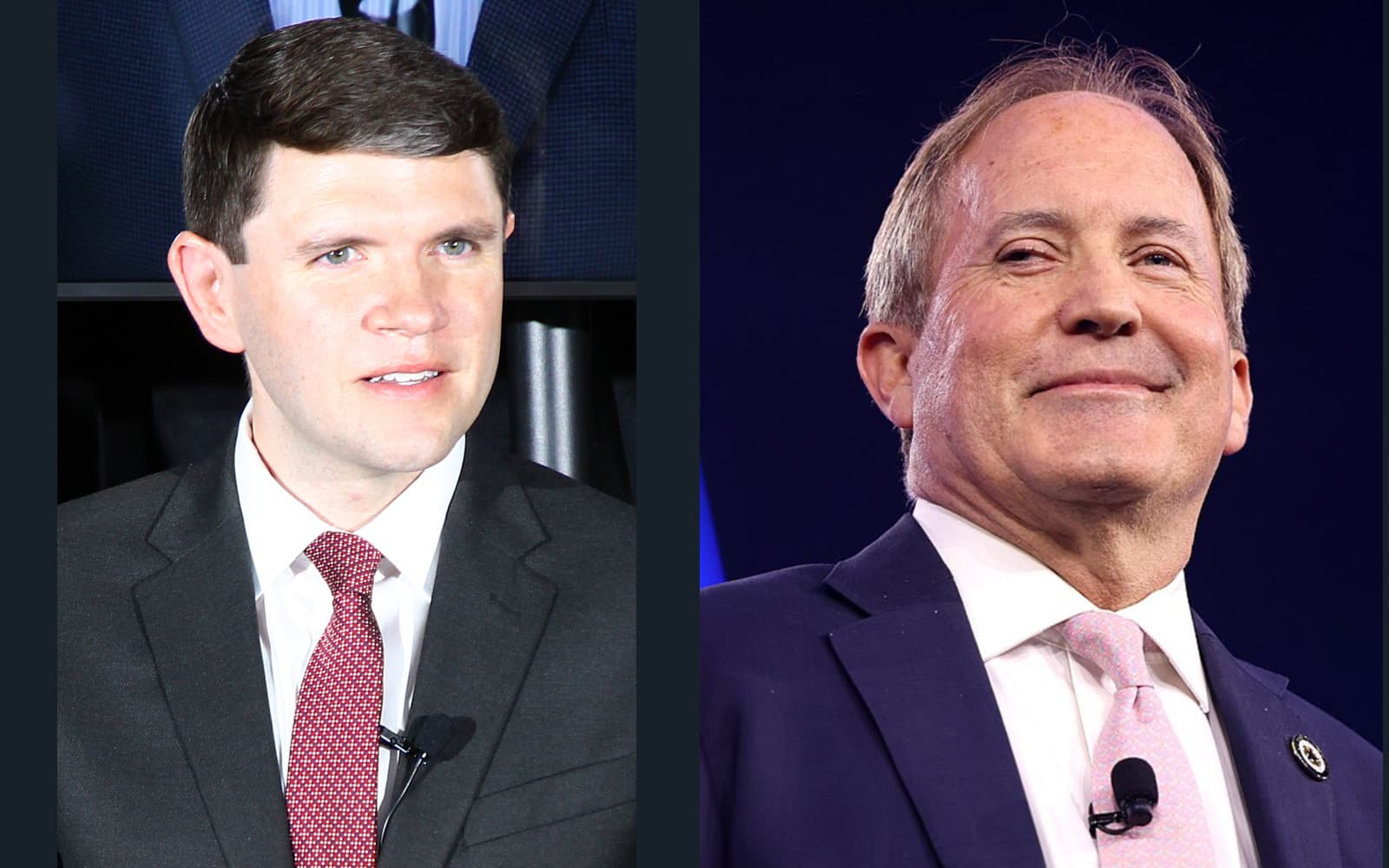
*Archive photographs; not October 27, 2026 events. Talarico: September 23, 2023, Austin. Paxton: December 21, 2024, Phoenix. Larry D. Moore / Wikimedia Commons, CC BY 4.0 (https://creativecommons.org/licenses/by/4.0/); source: https://commons.wikimedia.org/wiki/File:James_Talarico_Open_Congress_Austin_2023.jpg; Gage Skidmore / Wikimedia Commons, CC BY-SA 2.0 (https://creativecommons.org/licenses/by-sa/2.0/); source: https://commons.wikimedia.org/wiki/File:Ken_Paxton_2024_(cropped).jpg. Side-by-side layout/resizing by NewsCubby. Composite and cards shared under CC BY-SA 4.0. No endorsement implied.*
*NewsCubby articles are produced with AI assistance and reviewed by humans.*
Sources, credits & editorial notes
- FactCheck.org, October 23 tax-ad review
- Texas House journal, May 1, 2019
- Texas House journal, July 13, 2023
- James Talarico campaign, taxes and cost of living
- The Texas Tribune, September 15 ad buy
- FEC, independent expenditures
- FEC, advertising and disclaimers
- Marist, October 14 Texas poll summary
- Photo: Larry D. Moore; CC BY 4.0
- Photo: Gage Skidmore; CC BY-SA 2.0