World
Iranian negotiators meet Qatari mediators in Doha; no US agreement announced
Saturday consultations follow extended Tehran talks. Iran sets economic and shipping conditions, while nuclear verification and direct US contacts remain unresolved.
What to know
- Iranian and Qatari representatives held talks in Doha after Friday's extended Tehran discussions; Reuters says mediators maintained contact with Washington.
- Araghchi described proposals and conditions, while saying there were no current plans for a meeting with US officials. No final agreement was announced in the sources reviewed.
- Iran's demands include sanctions relief, access to frozen assets and changes affecting shipping through Hormuz. Those are negotiating positions, not implemented measures.
- Nuclear inspection access remains a substantive obstacle. The IAEA says normal inspection activity has not resumed at the affected Iranian facilities.
Iranian negotiators met Qatari mediators in Doha on Saturday, October 31, as regional governments tried to turn a new round of indirect diplomacy into a path away from renewed fighting between Iran and the United States. The talks follow more than 12 hours of discussions in Tehran on Friday, according to a source briefed on the negotiations who spoke to Reuters.
The move to Qatar is a concrete diplomatic development, but it does not establish a peace agreement or a meeting between Iranian and American officials. Iranian Foreign Minister Abbas Araghchi said his deputies were continuing consultations in Doha and that Tehran currently saw no need for a meeting with the United States, according to IranPress's account of his Saturday remarks. The practical dispute is over which side takes which steps first: nuclear verification, sanctions relief, access to frozen money and navigation through the Strait of Hormuz are all involved.
From Tehran discussions to Doha consultations
The latest round is an effort to restart a process rather than the announcement of its conclusion. Axios's original reporting described Qatari officials spending Friday in Tehran while maintaining contact with the White House. Its diplomatic sources described progress toward reciprocal steps that might make direct negotiations possible. Reuters subsequently reported that the discussions had moved to Doha on Saturday.
Those accounts identify different stages of the same mediation effort. Talking to an intermediary allows a government to test proposals without committing to a face-to-face encounter with its adversary. The location of Iranian representatives in Qatar therefore matters, but it cannot by itself establish that American officials are in the room, that Tehran has accepted Washington's demands or that either side has agreed to stop military action.
Iran's Tasnim news agency separately reported that the delegation's visit concerned follow-up discussions with Qatar and that negotiations with the United States were not on the Doha agenda. That account is consistent with a mediation channel operating while direct talks remain unresolved. It also limits how the Saturday development can accurately be described: contacts are continuing, but a completed diplomatic breakthrough has not been demonstrated.
The first-step problem
The talks link security and economic demands that each side regards as important before a larger negotiation. IranPress reports that Araghchi identified the lifting of sanctions imposed after the Islamabad memorandum, fewer US forces in the region, restored oil waivers and release of frozen Iranian assets, including money held in Qatar. These are his account of Iran's conditions, rather than a list of concessions accepted by Washington.
On the American side, Axios's October 28 reporting described mediators trying to bridge disagreement over nuclear concessions and the sequencing of economic relief. President Donald Trump told the outlet that negotiations were taking place through intermediaries but that he did not know whether they would succeed. That uncertainty is important to the present round: the existence of a channel has not eliminated the distance between the positions.
The order of implementation has real consequences. A proposal can identify actions for both sides yet still leave disagreement over verification, timing or whether the next step is conditional on an earlier one. Access for inspectors is an observable event; a promise of future access is a different commitment. The same distinction applies to releasing frozen money or changing restrictions on maritime trade. Saturday's reporting describes an attempt to connect those steps, without supplying an agreed and implemented sequence.
Hormuz is part of the negotiation
Araghchi has also made navigation through the Strait of Hormuz part of Iran's position. IranPress says he called for recognition of a shipping route Iran says it established in coordination with Oman and closure of other routes. These are assertions and demands by Iran's foreign minister. They do not establish Oman's agreement to every condition or international acceptance of restrictions on other shipping lanes.
The Associated Press's Saturday report says Araghchi described a proposal that could reopen the strait within two days. A proposed implementation period is not a countdown that began automatically with his interview. The relevant questions are whether the parties agree to the terms and whether commercial ships can actually transit safely. This article does not report that Hormuz has reopened or that an agreement has been signed.
The waterway connects the Persian Gulf with the Gulf of Oman and the Arabian Sea. In its February 2026 factsheet, the International Energy Agency put 2025 crude oil and petroleum-product shipments through it at about 20 million barrels a day, roughly a quarter of global seaborne oil trade. Those are prewar annual reference figures, not an estimate of traffic moving through the strait this Saturday.
The IEA also explains why replacing this route is difficult. Some Saudi and Emirati crude can use pipelines that bypass the passage, but those alternatives do not replace the full system. Liquefied natural gas exports from Qatar and the UAE depend on the maritime exit as well. Consequently, navigation arrangements concern exporters, shipping operators and importing economies alongside the countries conducting the negotiations.
Why nuclear inspectors remain central
The nuclear issue is more than a bargaining label. At an October 27 Security Council meeting, IAEA Director General Rafael Mariano Grossi described continuing gaps in information and access needed to verify Iran's declared nuclear material. The UN's transcript of that briefing, which is machine-generated rather than an official verbatim record, records his statement that normal inspection activity had not resumed, with verification continuing at Bushehr as an exception.
That distinction matters because a visit to one operating power plant does not establish access to other sites affected by attacks. Grossi identified practical arrangements for inspectors as essential to any verifiable settlement. Iran's safety and security concerns can be addressed within inspection arrangements, he said, while maintaining that safeguards obligations cannot simply be suspended unilaterally. A political assurance and an independent technical conclusion answer different questions.
The inspection dispute also predates this weekend. Security Council Report's briefing background describes the IAEA board's September decision to report Iran to the Council and the loss of continuity of knowledge concerning previously declared enriched uranium. That history helps explain why a return to talks would be a starting point for verification work, rather than proof that the nuclear questions had already been settled.
What would show progress next?
The immediate signs to watch are named official confirmation of the participants and the next meeting, an agreed description of reciprocal measures, and evidence that the measures have begun. A published arrangement concerning inspections, sanctions or shipping would permit a more precise assessment than anonymous descriptions of momentum. Until then, the strongest established development is that Iranian and Qatari representatives are continuing the mediation in Doha.
Military warnings have continued alongside diplomacy. AP reports that Iran's supreme leader called for an immediate response to threats without geographic limits, while Araghchi described preparedness for different scenarios. Those statements show the pressure surrounding the talks; they are not confirmation that a new attack has occurred. The Saturday diplomatic update should therefore be kept separate from earlier vessel incidents, disputed responsibility for attacks and predictions about what might follow the US election.
For more background on this diplomatic effort, read Vance’s letter and the nuclear dispute; The Gulf warning before the midterms; Earlier diplomacy and military options.
Want more? Explore today's headlines on NewsCubby and join My Day free to make NewsCubby part of your day.
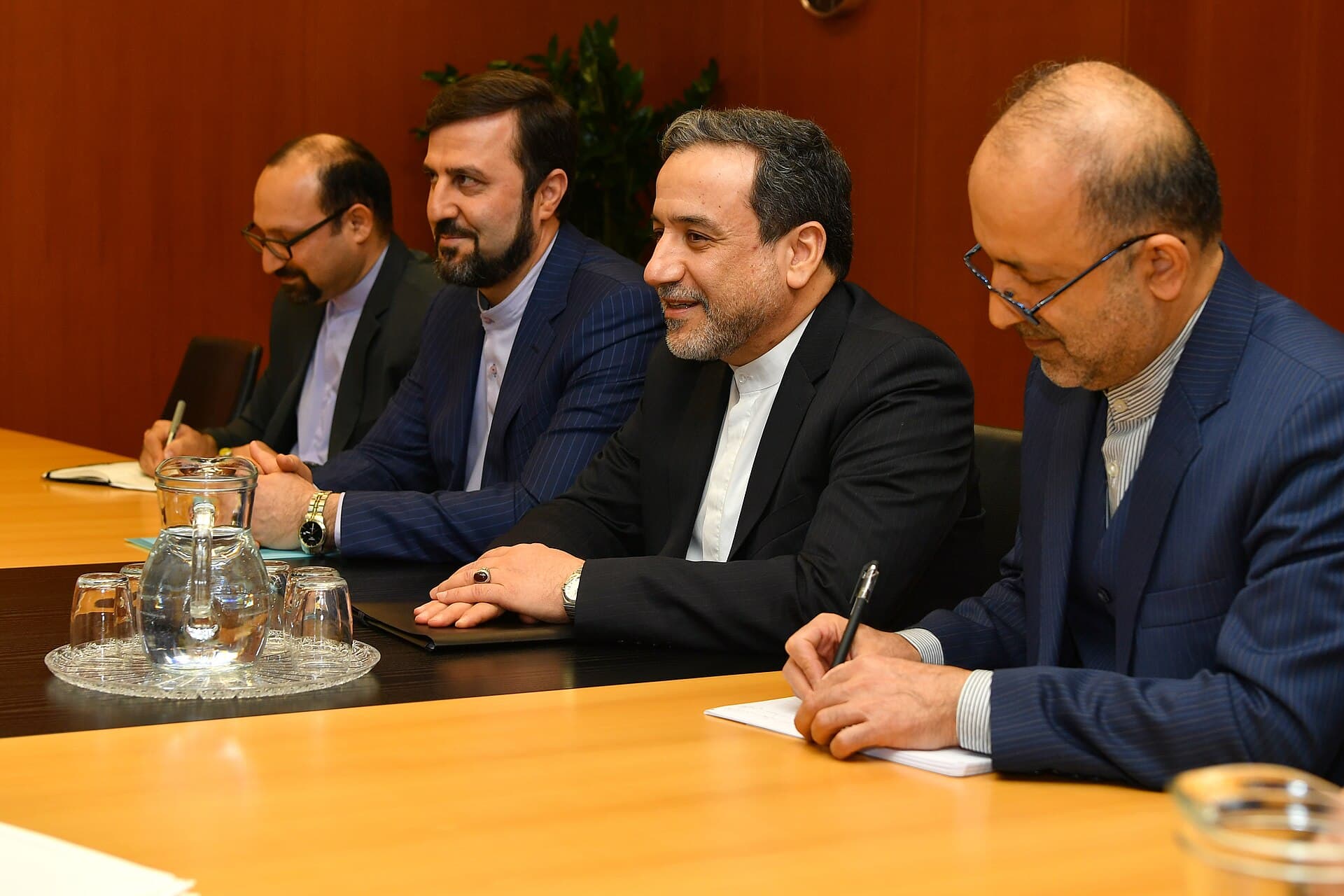
ARCHIVE PHOTO — Abbas Araghchi at IAEA headquarters in Vienna, Austria, January 28, 2019, during a meeting with Director General Yukiya Amano. Institutional background only; this does not show the October 2026 Doha consultations. Dean Calma / IAEA, CC BY 2.0. Wikimedia-served 1920-pixel resize; no local crop.
NewsCubby articles are produced with AI assistance.
Correction
Updated October 31, 2026: This article clarifies the attributed proposals and timetable for the Doha talks. Proposed reciprocal steps are not an announced agreement or a confirmed date for direct U.S.-Iran talks.
Reporting Sources
- Reuters, Andrew Mills/Yasmine Ghania/Enas Alashray: Doha talks
- IranPress: Araghchi Saturday remarks
- Tasnim: no planned direct US talks
- Axios, Barak Ravid: Friday mediation
- Axios: October28 mediation background
- Associated Press: October31 regional developments
- International Energy Agency: February2026 Hormuz factsheet
- UN transcript: October27 Security Council Grossi briefing
- Security Council Report: October26 Iran briefing background