World
Israel votes Tuesday: What to know about the Oct. 27 election
Polls open at 1 a.m. ET Tuesday. Final surveys showed neither Netanyahu's bloc nor the opposition reaching 61 seats. Here's how the coalition math works.
What to know
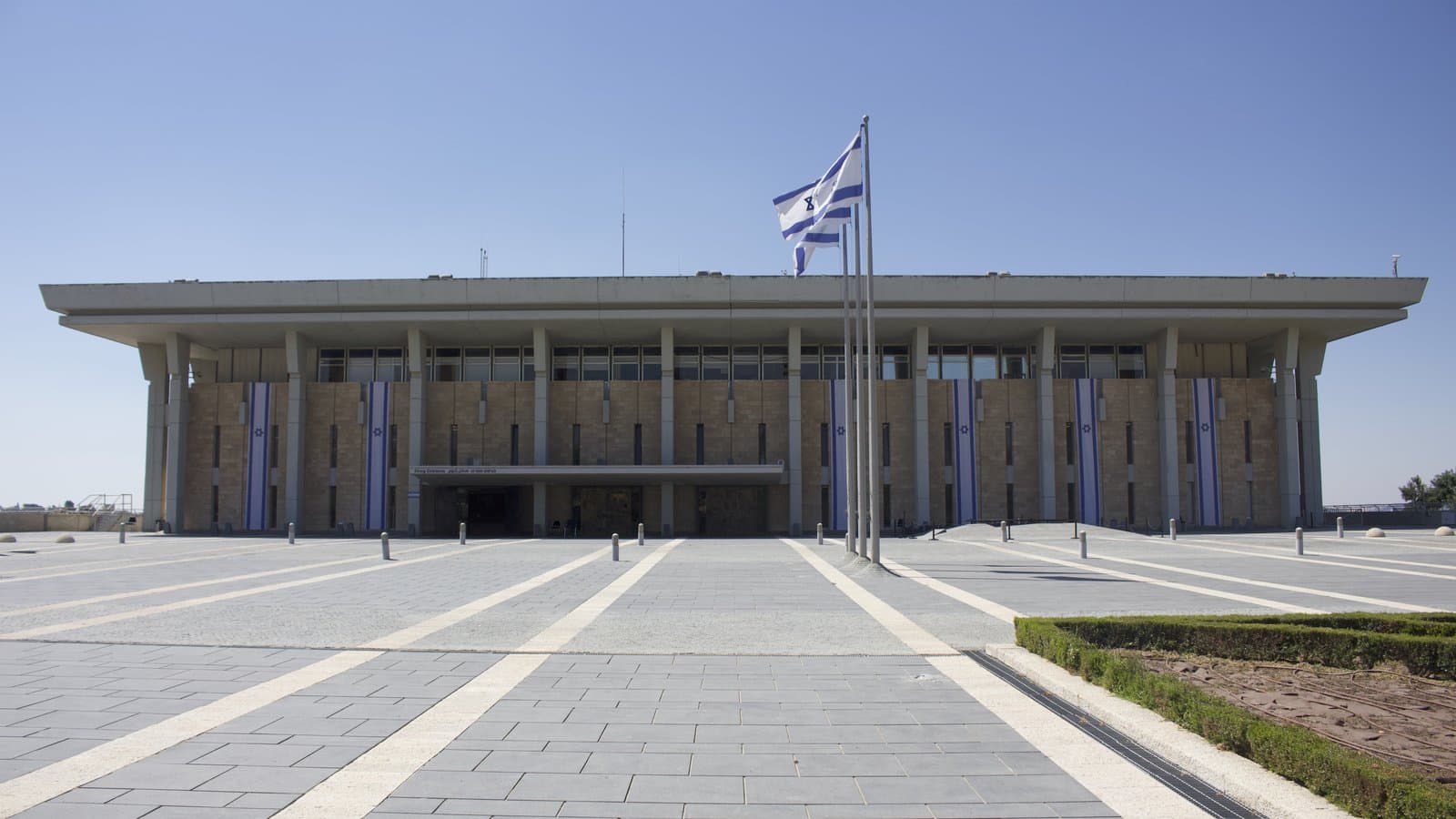
- Israelis vote Tuesday, Oct. 27, for all 120 seats in the Knesset, the country's parliament. Most polling stations open at 7 a.m. Israel time (1 a.m. ET) and close at 10 p.m. (4 p.m. ET), according to the Central Elections Committee and Ynet's voter guide.
- Exit polls from Israeli broadcasters are due right when polls close, at 4 p.m. ET, according to i24NEWS and the BBC. Official results are due by Nov. 4, Ynet reported.
- Final TV polls on Friday put former military chief Gadi Eisenkot's Yashar party ahead of Prime Minister Benjamin Netanyahu's Likud, but neither political bloc at the 61 seats needed to govern, according to Ynet and Israel National News. One poll, for i24NEWS, had Likud first.
- President Donald Trump endorsed Netanyahu on Oct. 18. Eisenkot responded that only Israeli citizens will decide who leads the country, The Times of Israel reported.
- It is Israel's first national election since the Hamas-led attack of Oct. 7, 2023, NBC News reported.
When do polls open and close in U.S. time?
Most of Israel's polling stations open at 7 a.m. and close at 10 p.m. local time on Tuesday, Oct. 27, according to the Central Elections Committee and a voter guide published by the Israeli news site Ynet. Israel moved its clocks back on Sunday, so it is six hours ahead of the U.S. East Coast this week. That means polls open at 1 a.m. ET and close at 4 p.m. ET Tuesday. In small communities of up to 350 residents, and in hospitals, prisons and nursing homes, polling places run from 8 a.m. to 8 p.m. local time, Ynet reported.
Israeli TV networks publish exit polls the moment polls close. The BBC said they will come at 10 p.m. local time, and i24NEWS listed its exit poll at 10 p.m. Israel time, 4 p.m. ET. Reuters, in an explainer published Monday, gave the same window as 0500 to 2000 GMT, which confirms the six-hour gap with the East Coast. Counting begins as soon as polls close, with partial results expected through the night, according to Ynet. Reuters said a final tally is expected by Oct. 30, and the Central Elections Committee formally publishes official results on Nov. 4, Ynet and Reuters reported. Israel Hayom noted that because several small parties are hovering near the threshold, a near-final seat count could take about a day longer than usual.
About 7.3 million Israelis are eligible to vote, according to Ynet and The Times of Israel, which cited the Central Elections Committee. The BBC reported that about half a million are first-time voters and that some 70,000 Israelis were reportedly flying in from abroad to vote. Election day is a national day off in Israel, Ynet noted. During the day, the Central Elections Committee will publish turnout figures for each regular polling station at least four times, under an August ruling by its chairman, Justice Noam Sohlberg, The Jerusalem Post reported. The same figures go to every party, and party observers may not report which individual voters have shown up.
How does the coalition math work?
Israel elects its parliament by proportional representation: voters choose a party list, not a local candidate. The Knesset has 120 seats, so a government needs the backing of at least 61, the BBC explained. Because of that system, Israeli governments have always been coalitions of several parties, according to the BBC. A party must win at least 3.25% of the vote to get any seats, Ynet reported, and votes for parties that fall short are effectively lost, which can shift the balance between the blocs.
After the results are in, President Isaac Herzog consults party leaders and asks the one he thinks has the best chance to try to form a government, according to the BBC. Under Israeli law, Herzog must name that candidate within a week of the official results, or by about Nov. 11, according to Channel 12's N12 site and Israel Hayom. The nominee then gets 28 days, with a possible 14-day extension, The Times of Israel reported. If that fails, another leader can be asked; if that fails too, new elections are called. The BBC noted that Israel held five elections between 2019 and 2022.
What did the final polls show?
Israeli law bars publishing new polls in the final days, so the last surveys came out Friday, Oct. 23. The three main TV networks' final polls, all published that Friday, found the following, according to Ynet and Israel National News:
- Kan 11 (Kantar, 1,006 respondents): Yashar 22 seats, Likud 20, Naftali Bennett's Together (B'Yachad) 14. Blocs: opposition 52, Netanyahu's bloc 50, Arab parties 14.
- Channel 12 (Midgam with iPanel, 1,018 respondents): Yashar 23, Likud 21, Together 15. Blocs: opposition 56, Netanyahu's bloc 50, Arab parties 14.
- Channel 13 (HaMadad and partners, 1,875 respondents): Yashar 22, Likud 19, Together 14. Blocs: opposition 54, Netanyahu's bloc 50, Arab parties 16.
Netanyahu's bloc of right-wing and religious parties had 50 seats in all three. The Arab party lists, the Joint List and Ra'am, are not counted in either bloc.
Not every poll agreed. A survey for i24NEWS, conducted by Direct Polls on Oct. 22 among 5,124 adults and published Friday, put Likud first with 26 seats and Yashar second with 21. It gave Netanyahu's bloc 59 seats, two short of a majority, Eisenkot's bloc 47 and the Arab parties 14, i24NEWS reported. A key difference was a small party led by former general Ofer Winter, which crossed the threshold in the i24NEWS poll but fell below it in the other surveys.
On who is better suited to be prime minister, Eisenkot led Netanyahu 44% to 38% in both the Kan 11 and Channel 12 polls, and Netanyahu and Bennett were tied in both, according to Israel National News. Kan found that 36% of respondents had not made a final decision on which party to support, i24NEWS reported.
Why could Arab parties matter?
About one-fifth of Israel's population is Arab, and many describe themselves as Palestinian citizens of Israel, according to the BBC. With neither main bloc at 61 in most polls, the Arab parties could in theory be kingmakers. But all but one of the leading Jewish parties have ruled out working with them, the BBC reported.
That leaves hard choices. In Channel 12's poll, 60% of opposition voters said they would prefer a minority government that relies on Ra'am abstaining in the confidence vote, 10% favored a unity government with Likud and 20% preferred another election, according to Israel National News. Kan's broader sample was split almost evenly among a unity government, a repeat election and a minority government, i24NEWS reported.
What is each side arguing?
Netanyahu, Israel's longest-serving prime minister, is campaigning on security under the slogan "No Surrender," according to the BBC. He points to Israel's wars in Gaza, Lebanon and Iran since 2023 as having reduced threats to the country, and he has cast his rivals as soft on security, the BBC reported. In an interview with i24News, he warned that an Eisenkot win would let Iran get nuclear weapons, using the slogan "It's right or nuclear," JTA reported.
Eisenkot, a former chief of staff of the Israel Defense Forces whose son was killed in the Gaza war, formed Yashar only last year, the BBC reported. He served in Netanyahu's war cabinet before resigning in 2024. He and other opposition leaders are promising a state commission of inquiry into the Oct. 7 failures, which Netanyahu has resisted, and Eisenkot has vowed to enforce court rulings on drafting ultra-Orthodox men into the military, according to the BBC. Other issues include the government's judicial overhaul plans and the cost of living.
In the last full day of campaigning on Monday, Eisenkot pressed voters to make Yashar the clear first-place party, Ynet reported. His argument is that the leader of the largest party usually gets the first chance to form a government, and that a narrow finish could leave Netanyahu that opening. He summed up the choice as a knockout versus a tie, according to Ynet. Netanyahu's Likud planned a final online push with hundreds of campaign videos aimed at supporters, Ynet reported, and his official accounts posted an image of an atomic bomb hitting Tel Aviv as part of his warnings about Iran. Eisenkot called that a scare campaign that would not work this time, JNS reported.
Analysts quoted by Fox News Digital on Monday split along familiar lines. Tamar Hermann of the Israel Democracy Institute said voters across the spectrum feel Netanyahu fell short of his "Mr. Security" image, while former ambassador Michael Oren described him as a leader who sees his role as historic, with stopping Iran as his central mission.
On some big questions, the gap is narrower than it looks. Eisenkot has pledged to end Hamas rule in Gaza within 18 months, through a U.S.-led plan or military means, and none of the leading Jewish parties is campaigning for a Palestinian state, the BBC reported. The Oct. 7 attack killed nearly 1,200 people in Israel, and 251 were taken hostage, the BBC reported. More than 74,000 people have been killed in Israeli attacks on Gaza since then, according to the Hamas-run health ministry, whose figures the BBC says the UN considers reliable.
What is the U.S. angle?
Trump endorsed Netanyahu in a Truth Social post on Oct. 18, calling him a "great warrior prime minister" and crediting him with joining the U.S. in strikes on Iran in February, NBC News reported, citing Reuters. "If Israel has the wrong Leader, which would be anyone other than Bibi, America will have to do this work ourselves, and I am not inclined to do so," Trump wrote, according to JTA. Netanyahu thanked him on X and said the two would finish the mission together, NBC News reported.
Eisenkot said he greatly appreciates the U.S. president but that only Israel's citizens will decide who becomes prime minister, The Times of Israel reported. He said he had asked that there be no intervention in Israel's election.
In Washington, Brian Romick of the Democratic Majority for Israel sharply criticized the endorsement, JTA reported. Bezalel Smotrich, a key Netanyahu ally, urged Israelis to heed Trump, saying the president was right, according to JTA. NBC News noted that Trump has endorsed candidates in several other countries' elections and that Israeli public support for him has diminished amid disagreements over Iran.
Trump renewed the endorsement on the eve of the vote. In a Truth Social post that re-shared his Oct. 18 message, he wrote: "Vote for Bibi Netanyahu for Prime Minister, we have to finish the job that we started!" JNS reported. Fox News reported that Netanyahu thanked Trump for what he called an "extraordinary endorsement." Eisenkot responded Monday that he was sure Trump would cooperate fully with whoever Israelis elect, and he called Trump a true friend of Israel, according to JNS.
Herzog, who will pick the lawmaker who gets the first try at forming a government, told MS NOW in an interview published Sunday that neither Trump nor anyone else can sway his decision, which he said must rest on the facts, JNS and The Times of Israel reported. He said he would try to avoid another election, including by encouraging a unity government of Netanyahu and Eisenkot, though he was unsure it was feasible, JNS reported. Eisenkot has said he will not serve under Netanyahu, even in a rotation deal, JNS reported.
Iran is the backdrop. The U.S. and Israel launched new strikes on Iran on Feb. 28, and the war was paused in April, JTA reported. U.S. officials told The New York Times that the two countries have plans for fresh strikes after the U.S. midterm elections on Nov. 3, CNBC reported. That uncertainty has pushed oil prices higher, which affects Americans at the pump.
Iran also shadowed the final day in Israel. Channel 12 reported Sunday evening that Netanyahu and military chief Lt. Gen. Eyal Zamir had clashed over Iran, The Jerusalem Post reported. The report has not been independently confirmed, and the government denies it. Netanyahu's office called it fake news from start to finish. Defense Minister Israel Katz called later reports that Netanyahu planned to fire Zamir a fabrication, and said Israel had no plan to attack Iran before the election but would respond forcefully if attacked, according to the Post. The military said its decisions rest solely on security, professional and national considerations and called any other portrayal misleading, the Post reported. On X, Netanyahu said he does not intend to dismiss Zamir and repeated his vow to end Iran's nuclear threat together with Trump.
What else changed before the vote?
Security. Israel is closing all West Bank land crossings for Palestinians on election day and barring Palestinian workers from settlements and industrial zones, the military said, according to The Times of Israel and the BBC. The BBC said the move comes amid a crackdown after Palestinian gunmen killed two Israeli soldiers in the West Bank. The crossings are expected to reopen after election day, likely Wednesday morning, pending a new assessment, The Times of Israel reported. Zamir has put the military on its highest state of alert for the vote, the paper said.
Small parties. One small party has left the race: the ultra-Orthodox Achi party dropped out on Friday after reaching a deal with Likud for a deputy minister post in the Prime Minister's Office, The Times of Israel reported. Achi had not been projected to cross the threshold in any poll, and opposition leaders condemned the deal. Ofer Winter, whose People of Israel (Amcha Yisrael) party has polled near the 3.25% threshold, rejected an offer from Finance Minister Bezalel Smotrich of a ministerial role in exchange for quitting the race, The Times of Israel, The Jerusalem Post and Israel National News reported. Winter says his party stays in Netanyahu's camp but will not give a "blank check." Yoaz Hendel and Yaron Zelekha's Reservists-Economic Party is also fighting to clear the threshold, Ynet reported. Whether such parties get in could decide whether either bloc reaches 61.
Alleged interference. Avigdor Liberman's Yisrael Beytenu asked the Central Elections Committee on Monday to halt what it described as thousands of Russian-language WhatsApp messages from phone numbers with Indian and Swedish country codes, urging voters not to back Liberman on what the party called the false claim that it would not cross the threshold, The Times of Israel reported. The party said some of the messages came from fake accounts posing as Bennett's party, and it asked the Shin Bet and law enforcement to investigate whether foreign actors were involved. Bennett's party joined the appeal and said it had not sent the messages, according to the Israeli Russian-language site Vesty. Separately, Winter's party reported an apparent cyberattack that it said blocked some of its candidates and campaign officials from WhatsApp, The Times of Israel reported. Neither claim had been independently verified as of Monday evening.
What we know
- Polls are open from 1 a.m. to 4 p.m. ET Tuesday at most stations; exit polls come at 4 p.m. ET.
- A government needs 61 of 120 seats. Most final polls showed neither bloc there.
- Official results are due by Nov. 4; Herzog must name a candidate to form a government by about Nov. 11.
- West Bank crossings are closed to Palestinians on election day.
- One small party, Achi, dropped out on Friday after a deal with Likud.
What we don't know yet
- Which party finishes first, and whether either bloc reaches 61.
- Turnout, and which small parties cross the 3.25% threshold.
- Whether the outcome is a coalition, a minority government or another election.
What happens next
Watch for exit polls at 4 p.m. ET Tuesday, with partial results overnight and a final tally expected by Oct. 30, according to Reuters. After official results on Nov. 4, Herzog consults party leaders and must choose who gets the first try at forming a government by about Nov. 11.
*Credits: reporting from Ynet, Israel National News, i24NEWS, the BBC, NBC News/Reuters, Reuters, JTA, The Times of Israel, The Jerusalem Post, Fox News, JNS, N12, Israel Hayom, CNBC and Vesty. Photo: Clema12 / Wikimedia Commons, CC BY-SA 4.0. NewsCubby articles are produced with AI assistance and reviewed by humans.*
*Want more? Explore today's headlines on NewsCubby and join My Day free to make NewsCubby part of your day.*
Sources, credits & editorial notes
- Ynetnews: Final Israel election polls put Yashar ahead of Likud, Oct. 23, 2026
- Israel National News: Final Israeli election polls, Oct. 23, 2026
- i24NEWS: Final election polls point to deadlock, Oct. 23, 2026
- BBC News: How do Israel's elections work and who are the main contenders?, Oct. 25, 2026
- NBC News (Reuters): Trump endorses Netanyahu ahead of Israeli election, Oct. 18, 2026
- JTA: Trump endorses Netanyahu ahead of Israeli elections, Oct. 18, 2026
- The Times of Israel: Eisenkot says Israeli voters, not Trump, will choose next PM, Oct. 18, 2026
- CNBC: Brent crude tops $116 as Middle East tensions swell, Oct. 23, 2026
- Ynetnews: Israel election enters final 24 hours, Oct. 26, 2026
- JNS: Trump renews Netanyahu endorsement on eve of Israeli election, Oct. 26, 2026
- Fox News: Netanyahu fights for political future as Israel heads to polls, Oct. 26, 2026
- The Jerusalem Post: Katz, Netanyahu deny plans to dismiss IDF chief Zamir, Oct. 26, 2026
- The Times of Israel: IDF to impose lockdown on West Bank during Israel's election, Oct. 25, 2026
- BBC News: Israel to close West Bank crossings on election day, Oct. 26, 2026
- The Times of Israel: Yisrael Beytenu alleges possible election interference via WhatsApp, Oct. 26, 2026
- The Times of Israel: Ofer Winter refuses to quit race despite Smotrich offer, Oct. 2026
- Reuters (via StreetInsider): Israel election: What happens after polls close?, Oct. 26, 2026
- The Times of Israel: Haredi party Achi drops out of the race after deal with Likud, Oct. 23, 2026
- Vesty (Russian): B'Yachad says it did not send WhatsApp messages about Yisrael Beytenu, Oct. 26, 2026
- Clema12 / Wikimedia Commons, CC BY-SA 4.0 (Knesset photo)