World
Venezuela election roadmap: Rubio's plan, step by step
A new Supreme Tribunal by mid-December, a technical electoral council next, then a vacancy declaration that opens six months to vote. No date yet.
What to know
- Washington wants a fully rebuilt Supreme Tribunal of Justice (TSJ) in place by mid-December, a senior State Department official told reporters on a call Monday, Oct. 26.
- Next would come a new National Electoral Council (CNE) with new members, turned into a technical body that could no longer bar candidates or refuse to register parties.
- The final step would be for interim President Delcy Rodríguez to declare a permanent vacancy in Nicolás Maduro's office. Under the framework Washington described, that would open a six-month window for a presidential election.
- No date is set. Secretary of State Marco Rubio didn't give one. María Corina Machado has called for a vote by mid-2027; Dinorah Figuera, who leads the opposition delegation at the talks, has pointed to late 2027 or early 2028. EFE and The Associated Press both frame the likely vote as sometime in 2027.
- As of midnight ET Monday, the interim government had not responded publicly to Washington's timetable. Rodríguez did speak about the talks during the day.
The plan in one sentence
Judges first, then the referee, then the vacancy: that's how the U.S. government on Monday laid out the path it says Venezuela must take before it can hold a credible presidential election.
A senior State Department official gave the details on condition of anonymity on a call with reporters, according to Spain's ABC and the Miami Herald. Rubio then took questions on the record on the same call. The briefing came a day after Machado returned to Venezuela, which NewsCubby covered Sunday and Monday. This story is about the plan.
Step 1: A new Supreme Tribunal by year's end
The first step is already underway. According to the official, as reported by the Miami Herald and ABC, representatives of the ruling PSUV party, led by National Assembly President Jorge Rodríguez, and opposition figures tied to the National Assembly elected in 2015 have named members to a committee that will vet candidates for the court.
The committee is to propose an agreed list of 32 justices, which would then go to the National Assembly for approval. The goal, the official said, is a new court by about mid-December. ABC reported that the commitment is for the legislature to respect the agreed list, and that Washington described the committee's members as law professors and jurists rather than party operatives. NewsCubby has not independently verified that description.
Figuera previewed the timing last week. "In November. At the latest, in December we will have a new Supreme Tribunal of Justice," she said, according to Infobae. She said the judicial nominations committee accepted applications through Oct. 9 and that the overhaul covers the whole court, not just its electoral chamber, with 32 principal justices and 32 alternates.
Why start with the court? Because, in the State Department's view, the TSJ was central to keeping Maduro's government in power, especially after 2015, when its rulings stripped powers from the opposition-majority National Assembly, ABC noted.
Step 2: A "technical" electoral council
The second step is the National Electoral Council. Talks on the CNE have started and will continue in the next round of negotiations, ABC reported. The plan calls for replacing all of the council's members through a selection process similar to the court's, with one difference: according to the official, as cited by ABC, those appointments would not need National Assembly ratification, which would speed things up.
Washington wants more than new faces. It wants a council with less power. According to the official, the CNE would lose its authority to decide which parties and candidates may run and would be limited to technical work: polling places, voting machines, counting ballots and announcing results, the Miami Herald reported. ABC said the official compared the model to state and county election offices in the United States.
That touches a recent wound. The CNE barred Machado from running before the July 2024 presidential election and later declared Maduro the winner, even though tally sheets published by the opposition showed a wide win for Edmundo González, Reuters noted.
Figuera told Gran Caracas News that a review of the CNE, led by lawmaker Ramón López, will be ready in December, covering the voter roll, the automated voting system, registration of young voters and the replacement of council members. She told Infobae the first job is "a cleanup of the voter registry." No date has been set for a new council.
Step 3: The vacancy and the six months
The third step is the decisive one, and the one that raises the most questions. U.S. forces captured Maduro on Jan. 3, and he is jailed in New York awaiting trial. Rodríguez has governed as interim president since then, but her government has never formally declared a permanent vacancy in the presidency.
According to ABC, the official said Rodríguez "will have to declare" a permanent vacancy and has not yet done so. Under the framework Washington described, that declaration would open a six-month period to hold a presidential election, with the exact date set by the rebuilt CNE, ABC and the Miami Herald reported.
There's an unanswered legal question. ABC pointed out that Article 233 of Venezuela's constitution sets 30 consecutive days for a new election when a permanent vacancy occurs in the first four years of a term, not six months. Washington didn't say whether it expects a constitutional change, a political agreement or a different reading of the law, or which body would validate the declaration.
What Rubio said on the record
Rubio didn't give a date. He said the electoral system Maduro's government built was designed to rig elections and must be replaced quickly before a valid vote can be held, Reuters reported.
"I think we're making real progress in that regard," Rubio said. He warned that anyone who tries to derail the process would be doing great harm to Venezuela, according to Reuters.
Asked whether Rodríguez can be trusted, Rubio said Washington judges the process by actions, not rhetoric, according to the State Department's transcript of the call. He said the interim government has agreed to the new TSJ and has done what the U.S. asked, including extraditing businessman Alex Saab. "We have timelines that are agreed to, and so far they've met every one of the timelines," he said, according to the Miami Herald. ABC reported a delay of about eight weeks caused by June's earthquakes and the relief work that followed.
The leverage, Rubio said, is sanctions: much of the economic activity allowed in Venezuela today depends on waivers and general licenses issued by the U.S. Treasury, he said, according to the Miami Herald. He also rejected the idea that Caracas could stretch the process out until the Trump administration leaves office in January 2029, ABC reported.
Rubio also put his own clock on the table. According to the official transcript, he said that in the best case he has two years and two months left in the job and that he intends to see the process through well before he leaves. He added that he has no sign the interim authorities don't plan to cooperate. Spain's EFE news agency described the plan as a path to a presidential vote likely in 2027, and AP noted that the interim government and opposition figures agreed last week on a blueprint to reform the electoral process so a vote can take place at some point that year.
The anonymous official added a point that drew attention in Caracas: Venezuela could hold an election next month because it has the machines and the polling places, but it would not be free or fair, according to ABC. Washington also wants the losing side to accept the result and move into opposition, the official said.
How the interim government is responding
As of midnight ET Monday, NewsCubby had found no official response to Washington's timetable from Delcy Rodríguez, Jorge Rodríguez, Interior Minister Diosdado Cabello or the Foreign Ministry.
Rodríguez did talk about the negotiations during a visit to a military hospital in Caracas. She said she hopes the talks remain a space for political participation and "democratic coexistence" where all voices are heard, according to Reuters and AFP. She also called for remorse from those who, in her words, asked for sanctions and outside aggression against Venezuela, a criticism the ruling party often aims at Machado. She denied there is political persecution in the country, according to the state news agency AVN. Her comment on Machado's return is in Monday's story.
On the call, Axios reporter Marc Caputo noted that Rodríguez had twice denounced "external aggression" that day, a reference to the United States. Rubio replied that she has never endorsed the Jan. 3 operation, but that actions are what count, according to the official transcript.
Jorge Rodríguez, who leads the PSUV delegation, has said before that the economy must improve so that people feel "this whole process was worth it," and that the sides need to agree on which election comes first, presidential or legislative, according to El Tiempo (Venezuela). He had not commented on the new timetable as of midnight Monday.
What the opposition wants
The opposition doesn't speak with one voice on dates.
The negotiating table. Figuera, president of the 2015 National Assembly, told Infobae she hopes for a presidential election in late 2027, or early 2028, after the electoral system is cleaned up and political guarantees are restored. She asked Venezuelans for patience and "a vote of confidence," according to Gran Caracas News, and demanded the release of all political prisoners.
Vente Venezuela. Machado's movement, which isn't part of the talks, wants to move faster. Machado has said the election should be held by mid-2027, Reuters reported, and El Diario reported that Vente Venezuela has proposed July 24, 2027. Carlos Blanco, a political adviser to Machado, told ABC the movement's demand is a new CNE this year and a presidential vote in 2027, adding that a presidential election "is not revenge, it's a political right." He said the movement won't block the talks but will demand results.
Omar González, Vente Venezuela's national political coordinator, told ABC that with Machado back, "the politics of absence" has ended and "the politics of presence" has begun. The party has said she will tour the country to press for free elections, according to ABC and El Nacional.
Machado had not commented publicly on Washington's timetable as of midnight Monday.
Washington and Trump
Rubio is Trump's point person on Venezuela. Reuters noted that Trump has said before that he doesn't believe the country is ready for a nationwide vote. The State Department frames the plan as the last stage of the three-phase roadmap Rubio announced after Maduro's capture: stabilization, recovery and transition, El Tiempo (Venezuela) reported.
ABC reported that the official also argued that economic recovery and the cooperation of those who control the security forces must move forward before any handover, so that an elected government doesn't inherit a crisis that brings it down. The official pointed to the transitions in Spain, Portugal and Paraguay as examples.
What we know
- The U.S. wants a new TSJ by about mid-December, with 32 justices proposed by a committee and approved by the National Assembly.
- A new, purely technical CNE would follow, with no power to bar candidates or parties.
- A permanent-vacancy declaration would then open a six-month window to vote, under the framework Washington described.
- There is no official election date; EFE and AP point to 2027.
What we don't know yet
- Whether the interim government publicly accepts this order and these deadlines.
- How a six-month window squares with Article 233 of the constitution.
- Who the new justices and electoral council members will be.
- Whether Vente Venezuela will join the talks in any form.
What happens next
The next round of talks, which ABC said should take up the CNE, is expected in November. Figuera said the review of the electoral system will be ready in December. The first concrete test of the timetable will be the list of 32 TSJ justices. NewsCubby will update this story when the interim government or Machado responds.
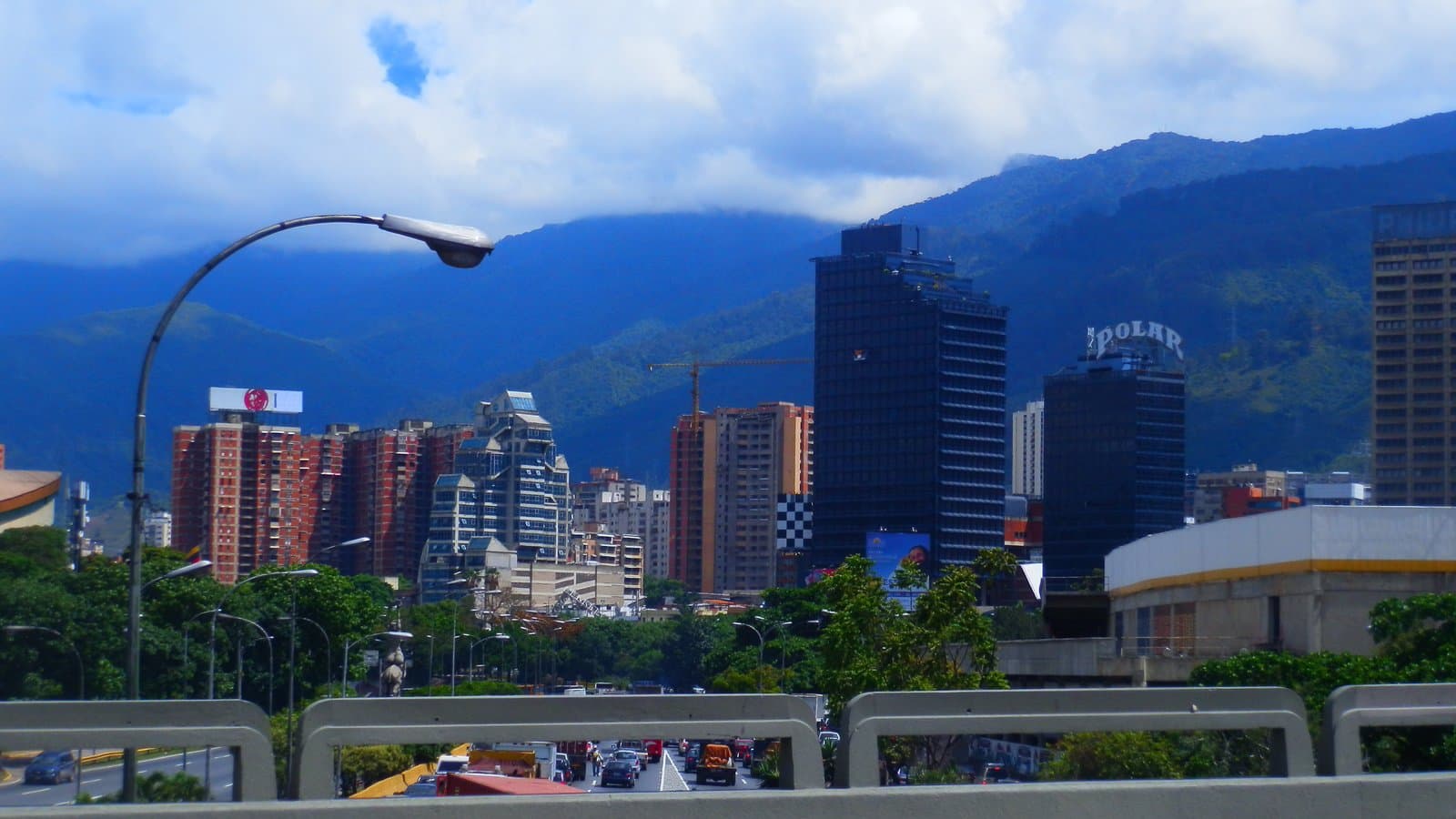
*Credits: reporting from Reuters (via Investing.com, MarketScreener and El Nuevo Herald), the U.S. State Department, ABC (Spain), the Miami Herald, EFE (via Infobae), The Associated Press, AFP (via France 24), Venezuela's state news agency AVN, Infobae, Gran Caracas News, El Diario, El Nacional and El Tiempo (Venezuela). Photo: George Miquilena / Wikimedia Commons, CC BY-SA 3.0 (archive photo, May 2012). NewsCubby articles are produced with AI assistance and reviewed by humans.*
*Want more? Explore today's headlines on NewsCubby and join My Day free to make NewsCubby part of your day.*
Sources, credits & editorial notes
- Reuters (via Investing.com): Rubio says Venezuela's electoral system must be replaced before a vote, Oct. 26, 2026
- ABC (Spain): Los detalles del plan de EE.UU. para Venezuela: nuevo Supremo y sistema electoral, Oct. 26, 2026
- Miami Herald: Rubio reveals U.S. role in María Corina Machado's return, Oct. 26, 2026
- U.S. State Department: Secretary Rubio on Venezuela, call transcript (via Forth), Oct. 26, 2026
- Reuters (via El Nuevo Herald): Presidenta encargada espera que diálogo brinde espacio a todos, Oct. 26, 2026
- AFP (via France 24): Delcy Rodríguez on Machado's return, Oct. 26, 2026
- AVN: Delcy Rodríguez ratifica al diálogo como la vía para la convivencia política, Oct. 26, 2026
- Reuters (via MarketScreener): De vuelta en Venezuela, Machado debe conciliar aspiraciones, Oct. 26, 2026
- Infobae: Dinorah Figuera quiere elecciones presidenciales para finales de 2027, Oct. 22, 2026
- Gran Caracas News: Nuevo TSJ antes de 2027, la apuesta de Dinorah Figuera, Oct. 2026
- El Diario: Dinorah Figuera: oportunidades para un nuevo Tribunal Supremo de Justicia, Oct. 23, 2026
- ABC (Spain): La hoja de ruta de María Corina Machado para Venezuela, Oct. 26, 2026
- El Nacional: María Corina Machado iniciará gira nacional para exigir elecciones libres, Oct. 2026
- El Tiempo (Venezuela): Analistas responden a palabras de Jorge Rodríguez
- Reuters (via Investing.com): Awaiting Machado's return, Venezuela opposition looks ahead to elections, Oct. 23, 2026
- EFE (via Infobae): La ruta de EE.UU. para Venezuela: reforma electoral, vacancia y elecciones, Oct. 26, 2026
- AP: US told Venezuela's government to allow in opposition leader Machado, Oct. 26, 2026
- Photo: George Miquilena / Wikimedia Commons, CC BY-SA 3.0 (archive photo, May 17, 2012)