Politics
DOJ plans about 1,000 election monitors: what they can do
The Justice Department says its largest-ever monitoring effort is routine oversight. Critics and some states call it intimidation. What the law says.
What to know
- The Justice Department's Civil Rights Division plans to send about 1,000 election monitors for the Nov. 3 midterms, which Assistant Attorney General Harmeet Dhillon has called the largest such effort in the department's history.
- A senior DOJ official told PBS NewsHour the monitors will "observe and report," won't go to early-voting sites and won't check anyone's citizenship. Any enforcement action would come after the election.
- Critics, led by the NAACP, argue that no federal law authorizes this kind of deployment and that it could intimidate voters. The NAACP has filed a federal lawsuit; as of Monday afternoon, the court docket showed no hearing, emergency motion or ruling.
- A DOJ representative told the Louisiana Illuminator the department will have monitors in all 50 states. Places notified so far, according to state officials and news reports, include counties or cities in Colorado, Florida, Michigan, Minnesota, Oklahoma, Oregon, Pennsylvania, Texas, Utah and Washington. State rules on who may enter polling places vary widely.
- Election officials from both parties are split: some call the plan unusual but manageable, while others call it hostile or disruptive.
What is the Justice Department planning?
Dhillon, who leads the Civil Rights Division, first announced plans in August to deploy about 1,000 monitors to polling places for the midterm elections. In September, she described it as the "biggest DOJ election observer effort in history," according to a complaint later filed by the NAACP. In a post on X on Friday, Oct. 23, she said the department would field its largest team ever on Election Day, acting as the federal government's "eyes and ears," and that its findings could lead to legal action, Fox News reported.
Past figures vary by source and measure, and they are not directly comparable. PBS NewsHour reported that the department sent 388 people to polling places in 2022, a figure it said a DOJ official confirmed. In August, CBS News reported a different count from a DOJ official: 289 people in 2022 and 714 people across 86 jurisdictions in 27 states in 2024. NPR reported that the department monitored 64 jurisdictions in 24 states in 2022. The NAACP's lawsuit alleges that the department "has never deployed more than 600 monitors in a prior election."
Attorney General Todd Blanche, speaking to reporters in Virginia on Thursday, Oct. 22, said it was not his intention to "improperly interfere with elections." Asked whether the department could step into states' certification of results, he did not rule it out in an extreme worst-case scenario, Fox News reported.
Dhillon was asked on CBS's "60 Minutes" on Oct. 18 whether the administration plans to send Immigration and Customs Enforcement agents to polling places. She said there was no such plan, according to Fox News and The Associated Press. The AP reported Monday that the department said it sent more than 100 monitors to hundreds of polling locations during this year's primaries.
What will the monitors actually do?
A senior department official, speaking at a background briefing described by PBS NewsHour, said the teams will focus on high-population areas, competitive races and access for voters who need language help or have disabilities. The official said monitors will not be posted at early-voting sites and are "not out there checking citizenship status."
The official said monitors "observe and report," with any enforcement handled after the election. In a break from long-standing practice, federal prosecutors will take part as monitors, PBS reported, though the official said they would not prosecute cases they personally observe.
Stacey Young of Justice Connection, a group of former DOJ employees, told PBS that the role has historically been "pretty passive." The department's letter to Colorado officials, quoted by PBS, put it simply: "Our monitors only observe and take notes."
A similar letter to Pennsylvania, reported by PennLive on Monday, adds detail. DOJ trial attorney James Catania wrote that monitors will introduce themselves to polling-place managers, show government ID and a department letter, wear business-casual clothes rather than uniforms or DOJ pins, and pass any concerns to a team leader who may contact county officials. He also wrote that monitors do not speak with voters inside polling places.
The DOJ has rejected the idea that the program is meant to intimidate anyone. In a statement to The Guardian, the department said its monitors "comply with all legal and ethical requirements," including not interfering with voting, and that their work is consistent with long-standing practice. The senior official told PBS that some critics are stoking unwarranted fear.
What is the legal basis?
This is the heart of the dispute, and two different tools are often confused.
The first is federal observers. Under Section 3(a) of the Voting Rights Act, a federal court can order observers into a jurisdiction, and those observers, run by the Office of Personnel Management, have legal access inside polling places, according to the DOJ's own explainer page. The department says it once also relied on Attorney General certifications under Section 8 of the law, but stopped after the Supreme Court's 2013 ruling in Shelby County v. Holder. The page lists only a few court-ordered observer jurisdictions, including Union County, New Jersey, and Pawtucket, Rhode Island.
The second is department monitors, Civil Rights Division staff who watch elections in places that are not covered by court orders. The DOJ page says the division has long done this with its own employees. Unlike court-ordered observers, these monitors generally need permission from state or local officials to go inside a polling place.
Supporters of the plan point to that history. "Since the 60s, the Department of Justice has monitored elections," Blanche said on Fox News on Oct. 4, as quoted by The Guardian. Language-access duties under Section 203 of the Voting Rights Act are one reason the department gives for picking particular counties; NPR reported that DOJ cited that provision for Adams County, Colorado.
Critics say the scale and makeup of this deployment go well beyond that tradition. Kristen Clarke, the NAACP's general counsel, who led the Civil Rights Division under President Joe Biden, argued in remarks quoted by The Guardian that no federal law gives the department a right to send its monitors.
What do the lawsuits say?
The NAACP and three individual voters sued Blanche, Dhillon and the department on Oct. 16 in federal court in Washington, D.C., according to the court docket on CourtListener. The case, NAACP v. Blanche, is assigned to U.S. District Judge Reggie B. Walton. The plaintiffs allege that using prosecutors and law enforcement agents as monitors could intimidate voters, in violation of Section 11(b) of the Voting Rights Act, and that the plan breaks federal administrative law. They are asking the court, among other things, to bar prosecutors and law enforcement agents from serving as monitors. These are claims in a lawsuit; the court has not ruled on them.
A department spokesperson, in a statement reported by Bloomberg Law, said the suit rests on unfounded fears and speculation, and that the department's routine election monitoring is meant to ensure compliance with federal law, not to intimidate voters.
As of Monday afternoon, Oct. 26, the court docket, as shown in the CourtListener archive, listed only procedural steps since the complaint: lawyers' appearances, the admission of out-of-state attorneys, a corrected copy of the complaint and summonses issued Oct. 21. It showed no request for an emergency order, no hearing and no ruling, and the government had not yet filed a response.
A separate NAACP case against Dhillon, seeking records about the program under the Freedom of Information Act, was filed Oct. 2. U.S. District Judge Sparkle L. Sooknanan denied the group's request for a temporary restraining order in that case on Oct. 22, according to Democracy Docket's case tracker. That ruling concerned the records request, not whether the monitoring plan is lawful.
Which places have been notified?
NPR reported that the department has notified counties in Colorado, Florida, Minnesota, Texas and Washington, including seven Texas counties, King County in Washington, Miami-Dade in Florida and Hennepin and Ramsey counties in Minnesota. The Oregonian reported that Multnomah County, which includes Portland, was also notified and that Utah is on the list. DOJ spokesperson Kiersten Pels told NPR more details would come "closer to the election."
The list has grown since then, though the department has not published a full roster. As of Monday afternoon: - All 50 states: a DOJ representative told the Louisiana Illuminator by email Friday that the department will have monitors in every state. Louisiana's secretary of state's office said it had been "indirectly informed" but had received no official notice naming parishes. - Pennsylvania: monitors are headed to Philadelphia, Allegheny, Luzerne and Lehigh counties, according to a DOJ letter to Secretary of the Commonwealth Al Schmidt reported by PennLive on Monday. - Michigan: the department notified seven cities on Oct. 21: Detroit, East Lansing, Flint, Grand Rapids, Hamtramck, Lansing and Warren, according to a press release from state Attorney General Dana Nessel. - Oklahoma: three counties, including the two most populous, according to the state election board, as reported by the Louisiana Illuminator. - Utah: Salt Lake County has been told monitors will be present; Lt. Gov. Deidre Henderson said she expects more but has no details, the Illuminator reported. - Colorado: the department notified Adams and Douglas counties on Oct. 21 but later said the Douglas County notice was a mistake, The Colorado Sun reported.
NPR reported that states were not initially told about the notices sent to their counties.
What are state and local officials saying?
Reactions do not break neatly along party lines.
Kansas Secretary of State Scott Schwab, a Republican, told PBS that monitors in his state cannot go past the point where voters show ID. He played down the impact, saying even a single monitor would be more than needed and suggesting the effort may be largely symbolic.
David Becker, a former attorney in the Civil Rights Division's voting section, told PBS the plan is "not normal, but I'm not particularly concerned," noting the department has no "blanket authority to be everywhere."
Minnesota Secretary of State Steve Simon, a Democrat, told MPR News that federal monitoring is "not so unusual." He said that during the August primary, about 40 polling places were covered by two-person teams and that counties declined to let them in, keeping them outside a 100-foot zone. He said the state had its own monitors watching the federal teams in August and that those teams followed the rules then. Simon said the state wants to be sure the department's stated reason for the effort is its real one.
Colorado Secretary of State Jena Griswold, a Democrat, called the department hostile toward the state's elections, according to PBS. Colorado rules require the secretary of state's permission for observers unless a court orders them, NPR reported, and a Griswold spokesperson said the office was weighing the request with the state attorney general's office. Adams County Clerk Josh Zygielbaum, also a Democrat, told NPR he worries the effort could be used to intimidate voters.
Colorado has since spelled out its terms. In an Oct. 22 letter, Deputy Secretary of State Andrew Kline told the department that monitors must apply for and receive state approval as "official observers" before entering non-public election areas, such as where mail ballots are processed, The Colorado Sun reported. Approved observers may not handle equipment, talk to voters or record, he wrote. A DOJ spokesperson told the Sun that Adams County was chosen because federal law requires it to print ballots in English and Spanish. As of Monday afternoon, NewsCubby found no report that Colorado had approved or denied specific monitors.
In Pennsylvania, the Department of State told PennLive that DOJ monitors have no legal right to more access to polling places than any member of the public, and urged them to coordinate with county offices. In Michigan, Nessel, a Democrat, described department monitors as a normal part of the state's election process and said she expects them to follow the law as they did in the August primary, while warning that her office would act against anyone who tries to intimidate voters.
Oregon Secretary of State Tobias Read, a Democrat, said in a statement reported by The Oregonian that the state welcomes observers but that no one, including the Justice Department, may legally interfere with Oregon's elections. Multnomah County's elections director, Tim Scott, said the county expects federal monitors to follow its observer procedures "just as we would for any group or individual."
In Texas, the dynamic was reversed two years ago. Attorney General Ken Paxton, a Republican, blocked Biden administration monitors in 2024, arguing that the department had no authority to monitor Texas elections, NPR reported.
What happened in Wyoming?
Wyoming's Aug. 18 primary has become a reference point for critics. Two department attorneys monitored polling places in Laramie County. Republican Gov. Mark Gordon said at a public state canvassing board meeting on Aug. 26 that the monitors' behavior had been somewhat aggressive and irregular, and asked the state attorney general to look into it, WyoFile and the AP reported. He also said he did not object to having observers. Laramie County Clerk Debra Lee said in a statement that the monitors asked about poll-worker training, sought to examine tabulators and asked to interview voters, which she refused, WyoFile reported. Secretary of State Chuck Gray, also a Republican, disputed the governor's account, according to WyoFile.
A DOJ official acknowledged to PBS that the department had not told the local clerk ahead of time. A department spokesperson, Kiersten Pels, told NPR the department disputes the public characterization that its two monitors were aggressive or did anything improper.
What does this mean for voters?
Election officials interviewed by PBS, MPR and NPR stressed that voters' rights do not change because a federal monitor is present. State laws on who may stand inside or near a polling place still apply, and monitors, by the department's own description, are there to take notes rather than question voters. Voters who feel intimidated can report it to local election officials or their state's election office.
Federal monitors will not be the only observers. The AP reported Monday that Democratic-aligned groups and nonprofits have trained tens of thousands of volunteers to watch polling places, while the Republican National Committee said it has recruited nearly 22,000 poll workers and is recruiting poll watchers for competitive districts. Asked about department monitors going to Georgia, President Donald Trump told a reporter they would do nothing beyond watching, the AP reported.
What we know
- DOJ plans about 1,000 monitors for Nov. 3, by its own account its largest effort, and told the Louisiana Illuminator they will be in all 50 states.
- The department says monitors will observe, not enforce, and will skip early-voting sites.
- The NAACP's lawsuit challenging the plan is pending before Judge Walton in Washington, D.C.; as of Monday afternoon, the docket showed no hearing or ruling.
What we don't know yet
- The full list of counties and how many monitors each will get; the department has not published one as of Monday afternoon.
- Whether the court will act on the NAACP suit before Election Day.
- Whether Colorado will approve specific monitors as official observers, and how other states will handle access.
What happens next
Election Day is Tuesday, Nov. 3. The department has said more details will come closer to the vote, and several states have said they will send their own observers to watch the federal teams. NewsCubby will update this story if the court rules, Colorado decides or the department releases its list.
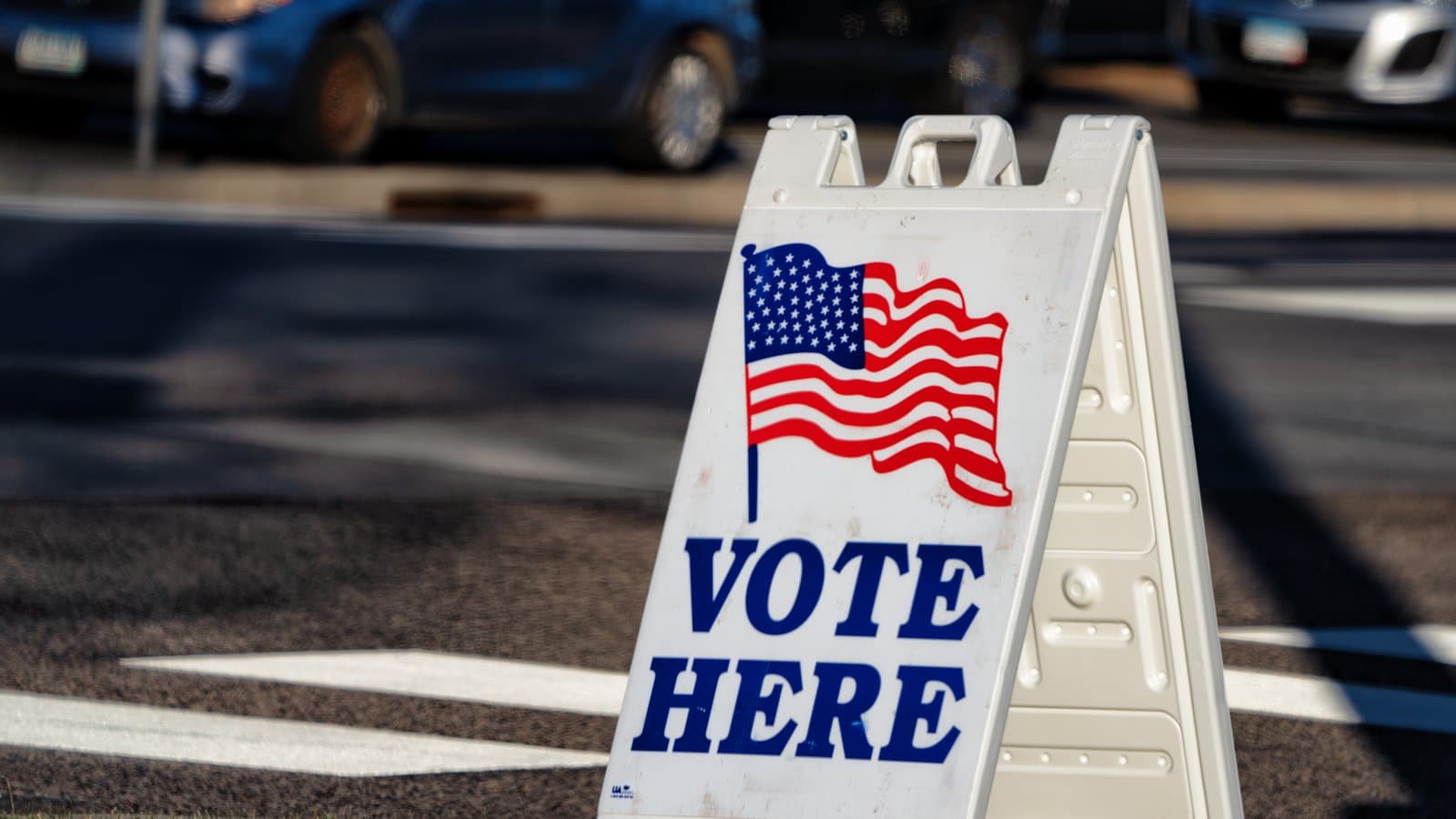
*Credits: reporting from PBS NewsHour, NPR (via GPB), The Associated Press, CBS News, Fox News, The Guardian, MPR News, The Oregonian/OregonLive, WyoFile, Bloomberg Law, Democracy Docket, PennLive, the Louisiana Illuminator and The Colorado Sun, plus the Michigan Attorney General's office, U.S. Department of Justice and federal court records. Photo: Tony Webster / Wikimedia Commons, CC BY 2.0. NewsCubby articles are produced with AI assistance and reviewed by humans.*
*Want more? Explore today's headlines on NewsCubby and join My Day free to make NewsCubby part of your day.*
Sources, credits & editorial notes
- PBS NewsHour: How some states are responding to DOJ's plan to send 1,000 monitors, Oct. 23, 2026
- NPR via GPB: The Justice Department begins notifying counties where it wants to monitor elections, Oct. 21, 2026
- Fox News: Midterm elections live blog, Oct. 23, 2026
- The Guardian: Trump administration sued over plans to send election monitors to voting sites, Oct. 7, 2026
- MPR News: Federal election monitors can't be disruptive by law, secretary of state says, Oct. 22, 2026
- The Oregonian/OregonLive: Trump's DOJ targets Oregon for election monitoring, Oct. 23, 2026
- Bloomberg Law: DOJ Aims to Intimidate Voters With Poll Monitors, NAACP Says, Oct. 18, 2026
- U.S. Department of Justice: About Federal Observers and Election Monitoring
- CourtListener: NAACP v. Blanche, No. 1:26-cv-03626 (D.D.C.), docket
- Democracy Docket: DOJ Election Monitors Records Challenge (NAACP), NAACP v. Dhillon
- WyoFile: Gov. Gordon concerned by 'aggressive' DOJ election observers during Wyoming's primary, Aug. 26, 2026
- CBS News: Justice Department to send a record 1,000 monitors to polling places in midterm elections, Aug. 18, 2026
- PennLive: DOJ says federal monitors will observe voting in four Pa. counties, Oct. 26, 2026
- Louisiana Illuminator: DOJ confirms it's sending election monitors to Louisiana and all 50 states, Oct. 26, 2026
- AP via PBS NewsHour: Thousands of observers from the right and left will monitor the vote, Oct. 26, 2026
- Michigan Department of Attorney General: State of Michigan Reminder on DOJ Election Monitors, Oct. 22, 2026
- The Colorado Sun: Colorado will require federal election monitors to get permission, Oct. 22, 2026
- Fox News: DOJ official defends Trump's noncitizen voter probe on '60 Minutes', Oct. 19, 2026
- Photo: Tony Webster / Wikimedia Commons, CC BY 2.0