Politics
Judge Rules DOJ Unlawfully Fired Maurene Comey, Orders Back Pay
A federal judge found the July 2025 firing of the ex-prosecutor unlawful and granted retroactive reinstatement and back pay through Dec. 20, 2025.
What to know
- A federal judge in Manhattan ruled Monday, Oct. 26, that the Justice Department unlawfully fired former federal prosecutor Maurene Comey in July 2025, according to his 55-page opinion and order.
- Judge Jesse Furman ordered retroactive reinstatement and back pay only for the period from her firing through Dec. 20, 2025, the date the court inferred she accepted another job. She is not returning to the Justice Department.
- The ruling was split. Comey won her separation of powers, Administrative Procedure Act and due process claims, lost one count, and four other counts were dismissed.
- Her First Amendment claim, which alleges she was fired because she is the daughter of former FBI Director James Comey, has not been decided. Her next filing on it is due Nov. 9.
- The Justice Department argued the president can remove federal prosecutors at will under Article II. As of 12:40 p.m. ET, the department and the White House had not commented on the ruling.
A federal judge in New York ruled Monday that the Justice Department broke the law when it fired Maurene Comey, a longtime federal prosecutor in Manhattan and the daughter of former FBI Director James Comey, in July 2025.
U.S. District Judge Jesse M. Furman of the Southern District of New York found that the firing violated the constitutional separation of powers, the Administrative Procedure Act and Comey's Fifth Amendment due process and statutory rights, according to his 55-page opinion and order, filed Oct. 26 in Comey v. U.S. Department of Justice. The judge ordered retroactive reinstatement and back pay from the date she was fired through Dec. 20, 2025.
The ruling is a legal win for Comey, but it does not put her back in the prosecutor's office. The relief covers a fixed window that ends on the date the court inferred she accepted another job, and it is designed to correct her employment and retirement record for that period. The amount of back pay, and whether she is owed legal costs and attorneys' fees, have not been decided yet.
What the judge decided
Comey had served for nearly 10 years as an assistant U.S. attorney in the criminal division of the U.S. Attorney's Office for the Southern District of New York, according to the opinion. On July 16, 2025, she received an email from Justice Department officials in Washington ending her employment and citing Article II of the Constitution, the opinion says.
The central question, Furman wrote, was whether limits Congress placed on removing assistant U.S. attorneys are consistent with Article II and the separation of powers. Under the Civil Service Reform Act of 1978, known as the CSRA, those prosecutors and millions of other federal employees can generally be removed only for cause that promotes "the efficiency of the service," and only after receiving notice and a chance to respond.
The judge concluded that the Justice Department's arguments failed on both fronts. He found that no statute authorized the firing and that it in fact violated the CSRA. He wrote that the attorney general does have legal authority to remove an assistant U.S. attorney, but that the CSRA limits how and why that can be done, and that Comey's removal clearly did not follow those limits.
He also rejected the department's broader argument that Article II prevents Congress from regulating the removal of federal prosecutors at all. Furman wrote that the argument runs against nearly two centuries of Supreme Court precedent holding that Congress may generally restrict the removal of "inferior officers," as long as they answer to a principal officer whom the president can remove at will. Accepting the government's position, he wrote, would "unsettle the very equilibrium established by this Nation's constitutional system."
In his conclusion, the judge warned that siding with the department could risk a return to the old patronage-based "spoils system" that Congress has been working to end since the 19th century.
What the government argued
The Justice Department argued that the president's executive power under Article II includes unrestricted authority to remove federal prosecutors, and that Congress cannot limit that power, CBS News reported. In court filings, the department said the firing was directed and authorized by then-Attorney General Pam Bondi, according to the opinion and NBC News.
The government leaned on two recent Supreme Court decisions, Trump v. United States and Trump v. Slaughter, according to the opinion. Furman wrote that neither one supports what he described as a sweeping theory of executive authority, noting that in Slaughter the high court explicitly declined to decide the fate of officials who were not before it. He added that, as a lower court, his court is not free to set aside longstanding Supreme Court precedent on the grounds that later decisions may have weakened it.
The department also acknowledged in its court filings that Comey received an overall "outstanding" rating in her annual performance reviews from 2019 through 2024, according to the opinion and CBS News. At a hearing, a government lawyer conceded she had outstanding service as a prosecutor, the opinion says. CNN reported that the department acknowledged she was not fired for cause or because of her performance.
Earlier in the case, the government tried to have the lawsuit dismissed on the grounds that Comey should have taken her claims to the Merit Systems Protection Board, which hears federal employees' appeals of personnel actions. Furman denied that motion, CBS News reported, finding the court had jurisdiction because the firing rested on Article II rather than on a civil service statute.
Comey's allegations
Comey sued on Sept. 15, 2025, according to the court docket. In her lawsuit, she alleges she was fired "solely or substantially" because she is James Comey's daughter, because of her perceived political affiliation and beliefs, or both, according to the opinion and Courthouse News Service. Her complaint alleges the administration gave no legitimate explanation for the firing, NBC News reported.
Those are her allegations. The judge has not ruled on her First Amendment claim, which is the part of the case most directly tied to her claim that she was fired over her father. Furman held off on that claim and ordered Comey to file a written explanation by Nov. 9, 2026, of why it should not be dismissed, with the government's response due one week later, according to the opinion. CNN also reported that the First Amendment claim remains unresolved.
The judge ruled for Comey on four of her counts and for the government on a separate count, and dismissed four other counts, according to the order. In a separate line, he said the ruling largely makes further fact-finding unnecessary and paused discovery in the case.
James Comey, who led the FBI until President Donald Trump fired him in 2017, is a longtime Trump critic. NBC News reported that he faces a pending federal criminal case brought by the administration, which his legal team argues is retribution rather than a good-faith prosecution. That case is separate from his daughter's lawsuit.
Who is Maurene Comey?
Comey joined the Manhattan U.S. Attorney's Office in 2015, according to CBS News and the opinion. She worked on some of the office's highest-profile cases, including prosecutions involving Jeffrey Epstein, Ghislaine Maxwell, Sean "Diddy" Combs and former Sen. Bob Menendez, according to CBS News and NBC News.
After her firing, she went into private practice. Reuters reported that she was hired as a partner at the law firm Patterson Belknap Webb & Tyler, and CNN reported she now works as a defense lawyer. Reuters also reported that she asked the court to reinstate her retroactively through December 2025 so she could receive back pay and qualify for retirement benefits.
According to the opinion, the relief Comey requested and the judge granted includes restoring pension and Thrift Savings Plan contributions through Dec. 20, 2025, crediting her with more than 10 years of service, and changing her personnel file to show that she resigned on that date rather than being fired in July 2025.
Reaction
Comey's legal team said in a statement reported by CNN that the win belongs to Comey, to civil servants and to people working to uphold the rule of law. The team also pointed to the judge's finding that accepting the government's view of executive power would upset the constitutional balance.
The Justice Department did not immediately respond to requests for comment, NBC News reported. CNN, CNBC and The Hill said they had sought comment from the department, and CNBC said it had also asked the White House. As of 12:40 p.m. ET Monday, NewsCubby had found no public statement from the Justice Department or the White House on the ruling, and no coverage from Fox News or Fox Business.
What it means for presidential firing power
Reuters described the case as a test of whether the administration can quickly fire career line prosecutors like Comey, who are not political appointees and typically serve under presidents of both parties. CBS News reported that the lawsuit is one of several brought by fired federal employees testing the limits of the president's power to remove officials.
The ruling is narrow in one sense: it applies to this case and binds only the parties. But its reasoning addresses a question likely to come up again. In the opinion, Furman distinguished career prosecutors protected by civil service law from the independent-agency officials at issue in recent Supreme Court removal cases. He noted that only the Supreme Court can revisit its own precedents.
Will the government appeal?
As of Monday afternoon, none of the outlets reviewed by NewsCubby had reported whether the Justice Department plans to appeal. Any appeal would go to the U.S. Court of Appeals for the Second Circuit. The district court still has to set the back-pay amount, rule on fees and decide the First Amendment claim.
What we don't know yet
- How much back pay Comey will receive, and whether she will be awarded costs and attorneys' fees.
- Whether the Justice Department will appeal.
- How the judge will rule on her First Amendment claim.
What happens next
- Comey's filing on the First Amendment claim is due by Nov. 9, 2026, with the government's response due a week later, according to the opinion.
*Credits: reporting from the court's Oct. 26, 2026 opinion and order in Comey v. U.S. Department of Justice (S.D.N.Y., 25-cv-7625), CBS News, NBC News, CNN, ABC News, CNBC, Courthouse News Service, Reuters, The Associated Press, Inner City Press and The Hill. NewsCubby articles are produced with AI assistance and reviewed by humans.*
*Want more? Explore today's headlines on NewsCubby and join My Day free to make NewsCubby part of your day.*
Sources, credits & editorial notes
- Opinion and Order, Comey v. U.S. Department of Justice, No. 1:25-cv-07625-JMF (S.D.N.Y. Oct. 26, 2026), ECF No. 96
- CBS News: Maurene Comey, James Comey's daughter, was unlawfully fired, judge rules, Oct. 26, 2026
- NBC News: Judge orders DOJ to reinstate former federal prosecutor Maurene Comey, Oct. 26, 2026
- CNN: Maurene Comey was unjustly fired from DOJ, judge rules, Oct. 26, 2026
- ABC News: Judge reinstates Maurene Comey after ruling firing unlawful, Oct. 26, 2026
- Courthouse News Service: Judge finds Maurene Comey was unlawfully fired, Oct. 26, 2026
- Reuters (Luc Cohen), via 965wtou.com: Firing of prosecutor Maurene Comey was unlawful, judge rules, Oct. 26, 2026
- The Associated Press: Judge says DOJ illegally fired Maurene Comey as a federal prosecutor, Oct. 26, 2026
- The Hill: Judge rules Maurene Comey was unlawfully fired by Justice Department, Oct. 26, 2026
- CNBC: Trump DOJ unlawfully fired Epstein prosecutor Maurene Comey, judge rules, Oct. 26, 2026
- Inner City Press: Maurene Comey wins on most counts against DOJ, Oct. 26, 2026
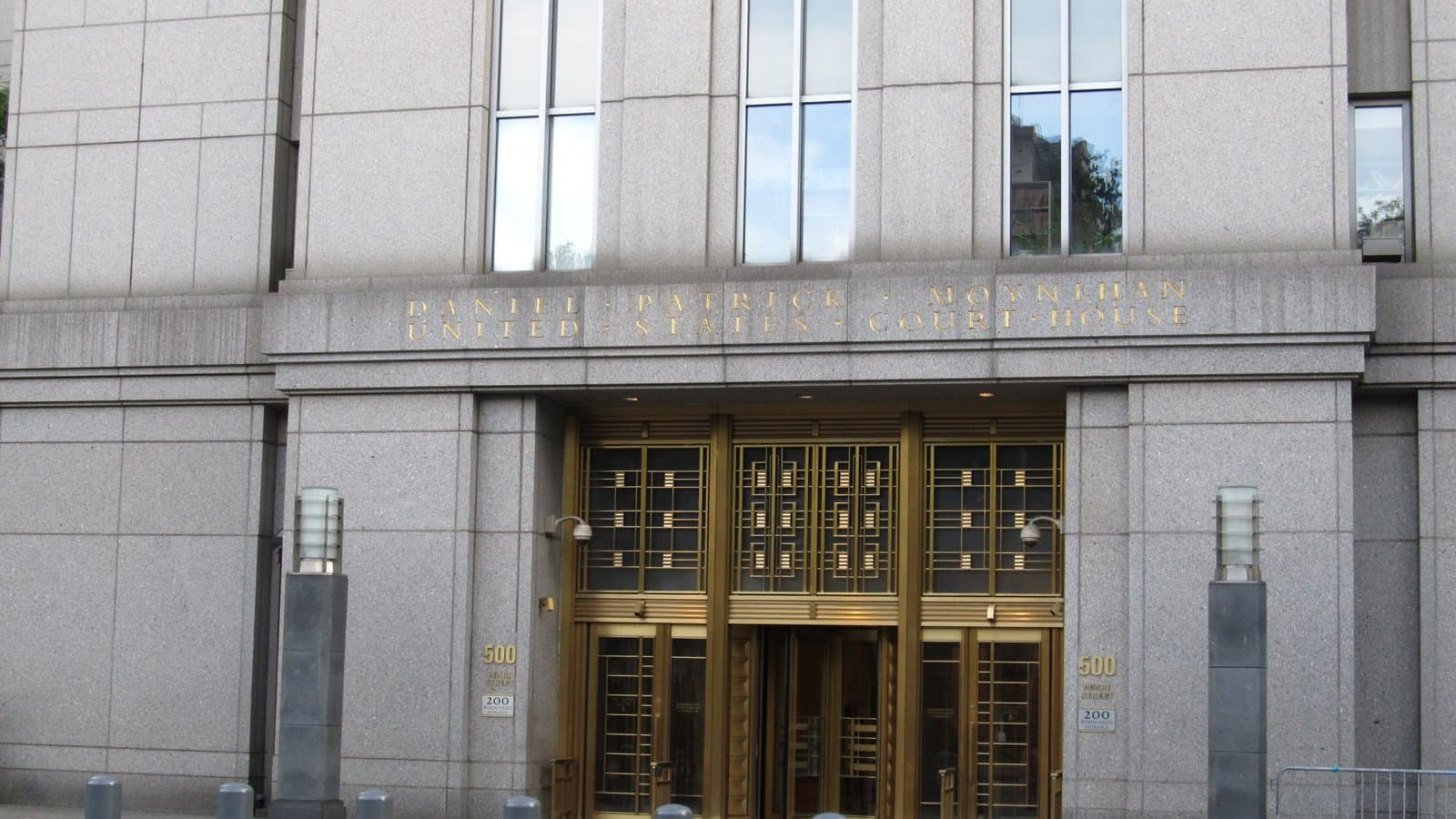
- Photo: Ken Lund / Wikimedia Commons, CC BY-SA 2.0 (archive photo, 2012; cropped)